


Welcome to the Stepwise Risk Outlook, which highlights and contextualizes over-the-horizon developments in key regions of the world and industries of the global market. Today’s featured deep dive by Dan Arbell examines Israel and Türkiye's regional competition in Syria.

Israel and Türkiye’s Zero-Sum Strategic Visions for Syria
By Dan Arbell
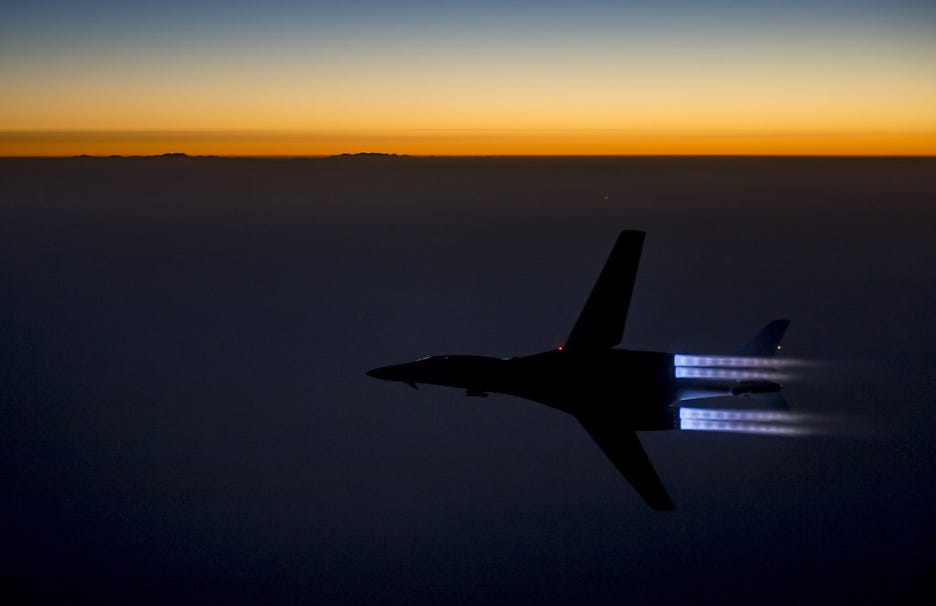
"Air strikes in Syria [Image 4 of 6]" by DVIDSHUB is licensed under CC BY 2.0.
A recent Israel-Syria scuffle over an airbase near Aleppo has laid bare Israeli and Turkish tensions and mismatched visions of Syria’s role in the region – and has caught the US in the middle. The flare-up stems from Israeli airstrikes on Abu al-Duhur airbase in Syria’s Idlib province, with Israel claiming that Türkiye was planning to deploy troops there in violation of a Syrian-Israeli agreement to maintain a security status quo. Türkiye and Syria have firmly denied any deployment plan and denounced Israeli action, but the sharpest rebuke came from Washington: US Envoy for Syria and Iraq (and Ambassador to Türkiye) Tom Barrack called the strikes “an unnecessary escalation.” The incident is intensifying regional competition between Israel and Türkiye, straining key US relationships and potentially endangering Syria’s postwar redevelopment (a site of significant international investment and the centerpiece of multiple pipeline plans as the region pivots from maritime oil transits).
In today’s full analysis:
Israel’s Calculus and Türkiye’s Position
Syria’s Interests
The US Policy Approach
Or listen to the full report here:

Listen to the news:
Global
Russia warned that it could strike British military targets inside and outside Ukraine, as concerns mount over a potential Russia-NATO confrontation. The Kremlin’s warning came after a Ukrainian attack at a shopping center in Donetsk, allegedly using a British Storm Shadow missile, and the British and French decision to permit Ukraine to directly produce the cruise missile, which has a range of 250 km (155 miles).
Some military analysts assess that the Kremlin is considering testing NATO’s resolve with limited incursions against NATO countries in Europe. A US intelligence assessment was leaked in early August, which assessed that shortfalls in certain critical munitions may have led the Kremlin to believe that NATO’s military capabilities are degraded, reducing the risks that NATO would respond to expanding targeting to include NATO member states. The leak of the intelligence assessment may have been intended to be a warning to the Kremlin not to miscalculate Western resolve, especially given the unusual visit by CIA Director Ratcliffe to Moscow this week. Ratcliffe reportedly delivered a warning not to escalate conflict with NATO allies, particularly Estonia, Latvia and Lithuania.
An attack on NATO and calls to trigger the mutual defense clause would put the US in a policy hard spot. Washington would be pressed between long-standing military commitments and the White House’s desire to stay out of the Ukraine war. The air war between Russia and Ukraine has entered into a new and highly destructive phase, where both combatants are pummeling each other, seeking to destroy critical infrastructure and raise the costs of war for civilians. The flow of Western military support is essential to Ukraine’s ability to continue its war strategy, which creates incentives for the Kremlin to increase the costs to NATO for providing that support.
Read More: Reuters [paywall], Wall Street Journal [paywall], Politico
Europe
The EU is diverging over the bloc’s flagship clean industrial policy initiative. This autumn, lawmakers and member states will develop the finalized version of the EU’s Industrial Accelerator Act. The act is intended to develop the EU’s industrial base while simultaneously driving forward the energy transition. However, Berlin and Paris have already started disagreeing over how the final initiative should look. France wants more “Made in Europe” measures, whereas Germany is worried about potential retaliatory responses from trading partners.
Clean industrial policy isn’t the only area where “Made in Europe” is a topic of discussion. Paris has recently signaled it would like to further restrict Ukraine’s ability to use EU-backed money so that Kyiv can only use EU funds to buy European armaments. The rules around EU-backed funding already limit Ukraine to primarily European suppliers, but there are exceptions for Chinese drone components and US-made Patriot air defense interceptors.
Any move towards “Made in Europe” will meet resistance in Washington. The US has made very clear in the past that it strongly opposes policies that would potentially disadvantage American companies operating in Europe.
Read More: Politico EU, Kyiv Post, Reuters [paywall]
Middle East
Hopes raised for an Iran-Oman deal for the Strait of Hormuz amid a flurry of diplomacy in Tehran. Some outlets reported yesterday that a deal had been reached, although Iranian and Omani sources tempered that reporting. Pakistani representatives also visited Tehran earlier this week to discuss a Strait deal, as well as broader talks with the US, and a Qatari official is in Iran today to discuss “upholding freedom of navigation.”
Still, an Iranian-Omani deal to reopen the Strait hinges on the US ending its blockade on Iran, and other conditions. Iran has made demands including American adherence to the terms of the June MOU (including an end to all hostilities and sanctions relief) to open the Strait, but will at the very least demand that the US ends its blockade on Iranian ports. Reopening the vital trade corridor is likely desirable enough to the US to accept a limited deal that implicitly validates Iranian claims over the Strait, but the US would also be abandoning a significant economic pressure point. However, the US’ efforts to reopen the Strait alone are faltering; US allies are reportedly privately warning vessels that the Strait remains mined, despite American claims that it had been cleared.
Read More: Reuters [paywall], Al Jazeera, New York Times [paywall], Axios, Bloomberg [paywall]
Asia-Pacific
A glacial collapse along the Nepal-Tibet border triggered a cascading flood disaster Wednesday, underscoring the growing risks posed by climate change to the Himalayan terrain. A section of glacier broke away at roughly 17,000 feet and plunged, generating an ice-and-rock avalanche that temporarily blocked the Lhende River before the resulting lake burst downstream. The event produced a 5.2-magnitude earthquake signal and sent water, ice and debris through the river systems. Casualties and missing individuals reporting vary widely, with accounts estimating nearly 1,500 people, including 800 foreigners, missing across Nepal and Tibet, alongside 360 deaths.
The disaster highlights the potential for cascading hazards and limited early-warning capacity in the Himalayas. A separate barrier lake formed upstream is overflowing and could burst today or tomorrow, threatening another surge downstream. The risk is particularly acute given the region’s dependence on vulnerable mountain transport and hydropower infrastructure—Kathmandu is expected to turn to India to cover any electricity shortfalls as the floods damaged over 8% of the country’s generation capacity. The UN has been ordered to release $2 million in emergency funding for medical care, shelter and water as Nepal and China continue search-and-rescue operations.
Read More: New York Times [paywall], NBC News, BBC, Strait Times, Bloomberg [paywall]
Americas
The US military confirmed it killed four people in a boat strike in the Caribbean on Tuesday. USSOUTHCOM posted a video of the strike on a small vessel that was allegedly carrying narcotics. This came after a US military strike in the Eastern Pacific on Monday killed two people accused of smuggling drugs, the first of such strikes in months. Since the boat strikes began in September 2025, a total of 227 people have been killed in 68 total strikes in the Caribbean and Eastern Pacific. The resumption of the strikes indicated that the US is not yet done with “Operation Southern Spear,” despite the hiatus.
Aerial strikes are playing an increasing role in security operations across Latin America. Mexico and the US recently signed an agreement to allow Mexico to procure US drones for anti-cartel and counter-drone capabilities. Latin American governments are now dealing with criminal groups that have acquired and adapted cheap drones, which cost only $600-$1,200 in Mexico and Colombia. Drone attacks have increased sharply in Colombia in recent years, and in Brazil, urban gangs are reportedly using drones as surveillance tools in favelas to track law enforcement activities. While the US sharing aerial technology with Latin American governments may enhance security capabilities, the US has also faced international condemnation for the boat strikes over the past year, which rights groups have described as extrajudicial killings.
Read More: The Guardian, PBS, InsightCrime
Disruptive Technology
The Trump administration is weighing semiconductor tariffs that threaten to deepen tensions between its industrial and AI strategies. Politico reports proposals ranging from sweeping tariffs on semiconductor-containing goods to country-specific tariff rates and quotas targeting foreign chipmakers. The latter would represent an almost inverse of the Biden administration’s proposed AI Diffusion Rule; rather than restricting the outward flow of US AI tech, Washington would constrain the inward flow of foreign-made semiconductors.
Broader restrictions could intensify pressure on an already strained semiconductor industry while threatening the administration’s push for AI dominance. Chip demand is surging alongside data center construction, meaning tariffs could raise costs and complicate access to the components needed to sustain AI expansion. Yet, the administration views broad tariffs as necessary leverage to force foreign manufacturers to expand US production, highlighting a central tension in Trump’s AI approach.
Energy
The war in the Middle East is driving renewable energy generation globally, but it’s also driving coal use. The global energy crisis has pushed countries across the world to accelerate their adoption of renewable energy sources and to cut their dependence on imports. Currently, the International Energy Agency expects renewable power to become the world’s top electricity source this year. However, coal is also set to rise 1.4% this year, although that growth is far outstripped by the almost 9% jump in renewables. Global emissions are also continuing to climb this year, but the IEA expects them to begin dipping in 2027.
Asian economies have led the charge on both renewables and coal. Asian countries that are most heavily dependent on energy imports through the Strait of Hormuz have driven both renewables and coal. China has pivoted to building out solar capacity, whereas countries including India, Vietnam and South Korea have seen power generation with coal rise. Solar generation has also risen in South Korea and India, although less so than coal.
Read More: Reuters [paywall], CNBC
Transnational Crime & Corruption
Haitian militants killed almost 50 people in a suburb of Port-au-Prince previously insulated from attacks. The attacks took place on Sunday night and Monday morning, with armed actors burning homes, taking hostages and killing civilians. The neighborhood, Kenscoff, had been seen as relatively safe from militant attack since the escalation of civil conflict in Haiti in 2024. A recent UN report found that militant violence in Haiti killed at least 1,408 people and injured 656 from April through June.
By threatening Kenscoff, militants are pushing forward to the city of Pétion-Ville, which hosts Haiti’s provisional government and foreign embassies. UN authorities and expert observers posited that the militants were attempting to show the international community that multinational suppression of militant activities would result in further escalations.
Read More: New York Times [paywall], UN News, Global Initiative against Transnational Organized Crime
Defense
The US Army is planning on building nuclear microreactors at multiple locations in the US. The Army has tapped five firms to construct nuclear microreactors at five bases across the country: Forts Bragg, Campbell, Hood, Benning and Drum. This is part of the Army’s Janus program. Each company will design, construct, and operate its own reactor at its respective military installation. The Army will invest more than $2 billion dollars in building and operating the reactors across the fiscal 2027-2031 timeframe. The military also hopes that the deals will result in additional investment in nuclear technologies and that they will boost the commercial nuclear power industry. The Army initiated the Janus program last year and expects to expand it to other services going forward.
The project has been driven by nuclear energy-related executive orders from the White House. The Trump administration has emphasized American energy sovereignty and nuclear power’s role in American energy security since taking office in 2025. The administration has also issued billions for large nuclear reactors needed to satisfy growing energy demand for data centers.
Read More: Defense Scoop, Defense News, AP


Contact Us
Karl Hopkins
Partner
+1 202 429 6499
khopkins@steptoe.com
Melissa B. Mahle
Senior Advisor
+1 202 261 0577
mmahle@steptoe.com
Anni Coonan
Senior Intelligence Analyst
+1 212 506 3979
acoonan@steptoe.com
Samuel Bloebaum
Senior Due Diligence Analyst
+1 602 410 6240
sbloebaum@steptoe.com
Zayna Dembinski
Analyst
+1 202 778 3567
zdembinski@steptoe.com
Thomas Goldstein
Analyst
+1 202 862 6735
tgoldstein@steptoe.com
Ian Cameron
Analyst
+1 202 327 6908
icameron@steptoe.com
Elton Smole
Analyst
+1 202 261 0556
esmole@steptoe.com
Carter Spahn
Intelligence Fellow
+1 202 261 7555
cspahn@steptoe.com
Chris Dantes
Intelligence Fellow
+1 202 327 6904
cdantes@steptoe.com
Legal disclaimer: This Substack is for educational and informational purposes only and does not constitute the rendering of legal counseling or other professional services. Reading, subscribing to, or communicating through this Substack does not create an attorney-client relationship. Do not send confidential information through this platform. Consult qualified legal counsel regarding your specific circumstances.