


Welcome to the Stepwise Risk Outlook, which highlights and contextualizes over-the-horizon developments in key regions of the world and industries of the global market. Today’s featured deep dive by Anni Coonan examines the potential ramifications of the US-Saudi nuclear deal.

The US-Saudi Nuclear Deal: Ramifications for Global Proliferation and the Fracturing Regional Strategic Landscape
By Anni Coonan
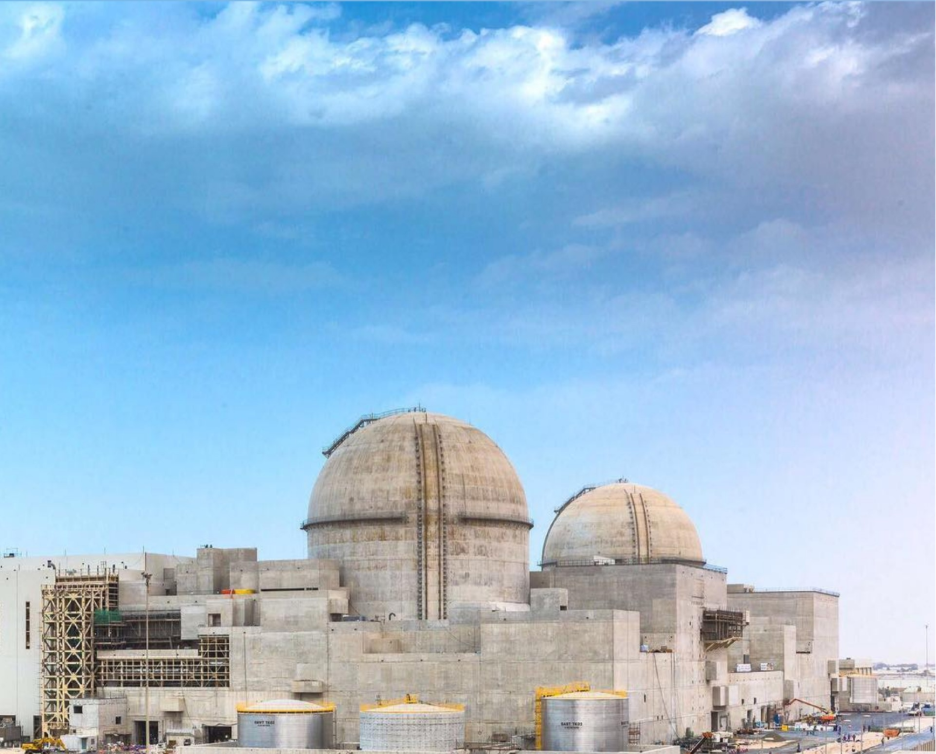
"Barakah nuclear power plant" by Wikiemirati is licensed under CC BY-SA 4.0.
The civil nuclear cooperation agreement signed between the US and Saudi Arabia last month was a historic and long-anticipated step for the bilateral partnership. For Saudi Arabia, the deal is a move to cement long-term US partnership amid anxieties around American retrenchment, and to free up more oil for export. For the US, it is an effort to reestablish its leadership in nuclear technology (and thus, proliferation norms), create new opportunities for America’s nuclear sector, and bolster its regional standing amid ongoing conflict. But misalignments over the content of the deal have prompted concerns of a regional arms race and laid bare the diversifying strategic landscape of the Middle East, not to mention cast doubt on whether it will move forward at all. A successful deal presents upsides for the American nuclear sector and the bilateral US-Saudi relationship (a key strategic and economic partnership), but also presents risks for global proliferation. Either way, the deal sheds light on the shifting Middle Eastern security architecture, featuring accelerated hedging, multiplying mini-lateral blocs, and a reduced guarantor role for the US.
In today’s full analysis:
What is (and is Not) in the Deal
Global Arms Race Concerns
The Nuclear Agreement amid Rising Regional Great Power Competition
Or listen to the full report here:

Listen to the news:
Global
The Chinese central bank has named Deutsche Bank as the first European clearing house for renminbi. Until now, a European company settling in renminbi (RMB) typically went through correspondent banking — a chain of intermediaries, each adding a day and a fee. Direct clearing removes the chain. Clearing in Frankfurt will provide financial institutions and companies with direct and rapid processing, clearing and settlement of cross-border renminbi transactions, helping to strengthen financial links between Europe and China.
China is seeking to promote global use of the RMB. Selection of Germany’s Deutsche Bank is a logical choice for Beijing. It deepens financial integration just as Berlin is pushing German companies to reduce their dependence on the Chinese market. China was Germany’s largest trading partner in 2025. Deutsche Bank is the top-ranked non-Chinese bank for panda bond deals (RMB-denominated debt issued by foreign institutions in mainland China). In terms of replacing the dollar, RMB use remains a small share of global payments, and as long as China maintains capital controls, the risk will push the currency market towards fully convertible currencies, namely the dollar and euro.
Read More: Financial Times [paywall], Reuters [paywall]
Europe
Relations between Armenia and Azerbaijan remain on a positive but fragile trajectory one year after a US-brokered peace framework. Since August 2025, the US and Armenia formalized the corporate structure of the TRIPPs Development Company, which will build the 43-km Zangezur transport and ICT corridor interlinking Azerbaijan’s Nakhichevan exclave through Armenia. Trade links between Armenia and Azerbaijan have also increased, and Türkiye has lifted its longtime trade embargo against Armenia in May. These efforts have enabled Yerevan to drift Westward, including through signing a connectivity partnership with the EU.
Armenian Prime Minister Nikol Pashinyan walks a political tightrope over the peace framework. Before a final peace agreement is signed, Azerbaijan wants Armenia to amend territorial references to the ethnic Armenian Nagorno-Karabakh exclave from its Constitution. However, Pashinyan does not have a constitutional majority to call the necessary referendum, and many Armenians maintain affinities to Russia, which has engaged in a geoeconomic pressure campaign against Armenia. Russian measures have included import bans on produce and flowers and threats against duty-free gas exports, which Armenia remains dependent on.
Read More: US Department of State, Reuters [paywall], The Irish Times, Stepwise Risk Outlook
Middle East
Syria sentenced former dictator Bashar al-Assad in absentia. A Syrian court sentenced al-Assad, who ruled the country for over 24 years, to death for crimes including killings, torture, and arbitrary arrest during the country’s nearly 14-year civil war. Al-Assad is currently residing in Moscow, to where he fled as rebel fighters closed on Damascus in December of 2024. Al-Assad is unlikely to be extradited from Russia, where he and his family were granted asylum on humanitarian grounds.
The sentences come as Syria attempts to navigate a complicated relationship with Russia. Moscow was a key ally to the Assads, but did not interfere in the insurgency that led to their ouster and remains an important strategic and economic presence in the country – although the US would like Russia out of the region. Earlier this week, Russia agreed to hand over control of two military bases on the Mediterranean coast, which will become jointly-run training centers. And last week, Syria promised to drastically reduce its Russian oil imports as part of discussions to lift remaining US sanctions.
Read More: Reuters [paywall], AP, Reuters [paywall], Foundation for Defense of Democracies
Asia-Pacific
Chinese and Indonesian navies are set to hold a joint navigation exercise in waters east of Taiwan later this month, adding to growing Chinese maritime activity around the self-governed island. The exercise will focus on strengthening joint operational capabilities and cooperation through communications drills and at-sea replenishment. The announcement follows China’s deployment of coast guard vessels to the area earlier this year, where Beijing has said it will continue strengthening its “law-enforcement patrols.” China began patrolling the waters shortly after Japan and the Philippines began discussions over overlapping EEZ and continental shelf claims east of Taiwan, discussions which Beijing believes it should be part of.
The exercise also comes amid growing maritime tensions between China and Indonesia’s Southeast Asian neighbor. A confrontation near Second Thomas Shoal in July, which coincided with the ASEAN Foreign Ministers’ Meeting, renewed pressure on regional discussions on security and a long-delayed code of conduct for the South China Sea. The drills highlight the increasingly difficult balancing act facing Southeast Asian governments: as China expands its maritime presence, regional states must balance growing security concerns and their individual economic ties to Beijing, further complicating ASEAN’s ability to reach consensus on how to collectively manage relations with China.
Read More: Reuters [paywall], Firstpost, USNI News, Asia Maritime Transparency Initiative
Americas
A 7.4-magnitude earthquake struck western Colombia on the morning of August 10, causing widespread devastation across the country’s coffee-growing region. The quake, centered near San José del Palmar in Chocó province, killed at least 164 people and injured nearly 1,500 others, with authorities warning that the death toll is likely to rise as rescue operations continue. Cali, Pereira, and Manizales suffered heavy damage, with dozens of buildings collapsing and key infrastructure affected, including hospitals, schools and airports. In Cali, part of a major hospital collapsed, trapping patients and forcing medical personnel to treat hundreds of people outdoors while emergency workers searched through rubble for survivors.
The disaster presents an immediate challenge for the new administration of President Abelardo De La Espriella, who took office only days before the quake. His government is now being judged on its ability to coordinate rescue operations and deliver aid to affected communities. De La Espriella has declared a state of emergency, assumed direct leadership of the response, and deployed additional security forces to Cali amid reports of looting. Beyond the immediate crisis, the administration will face pressure to manage a costly reconstruction effort after one of Colombia’s worst natural disasters in recent memory.
Read More: Reuters [paywall], New York Times [paywall], Al Jazeera
Africa
Burkina Faso has quietly deepened diplomatic engagement with Israel, likely seeking advanced security technologies as the military junta intensifies its crackdown on dissent. Junta leader Ibrahim Traore approved Israeli diplomat Simon Seroussi as ambassador to Ouagadougou, signaling a willingness to strengthen ties despite Burkina Faso’s growing security cooperation with Iran before the Iran war. Ouagadougou is reportedly seeking unspecified Israeli security technology, potentially including surveillance capabilities that could help the junta monitor political opponents and other perceived threats. Meanwhile, Israeli intelligence services have reportedly expanded contacts with counterparts in Alliance of Sahel States (AES) member countries.
For Israel, deeper engagement with Burkina Faso and the AES would extend its broader effort to expand its diplomatic and security footprint across Africa. Israel has strengthened ties with countries including Chad and Sudan in recent years, creating channels for diplomatic and security cooperation. Closer ties with the AES could advance several Israeli interests simultaneously: expanding its diplomatic reach, countering Iranian influence and improving intelligence cooperation against jihadist groups operating across the Sahel.
Read More: Africa Intelligence [paywall], al Hurra, Institute for National Security Studies
Geoeconomics
S&P Global’s new benchmarks allow businesses to see the higher cost of sourcing rare earths outside China. On June 30, Platts launched monthly FOB China prices for neodymium-praseodymium, dysprosium, terbium and samarium oxides, complementing its CIF North America assessments for alternative-origin material. The first comparison revealed a substantial security premium: dysprosium oxide was assessed at $2,100 per kilogram in North America versus $220 in China, terbium at $4,800 versus $1,000 and samarium at $600 versus $100. Different delivery terms account for part of the spread, but the multiples primarily reflect scarce non-Chinese processing capacity and Chinese export controls.
The assessments are commercial benchmarks, not official price floors, but could still help fuel investments to diversify supply chains. Standardized third-party prices give relevant parties a reference for contracts, valuations and government support. They also expose the near-term cost of resilience: China controls about 91% of rare-earth refining, leaving Western buyers to pay multiples of Chinese prices for some heavy rare earths. The limitation is liquidity, with these markets remaining thin and being assessed monthly from relatively few transactions, making the benchmarks more fragile than exchange-based prices. Even so, credible ex-China references can support longer contracts, financing and eventually hedging instruments, gradually reducing China’s influence over both mineral supply and price discovery.
Read More: S&P Global, Reuters [paywall], IEA, CSIS
Disruptive Technology
The CLARITY Act’s prospects narrow as Congress begins the August recess. The bill would clarify how cryptocurrencies are regulated, putting most crypto activity under the oversight of the Commodity Futures Trading Commission. However, other provisions have proven more controversial. Banking groups continue to lobby against the bill, which would not interrupt the right of stablecoin issuers to grant rewards to stablecoin holders, replicating a traditional savings account without the same regulations or insurance. Democrats want stronger ethics provisions preventing government officials and their immediate family from profiting off crypto while in office. Senators Thom Tillis (R, NC) and Ruben Gallego (D, AZ) have offered a provision to force President Donald Trump to divest from crypto holdings and allow state attorneys general to sue the Justice Department if it does not enforce the ethics provisions, but it remains unclear if this will prove to be a sustainable compromise.
Beyond the CLARITY Act’s impasses, Congress’ attention is scattered elsewhere. The Senate will attempt to discuss the CLARITY Act once Congress reconvenes in September, but Congressmembers will turn their focus to midterm elections. More politicized issues, such as the SAVE Act, a national voter registration bill, may occupy the agenda.
Read More: Politico, BeInCrypto, The New York Times [paywall]
Energy
Backlash to AI is fueling interest in Texas as a site for data center construction. Across Texas’ Permian Basin, the largest oil field in the US, companies are looking at building data centers due to the business-friendly environment, plentiful energy, and sufficient open land. While the trend is still in its infancy, there are undeniable synergies between data centers and the Permian Basin: very low population density, sufficient water, and energy resources that can help electrify technology infrastructure.
Data center construction will still face regulatory hurdles. Texas Governor Greg Abbot recently instructed state authorities to audit all data centers’ power and water usage before any new data centers can connect to Texas’ electricity grid. While this approach doesn’t go as far as New York’s moratorium on state construction, Texas’ government seemingly wants to slow construction and improve information gathering on how data centers will affect the state.
Depending on how data centers generate power, there is potential for political pushback on environmental grounds. Senator Chris Van Hollen has criticized data center plans in Texas that would rely on gas-fired power and not on renewable energy. Other environmental groups have also joined Van Hollen.
Read More: Wall Street Journal [paywall], The Hill, Axios
Defense
Lithuania is considering new defense procurement deals with South Korea. Vilnius will potentially buy South Korean air defense and counter-drone systems, with part of Lithuania’s rationale focusing on delivery timelines. Robertas Kaunas, Lithuania’s defense minister, met with Seoul’s ambassador to Lithuania to discuss potential procurements as well as defense industrial cooperation and options to produce equipment in Lithuania.
Seoul has rapidly expanded its defense industrial footprint in Europe in recent years. South Korean defense companies have signed agreements for business opportunities in Norway, Germany, and Poland. Warsaw in particular has pursued very close defense ties with Seoul. Since Poland began a major defense investment program in 2022, South Korea has been the largest beneficiary, making up 47% of Polish defense imports. Polish-South Korean defense industrial partnership has involved production of some materials in Poland. South Korea has also moved to institutionalize its ties with NATO over the last several years.
Read More: Defense Post, Notes From Poland, Atlantic Council


Contact Us
Karl Hopkins
Partner
+1 202 429 6499
khopkins@steptoe.com
Melissa B. Mahle
Senior Advisor
+1 202 261 0577
mmahle@steptoe.com
Anni Coonan
Senior Intelligence Analyst
+1 212 506 3979
acoonan@steptoe.com
Samuel Bloebaum
Senior Due Diligence Analyst
+1 602 410 6240
sbloebaum@steptoe.com
Zayna Dembinski
Analyst
+1 202 778 3567
zdembinski@steptoe.com
Thomas Goldstein
Analyst
+1 202 862 6735
tgoldstein@steptoe.com
Ian Cameron
Analyst
+1 202 327 6908
icameron@steptoe.com
Elton Smole
Analyst
+1 202 261 0556
esmole@steptoe.com
Carter Spahn
Intelligence Fellow
+1 202 261 7555
cspahn@steptoe.com
Chris Dantes
Intelligence Fellow
+1 202 327 6904
cdantes@steptoe.com
Legal disclaimer: This Substack is for educational and informational purposes only and does not constitute the rendering of legal counseling or other professional services. Reading, subscribing to, or communicating through this Substack does not create an attorney-client relationship. Do not send confidential information through this platform. Consult qualified legal counsel regarding your specific circumstances.