


Welcome to the Stepwise Risk Outlook, which highlights and contextualizes over-the-horizon developments in key regions of the world and industries of the global market. Today’s featured deep dive by Thomas Goldstein examines Ukraine's "kinetic" sanctions against Russian energy infrastructure.

Ukraine’s “Kinetic” Sanctions Against Russian Energy Infrastructure Add New Pressure to Global Energy Markets
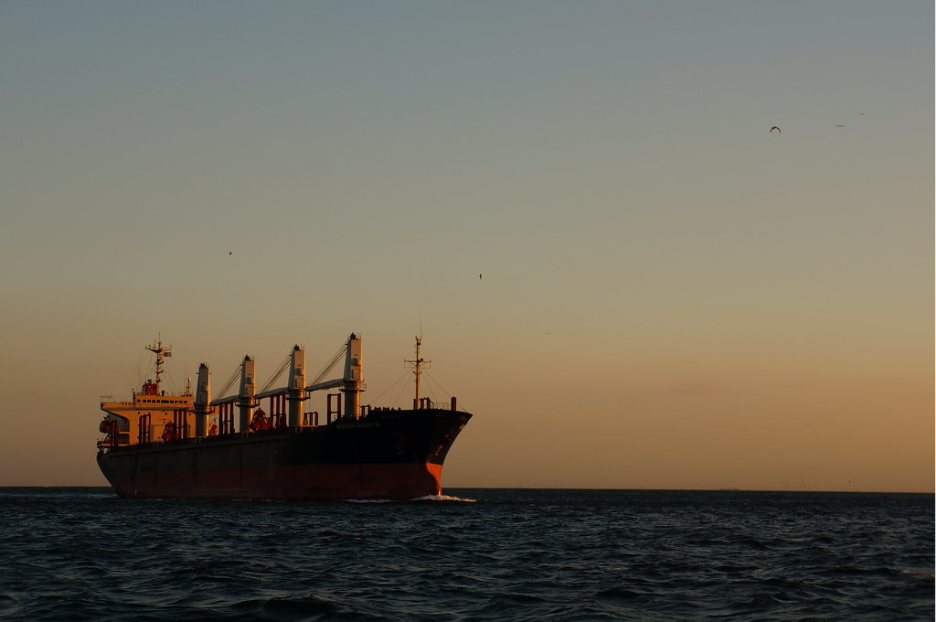
“Oil Tanker in the Bosphorus" by MrHicks46 is licensed under CC BY-SA 2.0.
Ukraine is leveraging its newfound indigenous long-range strike capability to escalate pressure on Russian refineries, export terminals and shadow fleet vessels, aiming to level the fiscal playing field in a war of attrition. Some of the results of the campaign are striking, including the reduction of Russian refining to about 57% of total capacity and inducing Russian export bans on refined products like diesel to contain shortages. However, the campaign has not yet reduced Russian export volumes of crude, so Ukraine has escalated strikes on Russia’s broader industrial economy and shadow fleet vessels in the Black Sea. The kinetic sanctions campaign creates downside risks of divergence between Ukraine and its Western backers, which want to constrain Russian fuel revenues as opposed to supply. Kinetic sanctions in the Black Sea have also created commercial spillovers, intermittently halting the export of Kazakh crude, one of Europe’s main diversification sources, and spiking maritime insurance for civilian sectors. On the upside, Ukrainian strikes on shadow fleet vessels may compel Russia to utilize more vessels covered by Western insurance and the G7 oil price cap.
In today’s full analysis:
Understanding the Scale of Ukraine’s “Kinetic Sanctions” Campaign
Kinetic Sanctions Are Pressuring Both Russia and the West
Risks of Kinetic Sanctions
Or listen to the full report here:

Listen to the news:
Europe
EU home affairs ministers commended Spain’s response to the weekend’s Ceuta incident, which saw the rapid influx of 72,000 people and the deaths of 86 in the rush into Spain’s closest African enclave. The emergency council session emphasized that the free-movement Schengen zone was not at risk and 70,000 of the migrants have since returned to Morocco. Magnus Brunner, the EU Commissioner for Migration, said the influx has been “instrumentalized” by smugglers and human traffickers, but did not comment on a presumed role of Morocco, which cooperates with Spain on migration but is wary of Madrid’s growing relationship with Algeria, a regional rival.
The rhetoric from the home affairs council could cool interstate tensions on migration policy. At the onset of the Ceuta incident, Italy suspended Schengen privileges to Spain, and Italian Prime Minister Giorgia Meloni led a letter signed by 22 other heads of government that implicitly condemned Spain’s relatively liberal migration policies as a possible spark. Now, EU home affairs ministers want to utilize the crisis to strengthen EU coordination on migration policy, such as through better early-warning systems, a strengthened Frontex, faster work on so-called return hubs outside the EU, and other mechanisms to filter out invalid asylum requests. Spain may have strengthened an image of reliability.
Read More: Politico, BBC [paywall], Financial Times [paywall]
Middle East
Türkiye’s government unveiled a draft law meant to finalize the years-long peace process with the Kurdistan Workers Party (PKK). The PKK, a separatist Kurdish armed group, was in active conflict with the Turkish state for decades, but reached a preliminary peace agreement in 2024 (in part due to fading US and Syrian support for Kurdish armed groups following the end of the Syrian civil war). PKK militia members symbolically burned their weapons last year, but a final peace had been stalled over legal details, and some PKK elements remained active.
The bill, which appears likely to pass, aims to progress peace by providing limited amnesty in exchange for verified disarmament. Western media reports indicate that the law will protect “many” former militants from prosecution and suspend prison sentences for many convicted of membership, in exchange for a disarmament and surrender process monitored by Türkiye’s intelligence agency. However, it may not satisfy earlier PKK demands for broad amnesty from prosecution. It also does not appear to address the hot-button issue of the legal status of Abdullah Öcalan, the PKK founder imprisoned by Türkiye since 1999 and who issued initial calls for the group to disband.
Read More: Reuters [paywall], Deutsche Welle, International Crisis Group
Asia-Pacific
China unveiled a series of retaliatory measures today against the US in response to recent US actions targeting Chinese firms. In response to recent US measures, the Ministry of Commerce (MOFCOM) placed seven US entities on its countermeasures list, prohibiting Chinese firms and individuals from conducting transactions or cooperating with them, alleging that six assisted Washington’s UFLPA designations. MOFCOM also tightened export controls on drones and other dual-use items destined for the US and launched a national security investigation into imported printers and copiers equipped with foreign software—the first inquiry initiated under China’s new national security provisions.
The exchange marks another escalation in US-China economic competition and increases pressure on an already fragile trade truce ahead of the September Trump-Xi meeting. The retaliation suggests Beijing is broadening its use of economic and regulatory tools to impose costs on US firms. Meanwhile, Washington has signaled it will continue to expand its own restrictions, with the FCC reportedly preparing to ban imports of new Chinese optical transceivers over security concerns. This escalatory pattern mirrors the weeks leading up to last year’s Busan summit, suggesting the cycle of reciprocal economic and regulatory measures is likely to continue even as diplomatic engagement resumes.
Read More: MOFCOM, MOFCOM, MOFCOM, MOFCOM, Nikkei Asia [paywall], South China Morning Post [paywall], Reuters [paywall]
Americas
The US State Department has revoked the visa of Brazil’s ambassador to Washington. The move was in retaliation after Brazil denied visas to two US officials seeking to visit Brazil ahead of the October elections, and in response to the stalled approval of Trump’s nominee for Washington’s ambassador to Brasilia. A US official confirmed that Brazil’s ambassador, Maria Luiza Ribeiro Viotti, would be able to remain in the US, and her visa would be reinstated if Brazil approves the nomination of Daniel Perez as US ambassador to Brazil.
The visa dispute is the latest in a year of diplomatic tensions between Washington and Brasilia. The Trump administration did not consult Brazil before selecting Perez as ambassador, breaking with a long-held diplomatic norm. In March, Brazilian officials revoked the visa of Darren Beattie, the US policy adviser on Brazil, who they believe planned to visit Jair Bolsonaro under house arrest. Bolsonaro’s son Flavio is challenging current President Luiz Inacio Lula da Silva and has lobbied the Trump administration for support. The recent designation of two Brazilian criminal organizations, the Primeiro Comando da Capital and the Comando Vermelho, came shortly after Flavio Bolsonaro’s visit to the White House. However, recent US tariffs on Brazil have had the effect of increasing Lula’s support in the polls.
Read More: AP, New York Times [paywall], CBS
Africa
Benin inaugurated a second chamber of its parliament to promote greater oversight following years of democratic backsliding. The newly established Senate will oversee proposed changes to the constitution, electoral rules, and laws governing political parties. Benin was among the more politically stable states in West Africa until the election of President Patrice Talon in 2016, who later excluded opposition parties in 2019 and deployed security forces to suppress protests. The election of Romuald Wadagni in April 2026 was comparatively more competitive, although opposition parties continue to express concerns that they are being marginalized.
The struggle to establish democratic institutions follows a trend of rising authoritarianism across West Africa, which risks undermining regional cooperation on security and economic issues. The military coups in the central Sahelian states led to sanctions and political isolation from the Economic Community of West African States. Similarly, continued political instability in Benin could complicate coordination within ECOWAS on shared security priorities, particularly counterterrorism efforts against jihadist groups. Diminished political trust among member states could also hinder economic cooperation, slowing progress on regional trade and investment.
Read More: Radio France Internationale, Atlantic Council, Institute for Security Studies Africa
Geoeconomics
Russia is expanding its shadow shipping system to preserve LNG exports after European sanctions, but the trade is becoming costlier and more concentrated. Moscow added at least eight second-hand LNG carriers in six months, expanding its fleet to 25 before the EU bans Russian LNG in 2027. The EU has accounted for 49 percent of Russian LNG exports since December 2022, compared with 23 percent for China and 18 percent for Japan, while its June purchases remained 14 percent above their year-earlier level. Russia is copying its oil fleet’s use of shell companies, false flags and ship-to-ship transfers, but $300 million LNG carriers require specialized containment, ice capability and compatible terminals. Russian LNG volumes rose 7 percent in June, yet total fossil-fuel volumes increased 7 percent while revenues fell 1 percent to €734 million per day. Exports are holding, but profitability is not.
Russia is also losing customers while Ukrainian strikes damage its refineries. Damascus reportedly told Washington it would sharply reduce Russian oil purchases during talks over US sanctions relief. Deliveries to Syria rose 75 percent this year to about 60,000 barrels per day, but Damascus lacks an immediate replacement. Ukrainian strikes have cut Russian gasoline production by roughly one-quarter; more than two-thirds of Russian regions report gasoline or diesel restrictions, and seaborne oil-product loadings fell 21 percent in June to a record low. Moscow extended its jet-fuel export ban and may restrict diesel, which generated $2.9 billion, 14 percent of Russia’s oil-export earnings, in May. Government payments to keep refiners serving domestic customers jumped from $220 million in the first quarter to more than $2.5 billion in May alone. Each workaround preserves supply by sacrificing revenue or increasing dependence on a few buyers.
Read More: Financial Times [paywall], Reuters [paywall], Centre for Research on Energy and Clean Air, Royal United Services Institute
Disruptive Technology
Texas Governor Greg Abbot announces an effective moratorium on new data centers, ordering the Public Utility Commission of Texas and the ERCOT, the grid operator, to conduct audits on requests for new grid interconnections. Projects will be required to disclose their tax break information, power use and generation, water use and cooling, facility ownership, and impact on local communities. The order follows efforts to create a voluntary disclosure system, which did not take off among data center operators. The order only applies to data centers seeking grid interconnection, so projects utilizing on-site power generation (i.e., through renewables) should be unaffected.
Texas is one of the friendliest states for data centers, but they remain a political flashpoint amid affordability impacts on the electric grid and water use. Requests for interconnection to ERCOT have rapidly risen from 233 GW at the beginning of 2026 to 474 GW; about 90% of the 1,800 projects in the request queue are for data center interconnections. Texas already hosts the second-most data centers in the US behind Virginia, with 335 data centers operating and a further 248 in advanced planning phases. Nonetheless, a red state like Texas following blue states like Maine and New York reflects a more bipartisan and potentially populist backlash against disruptive data center development.
Read More: The Texas Tribune, TechCrunch, Ars Technica
Energy
The Trump administration is planning to revise Obama-era regulations on the Arctic. The US Department of the Interior intends to revise a federal regulation, the 2016 Arctic Exploratory Drilling Rule, governing exploratory oil and gas drilling on Alaska’s Outer Continental Shelf. The proposal, which would be enacted through the Marine Minerals Administration, would “reduce unnecessary regulatory burdens, improve clarity and operational efficiency, and better reflect technological advancements and implementation experience.” Specifically, the proposal would affect oil spill prevention and containment rules.
The proposed change is part of a larger push by the Trump administration to “unleash American energy dominance” and open the Arctic to energy production. On his first day in office, President Trump issued an executive order titled “Unleashing Alaska’s Extraordinary Resource Potential.” The administration has also repeatedly tried to attract companies to bid for exploration rights in the Arctic, with varying degrees of success. An auction in March for rights in the National Petroleum Reserve-Alaska attracted record interest. However, a June auction for oil and gas leases in Alaska’s Arctic National Wildlife Refuge received offers from only two bidders on five tracts out of 58. Reluctance from oil companies to move forward in some parts of the Arctic is due at least in part to the difficulties associated with drilling in conditions that far north.
Read More: Axios, Reuters [paywall], Alaska Beacon, White House, US Department of the Interior, Stepwise Risk Outlook
Transnational Crime and Corruption
Chinese authorities announced a one-year initiative against organized crime. Chen Wenqing, a member of the Chinese Communist Party’s (CCP) Politburo and head of the Central Political and Legal Affairs Commission, told state media that the campaign would target cyber criminals, illegal mining syndicates and corrupt “protective umbrellas” exploited by criminals. Chen cited the effort as part of the national anti-crime campaign launched during the 20th National Congress of the CPC in 2022.
The initiative identified a variety of criminals, translated into English as “bullies,” as the targets of its campaign. The targets indicate various levels of organized crime sophistication, such as village, township and street bullies, as well as “sand bullies” and “mining bullies.” Sand bullies refers to the illicit dredging of rivers and lakes to obtain sand for use in cement manufacturing, damaging natural environments. Last week, authorities from the Nanjing Bureau of National Natural Resources Inspection criticized local city officials in Tongcheng for failing to curb illegal sand mining operations posing as farmland improvement efforts.
Read More: China Daily, China Daily, Foreign Policy [paywall], Reuters [paywall]


Contact Us
Karl Hopkins
Partner
+1 202 429 6499
khopkins@steptoe.com
Melissa B. Mahle
Senior Advisor
+1 202 261 0577
mmahle@steptoe.com
Anni Coonan
Senior Intelligence Analyst
+1 212 506 3979
acoonan@steptoe.com
Samuel Bloebaum
Senior Due Diligence Analyst
+1 602 410 6240
sbloebaum@steptoe.com
Zayna Dembinski
Analyst
+1 202 778 3567
zdembinski@steptoe.com
Thomas Goldstein
Analyst
+1 202 862 6735
tgoldstein@steptoe.com
Ian Cameron
Analyst
+1 202 327 6908
icameron@steptoe.com
Elton Smole
Analyst
+1 202 261 0556
esmole@steptoe.com
Carter Spahn
Intelligence Fellow
+1 202 261 7555
cspahn@steptoe.com
Chris Dantes
Intelligence Fellow
+1 202 327 6904
cdantes@steptoe.com
Legal disclaimer: This Substack is for educational and informational purposes only and does not constitute the rendering of legal counseling or other professional services. Reading, subscribing to, or communicating through this Substack does not create an attorney-client relationship. Do not send confidential information through this platform. Consult qualified legal counsel regarding your specific circumstances.