


Welcome to the Stepwise Risk Outlook, which highlights and contextualizes over-the-horizon developments in key regions of the world and industries of the global market. Today’s featured interview is with Zayna Dembinski, Analyst.

Interview with Zayna Dembinski, Analyst
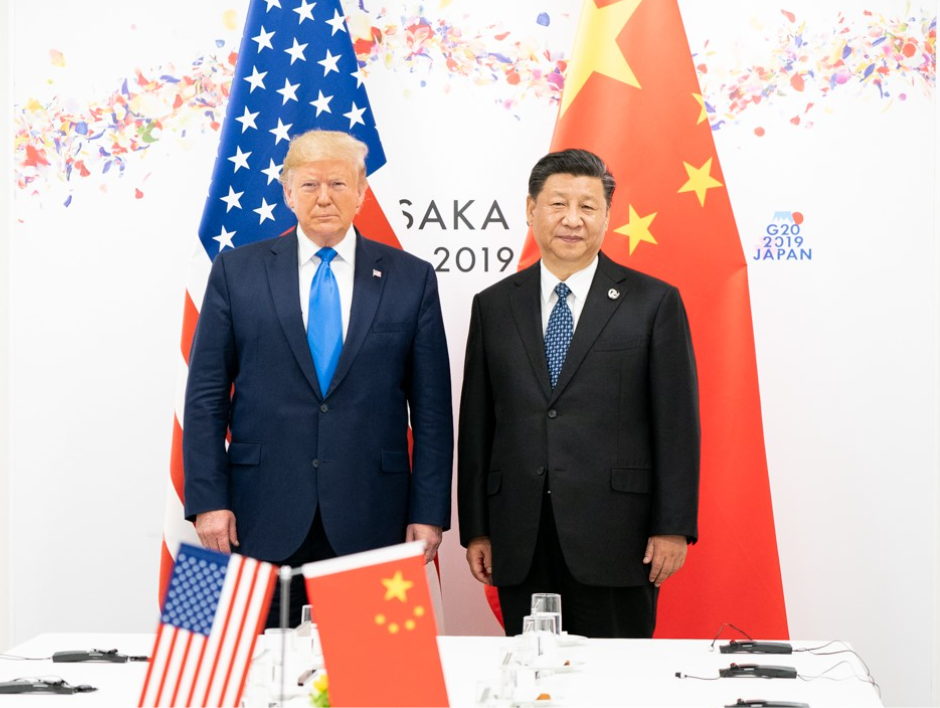
"President Trump at the G20" by National Archives and Records Administration is marked with CC0 1.0.
Zayna Dembinski is an analyst with Steptoe’s Global Strategic Engagement Team with a focus on US foreign policy and Asia-Pacific geopolitics. Zayna provides forward-looking analysis on domestic and geopolitical developments for international clients, providing assessments and key takeaways to guide strategic decisions and stakeholder engagement plans. She speaks and researches in Urdu.
Zayna sat down with Stepwise Editor-in-Chief Anni Coonan to discuss her take on ongoing developments in Asia-Pacific.
Or listen to the full report here:

Listen to the news:
Global
Saudi Arabia, Türkiye and Pakistan signed a defense pact today, seeking to deepen regional security co-operation. In Mecca, the three Sunni Muslim-majority countries agreed to strengthen collective deterrence against rivals; the Mecca Joint Defence Agreement includes a mutual defense clause, with an attack against one considered an attack against them all. Saudi Arabia and Pakistan already have a mutual defense pact, signed last September. The addition of Türkiye, a NATO member, brings in military capabilities and a strong defense industrial sector.
The regional balance of power is shifting, as a consequence of the weakening of the Arab heartland, Israel’s military dominance and Iran’s power projection across the Gulf. Each country faces instability along its borders: Saudi Arabia from Iran and Yemeni Houthis, Pakistan from India and Afghanistan, and Türkiye from Kurdish separatist movements. All three of these countries have invested political equities in de-escalating the Iran war, each critical of Iran, the US and Israel for destabilizing the region. The trilateral framework demonstrates the intention of powerful regional players to assert more influence over the region’s future through a new security architecture.
Read More: Financial Times [paywall], Reuters [paywall], Steptoe Risk Outlook
Europe
German federal police discovered drones laden with improvised explosives at Leipzig Halle airport on Wednesday. The airport is used as a logistics hub for Ukraine’s Antonov cargo planes, some of which had transported munitions earlier in the day and were parked at the airport when the drones were discovered. German Interior Minister Alexander Dobrindt stated that the incident represents a “new threat scenario” and is being investigated as a planned hybrid attack, but he fell short of attributing a specific state actor. Some German officials suspect Russian intelligence services could be connected due to an attempted July 2024 hybrid attack, in which parcels laden with incendiary devices ignited at the Leipzig airport before taking off on a plane. Coinciding with the Leipzig incident, a plane collided with a drone in Hanover but landed safely, and that drone has not been found.
Read More: Politico, Deutsche Welle, Financial Times [paywall]
Middle East
On-the-ground tensions between the Houthis and Saudi-backed forces in Yemen are reigniting alongside maritime escalation. A Houthi attack on military camps in central Yemen on Thursday reportedly killed about 45 government troops, the latest in several recent escalatory steps beyond the renewal of the Houthi blockade on Saudi ships. Last month, Saudi Arabia struck a Houthi airport following alleged arms shipments from Iran, and regional reports indicated that at least 50 Houthi fighters were killed in clashes over Red Sea littoral territory.
Saudi Arabia is reportedly preparing for a potential sea and ground offensive even as it pursues diplomacy. Reports of Saudi troop movements in eastern Yemen earlier this month could indicate planning for a larger-scale intervention against the Houthis, although Riyadh is also reportedly seeking indirect talks to contain the conflict (seen as a major quagmire for Riyadh until the 2022 ceasefire) and reopen the Bab al-Mandeb Strait.
Read More: BBC, Foundation for Defense of Democracies, Al Jazeera, The Guardian, Bloomberg [paywall]
Asia-Pacific
Japan’s 2026 defense white paper presents a strong defense industry as both a strategic necessity and an economic asset, reflecting Tokyo’s growing effort to link industrial policy, technological innovation and national security. The report argues investment in defense is critical to strengthening Japan’s industrial base, supporting startups, and enhancing long-term economic competitiveness. Compared with previous editions, the report places greater emphasis on emerging forms of warfare, highlighting drones, AI-enabled systems, and other dual-use technologies as increasingly central to Japan’s future defense posture.
Beijing sharply criticized the report, accusing Tokyo of promoting a “China threat” narrative and exaggerating regional security risks. While the white paper maintains Japan’s longstanding assessment that China’s external posture and military activities constitute its greatest strategic challenge, its publication comes amid heightened bilateral tensions following Prime Minister Takaichi’s November remarks that Japan could intervene if China attacked Taiwan. Beijing’s response builds on its rhetoric that Japan’s military modernization is not a defensive adjustment but part of a broader shift away from its postwar security posture and reviving its imperial past. Notably, Seoul also protested the white paper’s reiterated claim that Takeshima, known in South Korea as Dokdo, is Japanese territory. The two maintain competing claims to the islets.
Read More: Japan Ministry of Defense, Japan Ministry of Defense, Japan Times, Reuters [paywall], Xinhua, Korea JoongAng Daily, Stepwise Risk Outlook
Americas
The US State Department increased the reward on Wednesday for information leading to the capture of Juan Carlos González (”Pelón”) from $5 million to $25 million. Authorities identified González, the stepson of slain cartel leader Nemesio Rubén Oseguera Cervantes (”El Mencho”), as the new leader of Mexico’s Jalisco New Generation Cartel (CJNG). The State Department also announced more than $100 million in total rewards targeting CJNG leaders. At the same time, the Justice Department unsealed indictments against several senior cartel figures for alleged drug trafficking, firearms offenses, and money laundering. U.S. officials say CJNG remains one of Mexico’s most powerful criminal organizations, with extensive involvement in fentanyl, cocaine, methamphetamine, and heroin trafficking despite recent leadership losses.
The Trump administration has increased pressure on the Mexican government to take stronger action against cartels. US authorities have cited the flow of fentanyl and other drugs into the US as a major national security concern. Washington’s response has paired rewards, sanctions, visa restrictions, and criminal indictments with intelligence-sharing and law enforcement cooperation. While both the US and Mexican governments share an interest in combating organized crime, the active US approach has fueled tensions with Mexico over questions of sovereignty and cross-border security responsibilities in the process of weakening transnational criminal organizations that operate across both nations.
Read More: CBS, NBC, USA Today
Geoeconomics
The Democratic Republic of the Congo has tightened a long-standing ban on copper and cobalt concentrate exports, pressuring miners to process more material domestically. The June 29 order repeals the 2023 framework and its exemptions, takes effect immediately and permits one-year waivers only in undefined “strategic” circumstances. It does not cover all copper and cobalt exports: Congo shipped 696,725 tonnes of copper cathode in Q1 2026, versus 53,926 tonnes of concentrate containing 18,863 tonnes of copper. The immediate supply shock should therefore be concentrated among mines still dependent on waivers, although benchmark copper rose as much as 1.8% after the order became public.
Kinshasa is using its critical mineral mining as industrial policy. Kamoa-Kakula, owned by Ivanhoe Mines, Zijin Mining and the Congolese state, has historically exported some concentrate under waivers, although Ivanhoe says its output is also processed at two domestic smelters. The government wants to retain jobs, tax revenue and value added while strengthening its leverage with Chinese operators and Western governments competing for critical minerals and the Lobito Corridor. Yet similar restrictions since 2013 repeatedly required exemptions because domestic smelting and electricity capacity lagged mine output.
Read More: Reuters [paywall], Ivanhoe Mines, IEA, Chatham House
Disruptive Technology
A Stanford research team announced that it used AI to create an unfound genome of viruses capable of infecting bacteria, not humans. This is a step forward for using AI to design not only proteins but also DNA sequences that encode proteins. The AI models, Evo 1 and Evo 2, still require some inputs from human researchers on related genome clusters to emulate and build upon; otherwise, it may hallucinate a DNA sequence that does not work. For the Stanford study, researchers provided AI with DNA sequences of viruses that infect E. coli, which are single bacterial cells, and sequences from other viruses in the Microviridae group; then AI predicted new genome clusters with related functions to essentially “create” a new virus.
The upside and downside risks of AI-augmented biological research are enormous. On the downside, scientists seeking to weaponize this technology could create viruses that infect complex cells, enabling the creation of biological weapons that have not been experienced before. AI is also becoming more powerful. Frontier AI developers all disclosed incidents in July where models escaped their testing environment and hacked third parties; and theoretically, AI could become so powerful that it goes “rogue” and interprets new workarounds on safeguards. Politically, “gain of function” research is increasingly unpopular. On the upside, research into unfound viruses could significantly accelerate the speed of medical breakthroughs and vaccines to mutated diseases.
Read More: Axios, Ars Technica, The Wall Street Journal [paywall]
Energy
Europe’s gas storage levels are at historic lows as the continent prepares to head into the winter. The last time Europe’s gas levels were this low, slightly under 58% full, at this point in the year was in 2011. Last year they were at approximately 70% capacity by early August. This potentially leaves Europe open to energy security issues in the winter that are reminiscent of the winter gas crisis that followed Russia’s invasion of Ukraine. In response to that crisis, the EU created a target to fill storage capacity to 80% by December.
While Europe uses less gas than it did in 2022, more of that gas is LNG, which opens Europe to price spikes. The closure of the Strait of Hormuz has taken the 20% of global LNG supplied by Qatar off the market, which has raised global prices and complicated Europe’s search for LNG heading into winter. Markets have been in backwardation, where near-term gas costs more than winter gas, which in turn disincentivizes building storage levels for sale in winter. Prices are already high, reaching 60 euros per megawatt-hour in June. Price estimates vary significantly for winter, but depending on how shipping in the Strait of Hormuz develops, European gas prices could hit very high levels. However, analysts say there is relatively little danger of Europe’s gas supplies running completely dry.
Issues with natural gas can potentially compound with other challenges to European energy infrastructure and security. Extreme weather this summer has forced nuclear power plants offline at the same time it has spiked electricity demand due to heat waves.
Read More: Reuters [paywall], Oilprice.com, New York Times [paywall]
Transnational Crime and Corruption
US Treasury Secretary Scott Bessent announced a crackdown on illicit financial activities by transnational criminals. At a conference of Arizona community bankers on Thursday, Bessent warned that smaller financial institutions bordering Mexico were especially exposed to abuse by cartels and criminal organizations. The announcement built on initiatives from the Financial Crimes Enforcement Network (FinCEN) and the Office of the Comptroller of the Currency (OCC) to identify and shut down financial activities linked to illegal migration, shell companies and payroll tax evasion.
The Treasury efforts support the implementation of the executive order “Restoring Integrity to America’s Financial System” from May. The order sought to strengthen know your customer rules and risk ratings for borrowers without work authorization. New due diligence rule proposals are due from financial regulators in mid-August. A customer identification proposal is due in mid-November.
Read More: Department of the Treasury, Arizona Republic [paywall], CBS News
Defense
European governments are becoming increasingly skeptical of American ITAR regulations on arms. European capitals increasingly see the US’ International Traffic in Arms Regulations (ITAR), which restricts how foreign governments can sell or transfer weapons that contain certain components from the US, as a significant factor in arms procurement decisions. European governments are likewise concerned that ITAR could create complications if the US government has political objections to a foreign government’s defense and foreign policy decisions. Some industry players in Europe are already using “ITAR-free” as a way to promote their products and better compete with American defense firms. However, producing items that are free of US components can be easier said than done, and there are also some products and systems that are largely unavailable outside of the US.
There is a larger trend of European governments trying to boost their own technological sovereignty and defense industrial capacity. European firms are looking to diversify away from reliance on American firms in sensitive areas that involve national security data, intelligence, and law enforcement. Earlier this year, France and Germany announced plans to jointly develop a “European sovereign digital backbone” that could replace American vendors in sensitive areas of government. Moreover, both the French and German intelligence agencies opted for European companies over American competitors.
Read More: Breaking Defense, Politico, Stepwise Risk Outlook


Contact Us
Karl Hopkins
Partner
+1 202 429 6499
khopkins@steptoe.com
Melissa B. Mahle
Senior Advisor
+1 202 261 0577
mmahle@steptoe.com
Anni Coonan
Senior Intelligence Analyst
+1 212 506 3979
acoonan@steptoe.com
Samuel Bloebaum
Senior Due Diligence Analyst
+1 602 410 6240
sbloebaum@steptoe.com
Zayna Dembinski
Analyst
+1 202 778 3567
zdembinski@steptoe.com
Thomas Goldstein
Analyst
+1 202 862 6735
tgoldstein@steptoe.com
Ian Cameron
Analyst
+1 202 327 6908
icameron@steptoe.com
Elton Smole
Analyst
+1 202 261 0556
esmole@steptoe.com
Carter Spahn
Intelligence Fellow
+1 202 261 7555
cspahn@steptoe.com
Chris Dantes
Intelligence Fellow
+1 202 327 6904
cdantes@steptoe.com
Legal disclaimer: This Substack is for educational and informational purposes only and does not constitute the rendering of legal counseling or other professional services. Reading, subscribing to, or communicating through this Substack does not create an attorney-client relationship. Do not send confidential information through this platform. Consult qualified legal counsel regarding your specific circumstances.