


Welcome to the Stepwise Risk Outlook, which highlights and contextualizes over-the-horizon developments in key regions of the world and industries of the global market. Today’s featured deep dive by Zayna Dembinski examines Australia and India's defense policy amid the development of a more networked Asia-Pacific security architecture.

How India and Australia Are Navigating a Securitized Asia-Pacific
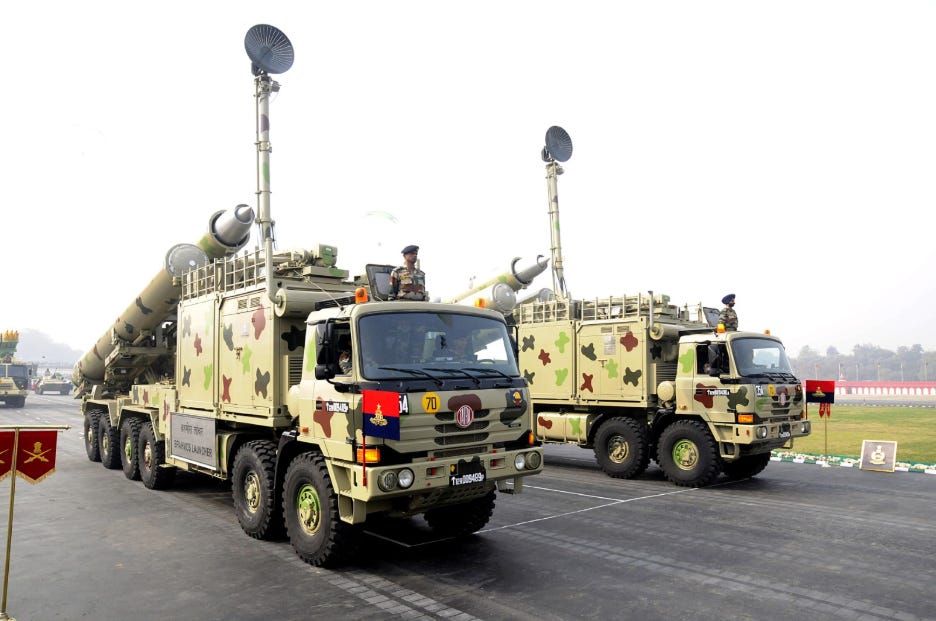
"BRAHMOS Launcher" by Hemantphoto79 is licensed under CC BY-SA 3.0.
The Asia-Pacific region is entering a new phase of security as middle powers like India and Australia respond to heightened regional threat perceptions set off by renewed worries of China’s expanding military capabilities and reach. The long-range ballistic missile launched into the South Pacific last week by China acted as more than an isolated demonstration; it illustrated a broader regional trend. As China’s military capabilities expand, Asia-Pacific states are strengthening defense cooperation, investing in indigenous defense industries and diversifying security partnerships. India and Australia provide two examples of how middle powers are contributing to this trend through expanded arms exports and regional security partnerships. These developments point toward a more networked Asia-Pacific security architecture with important implications for defense markets and businesses.
In today’s full analysis:
Escalating Regional Threat Perceptions
India’s Defense Exports and Australia’s Defense Diplomacy
Future Outlook and Business Implications

Global
The US launches diplomatic effort to isolate the International Criminal Court. According to the State Department press release, the US is adopting a whole-of-government response to “systematically disable the ICC’s ability to operate, target American servicemen or officials, or otherwise threaten American sovereignty.” The US announced plans to revoke visas and impose travel bans and sanctions on ICC personnel. Nations that cooperate with the ICC may put at risk US assistance. Partners who enjoy the benefits of the US security umbrella are called on to reject the ICC’s claimed authority to prosecute American officials and servicemen.
The US has never been a member of the ICC. The US regards the prosecution of its citizens before an international body without US consent as a violation of its sovereignty. Over the years, the US has adopted different approaches to protect Americans, from seeking exemptions from the UN for peacekeeping forces, to engaging the court to influence operations, ignoring court communications and, more recently, imposing sanctions.
The ICC was set up in 1998, with a mandate to prosecute those responsible for the most serious international crimes: war crimes, crimes against humanity, and genocide. The ICC has jurisdiction to prosecute crimes committed by nationals of member states, but also crimes committed on the territory of member states, even if those responsible are citizens of a country that is not a member of the court.
Read More: US Department of State, Reuters [paywall], Congressional Research Services
Europe
Ukrainian President Volodymyr Zelenskyy recently announced a reshuffle of the Ukrainian government. The reshuffle is reportedly a result of corruption allegations against Ukraine’s current ambassador to the United States, Olga Stefanishyna. Current Ukrainian Prime Minister Yulia Svyrydenko is seemingly set to succeed Stefanishyna as Ukraine’s representative in Washington, although that is not yet confirmed. It is unclear who will replace Svyrydenko, but there are several potential candidates such as the head of Ukraine’s state energy companies, Ukraine’s current Minister of Defense, or the current Energy Minister. Any shakeup that moves Mykhailo Fedorov out of the Ministry of Defense would be controversial given his popularity and the perception that he’s been highly competent in the role. There had been expectations of a reshuffle for months, with the expectation it would happen in the Fall, but the sudden announcement came as a surprise.
Corruption has been an ongoing problem for Zelenskyy’s government that creates larger foreign policy issues for Kyiv. In late 2025, Zelenskyy’s powerful chief of staff resigned as part of a larger corruption scandal involving the businessman Timur Mindich, which centered around the state nuclear power company Energoatom. The scandal also implicated high-level politicians such as ex-ministers Herman Halushchenko and Rustem Umerov. In 2025 Zelenskyy tried to establish control over Ukraine’s anticorruption agencies, a move that triggered street protests and strong backlash from Brussels. Ukraine’s progress on anti-corruption policies and major corruption scandals have direct implications both for Ukraine’s political climate and future elections as well as for its relationship with the EU.
Read More: Politico EU, Kyiv Independent, New York Times [paywall], Kyiv Independent, Kyiv Independent, Atlantic Council
Middle East
Houthi officials declared an end to de-escalation with Saudi Arabia on Monday after Yemen’s international airport in Sanaa was bombed. The Saudi-backed Yemen government claimed to have conducted the attack to prevent an Iranian plane from landing in Yemen. The plane was returning with a Houthi delegation that attended Ayatollah Ali Khamenei’s funeral. Saudi and anti-Houthi Yemeni officials alleged the plane was carrying Iranian military assets and advisors. The Houthis accused Saudi Arabia of carrying out the bombing and claimed to have launched ballistic missiles at a Saudi airport in retaliation.
The attacks mark a rare flare-up in the Saudi-Houthi conflict since the parties reached a truce in 2022. Tensions have been rising since the same Iranian plane was confronted by Saudi fighter jets on its way to Sanaa on July 3. Conflict between Saudi Arabia and Yemen poses renewed threats to shipping in the Red Sea just as the US and Iran have reimposed blocks to shipping traffic through the Strait of Hormuz. Saudi Arabia reportedly sought approval from the US prior to the military strikes.
Read More: Financial Times [paywall], New York Times [paywall], Reuters [paywall], Axios, Responsible Statecraft
Asia-Pacific
Japan will establish its first centralized intelligence agency since World War II as it seeks to counter foreign interference and strengthen national security. Postwar pacifist Japan, skeptical of state surveillance under imperialism, has relied on a fragmented system and close cooperation with the US for its intelligence gathering. The reform aligns with Prime Minister Takaichi’s broader effort to expand Japan’s security capabilities, building on initiatives championed by her mentor, former Prime Minister Abe. Since Takaichi took office, Japan has approved its largest postwar defense buildup and eased restrictions on weapons exports.
The move comes amid growing security concerns from China, North Korea, and Russia. The New York Times on Sunday reported weaknesses in Japan’s espionage laws have allowed a Russian military intelligence network to use the country as a hub for acquiring sensitive technology, with Japanese-made components reportedly appearing in 90% of Russian missiles and drones. Simultaneously, Tokyo’s tensions with Beijing remain elevated following Takaichi’s remarks on Taiwan in November, while the security threat from Pyongyang continues as it pushes to advance its nuclear and military capabilities. As strategic cooperation among China, North Korea, and Russia deepens, Tokyo appears increasingly convinced that a more centralized intelligence apparatus is necessary to monitor and respond to evolving regional threats.
Read More: New York Times [paywall], New York Times [paywall], The Japan Times, Korea JoongAng Daily
Americas
The US government has awarded nearly $3 million in compensation to current and former federal employees affected by Havana Syndrome. This marks the first payment made under the Havana Act, which was signed into law in 2021. The condition was first reported in 2016 among US diplomats and intelligence officers stationed in Havana. Since then, similar “anomalous health incidents” have been reported by American personnel in multiple countries. Those affected have described symptoms ranging from dizziness, nausea, and severe headaches to hearing unexplained sounds and experiencing intense pressure sensations. Some have also reported long-term neurological effects.
In a statement released on Friday, the Department of War said it remains committed to supporting personnel affected by Havana Syndrome and related incidents. Officials emphasized that the department would continue to prioritize transparency and scientific integrity in its research efforts, improve care for affected individuals, and adapt to an evolving operational environment. The department emphasized its commitment to mitigating non-kinetic threats.
The latest developments reflect Washington’s efforts to respond to the unresolved cases despite continued uncertainty. For years, speculation centered on the possibility of attacks using directed-energy or microwave-based weapons. However, a 2025 assessment by the US intelligence community concluded that it was “very unlikely” a foreign actor had used a novel weapon to harm US personnel, though some agencies stopped short of fully dismissing the theory. The issue remains sensitive for US diplomatic and intelligence agencies.
Read More: BBC, Voz, Department of War
Geoeconomics
Senegal is in a serious hidden-debt crisis. An audit commissioned after President Bassirou Diomaye Faye took office uncovered an estimated $7 billion to $13 billion in previously unreported borrowing accumulated under former President Macky Sall. Senegal’s debt-to-GDP ratio subsequently jumped from below 75% to more than 132%, forcing the government to freeze infrastructure projects, abandon promised energy-price reductions and cut health spending. A default remains possible unless Dakar secures new financing or restructures its obligations, but either course could require politically explosive austerity measures.
Senegal’s sovereign debt emergency is becoming a contest over economic autonomy and external influence. Faye favors an IMF-led restructuring, but his former prime minister, Ousmane Sonko, portrays its likely conditions, including subsidy reductions and spending cuts, as a surrender of sovereignty, and now leads a parliament capable of blocking the president’s budget and debt legislation. Prolonged deadlock could force Dakar to borrow on increasingly unfavorable terms, heightening default risk and transmitting financial stress through the West African Economic and Monetary Union. The outcome will also shape the regional balance of influence: meaningful relief could preserve the credibility of the IMF, World Bank and Western partners, while severe austerity could strengthen sovereigntist forces that reject Western institutions and favor alternative creditors and alignments.
Read More: Foreign Affairs [paywall], Reuters [paywall], Carnegie Endowment for International Peace
Disruptive Technology
Yesterday, the European Commission’s Special Panel on Child Safety Online recommended a minimum age for social media. The panel suggested that social media restrictions, similar to the “social media delay” in Australia, would improve children’s rights online but would require a societal shift in perspective. Like restricting rights to drive or buy alcohol, the panel envisions a digital ecosystem that is unlocked as children get older. Several European countries, including France and Denmark, are considering their own various proposals, compelling harmonization at the EU-level to improve the integrity of rules across the bloc. The European Commission is backing time restrictions for children under 13 and gradual access to additional platforms.
Regulating addictive online platforms is broadly popular within the EU, but could risk adding to tech frictions with the US. The EU is unlikely to adopt a blanket social media ban due to skepticism from tech-friendly capitals like Dublin, but 92% of EU citizens believe that strengthening child protections online should be a priority. However, the US may view social media restrictions as further discriminatory measures against its tech companies; notably, it warned the UK from taking similar action to restrict under-16s from social media. The US supports a lighter approach to social media governance, in which tech companies have a duty to mitigate harms to children and improve age verification.
Read More: European Commission, AP, Politico
Energy
OPEC is lowering its projections for 2026 oil demand growth. OPEC has revised its projections for global demand growth down to 780,000 barrels a day, a fall from 970,000 bpd in its last assessment. This marks the third straight downward revision from OPEC’s monthly reports. However, estimates for demand growth vary wildly between different organizations. The International Energy Agency (IEA) and the U.S. Energy Information Administration both expect contractions in demand this year of between 1 million bpd and 1.2 million bpd. In contrast to these projections, OPEC’s forecast for 2027 is optimistic, and the organization raised its forecast for 2027.
Global energy markets remain highly unstable, although prices are still holding well below their previous high point this year. Since the resumption of hostilities, Brent prices have been strongly trending upwards, but prices on July 13 were below $84 per barrel. Changes in the global political and conflict landscape will have a significant impact on how demand develops going forward, specifically regarding the US-Iran conflict and Ukraine’s war with Russia. OPEC forecast that “moderations in geopolitical tensions” could have some benefits for global demand growth in the second half of 2026.
Read More: Reuters [paywall], Oilprice.com, Wall Street Journal [paywall]


Contact Us
Karl Hopkins
Partner
+1 202 429 6499
khopkins@steptoe.com
Melissa B. Mahle
Senior Advisor
+1 202 261 0577
mmahle@steptoe.com
Anni Coonan
Senior Intelligence Analyst
+1 212 506 3979
acoonan@steptoe.com
Samuel Bloebaum
Senior Due Diligence Analyst
+1 602 410 6240
sbloebaum@steptoe.com
Zayna Dembinski
Analyst
+1 202 778 3567
zdembinski@steptoe.com
Thomas Goldstein
Analyst
+1 202 862 6735
tgoldstein@steptoe.com
Ian Cameron
Analyst
+1 202 327 6908
icameron@steptoe.com
Elton Smole
Analyst
+1 202 261 0556
esmole@steptoe.com
Carter Spahn
Intelligence Fellow
+1 202 261 7555
cspahn@steptoe.com
Chris Dantes
Intelligence Fellow
+1 202 327 6904
cdantes@steptoe.com
Legal disclaimer: This Substack is for educational and informational purposes only and does not constitute the rendering of legal counseling or other professional services. Reading, subscribing to, or communicating through this Substack does not create an attorney-client relationship. Do not send confidential information through this platform. Consult qualified legal counsel regarding your specific circumstances.