

Welcome to the Stepwise Risk Outlook, which highlights and contextualizes over-the-horizon developments in key regions of the world and industries of the global market. Today’s featured deep dive by Carter Spahn examines how to identify and define national security investments.

Principles of National Security Investing
By Carter Spahn
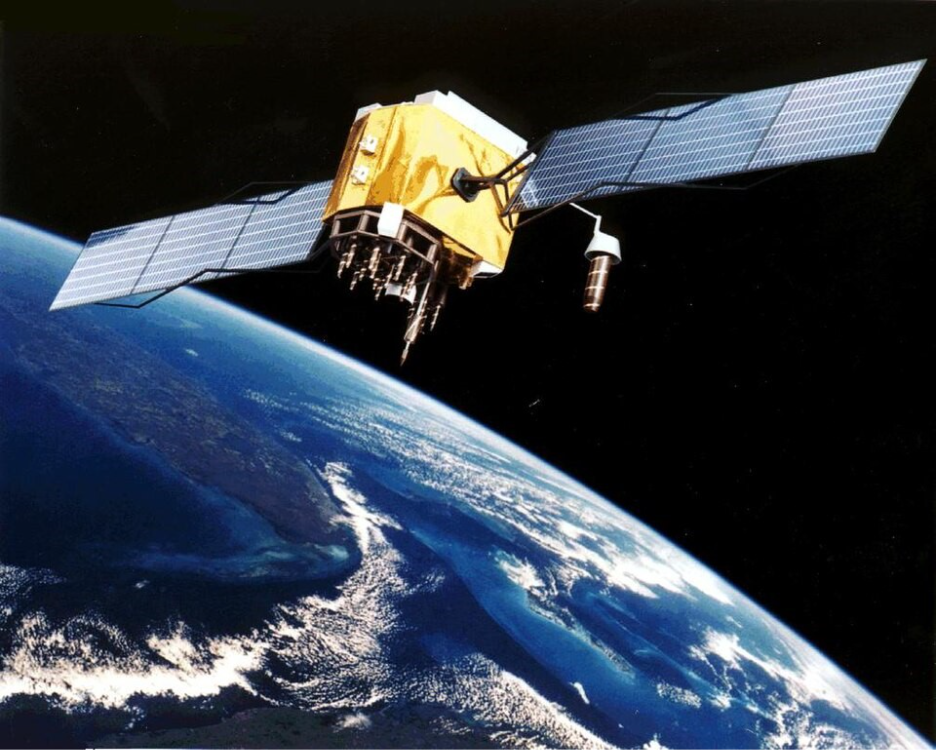
“Artist’s conception of GPS Block II-F satellite in Earth orbit” by NASA is marked with Public Domain Mark 1.0.

National security investing is attracting capital, yet it remains poorly defined as an investment category. Global venture investment in defense technology rose 75 percent from 2024 to 2025, while private funds increasingly extend the national security label to artificial intelligence, critical minerals, energy, advanced manufacturing and supply-chain resilience. Some investments in these fields definitively strengthen national security. Others primarily pursue attractive markets, domestic jobs, technological leadership or economic growth and produce, at most, an incidental security benefit. As more funds and companies characterize broad portions of their activity as national security investing, the term risks becoming a marketing device rather than a meaningful investment category.
If the distinction is not clarified, fund managers risk allocating capital under the pretense of helping protect a nation and generating a return, while the investment only does the latter. This misallocation could deceive investors and reduce the fund’s credibility. Further, governments need to know whether the private sector is financing a security capability or if they need to provide liquidity to entities and projects that are unable to secure it in the private markets. Misleading headline “national security investment” numbers due to security-washed transactions will create financing-blind spots. A rigorous qualification process is therefore necessary to identify national security investments: one broad enough to recognize essential infrastructure and enabling capabilities outside traditional defense technology, but narrow enough to exclude investments whose security connection is remote, speculative, immaterial or manufactured.
For private investors, the analysis begins with four questions:
Was national security part of the investment thesis from the outset?
What threat and security issue does the investment address?
Will this particular transaction materially create, preserve, expand, harden or assure access to the capability?
Are trusted substitutes inadequate under the relevant contingency?
If utilized, the following set of principles operates as a sequence of assessments to answer said questions, allowing investors to determine if an investment fits a national security mandate.
In today’s full analysis:
The Seven Principles
National Security Returns and Investment Returns are Separate Judgments

Global
Fighting hits shipping in second major waterway, disrupting energy and agriculture supply chains. Ukrainian forces have launched a campaign aimed at disrupting Russian logistics in the Sea of Azov. Ukraine is using naval and air drones to disable vessels transporting oil and petroleum products, limiting Moscow’s ability to supply its forces in occupied Crimea. Ukrainian forces struck a total of 76 merchant vessels between July 6 and 11, and the campaign is ongoing. Maritime traffic along the Don River, in the Sea of Azov and parts of the Black Sea has sharply declined, according to tracking data of AIS transponders.
Grain exports from both Russia and Ukraine risk disruption, reminiscent of the early days of the war. Russia’s leading grain-producing regions, Rostov and Krasnodar, lie along the Sea of Azov. The country’s second-largest port in the Black Sea region is located on the Kerch Strait, a key target of Ukrainian attacks. Russian forces are retaliating against Ukrainian ports. Strikes on port infrastructure in the Odesa and Chornomorsk regions severely disrupt Ukraine’s agricultural export corridors. The grain harvest has just begun, with trucks transporting just-harvested grain to ports backing up, creating bottlenecks, which risk rippling through the global supply chain.
Read More: Financial Times [paywall], Institute for the Study of War, Reuters [paywall]
Europe
On Monday, ten European countries agreed to establish the Integrated Anti-Ballistic Missile (IABM) Coalition. France, Denmark, the UK, Germany, Italy, the Netherlands, Norway, Spain, Sweden, and Ukraine have jointly agreed to coordinate the rapid development of a defensive anti-ballistic missile capability that is not dependent on American systems, like Patriot PAC-3 interceptors. The flagship project will be dedicated to scaling Ukraine’s Freyja system, which is a redesign of Fire Point’s offensive FP-7 ballistic missile. Ukrainian President Volodymyr Zelenskyy has described Russia’s ballistic missile threat as its “last advantage” in the war; in recent attacks, Ukraine has been unable to intercept any ballistic missiles.
The IABM partnership seeks to leverage defense industrial comparative advantages. Ukraine has unlocked the scale to potentially rapidly produce missiles at $700,000 per round, much cheaper than the Patriots’ cost of $3.8 million. However, Ukraine’s Freyja lacks the support of the radar, sensing, and command and control systems to ensure accurate warning and targeting. European defense primes from France, Norway, Germany, and others could assist with this.
There are obstacles to mass-producing interceptors in Ukraine. First, any factory producing missiles, a high-value target, will be difficult to hide or decentralize. Second, the nine NATO allies in the IABM coalition will need to negotiate workshare. Different national champions could argue that their systems should be the next flagship project; moreover, those companies may compete for production rights if the Freyja becomes licensed. Other attempts at European defense collaboration, such as in the design and production of a sixth-generation fighter jet, have recently faltered.
Read More: Elysee, Breaking Defense, Army Recognition
Middle East
US-brokered negotiations between Israel and Lebanon are working towards limited Israeli withdrawals. Israel announced Tuesday that it was willing to implement “pilot zones” in southern Lebanon where Hizballah would be disarmed, Israeli military forces would withdraw, and the Lebanese military would take over security operations. Israel currently occupies a 10km “buffer zone” in southern Lebanon. The fate of the buffer zone is controversial in Israel, where parts of Prime Minister Benjamin Netanyahu’s coalition have demanded a permanent military presence to deter future attacks by Hizballah.
The sticking point in the negotiations is the sequencing of Israeli withdrawal, Hizballah disarmament and Lebanese redeployment. Lebanese President Joseph Aoun demanded an immediate Israeli withdrawal from the pilot zones to allow for disarmament operations by the Lebanese military. Israeli officials instead want to verify the destruction of Hizballah military infrastructure before withdrawing from the zones. President Trump reportedly personally intervened to encourage Israel to redeploy troops from the pilot zones.
Read More: Axios, New York Times [paywall], Reuters [paywall]
Asia-Pacific
As Singapore prepares to assume the ASEAN chairmanship in 2027 from the Philippines, the leaders of both countries met to discuss the future of the regional bloc and their bilateral ties. Philippine President Ferdinand Marcos Jr. arrived in Singapore yesterday for a three-day working visit and met his counterpart today. The two leaders reaffirmed their commitment to maintaining a peaceful, stable and prosperous Association of Southeast Asian Nations (ASEAN). They also discussed expanding trade, advancing AI cooperation, attracting investment and strengthening health and social development. Singapore is one of the Philippines’ largest foreign investors. Foreign direct investment remains a key challenge for the Philippines, which attracted just US$9 billion last year of ASEAN’s total US$244 billion. Political instability in the Philippines has continued to weigh on investor confidence.
Singapore’s priorities for its 2027 ASEAN chairmanship include digital and AI integration, energy resilience, climate action and stronger external partnerships. The city-state aims to support small and medium-sized enterprises and develop a shared regional AI ecosystem by leveraging Southeast Asia’s rapidly growing digital population. However, ASEAN continues to face internal challenges, including tensions along the Cambodia-Thailand border, the ongoing crisis in Myanmar and external energy shocks. The bloc made a breakthrough on Sunday by holding its first face-to-face meeting with Myanmar representatives since the 2021 coup, although no concrete outcomes emerged as members failed to reach a common position. Balancing ambitious goals with ASEAN’s longstanding challenges will test Singapore’s ability to deliver meaningful and tangible outcomes during its chairmanship.
Read More: Inquirer, ASEAN, The Straits Times, South China Morning Post [paywall], S&P Global
Americas
Four members of the US House of Representatives concluded a four-day congressional delegation to Cuba on Monday. Maxine Dexter (OR-03), Mark Pocan (WI-02), Teresa Leger Fernández (NM-03), and Delia C. Ramirez (IL-03) met with President Miguel Díaz-Canel, government officials, entrepreneurs, medical professionals, religious leaders, farmers, and civil society groups. Following the visit, the lawmakers criticized the Trump administration’s energy embargo and broader sanctions regime, highlighting Cuba’s economic and humanitarian challenges. In a joint statement, the delegation said they traveled to assess the impact of US policies on ordinary Cubans, citing widespread electricity shortages, food scarcity, and difficulties facing the island’s private sector.
On Monday, the US Treasury Department imposed new sanctions on Cuba’s tourism ministry. The new sanctions also cover two state-owned companies: Grupo Empresarial de Transporte Maritimo Portuario (GEMAR) and Grupo Empresarial del Comercio Exterior (GECOMEX). This comes amid continued uncertainty over US-Cuba relations and the future of the Trump administration’s pressure campaign against Havana. While both governments have acknowledged recent contacts between officials, neither side has indicated progress toward easing restrictions or reopening formal negotiations. The congressional delegation called for greater engagement and dialogue between the two countries, arguing that current policies are worsening economic conditions without producing meaningful political change.
Read More: AP, House of Representatives, Al Jazeera
Africa
US and Nigerian forces stated that leadership decapitation strikes have significantly disrupted ISWAP operations in Nigeria. US AFRICOM reported that the killing of Abu-Bilal al-Minuki and other leaders of Islamic State West Africa Province (ISWAP) “destroyed critical logistical infrastructure.” Following this operation, Nigerian troops dismantled command and logistics hubs, further eroding the group’s capabilities. As a result, ISWAP fighters have reportedly surrendered as others struggle to find new leadership, damaging morale and slowing the tempo of its operations.
The US-Nigeria intelligence and counterterrorism partnership has produced early successes, but threats in the country’s northeast persist. Boko Haram remains an enduring challenge in Nigeria, and although ISWAP’s capabilities have been degraded, jihadist groups have historically demonstrated the ability to reconstitute following leadership losses. This underscores the resilience and adaptability of extremist movements despite strategic setbacks.
Read More: Africa Defense Forum, Africa Defense Forum, ISS Africa
Geoeconomics
US inflation cooled sharply in June, although falling energy prices accounted for most of the improvement. The Consumer Price Index declined 0.4% from May, the largest monthly decrease since April 2020, and annual inflation fell from 4.2% to 3.5%, below the 3.8% consensus forecast. Energy prices dropped 5.7% as gasoline fell 9.7%, reversing part of the surge caused by the US-Iran conflict; however, energy and gasoline remained 15.7% and 26.7% more expensive, respectively, than one year earlier. Food prices continued rising by 0.2% for the month and 3% annually. The report shows households received meaningful short-term relief at the gas pump, but less improvement in recurring household expenses: real average hourly earnings remained 0.1% below their June 2025 level.
Underlying inflation also slightly weakened. Core CPI was unchanged in June and slowed from 2.9% to 2.6% annually; shelter rose just 0.1%, its smallest monthly increase since January 2021, while core goods prices dropped 0.1% for a second consecutive month. Those figures suggest that housing inflation is finally easing and that much of the earlier tariff pass-through into consumer goods may have run its course. More importantly, the ceasefire-driven drop in oil prices has already been overtaken by renewed fighting with Iran, creating a pathway for higher fuel and transportation costs to feed back into core inflation. Markets now expect the Federal Reserve to hold rates at 3.5%–3.75% in July but assign roughly a 60% probability to a September increase.
Read More: Bureau of Labor Statistics, Financial Times [paywall]
Energy
The White House is showing interest in scaling up its energy partnership with Baghdad. Shortly before a meeting with Iraqi Prime Minister Ali al-Zaidi, US President Donald Trump declared that the US would be deepening its energy cooperation with Iraq on oil. Specifically, Trump appears to want American companies to have more access to Iraq’s oil reserves, and he told reporters that the US was “going to be taking out a lot of oil” in the country. Baghdad recently allowed a preliminary agreement to investigate strategic oil export pipeline projects, with US companies involved in the agreement.
In recent months, Iraq has chafed at the limits put on its oil production by OPEC. Baghdad has reportedly floated the possibility of leaving OPEC if it is unable to receive higher quotas for oil production. During his meeting with Trump, al-Zaidi stated that Iraq needs a fair share within OPEC after being asked about the potential for Iran to exit the group.
Trump has given al-Zaidi significant political support over the last year. Following Iraq’s parliamentary elections in 2025, Trump pushed for al-Zaidi to be appointed as Iraq’s prime minister. In turn, his visit to Washington was al-Zaidi’s first international trip since taking office, and al-Zaidi has referred to Iraq’s partnership with the US as “the most strategic partnership in the world.”
Read More: Reuters [paywall], Reuters [paywall], The Hill, Atlantic Council
Transnational Crime and Corruption
New US sanctions on Monday targeted Eastern European cyberattack software providers. The US Office of Foreign Assets Control (OFAC) designated a Ukraine-based VPN provider, its administrator, and a Belarusian ransomware developer. The three designees were accused of actively supporting cyberattacks on critical US infrastructure and providing tools used by hackers to remain anonymous.
The US sanctions were coordinated with EU and UK designations against Russian state-linked cybercriminals. The sanctions targeted Russian military intelligence officers, affiliated hackers and private companies that support cyberattacks. EU and UK officials accused Russia of orchestrating decades-long cyber campaigns to undermine critical infrastructure, governmental organizations and military installations across Europe. The UK specifically alleged that official from the GRU, Russia’s military intelligence agency, worked with cybercriminals to recruit hackers and university-trained cyber specialists.
EU and UK sanctions also targeted the developers of malware and ransomware used in cyberattacks by Russian intelligence and nonstate criminals. State and nonstate cyberattacks often rely on “malware-as-a-service” entrepreneurs, who develop sophisticated malware and cyberweapons sold and shared to a global customer base of less skilled criminals. These semi-private entrepreneurs also provide a degree of plausible deniability for state-backed cyberattacks.
Read More: Wall Street Journal [paywall], US Treasury, UK Foreign, Commonwealth & Development Office, European Council, Atlantic Council


Contact Us
Karl Hopkins
Partner
+1 202 429 6499
khopkins@steptoe.com
Melissa B. Mahle
Senior Advisor
+1 202 261 0577
mmahle@steptoe.com
Anni Coonan
Senior Intelligence Analyst
+1 212 506 3979
acoonan@steptoe.com
Samuel Bloebaum
Senior Due Diligence Analyst
+1 602 410 6240
sbloebaum@steptoe.com
Zayna Dembinski
Analyst
+1 202 778 3567
zdembinski@steptoe.com
Thomas Goldstein
Analyst
+1 202 862 6735
tgoldstein@steptoe.com
Ian Cameron
Analyst
+1 202 327 6908
icameron@steptoe.com
Elton Smole
Analyst
+1 202 261 0556
esmole@steptoe.com
Carter Spahn
Intelligence Fellow
+1 202 261 7555
cspahn@steptoe.com
Chris Dantes
Intelligence Fellow
+1 202 327 6904
cdantes@steptoe.com
Legal disclaimer: This Substack is for educational and informational purposes only and does not constitute the rendering of legal counseling or other professional services. Reading, subscribing to, or communicating through this Substack does not create an attorney-client relationship. Do not send confidential information through this platform. Consult qualified legal counsel regarding your specific circumstances.