

Welcome to the Stepwise Risk Outlook, which highlights and contextualizes over-the-horizon developments in key regions of the world and industries of the global market. Today’s featured deep dive by Samuel Bloebaum examines US and EU sanctions on Sudan's gold exports.

The Gold Nile: Sudan’s Civil War and the Gold Trade
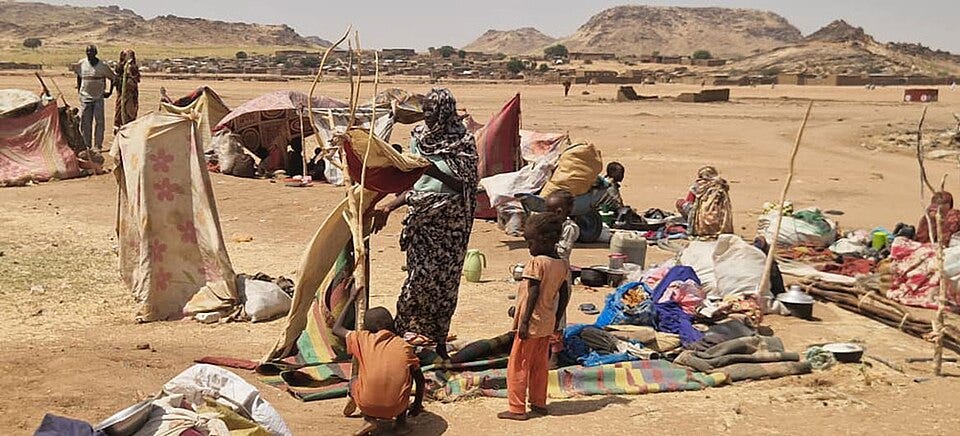
“Tawila displacement site, North Darfur, Sudan. 19/10/2025. IDP gathering site for newly displaced people from El Fasher” by UNOCHA / Mohamed Elgoni is licensed under CC BY-SA 2.0.

The Sudanese civil war and its dire humanitarian consequences are funded, in part, by the illicit gold trade, and growing sanctions pressure on the illicit market is exposing risks for global supply chains. Both the Sudanese Armed Forces (SAF) and the Rapid Support Forces (RSF) have been accused by foreign governments, international organizations and civil society groups of operating gold mines to fund weapon imports and pay troops. International smuggling networks have proven resilient to shifting geopolitical dynamics and tightening sanctions regimes. The pervasive presence of conflict gold in the global market also puts legitimate gold refiners and trading firms at risk of unknowingly handling illicit gold. Gold’s role in diverse manufacturing processes, from telecommunications to aerospace to medical devices, potentially exposes a wide range of businesses to the reputational and compliance impacts of Sudan’s illicit gold trade. The US, UK and EU view sanctions on Sudan’s gold exports as an effective way to degrade the SAF and RSF war efforts. Despite recent signs that Western actors are willing to impose increasingly muscular sanctions on Sudan’s gold economy, they are unlikely to be willing to expand this effort to the degree necessary to significantly disrupt the warring parties’ funding apparatuses.
In today’s full analysis:
Geopolitics Drives Shifting Exports
Existing Source Tracing Frameworks Struggle with Gold Smuggling
Strategic Limitations for Sanctions

Global
The UN reports that global hunger has declined while climate and trade risks increase. The 2026 State of Food Security and Nutrition in the World report finds that while global food security and nutrition improved modestly in 2025, progress remains uneven and insufficient to meet the 2030 targets. According to the report, jointly prepared by five UN agencies, 7.8% of the world’s population experienced hunger last year, down from 8.1% in 2024 and 8.6 in 2022. Despite global progress, recovery remains uneven across regions. Asia, together with Latin America and the Caribbean, has recorded steady improvements in recent years. In contrast, Africa is now home to approximately 309 million hungry people, compared with 292 million in Asia.
The report identifies that climate change and trade disruptions increase the cost of a healthy diet. The experts call for investment in agricultural R&D and irrigation infrastructure to improve crop yields and mitigate against supply volatility induced by climate variability and extreme weather events. The report also calls for policy interventions to support the agrifood system, such as reducing tariffs, facilitating trade, streamlining compliance requirements to make the market function more efficiently, equitably and without artificial distortions.
Read More: Reuters [paywall], UN Food and Agriculture Organization, UN FAO Food Insecurity Map
Europe
The European Commission appears divided on the future of its digital rulebook. The European Commission is slated to propose the Digital Fairness Act (DFA) after the summer break, which will add new obligations for digital platforms, such as reducing addictiveness on platforms and making subscriptions easier to cancel; the DFA may also incorporate a gradual allowance for social media use after age 13, which is reportedly a priority for Commission President Ursula von der Leyen. In some ways, the DFA expands upon the landmark Digital Services Act (DSA), which requires large platforms (i.e., over 45 million users) to protect consumers from harm. However, the European Commission reportedly remains divided on some aspects of the draft proposal, including whether it will take the form of a more concrete regulation or expand upon penalties in the DSA.
The author of the bill, Justice Commissioner Michael McGrath, wants to apply the DFA to all tech companies. Henna Virkunnen, the Commissioner who leads the digital competitiveness portfolio, is concerned about duplicating the DSA and hindering the Commission’s broader regulatory simplification agenda, but she agrees an update to the DSA is needed to improve online safety for minors. The Commission is likely anticipating a reaction from the US, which already views the DSA as discriminatory against American companies. Moreover, the US has hesitated to advance its own kids’ online safety bill due to disagreements on imposing a “duty of care” on platforms, similar to the EU.
Read More: European Parliament, Financial Times [paywall]
Middle East
Two oil tankers carrying Saudi crude reversed course in the Red Sea. The movement, gleaned from maritime tracking data, is among the first pieces of evidence that the “blockade” announced by the Iran-backed Houthis in Yemen is having its intended chilling effect on Red Sea shipping.
The anxiety around the maritime chokepoint underscores the Houthis’ ability to disrupt shipping at relatively low cost. As of Tuesday morning, the Houthis had launched no strikes, and there was significant skepticism that the group’s small, unconventional naval fleet could impose a true blockade. But the Houthis have experience harnessing their low-level capabilities to asymmetrically impact global logistics by raising the risks beyond acceptable thresholds for exporters and, more importantly, maritime insurers (war risk premiums more than doubled on Monday).
An effectively closed Bab al-Mandeb will decimate Saudi oil revenues and likely complicate global shipping. Saudi Arabia had increased reliance on its Red Sea Yanbu port following the Iranian closure of the Strait of Hormuz, but will need to transit the Suez Canal and Africa’s southern tip to reach Asian markets now. While the Houthi announcement did not implicate non-Saudi shipping, the risk of attack is almost certain to have a chilling effect on all shipping (of which as much as 14% of pre-war global trade went through the Bab al Mandeb).
Read More: Reuters [paywall], Reuters [paywall], New York Times [paywall]
Asia-Pacific
Pakistan has reportedly asked the US for $10 billion in exchange stabilization funds following a Tuesday meeting between Finance Minister Muhammad Aurangzeb and US Treasury Secretary Scott Bessent. The facility would bolster Pakistan’s foreign exchange reserves, ease pressure on the rupee and reduce reliance on multilateral financing. The request comes as Pakistan’s economy has begun to stabilize after years of financial distress that brought it to the brink of default in 2023, prompting a $3 billion IMF bailout. Pakistan has relied heavily on IMF support, entering 24 lending programs since 1958. Progress under IMF’s reforms led S&P Global on Wednesday to raise Pakistan’s long-term sovereign credit rating to “B” from “B-,” citing stronger institutional stability and effective implementation of reforms. However, the fiscal consolidation underpinning the program—including higher taxes and spending restraint—has remained politically unpopular and constrained public investment.
The request reflects broader improvement in US-Pakistan relations since the outbreak of the Iran war. Islamabad has played a prominent diplomatic role by facilitating direct US-Iran talks and helping broker the June Islamabad memorandum of understanding, which has subsequently unraveled as fighting resumes. Pakistan’s role in the conflict has bolstered its global recognition as a key regional partner and created opportunities to leverage its elevated regional profile to expand bilateral economic cooperation, including in investment, energy and defense partnerships. Most recently, Pakistan and Kuwait have reportedly been negotiating a defense pact in exchange for energy cooperation and investment.
Read More: Reuters [paywall], S&P Global, IMF, Reuters [paywall], Council on Foreign Relations, Nikkei Asia [paywall]
Americas
The United States on Tuesday sent its first humanitarian flight to Cuba under a new $100 million assistance package announced by Secretary of State Marco Rubio earlier this year. The flight, which departed from Miami, carried food and hygiene kits intended for approximately 700 families and was delivered through Catholic Relief Services and local Catholic parishes on the island. According to the State Department, the program is designed to provide aid directly to Cuban citizens while preventing the Cuban government from controlling or distributing the supplies. The shipment follows a previous $9 million humanitarian assistance effort coordinated through the Catholic Church after Hurricane Melissa.
The aid delivery comes as Washington continues to increase pressure on Havana through sanctions and public criticism of the Cuban government. On Monday, the State Department released a report titled “Cuba: The Capital of 21st Century Communism,” which accused the Cuban government of maintaining extensive intelligence, influence, and support networks abroad while portraying the island as a central hub for anti-democratic political movements. The report followed months of expanded US sanctions targeting Cuban state institutions, military entities, and energy imports. The humanitarian flight reflects the United States’ effort to distinguish between pressure on the Cuban government and assistance to the Cuban population.
Read More: Reuters [paywall], AP, ABC
Africa
US Assistant Secretary of State Frank Garcia visited West Africa to bolster ties amid a surge in terrorism and intensifying great power competition. Garcia traveled to Nigeria, Mali and Côte d’Ivoire primarily to discuss security cooperation and investment opportunities. The US reaffirmed its counterterrorism partnership with Abuja and discussed greater cooperation in the country’s energy and technology sectors. In Côte d’Ivoire, Garcia announced commercial deals in digital, health, education and logistics. Among the agreements are a deal with Starlink and a $570 million infrastructure framework.
The visit to Mali was particularly consequential as the Trump administration seeks to repair ties and resume counterterrorism cooperation. Following the 2021 coup, Mali’s military junta deepened security ties with Russia and suspended cooperation with the US. Garcia’s visit appears to have been received well, and a joint venture was announced between Timbuktu American University and San Diego State University—a soft power initiative aimed at rebuilding trust and expanding US influence beyond the security sphere.
Whether these engagements can reduce Chinese economic influence across the region and shift Mali away from Russia remains uncertain. Despite significant tactical and strategic losses in recent months, Russia’s Africa Corps remains deeply embedded in Mali’s security apparatus. Meanwhile, China continues to wield significant economic influence across the region. Without sustained diplomatic attention and follow-through on promised investments, the agreements announced during Garcia’s trip are unlikely to alter the strategic balance on their own.
Read More: US Embassy and Consulate in Nigeria, US Embassy in Côte d’Ivoire, US Embassy in Mali (Facebook)
Geoeconomics
President Trump on Monday signed an executive order tightening restrictions on defense contractors sourcing critical materials from unreliable foreign suppliers. Beginning January 1, 2027, the Department of War (DOW) will significantly limit waivers permitting acquisition of covered materials—including rare-earth magnets and strategically important metals—from China, North Korea, Russia and Iran. Waivers may be granted if contractors and subcontractors submit an approved mitigation plan demonstrating they took “exhaustive efforts” to identify alternatives, disclosed the origin of the materials, and established a strategy to reduce reliance on prohibited suppliers. Under the order, contractors and subcontractors will also be required to map critical supply chains for all DOW acquisitions with national security implications and vet suppliers for supply chain risks.
The order marks the administration’s latest effort to insulate the US defense industrial base from geopolitical supply chain risks, particularly as Washington moves to reduce dependence on Chinese critical minerals. Beijing’s increasing use of export controls on strategically important materials over the past year has reinforced concerns that critical mineral supply chains could be leveraged during periods of geopolitical tension or conflict. For defense contractors, the changes are expected to increase pressure to improve supply chain traceability, diversify supplier networks and secure alternative sources of strategically important materials, pushing support for administration-led initiatives to strengthen domestic and allied critical mineral supply chains.
Read More: The White House, Reuters [paywall], Executive Gov, The International Institute for Strategic Studies, Council on Foreign Relations
Disruptive Technology
Momentum for US limits on Chinese open-weight AI models is growing. Axios scooped this week that a faction of security hawks within the White House has pushed for increased export controls on China’s top open-weight models since last summer. The hawks are gaining momentum as pro-competition voices like David Sacks reduce their direct policymaking oversight and Chinese competitors, like MoonShot’s Kimi K3 and Z’ai’s GLM-5, narrow the capability gap with frontier US models like Mythos. US restrictions could include issuing advisories against Chinese labs, increasing enforcement of AI governance rules on Chinese models, or adding Chinese AI developers on the Entity List, which would require licensing for the export of those models.
China is considering its own restrictions that could be part of an escalation ladder. The Ministry of Commerce has reportedly consulted leading AI developers on preserving a qualitative edge and preventing Western acquisitions. This could include localizing data used for model training in China and disallowing open-weight models for foreign users (but allowing access to closed-loop versions). China is also reportedly considering controls on its homegrown advanced semiconductor designs, disallowing fabs from producing them. This would keep China’s AI innovation ecosystem closed off from competitors.
Read More: Axios, yahoo!news, Financial Times [paywall]
Energy
The US Strategic Petroleum Reserve (SPR) has fallen to its lowest level since 1983. The US has agreed to release 172 million barrels from the SPR in order to blunt the impact of the Iran war on energy supplies, and as of July 20 the SPR’s stocks had moved to about 310 million barrels. The US has already released a little more than 100 million barrels since the US war with Iran began in February. The SPR’s low level leaves the US with less buffer room to intervene and support global energy supplies as the US war with Iran continues and conflict in the Middle East restricts energy supplies.
The SPR was already low before the US war with Iran erupted. The Biden administration released large amounts of supply from the SPR to help absorb the supply shock from Russia’s invasion of Ukraine in 2022, with the SPR falling from over 600 million barrels in stocks to around 350 million in July 2023. While the US’ program with energy companies will have companies supply oil back to the SPR over time, that process will likely be gradual and take significant time.
Despite record releases, the International Energy Agency (IEA) says that member states still hold sizeable oil reserves. The IEA has released almost 290 million barrels since February and agreed to release 400 million barrels earlier this year. However, according to the IEA, member countries still hold more than 1 billion barrels of stocks in reserve.
Read More: Reuters [paywall], Reuters [paywall], Wall Street Journal [paywall], Wall Street Journal [paywall]
Transnational Crime and Corruption
The intergovernmental Financial Action Task Force (FATF) identified decentralized finance (DeFi) as a growing vehicle for fraud, ransomware, money laundering and proliferation financing. A July 21 FATF report estimated that DeFi platforms currently handle $86.64 billion, compared to $46.86 billion in 2023. Novel DeFi structures are largely unregulated in most countries, creating gaps actively exploited by criminal organizations and malign state actors. Many platforms, which operate through automated “smart contracts” that automatically process financial transactions with no oversight, facilitating intricate and fast-moving money laundering maneuvers. The report outlined case studies involving frauds and North Korean state-backed hacks that exploited poorly coded DeFi infrastructure to steal hundreds of millions of dollars.
The FATF report also highlighted that many DeFi platforms misrepresent how decentralized they are. DeFi defines itself as an avenue for decentralized and private financial transactions where no one actor has the ability to interfere with or block private transactions. However, many DeFi protocols maintain opaque technical structures that allow for individual actors to have de facto control over the platform. Governance token concentration, administrative privileges and developer controls over infrastructure upgrades are often used to exert control over ostensibly decentralized platforms.
Read More: Financial Action Task Force, Financial Times [paywall]


Contact Us
Karl Hopkins
Partner
+1 202 429 6499
khopkins@steptoe.com
Melissa B. Mahle
Senior Advisor
+1 202 261 0577
mmahle@steptoe.com
Anni Coonan
Senior Intelligence Analyst
+1 212 506 3979
acoonan@steptoe.com
Samuel Bloebaum
Senior Due Diligence Analyst
+1 602 410 6240
sbloebaum@steptoe.com
Zayna Dembinski
Analyst
+1 202 778 3567
zdembinski@steptoe.com
Thomas Goldstein
Analyst
+1 202 862 6735
tgoldstein@steptoe.com
Ian Cameron
Analyst
+1 202 327 6908
icameron@steptoe.com
Elton Smole
Analyst
+1 202 261 0556
esmole@steptoe.com
Carter Spahn
Intelligence Fellow
+1 202 261 7555
cspahn@steptoe.com
Chris Dantes
Intelligence Fellow
+1 202 327 6904
cdantes@steptoe.com
Legal disclaimer: This Substack is for educational and informational purposes only and does not constitute the rendering of legal counseling or other professional services. Reading, subscribing to, or communicating through this Substack does not create an attorney-client relationship. Do not send confidential information through this platform. Consult qualified legal counsel regarding your specific circumstances.