


Welcome to the Stepwise Risk Outlook, which highlights and contextualizes over-the-horizon developments in key regions of the world and industries of the global market. Today’s featured deep dive by Zayna Dembinski examines Japan's evolving defense policy.

Japan Restructures its Defense Posture in a More Contested Asia-Pacific
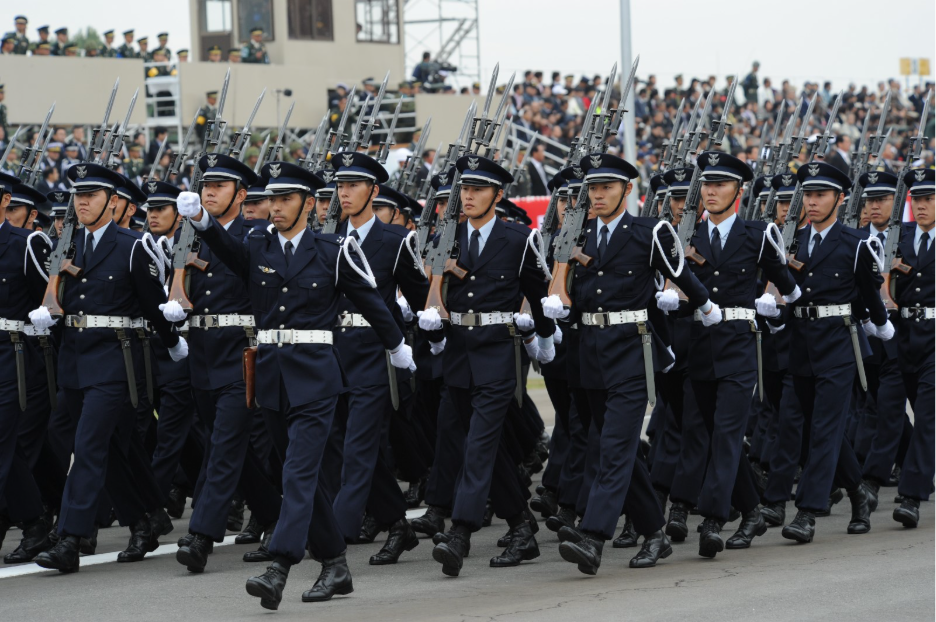
"平成22年度観閲式(H22 Parade of Self-Defense Force)" by JGSDF is licensed under CC BY 2.0.
Japan is undergoing its most significant transformation in defense policy since World War II. Under Prime Minister Sanae Takaichi, reforms initiated under her predecessors are increasingly being translated into greater military capabilities and a more proactive security strategy. The shift reflects a changing Asia-Pacific security environment, growing US pressure on allies to share the defense burden and the growing convergence of economic and national security. For businesses, the transformation presents significant opportunities across Japan’s defense industrial base. But careful balancing will be needed against rising geopolitical risk, regulatory complexity and supply chain realignment to successfully leverage Japan’s burgeoning industry.
In today’s full analysis:
The Trajectory of Japan’s Defense Transformation
The Strategic Environment of Japan Today
Looking Ahead for Businesses

Global
On the 75th anniversary of the UN Convention on the Status of Refugees, the consensus backing the comprehensive framework for refugee protection is fragmenting. The 1951 Refugee Convention and its 1967 protocol have been ratified by 149 states, making them among the most widely supported international legal frameworks. In practice, however, countries are adopting policies to restrict resettlement of new refugees and deport displaced people already within their borders. The EU is discussing establishing detention centers abroad, and the US has reduced its refugee admissions cap to a record low of 7,500 refugees for fiscal year 2026, down from 125,000. The US has also revoked Temporary Protected Status for hundreds of thousands of nationals from Haiti and Syria.
At the end of 2025, there were 41.6 million refugees globally. This is a decrease from 2024, with the sharp increase in the return of refugees, mainly to Afghanistan, Syria and Sudan. Yet the number of people forcibly displaced remains high, due to wars and state failure, in diverse locations including Afghanistan, South Sudan, Sudan, Syria, Ukraine and Venezuela. The UN Refugee Agency has launched an initiative, The Promise, which aims to build a broad coalition in support of refugee protection ahead of the Global Refugee Forum in 2027, to address the challenge of making the international protection system respond more effectively to displaced persons.
Read More: Reuters [paywall], United Nations, Euronews, Baker Institute for Public Policy
Europe
A suspected Islamist terror attack at a Berlin Pride gathering is opening up law enforcement debates in Germany before regional elections. The Saturday evening attack left one dead and 29 injured. The suspected attacker, identified as Abdul B., was killed on Sunday after attempting to assault police with a bladed weapon. Abdul B. was tried by a Berlin juvenile court when they were 17 years old for extortion and assault with intent to rob. Berlin security forces had also surveilled the suspect for sharing ISIS propaganda online, and he had been held in detention for three months in Summer 2025 by Lebanese security forces under suspicion that he had sought to join ISIS forces in Syria. Abdul B. was put in pre-trial detention and designated as a potential threat in January 2026 and, in May 2026, was given a suspended sentence under juvenile penalties for planning a serious act of violence. Abdul B. was required to undergo a de-radicalization course, but surveillance was relaxed after not uncovering cause for a planned attack.
The far-right Alternative for Germany (AfD) has suggested the case represents a failure in the government’s security policy. The AfD is leading the polls nationally and in the federal state of Saxony-Anhalt, where they may receive their first regional outright majority in September 2026. The ruling conservative Christian Democrats (CDU/CSU) understand that their mandate is based on tougher migration and security policies and will be quick to respond. German Interior Minister Alexander Dobrindt suggested removing suspended sentencing for serious cases like Abdul B.’s. Others may advocate longer sentences, tightening guidelines on the criminal age of responsibility, or even stripping citizenship. This moment resembles the January 2025 Aschaffenburg attack, after which the AfD voted alongside the CDU/CSU (then in opposition) to tighten migration rules at the onset of the parliamentary election campaign, undermining the far-right cordon sanitaire.
Read More: Tagesschau [in German], Deutsche Welle, New York Times [paywall]
Middle East
Oman presented Iran with a Gulf-backed plan to open the Strait of Hormuz with voluntary fees. The arrangement, which echoes one floated by Muscat following the June ceasefire, is reportedly backed by Arab Gulf powers and would involve Oman and Iran jointly administering the Strait and collecting voluntary fees from vessels transiting.
The arrangement could mirror the system in the Strait of Malacca, but it is unclear how voluntary fees would be set. Iran has also floated voluntary fees in prior Strait proposals, but critics worry that even non-mandatory fines could amount to permitting Iran to run a protection racket.
The proposal demonstrates Arab Gulf pragmatism as oil exporters seek a manageable outcome for the months-long conflict. Gulf powers desired a decisive defeat for the Islamic Republic, which now seems improbable – in its absence, Gulf capitals are increasingly seeking to manage their relationships with Iran. The UAE has reportedly sought détente, potentially to some success (the UAE has not been targeted in the current round of strikes).
Read More: Reuters [paywall], Wall Street Journal [paywall], Financial Times [paywall]
Asia-Pacific
China on Monday threatened to take “all necessary measures” if the US moves forward with any actions that harm Chinese AI companies. China’s Ministry of Commerce accused Washington of practicing hegemonic behavior with AI, such that Chinese AI models were released around the same time as cutting-edge US models and did not rely on distillation or stealing US intellectual property to achieve their successes. Distillation, a machine learning technique where smaller models are trained using the outputs of a larger “teacher” model, is defended in the statement as a widely used industry practice. This marks the first direct Chinese government response to what MOFCOM describes as a “smear campaign” lacking factual basis and legal support. The statement comes as Beijing has strengthened its countermeasures toolkit to punish foreign companies and individuals deemed to harm Chinese interests.
The response comes as Washington increases rhetoric on banning cutting-edge Chinese open-weight AI models. Director of the White House Office of Science and Technology Policy Michael Kratsios last week accused Chinese AI companies of developing a “sophisticated internal platform” to carry out large-scale distillation against US models covertly. Kratsios’ comments come after China’s Moonshot AI released its latest Kimi K3, which sent jitters through the tech industry and US policymakers, with the model’s performance and cost seemingly more attractive than those of US companies. Reports find many US firms are considering or have already started using Chinese open-weight models because of cost-effectiveness, adding more fuel for US policymakers committed to the US-China tech race.
Read More: China Daily, Reuters [paywall], Axios, Politico
Americas
Peru inaugurates Keiko Fujimori as president on Tuesday. Fujimori, a center-right populist, won a razor-thin runoff victory over hard-left rival Roberto Sánchez and now takes office alongside a newly sworn-in bicameral Congress, including Peru’s first Senate in more than three decades. Supporters hope the return of an upper chamber will provide greater institutional stability after years of executive-legislative conflict, while critics warn that deep political polarization remains. Peru’s chronic political instability has seen eight presidents in as many years. Fujimori inherits a country shaped by decades of market-oriented reforms that helped reduce poverty and expand economic opportunity, but also one facing persistent governance challenges, ideological divisions, and concerns about whether state institutions can uphold the rule of law.
Fujimori’s presidency is likely to have significant implications for Peru’s foreign and security policy. She has signaled a desire to strengthen ties with the United States, particularly on security cooperation and efforts to combat organized crime, as Peru grapples with rising illegal mining and the growing influence of transnational criminal groups. At the same time, she must balance that alignment with Peru’s extensive economic relationship with China, now the country’s largest trading partner and a major investor through projects such as the Chancay megaport. While Fujimori has expressed interest in closer relations with Washington and greater U.S. investment, a sharp break with Beijing is unlikely given China’s central role in Peru’s trade and infrastructure sectors.
Read More: Wall Street Journal [paywall], DW, Reuters [paywall]
Africa
The African Development Bank projects that El Niño could cost African economies $10 to $20 billion. Extreme droughts and flooding could exacerbate food insecurity amid ongoing fertilizer and fuel shortages stemming from the Iran war. African governments struggling to repay debt have limited capacity to finance reconstruction and other disaster recovery efforts. Furthermore, key industries like cocoa and coffee could be disrupted by extreme weather.
The potential impacts would be especially severe in the Horn of Africa, a region engulfed in protracted armed conflicts. Somalia, Sudan, and other Horn countries are already experiencing high food and water insecurity. Extreme weather events are likely to worsen population displacement, straining the resources of government and aid organizations. State and non-state combatants could weaponize famine to achieve military gains, sowing greater instability throughout the region.
Read More: Semafor Africa, Semafor Africa, The Conversation
Geoeconomics
The EU announced it will impose provisional anti-dumping duties on imports from Chinese producers of sodium benzoate. The duties will take effect tomorrow and range from 57.6% to 116.4% depending on the exporter, following an investigation that was initiated late last year and found Chinese producers were exporting sodium benzoate at artificially low prices. Sodium benzoate is used as a food preservative and is found in some pharmaceutical products.
The duties mark the latest measure taken by the EU to safeguard its industries from surging imports. The EU has launched a record number of anti-dumping measures and anti-subsidy measures, reaching 172 by the end of 2025 with just over three-quarters targeting Chinese companies. The measures come as the EU struggles with its growing trade surplus with China, which reached €360bn in 2025, a 15% increase from the year before, and a record €1 billion a day according to the latest trade data. There is growing consensus between EU members to take action against what they describe as China’s unfair trade practices, evident from earlier this month when France and Germany announced they will co-develop a roadmap to strengthen the EU’s responses to industrial pressure from China.
Read More: European Union, Reuters [paywall], Council on Foreign Relations, France 24
Disruptive Technology
China added 14 European entities to its dual-use export control lists, restricting rare earth element (REE) exports to prominent European defense contractors. Affected firms include wide swaths of Europe’s defense industrial base, including German defense champion Rheinmetall, Czechia’s defense contractor Tatra Trucks, Dutch shipbuilder IHC Merwede, French drone manufacturer Cavok UAS, and Italian electric motor maker Lafert. The export controls appear to be retaliation for the EU’s 21st sanctions package, which placed blocking sanctions against entities based in China and Hong Kong accused of exporting dual-use items to Russia.
China’s actions are a sharp escalation in the EU-China trade relationship. REEs are crucial inputs for sophisticated defense and electronic systems and are processed almost exclusively in China, representing a maximum pressure chokepoint. China may be escalating to de-escalate, seeking to delist Chinese firms from the EU’s sanctions regimes and prevent further listings. However, the move could backfire and push the EU to greater alignment with US-led economic security measures, including through the Pax Silica initiative or semiconductor export controls. Germany has traditionally sought a free trade approach to China, but is increasingly moving toward a more hawkish position due to the growing trade deficit and China’s alignment with Russia. Berlin has joined Paris in seeking greater trade controls against Chinese companies.
Read More: AP, New York Times [paywall], South China Morning Post [paywall]
Energy
Kazakhstan has resumed oil exports through the Caspian Pipeline Consortium (CPC) at the Russian port of Novorossiysk. Kazakhstan had previously ceased oil exports after a series of drone attacks at Novorossiysk had halted operations at the Black Sea port, and further operations will depend on how the security situation in the area develops. However, although Kazakhstan has restarted exports, Astana’s daily oil output has halved since the drone attacks caused the export terminal in Novorossiysk to close. The pipeline, which connects Kazakhstan’s Tengiz oilfield to the Black Sea, transports more than 80% of Kazakh exports. Astana is one of the world’s 10 largest oil producers, and issues with its export capacity and Black Sea security are likely to contribute to global oil price dynamics.
The fallout from the CPC’s closure is having an impact on Kazakhstan’s bilateral relationship with Russia. Kazakhstan’s President Kassym-Jomart Tokayev publicly called for freezing Moscow’s war with Ukraine while speaking alongside Putin at a Russia-Kazakhstan forum in the Siberian city of Omsk. According to his spokesman Dmitry Peskov, Putin rejected that line of argument with the claim that freezing the conflict was impossible due to Ukrainian intransigence.
Read More: Reuters [paywall], Reuters [paywall], UA.news, Oilprice.com


Contact Us
Karl Hopkins
Partner
+1 202 429 6499
khopkins@steptoe.com
Melissa B. Mahle
Senior Advisor
+1 202 261 0577
mmahle@steptoe.com
Anni Coonan
Senior Intelligence Analyst
+1 212 506 3979
acoonan@steptoe.com
Samuel Bloebaum
Senior Due Diligence Analyst
+1 602 410 6240
sbloebaum@steptoe.com
Zayna Dembinski
Analyst
+1 202 778 3567
zdembinski@steptoe.com
Thomas Goldstein
Analyst
+1 202 862 6735
tgoldstein@steptoe.com
Ian Cameron
Analyst
+1 202 327 6908
icameron@steptoe.com
Elton Smole
Analyst
+1 202 261 0556
esmole@steptoe.com
Carter Spahn
Intelligence Fellow
+1 202 261 7555
cspahn@steptoe.com
Chris Dantes
Intelligence Fellow
+1 202 327 6904
cdantes@steptoe.com
Legal disclaimer: This Substack is for educational and informational purposes only and does not constitute the rendering of legal counseling or other professional services. Reading, subscribing to, or communicating through this Substack does not create an attorney-client relationship. Do not send confidential information through this platform. Consult qualified legal counsel regarding your specific circumstances.