


Welcome to the Stepwise Risk Outlook, which highlights and contextualizes over-the-horizon developments in key regions of the world and industries of the global market. Today’s featured deep dive by Ian Cameron examines nuclear energy partnerships.

Increased Geopolitical Turbulence is Setting the Stage for More Nuclear Energy Partnerships
By Ian Cameron
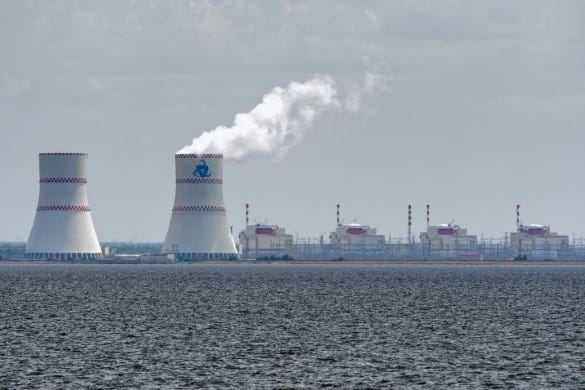
"Don River 19" by Alexxx1979 is licensed under CC BY-SA 2.0.
The sustained instability in energy markets caused by the simultaneous conflicts between the US and Iran and Russia and Ukraine has unleashed increased interest in nuclear power, especially in energy-poor states most affected by the crisis. Suppliers of nuclear technology like Russia and the US have launched a concurrent push to develop new partnerships, as exemplified by the recent US-Saudi Arabia agreement. The long-term nature of nuclear cooperation, as well as the diplomatic connections involved in nuclear cooperation, give nuclear technology exports a decidedly geopolitical aspect.
Nuclear energy cooperation with states like Russia cements multidecadal cooperation on energy policy and creates potential sanctions and diplomatic risks for Moscow’s partners. Alternatively, cooperation with either the US or American partners has the potential to boost long-term diplomatic relations and to create new opportunities for investment and economic connections. Generally, nuclear energy can strengthen energy security by diversifying supply in an increasingly unsettled market. Moreover, as new nuclear technologies progress, such as small modular reactors (SMRs), opportunities for nuclear energy cooperation will widen to include more countries and businesses as potential partners.
In today’s full analysis:
New Partnerships and Growing Nuclear Interest
The Geopolitics of Nuclear Cooperation
Risks and Opportunities
Or listen to the full report here:

Listen to the news:
Global
US and Ukrainian presidents report a positive Oval Office meeting, with President Zelensky seeking to sway President Trump to lean in on support for Ukraine. While the comments were positive, deliverables are less obvious. Perhaps most salient, US special envoy Steve Witkoff and point man Jared Kushner plan to visit Kyiv for the first time, renewing an effort to end the war. While the frontlines in Ukraine remain largely frozen, Ukraine has gained the initiative in 2026 by effectively targeting Russia’s war supply chain deep inside Russian territory. Ukraine needs US assistance in two critical areas to maintain this initiative: greater support for air defense and pressure on Russia’s foreign sources for economic lifelines and the war materials supply chain. Ukrainian officials believe that continued success on the war front will give Kyiv more leverage at the negotiating table.
Yesterday, the US Senate overwhelmingly advanced the Lindsey O. Graham Sanctioning Russia and Iran Act of 2026. The bill targets Russia’s energy revenues, financial networks and shadow fleet, measures aimed at curtailing the Kremlin’s ability to continue to wage war. The vote was bipartisan. After Senator Graham’s death, President Trump agreed he would work with Congress to pass the legislation. The law would give President Trump more tools to pressure Russia, including sanctions and tariffs on countries buying Russian oil and gas. The bill has more steps to clear the Senate and then would be taken up by the House once lawmakers return from recess in September.
The two leaders also discussed President Trump’s plan to license Patriot missiles to Ukraine for production. While beneficial, this does not provide an immediate solution to the pressing problem of Moscow terrorizing Ukrainian cities by missile and drone attacks on civilian infrastructure. It will take Ukraine two to three years to produce its first Patriot missile. Yet, being able to produce Patriot Missiles would move Ukraine a step closer to self-sufficiency in being able to defend itself.
Read More: Reuters [paywall], The Hill, Defense News
Europe
Germany’s government is set to complete its recently announced reshuffle today. Thorsten Frei, who had been the head of German Chancellor Friedrich Merz’s office, will be elected as the new head of the governing CDU party’s parliamentary group. Frei is generally seen as a skilled political operator who is well positioned to lead the CDU parliamentary group and to promote cooperation with the SPD, the other party in Germany’s coalition government. He will be followed as head of Merz’s office by Nini Warken, the current health minister, who in turn will be replaced by Carsten Linnemann, the general secretary of the CDU. Linnemann is a close advisor to Merz, and Warken successfully shepherded through a major reform effort earlier this year.
Other elements of the reshuffle have gone somewhat less smoothly for Merz. As part of the reshuffle, Merz intended to fire Germany’s transportation minister, Patrick Schneider, who instead ultimately asked to be removed from his position after a clumsy process to pick his successor. Merz’s actions towards Schneider have generated significant displeasure within the CDU’s ranks in Berlin and in regional parties. In particular, the CDU party of the German state of Rheinland-Pfalz, where Schneider is from, has openly criticized how the reshuffle was handled.
This isn’t the first time Merz has struggled with his own party. In April, Merz was forced to backtrack during a public spat with his economics minister, Katarina Reiche (CDU), after she received significant support within the party for her stance. Similarly, Merz has struggled to control his majority during a number of key measures throughout his time as chancellor, such as the government’s failure to secure the selection of constitutional court judges.
Read More: Tagesschau, Deutschlandfunk, Der Spiegel, Tagesspiegel, Atlantic Council
Middle East
China has reportedly been in touch with Yemen’s Houthis to ensure safe passage for ships transiting the Bab al-Mandeb. Sources told news outlets that Beijing has held direct talks with the Houthis to ensure that Chinese-flagged ships would be safe to transit the waterway (indeed, at least four Chinese vessels have safely passed the chokepoint since the imposition of the Houthi “blockade” on July 20). Import-reliant China seeks to keep oil exports from Saudi Arabia flowing as the Strait of Hormuz re-closure strangles its other sources.
Global powers are increasingly dealing with Iran and its proxies – adjusting to a new status quo rather than waiting on a US-led resolution. Reports indicated that China was not the only country that dealt directly with the Houthis. It was recently reported that the UAE is engaged in direct talks with Iran (and has not been targeted in the current round of strikes). Emirati vessels have transited the Strait of Hormuz somewhat regularly in defiance of the Iranian blockade, as well as limited Kuwaiti vessels. China, India and Japan were reported to be paying fees to Iran in April. The pragmatic willingness to engage reveals the extent to which regional countries are no longer waiting for the US to resolve the issue decisively – although engagement with Iranian control of waterways risks cementing Tehran’s aspirations of control even as the US fights to block them.
Read More: Reuters [paywall], DW, Financial Times [paywall], Anadolu Ajansi
Asia-Pacific
Violent clashes broke out in Pakistan-administered Kashmir on Tuesday between police and civil rights groups, with local groups reporting that at least 30 people have been killed over the past two days. Pakistani security forces have been accused of firing on tens of thousands of protesters who have demonstrated across the region since June, demanding political reforms including the removal of disputed assembly seats ahead of regional parliamentary elections that began Monday. Protesters are calling for parliamentary seats to be reallocated to Kashmiris living in the territory, a demand the Pakistani government has rejected.
The unrest has raised concerns over the government’s response to protests and broader election credibility weaknesses. Amnesty International has called on authorities to remove the communications blackout imposed across the region, warning restrictions impede access to information, hinder independent reporting on the violence and could further fuel tensions. The uptick in violence comes as confidence in Pakistan’s electoral process remains weak, with the regional elections likely to face heightened scrutiny amid ongoing unrest and could deepen existing distrust between Kashmiris and Islamabad. The Awami Joint Action Committee, a grassroots civil society group banned under anti-terrorism laws by the local Kashmiri government in June because of escalating civil unrest, and the Pakistan Tehreek-e-Insaf party have both boycotted the vote.
Read More: New York Times [paywall], The Guardian, Amnesty International, The Friday Times
Americas
Brazil’s presidential campaign season officially opened over the weekend. Liberal Party candidate Flávio Bolsonaro launched his bid in São Paulo alongside Argentine President Javier Milei, underscoring the transnational ties among Latin America’s conservative movements. Backed by his father, former President Jair Bolsonaro, who is serving a prison sentence and is barred from seeking office, Flávio Bolsonaro pledged to “rescue” Brazil and position himself as the heir to the Bolsonaro political project. The event also generated diplomatic controversy after Milei referred to President Luiz Inácio Lula da Silva as a “thief” and a “convict,” prompting Brazil to recall its ambassador to Argentina. Bolsonaro’s campaign launch additionally comes amid scrutiny over an AI-generated video featuring his father, which has been challenged in Brazil’s courts amid growing concerns about the use of deepfakes and digital misinformation during the election season.
Other presidential hopefuls also formally entered the race, seeking to establish themselves as alternatives to both Lula and Bolsonaro. The Social Democratic Party (PSD) launched the candidacy of former Goiás Governor Ronaldo Caiado, who used his convention to attack both frontrunners and present himself as a conservative capable of defeating Lula while distancing himself from the Bolsonaro camp. Meanwhile, Minas Gerais Governor Romeu Zema has continued to position himself as a center-right, pro-market option, though his campaign has so far struggled to gain traction nationally. Current polling suggests the contest remains dominated by Lula and Flávio Bolsonaro: an AtlasIntel/Bloomberg survey shows Lula leading the first round with 44.9% support, followed by Flávio Bolsonaro at 35.8%, while Caiado and Zema trail in the low single digits. In a projected runoff, Lula maintains an advantage of 49.2% to 42.9%, signaling that while the broader field has officially launched its campaigns, the election remains largely a two-candidate race at this stage.
Read More: Reuters [paywall], BBC [paywall], Valor
Africa
The US International Development Finance Corporation (DFC) plans to commit up to $4.48 million to support development of Madagascar’s Ampasindava Rare Earths Project. Owned by the UK-based Harena Rare Earths, the deposit contains neodymium, praseodymium, dysprosium and terbium. These rare earth elements are used for producing permanent magnets in electric vehicles, wind turbines and consumer electronics. The elements also have important defense applications, including fighter jets and precision-guided missile systems. Harena projected that the mine could produce roughly 4,000 metric tons of rare earth oxides annually, including 1,700 metric tons of high-value magnet rare earths. The move comes as the US seeks not only to reduce supply chain dependence on China but also to strengthen its defense industrial base amid rising demand for munitions.
Read More: Reuters [paywall], Business Insider Africa, Africa Center for Strategic Studies
Geoeconomics
The Trump administration on Tuesday unveiled restrictions on new foreign-made advanced robotic devices and connected power inverters, citing national security concerns. The Federal Communications Commission (FCC) said foreign-produced power inverters—which connect renewable energy sources and batteries to the power grid—pose supply chain and cybersecurity risks because their remote connectivity could allow foreign actors to disable equipment, access systems or collect data. The FCC similarly warned that advanced foreign-made robots, including humanoid and quadruped models, could be exploited by adversaries for surveillance or other malicious purposes. The restrictions apply to new models seeking FCC authorization, rather than products already approved or in use.
The measure is expected to disproportionately affect Chinese manufacturers, which dominate both sectors, underscoring the extent to which US-China technology competition is increasingly extending into physical infrastructure and emerging technologies. China accounts for roughly 85% of global humanoid robot production, while Chinese firms also dominate the global power inverter market, accounting for an estimated 80% of manufacturing capacity. The FCC is expected to provide pathways for non-Chinese manufacturers to obtain exemptions, similar to restrictions on foreign-made drones and routers. The move reflects an expanding US approach to technology security in which connectivity itself is increasingly treated as a strategic vulnerability: as foreign-made devices become embedded in critical infrastructure, Washington is showing greater willingness to restrict market access preemptively rather than risk dependence on technologies that could potentially be remotely influenced.
Read More: The Federal Communications Commission, Reuters [paywall], ABC News, International Energy Agency
Disruptive Technology
Ford announced that it will compete for a contract to produce 600 ISV-Heavy tactical vehicles. As part of the bidding process, Ford has been selected to create a prototype based upon its F-Series super-duty pickups, competing directly with Chevy, GM, and BC Customs. This is the first contract that Ford has explicitly competed for since the end of the Cold War. Ford previously was part of the defense industrial base but exited in 1990 when it sold a subsidiary, Ford Aerospace, to a defense prime. Ford had hinted earlier this year that it had engaged in preliminary discussions with the Pentagon on reentering the defense market, including for engine vehicles, munitions, and as an anchor buyer for US-processed critical minerals.
Ford’s re-entry into defense reflects the administration’s goal of integrating more commercial players into the market. Since the end of the Cold War, the US defense industrial base consolidated into conglomerate defense primes with little or no competitors on certain capabilities. By the end of the Cold War, commercial industrial players with defense segments comprised over 70% of major weapons systems acquisitions, but this number has dwindled to under 10% in 2025. A defense ecosystem cornered by primes enables R&D and a qualitative edge on defense capability, but also cost overruns and widespread delays. The Pentagon wants to incorporate the commercial sector to improve competition and scale production capacity.
Read More: Stars and Stripes, Wall Street Journal [paywall], CSIS
Energy
Ankara and Baghdad are considering an energy partnership agreement. On July 28, Turkish President Recep Tayyip Erdogan announced that Türkiye intends to agree on a comprehensive energy cooperation as soon. Erdogan made the statement after a meeting with Iraq’s prime minister Ali al-Zaid in Ankara. Furthermore, Erdogan announced that Turkey’s state-owned oil and gas company TPAO would start operating in the Kirkuk oilfield. However, the two sides did not sign a deal to extend their agreement on the Kirkuk-Ceyhan crude oil pipeline, which had been expected.
In recent months, Baghdad has pursued a policy of new energy partnerships and more oil output. At a meeting with US President Donald Trump earlier this year, Al-Zaid expressed interest in a closer energy relationship with America, and Iraq is partnering with US companies to diversify its export infrastructure away from dependence on the Strait of Hormuz. Iraq has also reportedly considered leaving OPEC over the limits placed on Iraqi oil production. The conflict in the Middle East and the disruptions to shipping through the Strait of Hormuz have had a severe impact on Iraq’s economy due to its reliance on oil exports through the strait.
Read More: Reuters [paywall], ABC News, AP, CNBC
Transnational Crime and Corruption
Poland requested that the US extradite former Polish Justice Minister Zbigniew Ziobro for alleged criminal misuse of public funds. Ziobro served as justice minister from 2015 to 2023 under the Law and Justice Party (PiS) government and implemented widespread judicial reforms. Ziobro was granted asylum in Hungary in January 2026 after being targeted with investigations by Polish prosecutors. Ziobro flew to the US in May 2026 after Hungarian elections took down the government that granted him asylum. The flight sparked a diplomatic complaint from Poland against Hungary and the US, as Ziobro was allowed to travel on a cancelled passport. Ziobro has called the charges against him “fabricated”.
Ziobro is accused of embezzling from a fund for crime victims to purchase the Israeli spyware Pegasus. Prosecutors and anti-PiS political figures accused Ziobro of targeting political opponents with their spyware in violation of Polish and EU law. Controversies surrounding the PiS government’s use of Pegasus escalated in February 2024 when Poland’s new prime minister confirmed that the prior government had illegally used the software. Investigations found that the Pegasus software had been used to spy on politicians, lawyers, and prosecutors critical of PiS.
Read More: Reuters [paywall], Politico.eu, European Parliament


Contact Us
Karl Hopkins
Partner
+1 202 429 6499
khopkins@steptoe.com
Melissa B. Mahle
Senior Advisor
+1 202 261 0577
mmahle@steptoe.com
Anni Coonan
Senior Intelligence Analyst
+1 212 506 3979
acoonan@steptoe.com
Samuel Bloebaum
Senior Due Diligence Analyst
+1 602 410 6240
sbloebaum@steptoe.com
Zayna Dembinski
Analyst
+1 202 778 3567
zdembinski@steptoe.com
Thomas Goldstein
Analyst
+1 202 862 6735
tgoldstein@steptoe.com
Ian Cameron
Analyst
+1 202 327 6908
icameron@steptoe.com
Elton Smole
Analyst
+1 202 261 0556
esmole@steptoe.com
Carter Spahn
Intelligence Fellow
+1 202 261 7555
cspahn@steptoe.com
Chris Dantes
Intelligence Fellow
+1 202 327 6904
cdantes@steptoe.com
Legal disclaimer: This Substack is for educational and informational purposes only and does not constitute the rendering of legal counseling or other professional services. Reading, subscribing to, or communicating through this Substack does not create an attorney-client relationship. Do not send confidential information through this platform. Consult qualified legal counsel regarding your specific circumstances.