


Welcome to the Stepwise Risk Outlook, which highlights and contextualizes over-the-horizon developments in key regions of the world and industries of the global market. Today’s featured deep dive by Dan Arbell examines the impact of 1000 days of war for Israel.

1000 Days of War: Israel’s Security Reckoning
By Dan Arbell
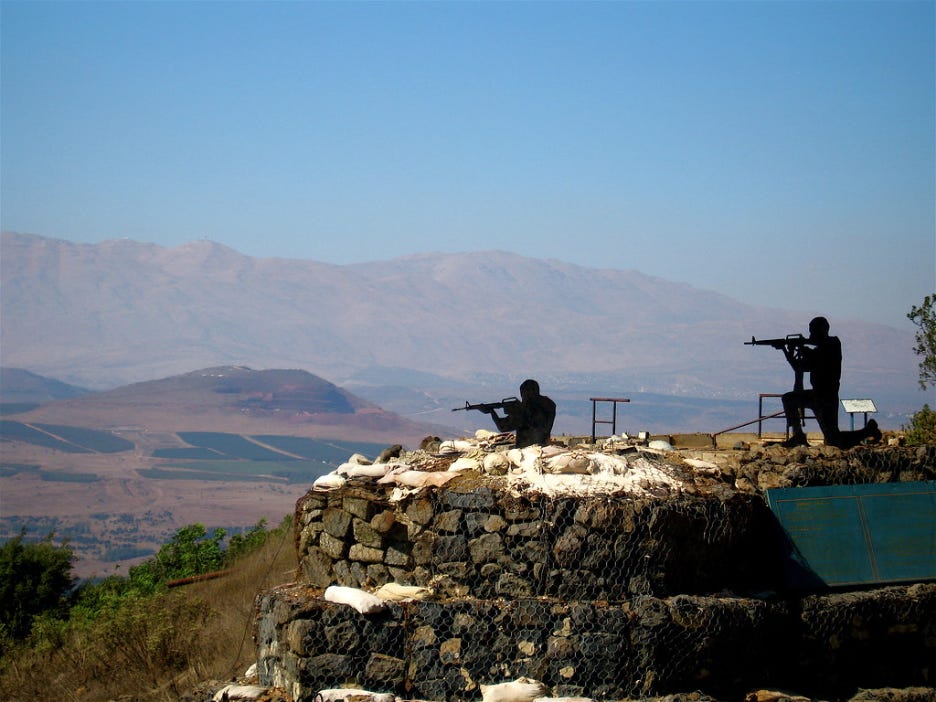
"Israel/Lebanon border.JPG" by mockstar is licensed under CC BY-ND 2.0.
On July 2, 2026, Israel marked 1,000 days since Hamas's October 7, 2023 attack—a painful and transformative period for Israel’s security and strategic outlook. As ceremonies were held across the country, the Israeli Defense Forces (IDF) released data on the war's scope: Since October 7, more than 31,000 projectiles were fired at Israel: over 20,000 from Lebanon, 10,000 from the Gaza Strip, and more than 1,000 from Iran. Those numbers alone demonstrate the transformation of what began as a single-front catastrophe into a multi-front war that altered the security map of the Middle East. While Israel has decisively asserted its military superiority, no front has resulted in the kind of alternative political arrangement that would represent a durable strategic victory for Jerusalem and Prime Minister Netanyahu.
In today’s full analysis:
The Gaza Strip: Tactical Dismantlement, Strategic Ambiguity
Lebanon: From Deterrence Collapse to Forced Restructuring
Iran: A Decapitation Without a Collapse

Global
Despite increasing amounts of oil transiting the Strait of Hormuz, the global energy market is expected to remain volatile in 2026. The surge of oil may not find immediate buyers because of demand destruction. China’s internal demand dropped sharply during the war, and there is uncertainty around how much is a temporary adaptation to the supply disruption and how much reflects a structural shift in consumption. For consumers, this means that an oversupplied market will eventually lead to sustained easing of prices for refined products, but not right away.
Countries that drew down on strategic stockpiles will gradually seek to refill them once the price of oil drops to a new post-war equilibrium. The International Energy Agency (IEA) estimates that since the start of the Iran war, drawdowns on global inventories of crude averaged around 2.4 million bpd. The IEA expects global oil demand to fall by 1.1 million bpd in 2026 and predicts growth to rebound to 2 million bpd in 2027 as trade flows normalize and lower oil prices and an improving economic outlook contribute to the recovery.
The Iran war will have long-lasting impacts on the energy market. Strong non-OPEC production growth (think US LNG exports and UAE exit from OPEC) and market shifts to diversify away from dependence on Gulf oil will persist. Additionally, improving energy efficiency and the gradual shift toward domestically generated cleaner energy sources will exert downward pressure on global prices.
Read More: Yahoo! Finance, International Energy Agency, World Economic Forum
Europe
France’s Court of Appeals opens the possibility for Marine Le Pen to run for President in 2027, but she may step aside anyway. In March 2025, Le Pen—France’s presidential hopeful and leader of the far-right National Rally party—received a five-year ban on politics after a first instance verdict against embezzling European Parliament funds for domestic political initiatives. Today, the second-instance verdict has commuted the sentence to a year with an electronic tag and three years suspended; her political ban was narrowed to 15 months, allowing her to run in April 2027. However, Le Pen has previously stated that she would not want to run with an electronic tag and seek authorization for every campaign event. If she holds firm on that line, then the National Rally’s “Plan B” candidate—Jordan Bardella, the 30-year-old social media firebrand—would go ahead as planned. Polling last month suggests that Bardella would win 37% of the vote in the first round, about 15 points higher than his nearest challenger.
Le Pen will hold a press conference at 8 PM local time (2 PM EST), possibly clarifying her decision on whether she will run. If she decides to run, it will be her fourth candidacy for President. Her experience on the campaign trail is an advantage over running the relatively inexperienced Bardella, and it would likely preserve the National Rally’s populist and blue-collar brand. Meanwhile, a Bardella candidacy may move the party toward the center, potentially at the expense of the base. For example, Bardella has suggested that pension reform is needed to balance the budget. Bardella has also rejected a French withdrawal from NATO’s command structure during Russia’s operations in Ukraine.
Read More: BBC, Politico, The Economist [paywall]
Middle East
Iran’s Islamic Revolutionary Guard Corps fired missiles at two commercial ships near the Strait of Hormuz. The IRGC reportedly warned ships transiting the Strait that they could come under attack, but it is not clear why the ships – one of them a Qatari LNG tanker – were targeted. The attacks are a re-escalation of hostilities in the Strait following over a week of smooth sailing, and could inflame tensions yet again. Analysts are also seeing the strikes as a demonstration of distance between the government in Tehran and the harder-line IRGC, which may object to negotiating terms.
The attack could complicate the recovery of shipping traffic in the Strait, but the US appears committed to continuing negotiations. President Trump has previously been reported as saying that he is committed to negotiations for as long as they take (even past the 60-day deadline in August) and that he would not reignite full hostilities unless an American is killed. These strikes may be the type of low-level conflict acceptable under the tenuous ceasefire as the US seeks a deal and Iran seeks to cement its control of the Strait of Hormuz.
Read More: AP News, Wall Street Journal [paywall], Wall Street Journal [paywall], The Jerusalem Post
Asia-Pacific
Pakistan’s prominence as an international mediator is growing, with Reuters reporting on Monday that Islamabad has been facilitating talks between Libya’s rival eastern and western factions since late last year. Combined with Pakistan’s ongoing diplomatic efforts between the US and Iran, its role in Libya further strengthens its image as a credible facilitator and, if sustained, could bolster its international standing and create long-term strategic opportunities.
The report states Pakistan would play “an active role” in ensuring US Senior Advisor Massad Boulos’ vision of a power-sharing arrangement in Libya would be implemented. The proposal would recognize Abdulhamid Dbeibah, leader of Libya’s western government, as prime minister and Saddam Haftar, representing the eastern faction, as chairman of the presidential council for a 36-month transitional period before national elections are held. For Pakistan, this oversight and implementation role is a step up from its more shuttle diplomacy support between the US and Iran to a key stakeholder in international peace settlements.
As in its mediation between Tehran and Washington, Pakistan maintains ties with both Libyan factions, giving it a degree of access many other external stakeholders do not equally possess. This would position Islamabad as a more balanced and capable intermediary, not wholly aligned with either camp. Pakistan nevertheless appears closer to Haftar, with Field Marshal Syed Asim Munir having repeatedly met him this past year and Islamabad signing a landmark arms deal worth $4 billion with the Libyan National Army to modernize its air and land capabilities.
Read More: Reuters [paywall], Stepwise Risk Outlook, Atlantic Council, Anadolu Agency
Americas
Brazilian presidential candidate Flavio Bolsonaro has asked the Trump administration to delay proposed 25% tariffs on Brazilian goods until after Brazil’s October elections. The Trump administration proposed the tariffs in June shortly after Bolsonaro visited the White House. The justifications for the proposed tariffs included alleged trade violations, illegal deforestation, and unfair payment practices. The proposal came as a surprise to Brasilia, after President Luiz Inácio Lula da Silva visited the White House in May and said that US-Brazil relations were improving. The timing of the proposed tariffs, closely following Bolsonaro’s visit, also led to allegations that the Bolsonaro family had invited the US pressure on Brazil.
Flavio Bolsonaro’s filing to the Office of the U.S. Trade Representative, which became public on July 3, argues that the tariffs would help Lula electorally. Lula responded by accusing Bolsonaro of treason against Brazil. The issue has added to the political polarization in Brazil, with 47% of Brazilians agreeing with Lula’s accusation that Bolsonaro has pushed the US to impose the tariffs. On the other hand, 35% believed Bolsonaro’s assertion that he had tried to prevent them. Washington has until July 15 to finalize the decision of whether to impose the tariffs.
Read More: Al Jazeera, Reuters [paywall], Valor International
Africa
Russian state nuclear energy corporation Rosatom and Rwanda held their first meeting on joint nuclear energy cooperation. As Kigali seeks to significantly expand electricity generation capacity by 2050, it signed a roadmap with Rosatom to jointly develop Small Modular Reactors (SMRs). The agreement reflects Moscow’s broader strategy of expanding its long-term influence in Africa through high-profile economic and technological partnerships. Rosatom has signed civilian nuclear cooperation agreements with over 20 African countries, intensifying geopolitical competition with the US.
The agreement follows recent initiatives from Russia to expand its diplomatic footprint. Moscow is preparing to open new diplomatic missions in the Gambia, Liberia, Togo, and Comoros. Russian state media reported that an ambassador to the Gambia was recently appointed.
Moscow’s diplomatic and economic engagement serves wider geopolitical objectives by enhancing its strategic reach and diplomatic leverage across the continent. Ports in Togo and Comoros are strategically located in the Atlantic and Indian Oceans, respectively, while engagement with the Gambia includes opportunities for cooperation in sectors such as hydrocarbons and agricultural commodities. Moreover, Russia’s diplomatic network is intended to cultivate political support in multilateral forums such as the UN.
Read More: AllAfrica, IntelliNews, TASS News, Africa Intelligence, The Jamestown Foundation
Geoeconomics
Today’s forced-labor Section 301 hearing is the next step in the Trump administration’s effort to revive its tariff power. USTR has proposed additional duties on imports from 60 economies after finding that major trading partners have not done enough to block goods made with forced labor from entering their markets. The proposed structure has two tiers: a 10% tariff on countries such as Canada, Mexico, the EU, the UK, Taiwan, Malaysia, Bangladesh, and Pakistan that USTR says have partial laws, plans, or trade-agreement commitments, and a 12.5% tariff on countries such as China, India, Japan, South Korea, Vietnam, Australia, and New Zealand that USTR says lack adequate forced-labor import prohibitions or enforcement. If USTR finalizes the forced-labor duties before the temporary Section 122 tariffs expire on July 24, the hearing could help bridge the administration from emergency tariff authority to a lasting framework.
The hearing will likely focus on whether tariffs are the right remedy. Trading partners are expected to argue that the US is using forced-labor concerns as a new legal basis for broad tariffs after earlier emergency tariffs were struck down, while companies will likely focus on exemption requests, the difficulty of supply-chain tracing, and the risk of duplicative compliance regimes. The exemptions indicate the focus of the investigation is not just about worries over forced labor: USTR carved out many products, including goods already covered by Section 232 tariffs, USMCA-compliant Canadian and Mexican imports, oil, rare earths, pharmaceuticals, aircraft parts, beef, coffee, and other food products.
Read More: United States Trade Representative, Reuters [paywall], Brookings Institute
Disruptive Technology
Yesterday, Illinois Governor JB Pritzker signed a law requiring AI developers to contract third-party AI safety audits, potentially a new standard for American AI safety regulation. The bill, which passed the Illinois legislature nearly unanimously, models a regulatory framework based on New York’s RAISE Act, which requires frontier developers to publish safety frameworks to prevent catastrophic risks and report material risks to an AI-dedicated office. The bill also requires developers to create anonymous internal reporting processes to enable whistleblowing, as well as contract third-party auditors to ensure the developers’ compliance with safety and transparency frameworks. Violations of the bill could result in fines up to $1 million in the first infraction and $3 million in subsequent infractions.
The Trump administration is pushing for a federal AI regulatory framework that supersedes a patchwork of state laws. The White House has endorsed supply-side measures to enable AI dominance—such as equipping American workers with AI skills, increasing energy production and grid interconnections to manage a data center build-out, and codifying a ratepayers’ pledge from tech companies—while also pushing for kids’ safety and protecting artists’ intellectual property rights. The White House has pushed to pre-empt or pressure states to remove AI laws viewed as burdensome; meanwhile, it is tinkering with its own AI security approach through increased coordination with AI developers on pre-release screening.
Read More: CBS News, yahoo!news, Chicago Sun Times
Energy
Global oil markets are reckoning with a potential supply glut. As prices stabilize at prewar levels and shipping in the Strait of Hormuz recovers, the amount of oil available on the global market is potentially set to overshoot demand. Kuwait and the UAE have sharply boosted production, and OPEC+ is likewise set to raise production. However, the continued availability of oil coming out of the Middle East will depend to some extent on developments between the US and Iran.
A potential oil supply glut has important consequences for geopolitical developments in Europe and the Middle East. Russia has benefited from the price spikes caused by the Strait of Hormuz’s closure, but oversupply and falling prices would likely complicate Russia’s already strained fiscal position. For its part, Tehran’s sanctions relief only extends for 60 days according to the Memorandum of Understanding between the US and Iran, which gives a limited time to export. The rate at which countries begin refilling their strategic reserves also plays a role in Tehran’s leverage over global energy markets.
Read More: Wall Street Journal [paywall], Reuters [paywall], Reuters [paywall], CNBC, CNBC, Moscow Times
Transnational Crime and Corruption
Ukrainian authorities arrested a serving military intelligence (HUR) officer and a former law enforcement officer for murdering the lead suspect of a bombing in Monaco. Anastasiia Berezovka, a Ukrainian refugee residing in Germany since March 2022, allegedly detonated an explosive device in the entrance of a Monaco apartment building on June 29. The bomb injured Ukraine-born businessman Vadim Ermolaev, his partner, and their teenage son. Berezovka fled on foot to France, drove in a rented car to Germany, and returned to Ukraine on July 1. She then contacted the HUR agent and former police officer, who had previously made transfers to Berezovka’s cryptocurrency and bank accounts. The intelligence officer admitted to Ukrainian police that he killed Berezovka, and the authorities later discovered a “torture chamber” in the former police officer’s home.
Berezovka’s target was subject to Ukrainian sanctions. Vadim Ermolaev emerged in the late 2000s as one of the 100 richest people in Ukraine. Through his Alef conglomerate, he was a prominent property developer and is credited with leading projects in the center of the Ukrainian city of Dnipro. He renounced his Ukrainian citizenship in 2019 and became a Cypriot national, alleging unfair treatment by Ukraine’s tax and justice system. Ukraine sanctioned Ermolaev in late 2023 for allegedly doing business with Russian companies in occupied areas of Ukraine and paying taxes to the authorities there.
No motive for the attack has been conclusively established. Monegasque authorities noted that the sophistication of the bomb suggested that Berezovka had accomplices. French, German, and Ukrainian media reported that authorities were investigating potential involvement by Ukrainian intelligence or organized crime. Ukrainian prosecutors stated that the HUR agent who killed Berezovka claimed to have been acting outside of his professional capacity. In May 2026, Ermolaev’s son reached a €8.5 million plea deal with Estonian authorities to settle charges that he ran a €100 million scam call center network in Ukraine.
Read More: The Times, Financial Times [paywall], Financial Times [paywall], Der Spiegel, Riviera Radio


Contact Us
Karl Hopkins
Partner
+1 202 429 6499
khopkins@steptoe.com
Melissa B. Mahle
Senior Advisor
+1 202 261 0577
mmahle@steptoe.com
Anni Coonan
Senior Intelligence Analyst
+1 212 506 3979
acoonan@steptoe.com
Samuel Bloebaum
Senior Due Diligence Analyst
+1 602 410 6240
sbloebaum@steptoe.com
Zayna Dembinski
Analyst
+1 202 778 3567
zdembinski@steptoe.com
Thomas Goldstein
Analyst
+1 202 862 6735
tgoldstein@steptoe.com
Ian Cameron
Analyst
+1 202 327 6908
icameron@steptoe.com
Elton Smole
Analyst
+1 202 261 0556
esmole@steptoe.com
Carter Spahn
Intelligence Fellow
+1 202 261 7555
cspahn@steptoe.com
Chris Dantes
Intelligence Fellow
+1 202 327 6904
cdantes@steptoe.com
Legal disclaimer: This Substack is for educational and informational purposes only and does not constitute the rendering of legal counseling or other professional services. Reading, subscribing to, or communicating through this Substack does not create an attorney-client relationship. Do not send confidential information through this platform. Consult qualified legal counsel regarding your specific circumstances.