


Welcome to the Stepwise Risk Outlook, which highlights and contextualizes over-the-horizon developments in key regions of the world and industries of the global market. Today’s featured deep dive by Ian Cameron examines the 2026 NATO Summit in Ankara.

NATO’s 2026 Ankara Summit Projects Conflict Rather Than Unity
By Ian Cameron
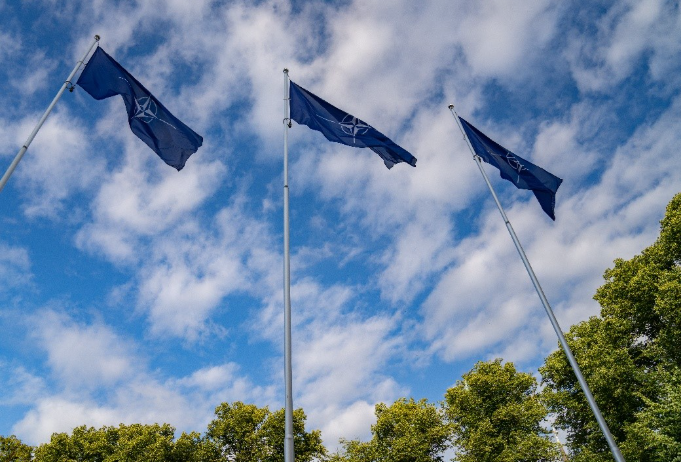
"NATO Flags at the Riga Castle - Latvia (53870034739)" by Tony Webster is licensed under CC BY 2.0.
NATO’s summit in Ankara successfully avoided major blowups and ended with a generally positive summit communique, but it also struggled in its overarching aim to demonstrate the alliance’s unity. NATO is attempting to adapt to a new strategic environment in which the US redirects attention to Asia and Europe takes on operational management. Simultaneously, NATO is reckoning with elevated levels of internal tension and unpredictability brought on by conflicts between Washington and other members of the alliance, which are challenging transatlantic cohesion.
In Ankara, European leaders confronted American leadership still focused on Iran, Greenland, and Europe’s perceived lack of progress on defense investment. At the same time, allies successfully reaffirmed support for Ukraine and announced new defense procurement deals. These dual outcomes reaffirm downside risks in NATO’s predictability and planning, as well as a lack of common vision about where the transatlantic relationship is going. However, some upside risks are also present, such as industrial projects enabled by increasing defense spending across Europe, and warming towards Türkiye, the summit’s host.
In today’s full analysis:
Managing Tension and Projecting Unity
Outcomes From the Summit
Risks and Opportunities

Europe
Moscow has implemented a ban on diesel exports until the end of July, reflecting the seriousness of the fuel shortage caused by Ukraine’s escalating long-range strikes. Ukraine has struck up to 22 oil refineries since the beginning of 2026, including the Omsk oil refinery last week, the country’s largest, which is located about 2,500 km from the front lines. Ukraine’s strikes reflect a change in capability: FP-1 drones designed by Ukraine defense contractor Fire Point have redesigned a wing to act as an additional fuel tank, allowing drones to travel as much as 3,400 km. Ukraine has also scaled production. Russia intercepts an average of 600 Ukrainian drones per day, but some inevitably get through air defenses. As a result, up to 30% of Russia’s oil refining capacity has been taken offline, causing hours-long lines at fuel pumps. Russia has announced it will import as much as 400,000 tons of fuel per month to fill its current deficits.
Ukraine’s strategy is to increase the costs of war for Russians at home to compel negotiations. Ukrainian President Volodymyr Zelenskyy tweeted that “Russians must feel that their state is waging this war.” However, Russia’s government will aim to stabilize the diesel market through supply agreements with Mongolia and India. In the meantime, Russia will scramble to improve air defenses near oil and gas infrastructure within range of Ukrainian long-range strikes, but covering an expansive amount of territory will take time. Russia’s diesel imports will intensify a global supply glut, increasing costs for EU states too.
Read More: OilPrice.com, Politico, Financial Times [paywall], Institute for the Study of War
Middle East
Iraq agreed to US demands to halt the flow of dollars to Iran-backed militias as part of the process of restarting regular US dollar shipments. The US suspended shipments of cash, generated by Iraq’s oil revenues and routed through the Federal Reserve Bank in New York, in April in a bid to pressure Baghdad to curtail the actions of Iran-backed militias and Iran-aligned groups in Iraq. Dollar-denominated salaries for Iran-backed members of the Popular Mobilization Forces, a patchwork of militias brought under state control in the postwar period, and the black market have been a significant source of dollars for Iran following US sanctions. Baghdad reportedly agreed to take steps to stop Iran from obtaining dollars from currency exchange businesses and salary payments.
The move represents a westward shift for Baghdad amid immense pressure from the US to distance itself from Iran. The US made its preferences in Iraqi government formation this spring unusually clear: President Trump’s public disapproval of contender Nour al-Maliki as too close to Iran ultimately contributed to the confirmation of political outsider Prime Minister Ali Al Zaidi. The US-Iraq relationship has often been seen as a necessary evil in Iraq, where Iranian influence and the memory of postwar occupation weigh heavily. But al-Zaidi’s efforts to curb dollars to Iran and a policy focus on bringing weapons under state control are a step towards Washington, which wants to curb Iranian influence and make operating in Iraq safer for US companies.
Read More: Wall Street Journal [paywall], Reuters [paywall], Middle East Institute
Asia-Pacific
India and Australia on Thursday adopted a new defense and security cooperation, pledging to deepen military interoperability and coordination, maritime security, and defense industry collaboration as uncertainty in the region builds. The agreement comes just days after Beijing flexed its growing military might on Monday, launching a nuclear-capable missile into international waters for the first time with little warning to global leaders, underscoring the country’s expanding capabilities and broader nuclear ambitions. While both Canberra and New Delhi have stepped up engagement with Beijing in recent years, relations remain limited and tensions simmer.
The two leaders also announced Australia will begin selling uranium to India for “peaceful purposes,” finalizing the safeguards for their nuclear cooperation agreement signed over a decade ago. India seeks to incorporate more nuclear power into its energy mix, up from 8 GW today to 100 GW in 2047, as demand skyrockets in the energy-hungry country. New Delhi is preparing for a peak power demand of 300 GW next year to support its data centers and AI usage. Prime Minister Modi on Wednesday emphasized the need for more homegrown capabilities and clean energy supplies to protect India’s sectors from global uncertainties. For Australia, which is home to one of the world’s largest uranium reserves despite not having nuclear power generation of its own, rising global demand for nuclear energy is set to strengthen its position as a key supplier of uranium.
Read More: Nikkei Asia [paywall], Prime Minister of Australia, New York Times [paywall], Reuters [paywall], Center for Strategic and International Studies
Americas
Colombian President-elect Abelardo de la Espriella called off transition talks with outgoing President Gustavo Petro on July 7. De la Espriella, whose victory in the June 21 presidential runoff marked the latest instance of Latin America’s shift to the right, is set to take office on August 7. De la Espriella suspended the transition process after accusing the Petro administration of corruption, stating that evidence of irregular contracts came to light during the initial working sessions. Petro has refused to accept the election results, alleging fraud. However, Ivan Cepeda, the ruling party candidate who ran against de la Espriella, has conceded the election.
Immediately following the suspension of the transition process, Petro’s lawyer filed a criminal defamation complaint against a member of de la Espriella’s transition team. Petro’s team also formally requested that the Office of the Inspector General and the Office of the Comptroller General oversee the transition as guarantors. These institutions would be responsible for facilitating the transfer of information and appointing officials to attend transition sessions. However, Petro has also expressed support on X for publicly broadcasting all transition meetings. De la Espriella’s team has accused Petro of turning the transition into a spectacle.
Africa
Nigeria opened its first lithium processing plant, reflecting a broader push by African governments to capture greater domestic value from the sector. Among the largest refineries in Africa, the plant is expected to process 3 million metric tons of lithium per year.
The project highlights Nigeria’s growing geopolitical importance in the race for critical minerals, and particularly access to processed lithium. Abuja’s expanding lithium sector attracted approximately $1.3 billion in Chinese investment between 2023 and 2025, reinforcing Beijing’s influence over emerging supply chains. At the same time, the US is seeking to strengthen its own access to lithium. The US Defense Logistics Agency recently announced plans to expand its stockpile of battery-grade lithium carbonate through a five-year contract worth up to $300 million to procure 16,000 metric tons. The contract has yet to be awarded, but could include Nigeria and other lithium producers on the continent, intensifying economic competition between Washington and Beijing.
Read More: Semafor Africa, Business Insider Africa, Yahoo Finance
Geoeconomics
The IMF’s new global GDP report shows a world economy that has absorbed the Iran war better than initially feared. The Fund lowered its 2026 global growth forecast to 3.0%, down from 3.1% in April and below the 3.5% average of 2024 and 2025, while raising its 2027 forecast to 3.4%. The downgrade is being driven by higher energy prices, trade fragmentation, and the direct hit from the Middle East conflict, but the damage has been cushioned by strategic oil releases, higher non-Gulf energy production, renewable energy, and continued demand tied to AI and technology investment. The IMF now expects global inflation to rise to 4.7% this year before falling to 3.9% in 2027, with energy prices still about 25% above their prewar level and the baseline assuming the Strait of Hormuz begins reopening in mid-July and normalizes by March 2027.
The country-level revisions show a continued divergence between developed and emerging economies. The US forecast was left unchanged at 2.3% growth in 2026, supported by AI-related investment and lower direct exposure to Gulf energy, while China was upgraded to 4.6% after a strong first quarter, and South Korea received a large upgrade because of AI hardware exports. India was trimmed slightly to 6.4% but remains one of the fastest-growing major economies. The euro area was cut to 0.9%, Japan was lowered to 0.6%, and emerging and developing economies were trimmed to 3.8%, with the sharpest hit in the Middle East and Central Asia, where the IMF cut 2026 growth by 1.2 percentage points to 0.7%.
Read More: Reuters [paywall], IMF
Energy
Oil prices spiked following the resumption of US hostilities with Iran. Futures for Brent crude shot up more than 7%, reaching almost $80 a barrel immediately after Trump stated that the US-Iran ceasefire deal was over. Ships are also starting to turn back from attempting to transit the Strait of Hormuz amid renewed attacks on vessels, such as damage to a Qatari LNG tanker and a Saudi-flagged crude oil tanker. However, some shipping appears to still be going through the Strait despite the resumption of American military activities and Iranian attacks on ships. The US also revoked its sanctions waiver for Iran to sell its oil.
Oil prices are still much lower than they were at their peak several months ago. At the height of the conflict, prices moved up to over $110 per barrel, and they have been trending downwards since May. While there had been fears of a supply glut due to demand destruction and increased supply from the Middle East, the flare-up between the US and Iran has the potential to undercut that possibility.
Renewed fighting around the Strait of Hormuz adds more unpredictability to global energy markets. US President Trump has opted not to restart the US blockade of Iran, and he has expressed openness to continued talks. However, the lack of stability around the Strait of Hormuz creates problems for shipping in the region. Each round of new attacks on commercial shipping undermines confidence in the Strait’s reopening and complicates the potential for future recovery of shipping. Continued instability could further drive interest in alternative energy options, expansion of production away from the Middle East, and demand for energy producers like Russia, which are not subject to closures of the Strait of Hormuz or US-Iran fighting.
Read More: Wall Street Journal [paywall], Reuters [paywall], Reuters [paywall], Oilprice.com
Transnational Crime and Corruption
US, Canadian and European authorities charged 37 members of an India-based criminal organization with conducting international smuggling, extortion and political assassination campaigns. The organization was allegedly led by Lawrence Bishnoi, a high-profile Indian gangster. According to the Department of Justice press release, Bishnoi “directed political assassinations, murders, shootings, extortions, kidnappings, drug trafficking, human smuggling, and other crimes” from his prison cell. The extortion campaigns often targeted Indian diaspora communities by threatening family members still in India. US prosecutors hinted that they may request India to extradite Bishnoi and other senior gang members to the US to ensure he could no longer manage the criminal organization from prison.
The Bishnoi enterprise was accused of murdering and attempting to murder Sikh activists based in the US and Canada. In June 2023, a Bishnoi operative murdered the Sikh political separatist Hardeep Singh Nijjar outside a gurdwara in a suburb of Vancouver, British Columbia. Then-Prime Minister Justin Trudeau accused senior Indian government officials of directing Bishnoi to conduct the assassination, setting off a severe diplomatic crisis between Canada and India. In October 2024, US prosecutors charged an Indian intelligence agent with conspiring with Bishnoi gang members to murder another Sikh activist in New York City. The charges announced this week did not reference alleged Indian government connections with Bishnoi’s gang, which India has strenuously denied.
Read More: US Department of Justice, New York Times [paywall], CBC


Contact Us
Karl Hopkins
Partner
+1 202 429 6499
khopkins@steptoe.com
Melissa B. Mahle
Senior Advisor
+1 202 261 0577
mmahle@steptoe.com
Anni Coonan
Senior Intelligence Analyst
+1 212 506 3979
acoonan@steptoe.com
Samuel Bloebaum
Senior Due Diligence Analyst
+1 602 410 6240
sbloebaum@steptoe.com
Zayna Dembinski
Analyst
+1 202 778 3567
zdembinski@steptoe.com
Thomas Goldstein
Analyst
+1 202 862 6735
tgoldstein@steptoe.com
Ian Cameron
Analyst
+1 202 327 6908
icameron@steptoe.com
Elton Smole
Analyst
+1 202 261 0556
esmole@steptoe.com
Carter Spahn
Intelligence Fellow
+1 202 261 7555
cspahn@steptoe.com
Chris Dantes
Intelligence Fellow
+1 202 327 6904
cdantes@steptoe.com
Legal disclaimer: This Substack is for educational and informational purposes only and does not constitute the rendering of legal counseling or other professional services. Reading, subscribing to, or communicating through this Substack does not create an attorney-client relationship. Do not send confidential information through this platform. Consult qualified legal counsel regarding your specific circumstances.