


Welcome to the Stepwise Risk Outlook, which highlights and contextualizes over-the-horizon developments in key regions of the world and industries of the global market. Today’s featured deep dive by Thomas Goldstein examines the political challenges to EU enlargement.

EU Enlargement Back on the Agenda: What to Know
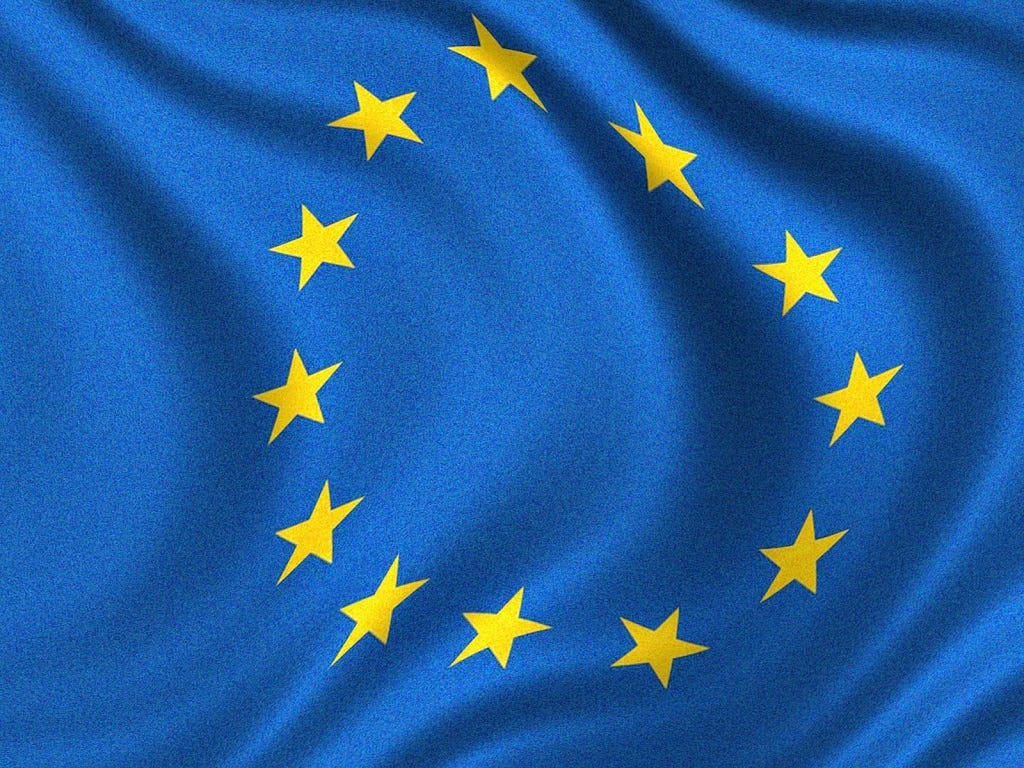
“European Union flag“ by YanniKouts is licensed under CC BY 2.0.
Political momentum is growing to admit new members into the EU for the first time since 2013. Before a June 5 summit hosted in Tivat, Montenegro, a non-paper circulated by Germany and France endorsed a “gradual enlargement” approach to grant EU candidates privileges as they complete relevant reforms, before full membership, thereby locking in accession. This pivot is a technical but important signal that the EU’s Franco-German engine is considering bending the rules to treat enlargement as a geopolitical necessity. However, enlargement is a political minefield. To translate momentum into reality, EU member states must also resolve questions of unanimity in foreign policy decision-making, where EU budget funds go, and the politics of whether Ukraine “cuts the line.” On the upside, an enlarged EU would eliminate nontariff barriers across Europe and open new investment opportunities. On the downside, a rushed enlargement could create friction with the US, complicate internal EU political dynamics, or create negative economic shocks, contributing to regional instability.
In today’s full analysis:
The Tivat Summit: Adjusting the Enlargement Method
The Political Minefield of EU Enlargement: What to Watch
The Risk Outlook

Global
The Russian intelligence now controls access to the internet and other digital communications platforms, in an expanding trend of digital authoritarianism. The FSB has exploited digital communications for intelligence collection for years, but starting last year has taken control, determining what services will be inaccessible. The shutdowns impact normal commercial activity, such as digital payment services. But shutdowns also counter the risks of Ukrainian drones using Russian mobile networks for command and control communications. Russian intelligence has also successfully convinced Russian leaders to ban popular social messaging apps, such as Telegram and WhatsApp, pushing users to state-approved apps that the FSB can compromise and manipulate.
Similarly in Iran, the Islamic Revolutionary Guard Corps (IRGC) fully controls domestic access to the internet. The IRGC shut down the internet for almost three months starting in January. The regime was initially trying to quell national protests but extended the shutdown for counterintelligence purposes. Reportedly, the Israelis were exploiting Iranian domestic surveillance systems to collect intelligence on leadership movements, informing targeting operations during military operations. Tehran has since created separate high-speed internet access for “trusted” users that is exempt from national filtering, while businesses and the general public must rely on the heavily restricted state-controlled system.
Controlling digital services is the new wartime intelligence imperative. While the governments characterize digital sovereignty as needed to protect national security, privacy and economic resiliency, countries are using digital authoritarianism for espionage, counter-espionage, mass surveillance, censorship and repression of internal dissent. Citizens who have become increasingly dependent upon the digital domain are vulnerable to state-directed coercion. VPNs are regulated. Foreign apps are no longer available, and permitted VPNs are heavily monitored. Introduction of state-controlled platforms enables governments to further exert digital dominance and weaponize digital services.
Read More: Financial Times [paywall], Financial Times [paywall], CNN
Europe
France has offered preliminary proposals to reform the EU External Action Service (EEAS), the bloc’s diplomatic service, to prevent overlap in foreign policy. France makes three proposals: either put all EU foreign policy under the European Commission, the bloc’s foreign affairs ministerial, or the EEAS with “reinforced” powers for its leader, the High Representative for Foreign Affairs. Such a change in the bloc’s foreign policy could occur without EU Treaty changes—as long as the EEAS is not dramatically restructured—but a fierce debate on who speaks for the EU will follow nonetheless.
Some diplomats told the Financial Times that the current system is “dysfunctional,” largely because the EEAS has scrambled to coordinate among both the European Commission and individual member states, leaving little room for its ability to speak for the bloc’s foreign policy. Many capitals have been irked when High Representative Kaja Kallas has spoken on foreign policy issues on behalf of the bloc, including on divisive issues like managing relationships with China and Russia. If the EU is to maintain a foreign policy voice, the European Commission will most likely subsume the EEAS. While this option would enable the EU to speak flexibly with one voice, member states will still be skeptical of Brussels steering the direction of their foreign policy.
Read More: Politico, Reuters [paywall], Financial Times [paywall]
Middle East
President Trump called off high-profile strikes on Iran, again raising the prospect of an imminent peace deal. On Thursday evening, President Trump walked back threats to “take” Kharg Island. Siezing Iran’s primary maritime oil exporting hub would have been highly escalatory and require significant American boots on the ground, exposing the US to higher-impact attacks. Instead, President Trump called off strikes and announced a new memorandum of understanding that would end the US blockade of Iranian ports in exchange for the opening of the Strait of Hormuz.
Optimism for a deal, after weeks of whipsawing between escalatory rhetoric and announcements of imminent peace, is low. Iranian officials denied American claims that they had agreed to the new deal, and said that they would not compromise on their red lines – chief among them the prompt delivery of billions in frozen Iranian assets currently held in the US. Both sides badly want a deal, but significant obstacles remain.
Both sides’ desire to claim a win complicates any deal more substantive than a ceasefire. Both sides have repeatedly claimed victory over the course of the conflict and feel it is politically necessary to emerge with an agreement that can be cast as a victory lap to hawks and hardliners at home. But issues that both sides consider red lines – like whether Iran has a right to enrich uranium, or to exercise sovereignty over the Strait of Hormuz – are impossible for the other side to spin. Unless one side is willing to accept an exit ramp, rather than a win, a substantive peace deal is unlikely to come in the near future.
Read More: Wall Street Journal [paywall], Associated Press, Associated Press, New York Times [paywall]
Asia-Pacific
Three Indian sailors were confirmed dead on Thursday after a US strike on an oil tanker off the coast of Oman. The strike on the Palau-flagged Settebello was the third such attack this week after the US military accused the ships of violating its blockade. Oman’s military rescued dozens of Indian crewmembers from the affected vessels, which also included the Palau-flagged Marivex and Guinea-Bissau-flagged Jalveer.
New Delhi has responded sharply, summoning the deputy chief of mission at the U.S. Embassy in India to lodge a protest. India’s permanent representative to the United Nations condemned the attacks in a statement at the UN Security Council, highlighting the danger to Indian nationals and the consequences for the Indian economy. India’s minister of ports, shipping and waterways has released a statement describing the incident as a profound loss and directing government officials to repatriate surviving Indian crewmembers.
The diplomatic fallout is a setback for US-India ties, despite recent efforts to improve the relationship. Indian Prime Minister Narendra Modi will likely hold bilateral talks with US President Donald Trump at next week’s Group of Seven summit. New Delhi has been seeking to finalize trade negotiations with Washington as it diversifies its energy sources. India has been heavily impacted by the disruptions in shipping through the Strait of Hormuz and has called for dialogue and diplomacy to achieve a lasting peace agreement.
Read More: New York Times [paywall], Reuters [paywall], Wall Street Journal [paywall]
Americas
Anti-government protestors in Boliva have paralyzed much of the country with roadblocks as they call for President Rodrigo Paz’s resignation. Paz is the first right-wing leader in Bolivia after more than a decade of rule by the leftist Movement for Socialism. Upon taking office, he cut fuel subsidies in an effort to stabilize the economy, but inflation and low wages have persisted. Workers’ unions, farmers, and indigenous groups have responded with dozens of blockades on key transport routes, including around the capital La Paz.
The blockades have brought Bolivia close to a standstill, causing shortages of basic goods, as demonstrators clashed with police. The unrest has resulted in 10 deaths and hundreds of arrests. Demonstrators have utilized firecrackers and stones to confront police, who responded with tear gas. On Monday, farmers attempted to cut off a key bridge in the central city of Cochabamba. In El Alto, near La Paz, crowds stormed a public transit union office amid a protest over fuel shortages.
Paz signed legislation on Monday to open the way for declaring a state of emergency. For it to take effect, he must issue an additional decree. Such a move would suspend constitutional rights and embolden the military to clear the blockades. However, a major crackdown could further enflame tensions. Paz, who has the backing of US President Donald Trump and the recently formed Shield of the Americas coalition, has urged restraint in the use of force so far. Meanwhile, protestors have pledged to continue demonstrating until he steps down.
Read More: AP, France 24, The Economist [paywall]
Africa
Tanzania is seeking to deepen economic cooperation with Russia amid growing diplomatic tensions with the West. Repression and arbitrary disqualification of opposition candidates during the October 2025 presidential election triggered large-scale protests. In response, the government imposed an internet blackout and used force against protestors, killing an estimated 700 protestors according to the UN. Following the violent crackdown, the State Department announced it would review bilateral relations and designated a Tanzanian police commissioner for involvement in “gross violations of human rights.” US senators are also pushing for sanctions on Tanzanian officials and a freeze in security assistance. Meanwhile, the EU condemned the killings and froze $180 million in annual assistance.
Against this backdrop, President Samia Suluhu Hassan has accelerated outreach to Moscow. Her visit to Russia in June—the first by a Tanzanian head of state since 1969—covered expanding cooperation in trade, mining, pharmaceuticals and other areas. Tanzania’s mining minister stated that the two countries recommitted to advancing the $1 billion Mkuju River uranium mining project, which is led by Russian nuclear corporation Rosatom. If developed, the project could position Tanzania as one of the continent’s top uranium producers.
Despite setbacks to its credibility in West Africa, Russia continues to capitalize on tensions between Western and African nations. Across the continent, Moscow has pursued a strategy of exchanging security assistance and economic partnerships for access to resources. While Russia’s influence in West Africa has weakened somewhat due to repeated failures by the Africa Corps to contain jihadist insurgencies, its outreach to Dodoma underscores that Russian influence is likely to remain a significant regional challenge.
Read More: Radio France Internationale, Semafor Africa, US Department of State, Business Insider Africa, US Department of State, Critical Threats
Geoeconomics
The Consumer Price Index rose 0.5% in May and 4.2% from a year earlier, up from 3.8% in April and the fastest annual pace since 2023. Energy did most of the damage: energy prices rose 3.9% on the month and 23.5% over the year, with gasoline up 7.0% in May and 40.5% year over year. Energy accounted for more than 60% of the monthly CPI increase, while food rose a milder 0.2% on the month and 3.1% over the year. Core CPI, which excludes food and energy, was not as high, rising only 0.2% in May after rising 0.4% in April, and the annual core rate ticked up to 2.9% from 2.8%.
The May PPI report showed producers are shouldering some of the costs. Producer prices rose 1.1% in May and 6.5% from a year earlier, the largest annual gain in roughly three and a half years, with the increase also driven heavily by energy: gasoline jumped 23.4%, while diesel, jet fuel, natural gas liquids, plastics, chemicals, and other industrial inputs also rose. Core PPI excluding food and energy was up 0.4% on the month and 4.9% over the year, while the broader core measure excluding food, energy, and trade services rose 0.8% in May and 5.1% annually.
The Fed is again in a difficult position heading into next week’s meeting. The energy shock from the Iran war is pushing headline inflation higher and raising producer costs, but monetary policy cannot reopen shipping lanes, lower oil prices, or fix disrupted fuel supply chains. At the same time, the Fed cannot ignore the risk that temporary energy pressure passes through into broader prices and inflation expectations, especially with the labor market remaining strong. This will also be Kevin Warsh’s first FOMC meeting as Fed chair, making the decision an early test of whether he can preserve the Fed’s inflation credibility while managing a divided committee and a politically sensitive rate path, especially as President Trump continues to push for the bank to cut interest rates.
Read More: Bureau of Labor Statistics, Bloomberg [paywall], Reuters [paywall], Council on Foreign Relations
Disruptive Technology
SpaceX trades publicly today in the largest initial public offering (IPO) in history. The company aims to raise $75 billion in its IPO, trading at $135 per share across 555.6 million shares at a full valuation of $1.77 trillion. Its purported valuation is a bet on xAI, the developer of Grok that recently merged with the company. Currently, SpaceX makes most of its revenue through Starlink, a satellite-based internet service provider backed by a mega-constellation of over 10,000 low-earth orbit satellites, but the company also envisions using its rocket launch capabilities to put AI data centers in space to utilize constant solar energy.
SpaceX could be a signal for the broader stock market, buoyed by AI and tech stocks. AI developers like Anthropic are also eyeing IPOs later this year, but could delay depending on SpaceX’s performance, the first IPO of an AI developer. Due to new NASDAQ rules, new stocks like SpaceX will be bought up by passive investors like index funds and pensions after 15 days. This could embolden AI companies but also add financial volatility to the broader financial system.
Read More: TechCrunch, The Street, New York Times [paywall]
Energy
Since the beginning of the war in Iran, the US has become India’s primary gas supplier. The US has increased exports of liquefied natural gas (LNG) and liquefied petroleum gas (LPG), replacing India’s supplies from the Gulf, which have been disrupted by the war in the Middle East. US exports of LNG to India in May were up 300% month on month, totaling 900,000 tons and making up more than 40% of India’s total requirements. While the shift is due in large part to the closure of the Strait of Hormuz, Washington has also undertaken a broader push to sell more energy to India even before the start of the US war with Iran. American exports to India have increased eightfold compared to the level of trade pre-war.
Growth in Indian imports of American gas is coexisting with increases in India’s imports of Russian oil. Russian oil made up almost 40% of India’s imports in April, an 11-month high. Russia has also reportedly begun charging a premium of over 400% for its oil, a major shift from earlier when it had been offering discounts to attract buyers. In March, Russia had only accounted for around 27% of total Indian imports. At the same time, US exports of oil to India fell. New Delhi has repeatedly asked the US to extend limited sanctions relief on Russian energy exports, which Washington had implemented to stabilize the global energy market.
Read More: CNBC, The Hindu, Reuters [paywall], Bloomberg [paywall]
Transnational Crime and Corruption
Clashes between police and protestors in Northern Ireland reflect growing political tensions over crime and UK immigration policy. The protests were sparked by a knife attack in Belfast committed by a Sudanese national granted refugee status in 2023. The protestors blocked roads, set houses and vehicles on fire and marched through Belfast chanting anti-immigrant slogans. At least 27 people, fearing violence, were evacuated from their homes by police. Similar protests took place last week in Southampton against perceived bias in the police response to a stabbing murder committed by a British Asian man. UK authorities highlighted how the severity of the protests was driven by the quick spread of outrage and rumor on social media following the stabbings.
UK political figures widely condemned violent protestors while promising stronger responses on immigration. Prime Minister Kier Starmer characterized the protestors as bigoted and accused “bad faith actors” on social media of calling for violence. Conservative Party Leader Kemi Badenoch found the protests “deeply disturbing” and called for increased border security as a response to public anger. Reform Party leader Nigel Farage called for “pure cold rage” in Southampton and warned that further protests in Northern Ireland were inevitable without major asylum policy reforms. A Gallup poll in February found that 21% of Britons called immigration the biggest issue facing the UK, more than any other country in the world.
The protests in Belfast are disruptive to Northern Ireland’s already struggling economy. Belfast has the fastest rising rents of any UK city while Northern Irish household incomes are significantly lower than the rest of the UK. Northern Ireland’s healthcare and hospitality sectors also rely disproportionately on immigrant workers. The Financial Times reported that many migrant doctors and nurses in Belfast feared coming to work following the protests.
Read More: New York Times [paywall], Financial Times [paywall], The Economist [paywall], Gallup


Contact Us
Karl Hopkins
Partner
+1 202 429 6499
khopkins@steptoe.com
Melissa B. Mahle
Senior Advisor
+1 202 261 0577
mmahle@steptoe.com
Anni Coonan
Senior Intelligence Analyst
+1 212 506 3979
acoonan@steptoe.com
Samuel Bloebaum
Senior Due Diligence Analyst
+1 602 410 6240
sbloebaum@steptoe.com
Zayna Dembinski
Analyst
+1 202 778 3567
zdembinski@steptoe.com
Thomas Goldstein
Analyst
+1 202 862 6735
tgoldstein@steptoe.com
Ian Cameron
Analyst
+1 202 327 6908
icameron@steptoe.com
Elton Smole
Analyst
+1 202 261 0556
esmole@steptoe.com
Carter Spahn
Intelligence Fellow
+1 202 261 7555
cspahn@steptoe.com
Chris Dantes
Intelligence Fellow
+1 202 327 6904
cdantes@steptoe.com
Legal disclaimer: This Substack is for educational and informational purposes only and does not constitute the rendering of legal counseling or other professional services. Reading, subscribing to, or communicating through this Substack does not create an attorney-client relationship. Do not send confidential information through this platform. Consult qualified legal counsel regarding your specific circumstances.