


Welcome to the Stepwise Risk Outlook, which highlights and contextualizes over-the-horizon developments in key regions of the world and industries of the global market. Today’s featured deep dive by Dan Arbell examines potential outcomes of Israel’s elections.

Key Takeaways Ahead of Israel’s Consequential Upcoming Elections
By Dan Arbell
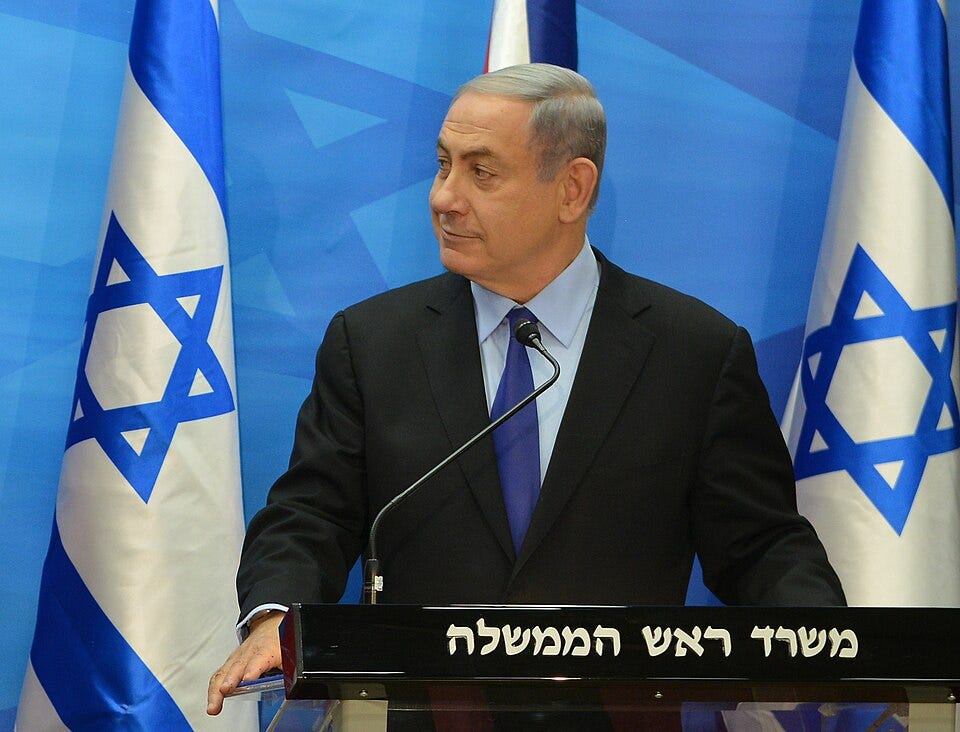
“Prime Minister Benjamin Netanyahu” by Foreign, Commonwealth & Development Office is marked with CC BY 2.0.
_(cropped-02).jpg)
In two weeks, Israelis will vote in a deeply consequential election amid prolonged regional war, rising domestic divisions, and a messy electoral map. Ahead of the October 27 vote, recent polls show a near-tie. Neither the Netanyahu bloc nor the opposition reliably reaches the 61 of 120 Knesset seats needed for a coalition, so the bargaining after election day may matter more than the vote itself. The opposition’s security policy differs little from Netanyahu’s, and the election is not a referendum on the country’s broader security posture. Instead, it centers on domestic accountability and governance. A change of government would be most felt domestically, touching issues like the military draft for Ultra-Orthodox men, the judiciary’s role, and the tone and mechanics of post-war Gaza diplomacy. The outcome will also impact Israel's global diplomatic and economic relationships, intensifying or ameliorating reputational and regulatory risks amid rising European condemnation and US tensions at the leadership level.
In today’s full analysis:
The State of the Race
What Would Change Under Each Frontrunner?
Where This Leaves Us
Or listen to the full report here:

Listen to the news:
Global
Suspected drone attacks on ships in the vicinity of Romanian territorial waters raise stakes for NATO response. Two chemical tankers were attacked while anchored in the Black Sea. Romania scrambled fighter jets, but has not commented publicly on the incident, which local media is attributing to Russian drones. Attribution, however, can be difficult. Five commercial vessels have been attacked in separate drone incursions in the past week. Neighboring Bulgaria reported similar attacks against two cargo ships sailing in its exclusive economic zone in the Black Sea this week, sinking one of the ships.
Attacks on shipping in NATO member states territorial waters would be a breach of sovereignty. If the ships are located in exclusive economic zones, but outside territorial waters, they would not automatically trigger NATO’s Article 5 collective-defense clause, leaving member states to lead the response. Black Sea countries Bulgaria, Romania and Turkey have raised the issue at NATO, asking for more focus on the region and joint support. NATO is considering deploying anti-drone defenses to the region to respond to a series of unprecedented attacks. Russia’s ability to launch large-scale attacks using drones poses a growing strategic vulnerability for NATO countries.
Read More: Financial Times [paywall], Ars Technica, Politico, Reuters [paywall]
Europe
EU heads of government gather in Brussels for the European Council summit. The most pressing issue is the seven-year budget, known as the Multiannual Financial Framework (MFF). There is an impasse between the “frugals” (member states seeking to trim the budget to prevent increases in member state contributions) and the “friends of cohesion” (member states seeking a larger budget to preserve legacy funds for agriculture and regional development). Ireland proposed a compromise to preserve the MFF’s legacy funds while cutting new priorities in competitiveness and defense, but this idea was rejected by everyone. The European Commission suggested adding new “own resources” (i.e., EU taxes) to fulfill a growing list of demands.
The Council will also juggle time to discuss migration, competitiveness, defense, and EU enlargement. Leaders may seek to spend time discussing migration as elections loom. Spanish Prime Minister Pedro Sanchez, facing the polls next month, will defend Spain’s record after the August onrush in Ceuta, an exclave bordering Morocco, and take aim at Italian Prime Minister Giorgia Meloni, who restricted travel to Spain to defend her hardline migration bona fides before elections next year. Meanwhile, Germany wants to discuss EU enlargement and tougher trade policy toward China.
Read More: Politico, European Parliament Research Service, Stepwise Risk Outlook
Middle East
Yemen’s Iran-backed Houthis are reportedly building advanced missiles with Chinese parts. Per a new report by Conflict Armament Research, the Houthis are using Chinese components to make an independent version of Iran’s Kheibar Shekan precision-guided missile. Attempts have been ongoing since at least June, and it is unclear if the Houthis have been successful.
The news signals the Houthis’ relative strategic autonomy, as well as rising risks to Saudi Arabia. Sourcing supplies from China, and copying the Kheibar Shekan demonstrates a level of desired independence from Iran – although the Houthis have always considered themselves more a partner than a proxy of Tehran. If successful, the missile will put all of Saudi Arabia and Israel within the Houthis’ reach, escalating risks to Saudi Arabia that already reached historic heights with the deadly and expensive Riyadh airport attack of the weekend.
Read More: Wall Street Journal [paywall], CNN, Brookings Institution
Asia-Pacific
Russia on Tuesday accused Japan of using journalists to gather intelligence and detained a Japanese reporter on suspicion of espionage. Russia’s Federal Security Service (FSB) identified the journalist as a correspondent for Japan’s Hokkaido Shimbun newspaper and accused him of collecting information on Russia’s defense capabilities. Japan denied the allegations and summoned the Russian ambassador on Wednesday to lodge a formal protest.
The arrest further strains already deteriorating relations between Tokyo and Moscow. The two countries have a decades-long territorial dispute over the Kuril Islands, which flared again in August when Russian President Vladimir Putin visited the disputed territory, prompting strong protests from Tokyo. Relations, however, especially soured after Russia’s invasion of Ukraine and Japan’s subsequent imposition of sanctions against Russia, imposing additional measures approved this month. Moreover, Russia has increasingly echoed China’s criticism of Japan’s defense posture, accusing Tokyo of seeking to revive World War II-era militarism. The detention, the most high-profile arrest of a foreign journalist in Russia since 2023, will further complicate efforts to improve bilateral ties.
Read More: The Japan Times, Wall Street Journal [paywall], Reuters [paywall]
Americas
Costa Rica opened a new mega-prison on Wednesday amid high levels of crime. Costa Rica’s conservative President Laura Fernandez announced that the High-Containment Centre Against Organized Crime (CACCO) represents a tough-on-crime model in Costa Rica that seeks to make the country a benchmark for prison security. The prison will have the capacity to hold 5,100 people, or 20 percent of Costa Rica’s current prison population. Costa Rica, which lies along the narcotrafficking route through Central America, has seen elevated homicide rates in recent years, with a record 905 homicides in 2023.
The opening of CACCO comes as nations across Latin America seek to replicate Nayib Bukele’s carceral model in El Salvador. Similar proposals have been made in the past year by right-wing candidates in Colombia, Brazil and Peru, where the growth of organized crime has given a boost to conservative candidates. Costa Rican President Fernandez took office in May and declared a war on criminal groups. On Friday, she will visit the CECOT facility in El Salvador to learn about its operational procedures. However, CACCO’s capacity is only one-eighth of that of CECOT, which can hold up to 40,000 prisoners.
Read More: El Pais, Al Jazeera, Reuters [paywall]
Geoeconomics
China’s goods trade surplus reached $938.1 billion in the first nine months of 2026 as September exports surged. The monthly surplus totaled $133.5 billion, putting China on course to exceed last year’s record of roughly $1.2 trillion. Exports rose 36.3% from a year earlier in US dollar terms, accelerating from 25% in August, while imports increased 31%. Semiconductors, data-processing equipment and vehicles helped drive export growth as China benefited from global AI investment. Higher prices also contributed to the figures: rising chip prices lifted export receipts, while more expensive oil increased the import bill. The strong trade performance continues to support an economy struggling with weak consumption and a prolonged property downturn.
The surplus is cushioning China’s domestic slowdown, but the IMF thinks it is not enough. MERICS finds that government credit support and investment incentives sustain production capacity even when domestic demand is insufficient, encouraging manufacturers to seek buyers abroad. Its analysis of the first half also found that stronger imports were concentrated in industrial inputs and inflated by energy prices, offering little evidence of a broad recovery in household consumption. On October 15, the IMF echoed those concerns, calling for larger fiscal stimulus to counter deflation risks, judging existing support too limited in size and scope. It also urged measures to address the prolonged property crisis and strengthen social safety nets, helping restore household confidence and shift growth from exports toward domestic consumption. If successful, those measures could narrow the trade surplus by increasing demand for imports and absorbing more Chinese production at home.
Read More: Reuters [paywall], Financial Times [paywall], Reuters [paywall], Bloomberg [paywall], MERICS
Energy
The International Energy Agency (IEA) is revising its global oil demand forecast downwards. The IEA assesses that rising fuel prices, limited global supplies, and a generally deteriorating economic outlook are pushing down the global demand picture for oil. The IEA predicts that in the fourth quarter of this year, global demand for oil will decrease 2.5 million barrels a day year-over-year and that across 2026 demand will drop on average 2.6 million barrels a day. While oil will recover partially in 2027, according to the IEA’s prediction, it will remain approximately 0.5% below 2025 levels.
While oil has largely resumed flowing from the Middle East, the shockwaves from the war with Iran continue to be felt. Brent crude futures have been trading over $100 for around a month and have risen in the last several days, even as oil from the Middle East reached around 80% of pre-conflict levels in December. The global supply problems for refined products are still present despite that, and the tensions around oil in the Middle East and Russia are creating prolonged instability.
Read More: AP, Yahoo Finance, Reuters [paywall]
Transnational Crime & Corruption
The US is reportedly deploying hundreds of Army soldiers to Panama for use in anti-cartel operations with Latin American allies. According to The New York Times, 600 soldiers from the 10th Mountain Division will be assigned to a jungle training facility and eventually train with the Colombian and Honduran militaries. The soldiers will reportedly participate in military exercises in the Colombian jungle dubbed Southern Vanguard. They will reportedly supplement extant US special operations deployments in the region. The US Embassy in Panama denied the New York Times’ reporting, asserting that only 120 soldiers from the 10th Mountain Division were deploying in Panama and that they would rotate back to the US by the end of October.
The deployment is overseen by a new office in the Pentagon overseeing anti-cartel activities. The new office joins several Latin American military initiatives to counter narcotrafficking activities, including SOUTHCOM’s Joint Task Force Western Hemisphere to coordinate activities of the Shield of the Americas coalition. The task force replaces the existing programs coordinating military airstrikes targeting maritime drug traffickers since 2025.
Read More: New York Times [paywall], Metro Libre [in Spanish]


Contact Us
Karl Hopkins
Partner
+1 202 429 6499
khopkins@steptoe.com
Melissa B. Mahle
Senior Advisor
+1 202 261 0577
mmahle@steptoe.com
Anni Coonan
Senior Intelligence Analyst
+1 212 506 3979
acoonan@steptoe.com
Samuel Bloebaum
Senior Due Diligence Analyst
+1 602 410 6240
sbloebaum@steptoe.com
Zayna Dembinski
Analyst
+1 202 778 3567
zdembinski@steptoe.com
Thomas Goldstein
Analyst
+1 202 862 6735
tgoldstein@steptoe.com
Ian Cameron
Analyst
+1 202 327 6908
icameron@steptoe.com
Elton Smole
Analyst
+1 202 261 0556
esmole@steptoe.com
Carter Spahn
Intelligence Fellow
+1 202 261 7555
cspahn@steptoe.com
Chris Dantes
Intelligence Fellow
+1 202 327 6904
cdantes@steptoe.com
Legal disclaimer: This Substack is for educational and informational purposes only and does not constitute the rendering of legal counseling or other professional services. Reading, subscribing to, or communicating through this Substack does not create an attorney-client relationship. Do not send confidential information through this platform. Consult qualified legal counsel regarding your specific circumstances.