


Welcome to the Stepwise Risk Outlook, which highlights and contextualizes over-the-horizon developments in key regions of the world and industries of the global market. Today’s featured deep dive by Elton Smole examines how drones are reshaping Latin America’s security environment.

How Latin America’s Security Landscape is Being Transformed by Drones
By Elton Smole
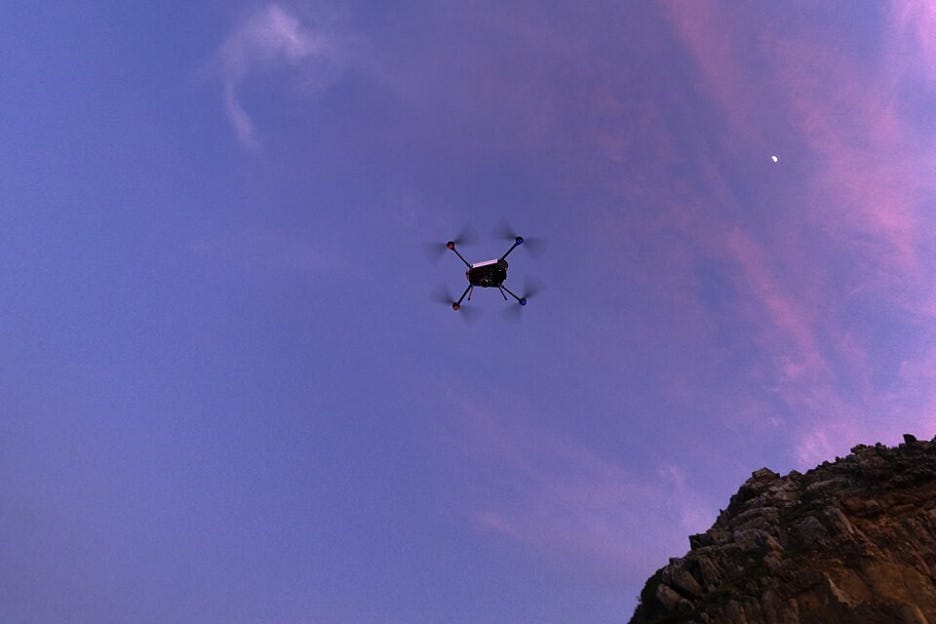
“EM120 inspection” by Medusasami is licensed under CC BY-SA 4.0.

Cheap and commercially available drones are being widely adopted by organized crime groups in Latin America to enhance their illicit activities. Rapid innovation by cartels and guerrilla groups is creating an ever-shifting landscape of threats, posing risks to public security and territorial integrity. Drones in the price range of $600-$1200 USD are retrofitted with explosives, surveillance equipment or narcotics trafficking payloads, giving gangs unprecedented capabilities. The weaponization of these technologies is accelerating: while 670 instances of weaponized drone events have been recorded in Latin America in the past eight years, more than 72% of these events occurred between January 1, 2025, and August 21, 2026.
As regional governments rush to adapt, new risks are emerging for citizens and businesses from the proliferation of Unmanned Aircraft Systems (UAS), including collateral damage in populated urban areas and new risks to supply chains and fixed infrastructure as criminal capacities evolve. These risks are even more prevalent in contexts where state capacity is already weak, are compounded by the increasing use of drones by private, non-state actors with limited regulatory oversight, and raise the need for updated regional risk assessments and protocols. While many uncertainties remain, it is already clear that aerial conflict in Latin America has reached a point of no return, as regional governments increasingly look to import more advanced capabilities from the US and abroad.
In today’s full analysis:
Aerial Innovation Expands Capabilities of Organized Crime
Regional Governments Ramping Up Responses to Evolving Threats
Emerging Risks
Or listen to the full report here:

Listen to the news:
Global
US President Trump embraces the idea of trilateral leaders meeting with Russian President Putin and Chinese President Xi, focused on denuclearization. Russia proposed a trilateral summit to discuss ending the war in Ukraine. Trump dismissed a Ukraine agenda, focusing on the strategic issue of nuclear arms control. Trump has been pushing both Russia and China for substantive talks, but the proposals have not gained traction. The concept of a leaders’ summit, however, may appeal to Putin and Xi, as it demonstrates a shift in the balance of power in the global order and could address emerging strategic risks.
Nuclear competition is a growing risk. The Strategic Arms Reduction Treaty (New START) between the US and Russia expired in February. Both the US and Russia considered each other in breach of the terms. Russia used the disagreement to formally suspend Russian participation in the nuclear arms pact in2023. The US has pushed for a “modernized” trilateral treaty to bring China into a framework agreement. China is rapidly building its nuclear arsenal, with no international restraints. China has expanded its nuclear arsenal from 250 warheads in 2015 to 600 warheads in 2026. The US has 3,700 nuclear warheads, while Russia has 4,300. New START limited the number of “deployed” warheads. Both China and Russia are concerned about the US Golden Dome missile defense program that envisions space-based interceptors, which can either fuel the nuclear arms race or help draw the Chinese and Russians to the table.
Read More: Wall Street Journal [paywall], Reuters [paywall], Brookings
Europe
Presidential envoys Steve Witkoff and Jared Kushner travel to Oslo to meet Ukrainian President Volodymyr Zelenskyy today. Crucially, meetings will also be held alongside Norwegian Prime Minister Jonas Gahr Stoere and Finnish President Alexander Stubb, who is considered a bridge between the Trump administration and the EU. Tensions are high between Washington and Kyiv following US sanctions relief for the import of Russian diesel. Since then, Zelenskyy has implied that the administration ordered the slowdown of Starshield, which undermines Ukrainian domain awareness and drone operations, and dismissed attempts at an energy infrastructure ceasefire as one-sided. US President Trump has accused Zelenskyy of not wanting to end the war and suggested Ukraine needs new leadership.
Ukraine and its European allies will aim to restore perceived goodwill as diplomatic momentum grows. Witkoff and Kushner rekindled negotiations to end the Russia-Ukraine war in the summer based on two objectives: achieving a sustainable security guarantee for Kyiv and creating the “conditions” for a durable peace, including a new security architecture and economic cooperation between Russia and Europe. The US appears committed to keeping the Europeans in the loop on these negotiations, even as it signals increased willingness to negotiate with Moscow directly on some issues, including prisoner releases. Ukraine will hope to end uncertainty over US intelligence-sharing and disarm threats of suspending further arms sales.
Read More: Axios, CNBC, Stepwise Risk Outlook
Middle East
Qatar will soon announce a defense production hub to boost defense capabilities. Doha is planning to partner with regional and Western partners to boost local production or co-ownership of indigenous defense capabilities, reportedly including ballistic missile, drone, and cyberattack defenses, among others.
Risks from the Iran war have prompted Gulf powers to diversify their defense relationships and seek indigenous capabilities. The UAE, Saudi Arabia, and Kuwait have acquired or domestically produced drones in recent months in a bid to localize their supply bases. In May, the UAE announced its intention to establish a new defense-focused free zone in Abu Dhabi. Some estimates project a possible 20% rise in Gulf Cooperation Council (GCC) military expenditure as a result of this year’s conflict. The moves come as the Gulf realizes the limitations of the US’ historical security umbrella (Gulf allies have been most targeted by Iran in the midst of the war) but will coexist with American security support, which is very much still necessary, rather than replacing it.
Read More: Reuters [paywall], Stimson Center, Arab Gulf States Institute, INSS
Asia-Pacific
US Secretary of State Marco Rubio arrived in India today for a two-day visit aimed at advancing their bilateral trade deal and expanding energy cooperation. Following his meeting with External Affairs Minister Subrahmanyam Jaishankar, Rubio told reporters the countries were “about as close as you can be without having executed the [trade] agreement,” signaling major progress not long after Indian Finance Minister Nirmala Sitharaman said negotiations had “plateaued” earlier this month.
The visit offers an opportunity to stabilize ties strained by US tariffs and pressure over India’s Russian oil purchases. President Donald Trump last week waived additional 100% tariffs on the top purchasers of Russian oil and gas, removing a major obstacle to trade negotiations. During his meeting with Jaishankar, Rubio emphasized the US’ potential to help diversify India’s energy supplies and is planning to visit the world’s largest refining complex in Jamnagar, underscoring Washington’s interest in expanding energy ties. Progress on trade and energy cooperation could help rebuild bilateral confidence, but disagreements over market access and energy sourcing remain potential sources of friction.
Read More: US Department of State, ABC, Reuters [paywall], New York Times [paywall]
Americas
Canada’s Alberta province voted in a referendum yesterday to remain part of Canada. While the vote on independence was not legally binding, it would have put Alberta on a path toward separating from the rest of Canada. Instead, 76% of voters supported remaining, a decisive rejection of a separatist movement that has gained visibility in recent years over grievances with Ottawa, including federal climate policies and perceptions that Alberta’s oil-driven economy is underrepresented in national decision-making.
The result was a victory for Canadian Prime Minister Mark Carney. He campaigned in Alberta for the remain vote, including a rally on Friday in Edmonton. Carney, who grew up in Alberta, is seeking to unify Canada amid trade tensions with the United States. The result strengthens his message of national unity. The vote also comes amid heightened Canadian nationalism sparked by US tariffs and tense rhetoric, with many voters viewing the referendum as a bellwether of Canadian unity more broadly.
Read More: CNN, CBS, New York Times [paywall]
Geoeconomics
India and New Zealand’s free trade agreement took effect on October 20, eliminating tariffs on Indian exports and expanding access to India’s market. New Zealand removed duties of up to 10% on qualifying Indian goods, benefiting sectors including textiles, apparel, footwear and engineering products. In return, approximately 57% of New Zealand’s existing exports to India now enter duty-free, rising to 82% as phased reductions are completed; altogether, 95% will receive tariff elimination or reductions. Immediate beneficiaries include sheep meat, wool, coal and most forestry products, while apples and kiwifruit receive preferential access within quotas. A second round of tariff cuts begins on January 1, 2027. The governments aim to double bilateral goods and services trade to NZ$7 billion by 2030.
The agreement helps both countries diversify their economic relationships, but India installed protections for politically sensitive sectors. Most dairy products, including milk and cheese, remain excluded, limiting opportunities for one of New Zealand’s leading export industries. India also secured commitments on investment and professional mobility, with New Zealand set to promote US$20 billion in private-sector investment into India over 15 years and establish a temporary employment pathway capped at 5,000 Indian workers at any one time. The investment target will depend on businesses finding commercially attractive projects, although India can adjust tariff concessions following an unresolved failure to meet the agreement’s investment commitments.
Read More: New Zealand Government, India’s Ministry of Commerce, New Zealand Ministry of Foreign Affairs and Trade, The Indian Express, Lowy Institute
Defense
The US and Japan deployed several major weapons systems to Yonaguni Island for the first time as part of their biennial joint military exercise, Keen Sword 27. Keen Sword 2027 began on Monday with an opening ceremony on Ishigaki Island. Yonaguni, Japan’s westernmost island, lies just 110 km east of Taiwan. Among the systems deployed are the US’ Navy-Marine Expeditionary Ship Interdiction System (NMESIS), a ground-based anti-ship missile launcher, and its Marine Air Defense Integrated System (MADIS), a short-range air-defense system. Japan also deployed its Type-25 surface-to-ship missile system outside its permanent base for the first time. The systems will not be fired during the exercise.
The exercise comes amid rising Japan-China tensions as Japan adopts a more explicit stance on Taiwan under Prime Minister Sanae Takaichi. Last year, Takaichi said a Chinese attack on Taiwan could trigger Japanese military intervention, prompting Beijing to criticize Japan’s defense buildup and impose export restrictions while discouraging Chinese tourism to Japan. The weapons deployment underscores how these tensions are playing out in the military domain, with the US and Japan positioning anti-ship and air-defense capabilities close to Taiwan. The exercise provides an opportunity to rehearse defending Japan’s southwestern islands and Taiwan during a Chinese military operation.
Read More: Nikkei Asia [paywall], Japan Times, US Pacific Command


Contact Us
Karl Hopkins
Partner
+1 202 429 6499
khopkins@steptoe.com
Melissa B. Mahle
Senior Advisor
+1 202 261 0577
mmahle@steptoe.com
Anni Coonan
Senior Intelligence Analyst
+1 212 506 3979
acoonan@steptoe.com
Samuel Bloebaum
Senior Due Diligence Analyst
+1 602 410 6240
sbloebaum@steptoe.com
Zayna Dembinski
Analyst
+1 202 778 3567
zdembinski@steptoe.com
Thomas Goldstein
Analyst
+1 202 862 6735
tgoldstein@steptoe.com
Ian Cameron
Analyst
+1 202 327 6908
icameron@steptoe.com
Elton Smole
Analyst
+1 202 261 0556
esmole@steptoe.com
Carter Spahn
Intelligence Fellow
+1 202 261 7555
cspahn@steptoe.com
Chris Dantes
Intelligence Fellow
+1 202 327 6904
cdantes@steptoe.com
Legal disclaimer: This Substack is for educational and informational purposes only and does not constitute the rendering of legal counseling or other professional services. Reading, subscribing to, or communicating through this Substack does not create an attorney-client relationship. Do not send confidential information through this platform. Consult qualified legal counsel regarding your specific circumstances.