


Welcome to the Stepwise Risk Outlook, which highlights and contextualizes over-the-horizon developments in key regions of the world and industries of the global market. Today’s featured deep dive by Thomas Goldstein examines proposed internal reforms for EU enlargement.

European Commission Proposes Internal Reforms for EU Enlargement: What Comes Next
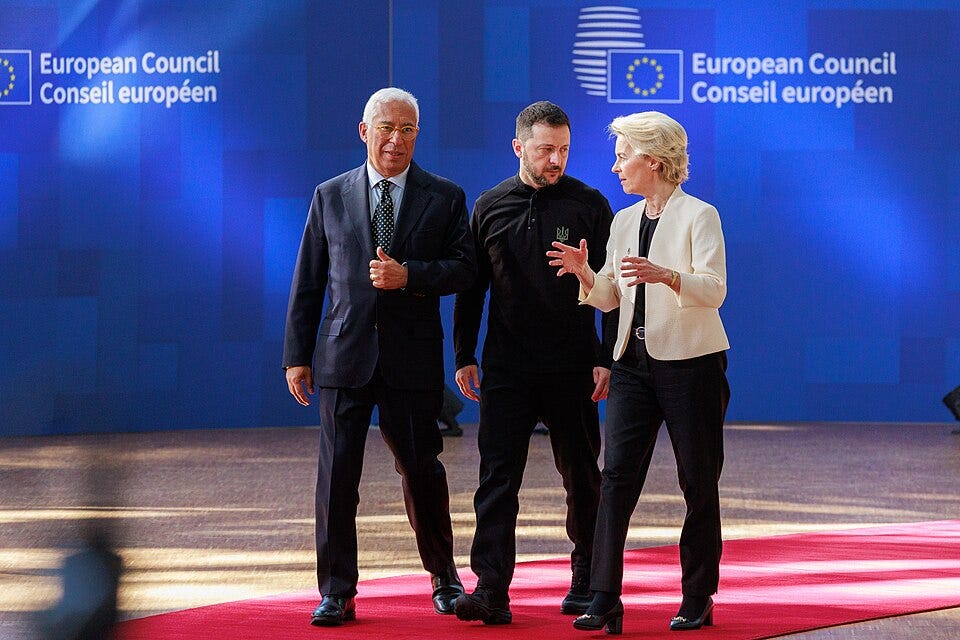
“Special meeting of the European Council - March 2025 - P065852-462073“ by Dati Bendo / European Union is licensed under CC BY 4.0.
On October 6, the European Commission proposed reforms to the EU enlargement process and the EU itself to enable four new frontrunners to join the bloc: Montenegro, Albania, Moldova, and Ukraine. Specifically, the Commission calls for new Accession Treaty safeguards to hold candidates accountable to reforms and a new “gradual integration” approach allowing members to participate in EU initiatives, including potentially the Single Market, as reforms are completed and before Treaty ratification. EU member states have increasingly voiced support for increasing flexibility in the accession process but remain skeptical of surrendering their cherished vetoes over foreign policy decisions. Moreover, Ukraine – whose accession is driving much of the enlargement debate – disapproves of limiting its agricultural exports to the Single Market, creating a potential obstacle to the Accession Treaty safeguards. Failing to reform the accession process makes enlargement improbable, creating downside risks for the EU’s agency and investment conditions in candidate countries. On the upside, gradual integration of countries like Ukraine could unlock industrial capacity for the EU.
In today’s full analysis:
The Commission’s Envisioned Enlargement Reforms, Explained
The Adoption Outlook
The Risk Outlook
Or listen to the full report here:

Listen to the news:
Europe
Eurozone finance ministers called upon France to pass its proposed 2027 budget to contain a bond yield surge. The proposed budget would reduce the government’s deficit to 5% of GDP with €43 billion saved in new spending cuts, including through trims to health reimbursements and pension benefits. The government’s austerity agenda is unpopular, as evidenced by ongoing high school student protests frustrated with dilapidated schools.
Eurogroup finance ministers projected confidence in France’s ability to manage its spending. European Central Bank President Christine Lagarde stated that an intervention to stabilize France’s bond market would be unwarranted. Investment funds have also not resorted to a sustained sell-off, with some buying what are viewed as undervalued French bond prices. Nonetheless, France faces significant challenges. France’s 10-year bond yield is just short of 5%, the highest level since July 2002, and government debt comprises 121% of GDP.
The specter of France electing a populist President in April 2027 has added uncertainty to the country’s fiscal direction. Marine Le Pen, the leader of the populist right National Rally, is leading the polls with roughly a third of French voters. France is a run-off system, so the runner-up will either be the populist-left Jean-Luc Mélenchon or a centrist candidate like Édouard Philippe, both of whom poll around 18%. Marine Le Pen released a fiscal strategy endorsing spending cuts, which calmed markets this week.
Read More: Reuters [paywall], Politico, Financial Times [paywall]
Middle East
Syria rejected reports that it was considering sending troops to support the Saudi-led coalition in Yemen. On Wednesday, US media circulated reports from US officials that Damascus was “seriously considering” sending Syrian troops to Yemen following a Tuesday visit by President al-Sharaa to Riyadh. Saudi Arabia has provided significant economic support to the fledgling Syrian state, and Riyadh reportedly considers Syrian troops better trained and more experienced using Turkish drones than Yemeni government forces. On Thursday, Syria firmly denied the reports.
Deploying would have embroiled Syria in a regional war it has avoided. Syria is in a fragile postwar transition period and has thus far sought to stay out of the growing regional war to avoid damage to its currently integrating army, nascent democratic institutions, and developing economy. The US, which was reportedly consulted on the potential deployment, also worries that it could inject a religious dynamic into the war; the Syrian army is largely made up of Sunni former freedom fighters, while the Houthis are Zaydi Shia.
Read More: Axios, Reuters [paywall], The New Arab
Asia-Pacific
A series of cyberattacks targeting South Korean banks is suspected to have been carried out by a China-based actor using AI tools. Cybersecurity firm CrowdStrike’s report published Wednesday identified a single actor who allegedly used the Chinese-developed AI agent ARTEX alongside Anthropic’s Claude Code to target at least nine South Korean financial institutions since late September. The attacks underscore growing concerns that AI enables individual threat actors to conduct sophisticated, far-reaching attacks with fewer resources. Earlier this week, two South Korean megachurches were also suspected of being targeted by cyberattacks potentially using AI tools, compromising data on up to 850,000 members.
South Korean authorities are responding by tightening cybersecurity requirements across the financial sector and pushing firms to adopt AI-enabled defenses. On Sunday, the Financial Services Commission ordered financial institutions to review vulnerabilities across externally exposed systems and restrict outside access where possible, while the Ministry of Science and ICT activated an emergency response system with the Korea Internet & Security Agency. The FSC also called for greater use of AI-based defenses against AI-enabled attacks. The incidents are likely to increase scrutiny of third-party systems, which investigators believe were exploited in several of the banks, rather than the banks’ core networks.
Read More: CrowdStrike, New York Times [paywall], Reuters [paywall], Financial Times [paywall], Seoul Economic Daily, The Chosun Daily
Americas
Canadian Prime Minister Mark Carney announced this week that he will visit Türkiye from October 21-23. It will be the first official bilateral visit to Türkiye by a Canadian Prime Minister. Carney will meet with Turkish President Tayyip Erdogan in Ankara and with Turkish business leaders in Istanbul. He aims to strengthen Ottawa-Ankara cooperation on defense and energy while promoting Canada as a destination for foreign direct investment and trade.
The visit comes as Canada seeks to diversify its economic partnerships after trade talks with the US, its largest trading partner, collapsed. Carney has also visited Saudi Arabia, India and China this year. At the NATO summit in July, Carney and Erdogan announced negotiations for a free trade agreement between their two countries. Türkiye is also one of ten founding member states of Canada’s Defense Security and Resilience Bank, which is mostly made up of “middle powers” as Carney aims to push back against superpower hegemony.
Read More: Reuters [paywall], Middle East Eye, Turkish Minute
Africa
Eritrean soldiers reportedly crossed into Tigray and appear to be moving toward the regional capital, marking a major escalation in the Ethiopian conflict. Agence France-Presse reported that between 5,000 and 8,000 Eritrean troops are in Tigray, citing an “anonymous foreign security source.” A senior Ethiopian official told Reuters that Eritrea had deployed one mechanized division and three infantry divisions on October 7, but this has also not been verified. Ethiopia reportedly launched drone strikes against the Eritrean convoys. The incursion follows recent tactical gains by the Ethiopian National Defense Force (ENDF), including the recapture of Mekelle and its airport and the disruption of attempts by rebels to cut off trade corridors in the Afar region. Asmara potentially deployed forces to support the Tigray People’s Liberation Front against the ENDF’s counteroffensive and prevent a significant degradation of the group’s capabilities.
Eritrea continues to deny the presence of its troops in Tigray and condemned Ethiopia’s “unprovoked war of aggression.” Yemane Gebremeskel, Eritrea’s Information Minister, stated that Addis Ababa has effectively been waging a war against Asmara for the past three years, referencing Prime Minister Abiy Ahmed’s statements that secure access to the Red Sea is an existential issue and essential for Ethiopia’s modernization. The ENDF is likely to rely on drone strikes to repel Eritrean forces, but it is uncertain whether Asmara is willing to further escalate the conflict by deploying reinforcements.
Read More: Reuters [paywall], Reuters [paywall], Agence France-Presse, Critical Threats
Disruptive Technology
Ecosia, Germany’s leading search engine champion, is replacing France-based Mistral with an open-weight model. Ecosia CEO Christian Kroll suggested that Mistral is a “year behind” leading Chinese open-weight models, like GLM 5.2 or Kimi K3, and may not be a sovereign European model due to American and Korean investors. Kroll stated that the French model has recurring technical problems, including overloaded servers, and has higher costs than open-weight models. However, ditching Mistral for a Chinese model could create political risks for Ecosia, which is utilized by the UK’s National Health Service and Germany’s federal environment ministry, in addition to the prospect of developing a sovereign European tech stack.
Read More: Cybernews, Politico
Energy
South Korea is planning a more than $700 billion plan for the energy transition through 2035. South Korea’s government has released a strategy for energy transition and decarbonization that foresees 1,000 trillion won ($747 billion) in spending and investments. The K-GX, or Korea-Green Transformation strategy, will direct almost 800 trillion won into climate finance and will put 200 trillion won into fiscal measures. The government is aiming for 100 gigawatts of renewable energy capacity by 2030, and the strategy includes measures for decarbonizing South Korea’s highest-emitting industries and promoting ten green industries for the future.
South Korea has historically been a major importer of energy from the Middle East and is trying to diversify. Seoul is targeting a reduction in its dependence on Middle Eastern oil supplies to 50% by 2035 and to source new supplies of condensate, a component in producing naphtha (the key feedstock for petrochemicals). In 2025, South Korea imported 70% of its oil supplies, almost 80% of its naphtha, and 20% of its LNG from the Middle East.
The war in the Middle East has centered energy security as a core issue for many countries. Across the globe, capitals are looking to cut their dependence on foreign energy supplies, to develop domestic energy resources such as renewables, and to promote electrification of their economies to reduce reliance on oil and gas.
Read More: Reuters [paywall], Argus Media, Reuters [paywall], Council on Foreign Relations
Transnational Crime & Corruption
The Department of State’s 2026 Trafficking in Persons Report highlighted Southeast Asian scam centers, Cuban labor exports, and so-called “orphanage trafficking” as major global trafficking concerns. The first two dovetail with Trump Administration priorities to tackle global fraud and confront Cuba, while the latter has been tracked in State Department reports since 2019.
Compared to the prior year’s list, several countries were upgraded or downgraded in “tiers” of anti-human trafficking effectiveness. Shifts included upgrades for Israel from Tier 2 to Tier 1 and for Syria from Tier 3 to Tier 2 Watch List, and a downgrade for Hong Kong from Tier 2 Watch List to Tier 3. Syria’s upgrade was in recognition of anti-trafficking reforms implemented since Bashar al-Assad was removed from power. It was also removed from the list of countries accused of conducting state-sponsored trafficking. Syria, Libya, Mali, and Türkiye were removed from the list of countries accused of using or recruiting child soldiers, while Nigeria was added to the list.
Read More: US Department of State
Defense
The Pentagon is beginning to operationalize its FORTRESS AMERICA program for military installations in the US. A memorandum by the Under Secretary of Defense for Acquisition and Sustainment, Michael Duffey, instructed senior officials to take steps to operationalize the initiative, which is intended to boost resilience and harden military bases. Richard O’Malley has been tapped to serve as the Interim Director, FORTRESS America Program Office. O’Malley was nominated by the Trump administration to serve as deputy under secretary of defense for acquisition and sustainment, but he has not yet been approved by the Senate.
The initiative focuses on a number of areas. The memo lays out five foundational pillars for the program: space and spectrum resilience, installation hardening and cyber resilience, energy independence, supply chains and defense industrial base, and strategic defense reserves. Some pillars, like energy, are connected to other military projects such as the Army’s Project Janus to build nuclear reactors at military bases to ensure their access to reliable power.
Read More: Defense Scoop, The Hill, Defense One


Contact Us
Karl Hopkins
Partner
+1 202 429 6499
khopkins@steptoe.com
Melissa B. Mahle
Senior Advisor
+1 202 261 0577
mmahle@steptoe.com
Anni Coonan
Senior Intelligence Analyst
+1 212 506 3979
acoonan@steptoe.com
Samuel Bloebaum
Senior Due Diligence Analyst
+1 602 410 6240
sbloebaum@steptoe.com
Zayna Dembinski
Analyst
+1 202 778 3567
zdembinski@steptoe.com
Thomas Goldstein
Analyst
+1 202 862 6735
tgoldstein@steptoe.com
Ian Cameron
Analyst
+1 202 327 6908
icameron@steptoe.com
Elton Smole
Analyst
+1 202 261 0556
esmole@steptoe.com
Carter Spahn
Intelligence Fellow
+1 202 261 7555
cspahn@steptoe.com
Chris Dantes
Intelligence Fellow
+1 202 327 6904
cdantes@steptoe.com
Legal disclaimer: This Substack is for educational and informational purposes only and does not constitute the rendering of legal counseling or other professional services. Reading, subscribing to, or communicating through this Substack does not create an attorney-client relationship. Do not send confidential information through this platform. Consult qualified legal counsel regarding your specific circumstances.