


Welcome to the Stepwise Risk Outlook, which highlights and contextualizes over-the-horizon developments in key regions of the world and industries of the global market. Today’s featured deep dive by Dan Arbell examines the precarious situation in the West Bank.

Rising West Bank Tensions Draw Sharper International Pressure on Israel
By Dan Arbell
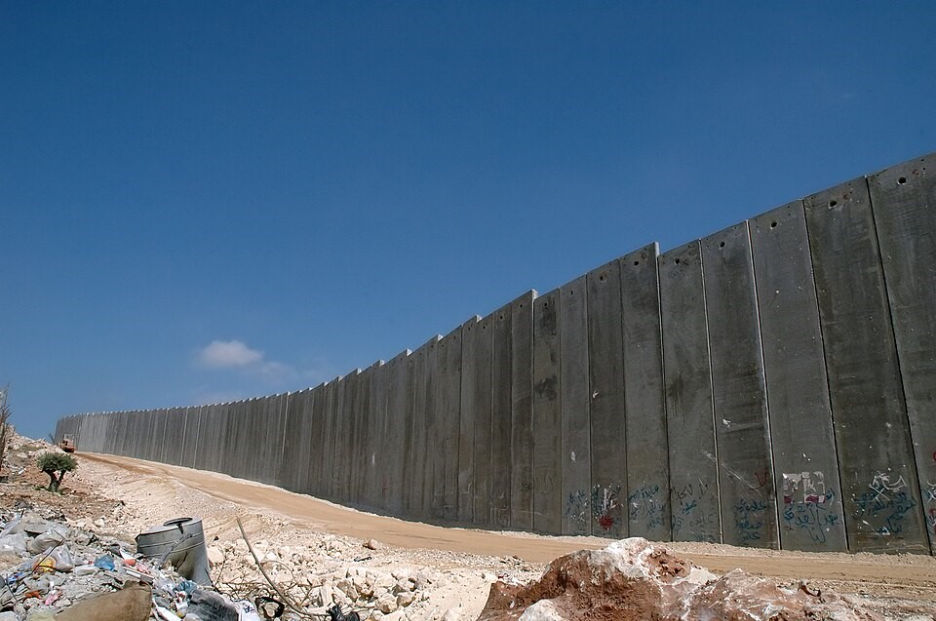
“Israeli West Bank Barrier” by Justin McIntosh is licensed under CC-by-2.0.

The recent surge in settler violence across the West Bank has drawn international rebuke and complicated Israel’s partnerships, all against the backdrop of a contentious election. The spike also coincides with a potent anniversary: September 13 marks thirty-three years since the signing of the first Oslo Accord, which established interim Palestinian self-rule and set a five-year timetable for negotiating a permanent settlement on borders, Jerusalem, refugees, and settlements. Observers marking the date this year haven’t missed the gulf between Oslo’s original ambition and today’s trajectory: record settler violence, open talk of annexation, and a Palestinian Authority (PA) which is now widely seen as a hollow shell. The escalating violence has prompted international rebuke but is unlikely to slow down, posing new risks for businesses and the broader region’s increasingly complex strategic landscape.
In today’s full analysis:
A Government Policy Sharpened by the Election Clock
A Palestinian Authority Too Weak to Respond
Mounting Frustration Triggers International Rebuke
Or listen to the full report here:

Listen to the news:
Europe
Permanent Representatives from EU member states agreed to delay the rollover of Russia sanctions to September 22. After three rounds of talks yesterday, EU member states could not find the necessary unanimity to renew sanctions on roughly 3,000 individuals and entities for another six months. Core to the dispute is the potential delisting of Alisher Usmanov and Mikhail Fridman, two Russian oligarchs that Slovakia wants off the list. France backed Bratislava’s request, but did not detail why beyond a “specific” national security issue; the Financial Times reported that Usmanov’s delisting could be part of a prisoner exchange deal. On the other hand, Mikhail Fridman, who made his fortune in the chemicals and investment sectors, is challenging the EU sanctions regime in court. Slovakia and Hungary under Viktor Orban have routinely called for his delisting.
The sanctions delay is a precedent but a negative signal for bloc cohesion on Russia. The EU has delayed discussions on sanctions packages and renewals before, but this delay suggests that fights over Russia sanctions will continue even on more routine actions. Passing an anticipated 22nd Russia sanctions package—envisioned by chief diplomat Kaja Kallas as expanding the list of sanctioned companies, individuals, and vessels by a third—will remain an uphill battle. Recent calls from countries like Sweden to renew discussions on backing loans to Ukraine on immobilized Russian assets could also fall flat.
Read More: Politico, yahoo!news, Reuters [paywall]
Middle East
A fuel price hike has sparked the largest protests in Syria since the fall of Assad. Demonstrators burned tires in Hama, Khan Sheikhoun and Maarat al-Numan and blocked key roads between Aleppo and Damascus, threatening to block border crossings. The protests came after the Syrian Ministry of Energy raised diesel prices by 40% and high-octane gas by 26-28%, the steepest price hikes since the Iran war began. Damascus said that the prices reflected intensifying global price pressures and shortages imposed by the three-month closure of the Baniyas refinery for its first comprehensive maintenance program.
The protests underline Damascus’ struggles to deliver economic growth to ordinary Syrians, which is make-or-break for its legitimacy. An estimated 90% of Syrians live below the poverty line, and making good on promises of broad-based economic growth is a key hurdle for President Ahmed al-Sharaa’s young democracy. Sharaa ended subsidies (which were often funded by Captagon sales during the Assad regime) and is attempting to transform the economy via FDI (which has been significant but is not quick). The ongoing protests are a major test for the new democracy, which was already struggling not to become a casualty of the ongoing Iran war.
Read More: Reuters [paywall], Al Jazeera, The New Arab, DW
Asia-Pacific
China’s State Security Minister Chen Yixin on Sunday called for greater government oversight of AI, warning generative AI poses growing risks to China’s political and national security. In the Ministry of State Security’s first public statement on AI, Chen warned malign actors could use generative AI, such as by spreading political rumors, to threaten China’s “political security, institutional security, and ideological security.” He also cited espionage and intelligence-leak risks from the use of foreign AI products within China, signaling Beijing increasingly views AI governance through a national-security lens.
The statement comes as US AI leaders debate slowing AI development or ceding Washington’s competitive advantage over China. Anthropic CEO Dario Amodei’s Saturday proposal to slow frontier AI development acknowledged the toughest dilemma would be if the US slowed while China continued advancing. He argued tighter restrictions on AI chips and semiconductor manufacturing equipment, efforts to curb chip smuggling and model distillation, and stronger AI security measures could widen the US lead over the next 3-5 years. China’s Foreign Ministry rejected such warnings Monday, calling them “fearmongering” and saying confrontation would disrupt global AI governance.
Read More: WeChat, Financial Times [paywall], New York Times [paywall], Dario Amodei, CNBC, NPR
Americas
Colombian President Abelardo De La Espriella on Sunday announced new protocols allowing the National Police to enter public universities to stop them from serving as “sanctuaries of violence.” The National Police will now be allowed to enter universities when there are acts of violence, vandalism or terrorism. The government will establish a national protocol to distinguish peaceful protests from demonstrations involving violence, danger, criminal acts or extraordinary disruptions to public order. De La Espriella emphasized that peaceful protests remain protected under the Constitution and law.
The announcement follows violent incidents during protests near the National University of Colombia in Bogota on Friday, when a demonstration that began at the university resulted in clashes, infrastructure damage and the evacuation of the campus. The measures are consistent with De La Espriella’s broader security agenda, which has emphasized strengthening state authority and taking a harder line against crime and armed groups. The protocol could nonetheless heighten tensions with student groups and university officials over the boundaries of university autonomy and the government’s authority to intervene on campuses.
Read More: El Tiempo [paywall], La FM, DW
Geoeconomics
Long-term US Treasury yields have reached their highest levels since 2007 as rising oil prices reinforce expectations of renewed Federal Reserve tightening. The benchmark 10-year yield touched roughly 5.04% on September 15, while the 30-year yield reached about 5.40%. Renewed attacks on Saudi Arabia and stalled regional diplomacy have kept Brent crude above $105 per barrel, increasing concern that energy costs will sustain inflation. Markets priced in roughly a 93% probability of a Fed rate increase on September 16, according to CME’s FedWatch tool. With that move largely anticipated, investors will focus on whether Chair Kevin Warsh signals further increases and how the Fed’s updated forecasts balance persistent inflation against the risk of slower growth.
The pressure on long-term borrowing costs extends beyond the Fed’s next decision. Large federal deficits and corporate borrowing for AI infrastructure are increasing the supply of bonds competing for investors’ money, while concerns about Washington’s fiscal outlook are adding to the compensation investors demand. Higher Treasury yields raise the benchmark for mortgage and corporate financing and make government bonds more competitive with equities. They also increase federal interest expenses as existing debt matures and is refinanced. Treasury Secretary Scott Bessent’s expanded bond repurchases have provided little sustained relief from rising yields: the buybacks purchase older, less actively traded Treasury securities to support market liquidity, but because the purchases are financed through new issuance, they do not resolve the underlying federal deficit.
Read More: The Wall Street Journal [paywall], Reuters [paywall], Financial Times [paywall], Peterson Foundation
Disruptive Technology
The Senate will put the Clarity Act to a procedural vote today after President Trump reportedly agreed to new ethics provisions. The bill, which would place most crypto regulation under the oversight of the Commodity Futures Trading Commission, has been delayed since passing the House over a year ago due to disputes between crypto issuers and banks on stablecoin rewards, as well as Democratic opposition to the draft ethics language, which reserves enforcement action exclusively to the Justice Department. Under the new proposed language, state attorneys general can also take enforcement action. Officials with “significant” financial interests in cryptocurrency must also divest or put those activities under a blind trust.
The Clarity Act’s passage is not guaranteed. Some Republicans reportedly dislike the ethics amendment compromise. Meanwhile, some Democrats may demand stronger language, such as full crypto divestiture for officials. Banking groups continue to advocate for stronger restrictions on stablecoin holding rewards, which they fear could lead to capital flight toward what are functionally uninsured and unregulated savings accounts.
Read More: Axios, The Hill, CNBC
Energy
Saudi Arabia’s damaged pipeline could shut down 4% of the world’s oil supply. Riyadh reportedly has stocks of oil on its Red Sea coast that can still be exported, but those will only last for 5-7 days. However, since Saudi Arabia’s pipeline has been shut down since September 11, the country will need to restart its supply transit to the Red Sea in order to avoid a massive fall in its exports. However, estimates for how long repairs could take varies, with the range of estimates running from five to six weeks to the potential for partial oil transport to resume while repairs take place.
Saudi Arabia has been rerouting oil through a massive east-west oil pipeline to get its supplies to markets. The pipeline has redirected 4 million barrels per day away from the Strait of Hormuz to the Yanbu port. 4 million barrels per day is equivalent to around 4% of global daily supply. A drone attack by Iranian-backed militias in Iraq damaged the pipeline to the Red Sea on September 11. Even before the pipeline was damaged, Saudi oil supply had already dropped to a multi-decade low.
The Houthis in Yemen have also taken control of islands along the Red Sea shipping route. This could complicate Saudi energy shipping through the Red Sea even if Riyad is able to bring the oil pipeline back online rapidly. The Houthis have also targeted Saudi oil traveling north into the Mediterranean.
Read More: Reuters [paywall], AP News [paywall], The Guardian
Transnational Crime and Corruption
A South African judicial commission is revealing the extent of violent criminal activity with political influence in the country. The Judicial Commission of Inquiry into Criminality, Political Interference and Corruption in the Criminal Justice System, led by retired judge Mbuyiseli Madlanga, is investigating organized crime influence in South Africa’s judiciary and police. Thursday will mark one year since the commission was opened in the wake of public allegations that senior South African police officials colluded with organized criminals. The commission is tasked with proposing judicial reforms in November. The World Bank estimated that organized crime in South Africa cost the country 10% of its potential GDP due to security costs and theft.
The commission has been targeted by assassinations and other violent attacks. In December 2025, one of the commission’s witnesses was murdered by a police special forces officer after the witness’s police misconduct allegations led to the suspension of several officers. Another police reservist with alleged knowledge of additional misconduct reportedly committed suicide two days after an assassination attempt in February 2026. An international organized crime watchdog recorded almost 2,500 assassinations in South Africa since 2000.
Read More: The Economist [paywall], BBC, Human Rights Watch, Global Initiative against Transnational Organized Crime
Defense
The US has acknowledged that it maintains “on-orbit” space weapons. US Air Force Secretary Troy Meink stated yesterday that the Air Force has “on-orbit” space control weapons for protecting US forces against “hostile enemy action.” Meink made the announcement while delivering the keynote speech at Air & Space Forces Association’s 2026 Air, Space & Cyber Conference, and during the speech he also underscored the importance of maintaining American dominance in space. Meink declined to provide any more details on what exact capabilities he was referring to, but his statement was the most open public acknowledgement to date about America’s use of space control weapons. Space is becoming an increasingly critical domain for potential future military conflict, and countries like the US and China have been undertaking steps to prepare for the possibility that a future military conflict could extend into outer space.
Read More: Defense News, Defense One, Reuters [paywall]


Contact Us
Karl Hopkins
Partner
+1 202 429 6499
khopkins@steptoe.com
Melissa B. Mahle
Senior Advisor
+1 202 261 0577
mmahle@steptoe.com
Anni Coonan
Senior Intelligence Analyst
+1 212 506 3979
acoonan@steptoe.com
Samuel Bloebaum
Senior Due Diligence Analyst
+1 602 410 6240
sbloebaum@steptoe.com
Zayna Dembinski
Analyst
+1 202 778 3567
zdembinski@steptoe.com
Thomas Goldstein
Analyst
+1 202 862 6735
tgoldstein@steptoe.com
Ian Cameron
Analyst
+1 202 327 6908
icameron@steptoe.com
Elton Smole
Analyst
+1 202 261 0556
esmole@steptoe.com
Carter Spahn
Intelligence Fellow
+1 202 261 7555
cspahn@steptoe.com
Chris Dantes
Intelligence Fellow
+1 202 327 6904
cdantes@steptoe.com
Legal disclaimer: This Substack is for educational and informational purposes only and does not constitute the rendering of legal counseling or other professional services. Reading, subscribing to, or communicating through this Substack does not create an attorney-client relationship. Do not send confidential information through this platform. Consult qualified legal counsel regarding your specific circumstances.