


Welcome to the Stepwise Risk Outlook, which highlights and contextualizes over-the-horizon developments in key regions of the world and industries of the global market. Today’s featured deep dive by Chris Dantes examines Russia's role surrounding the Niger coup attempt.

Niger Coup Attempt: Russia’s Role Highlights Evolving Defense Partnerships in the Sahel
By Chris Dantes
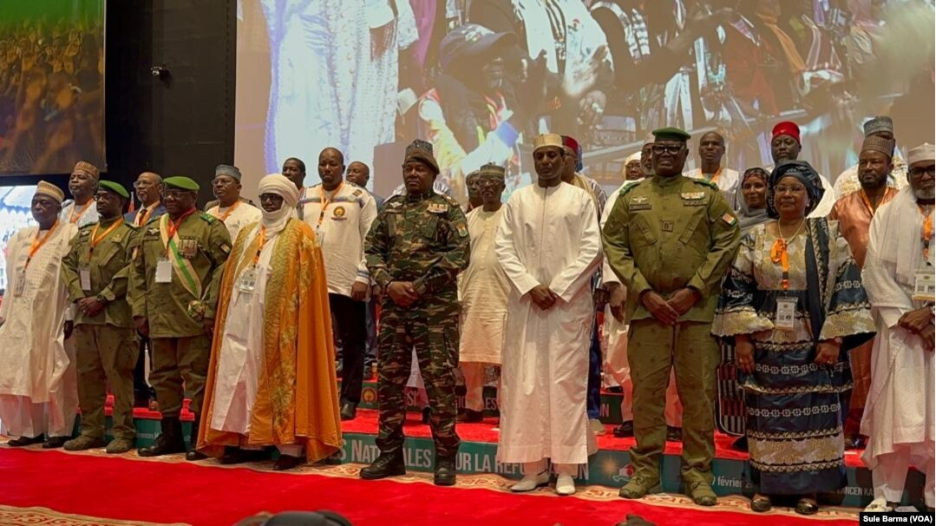
“Abdourahamane Tiani at the 2025 National Assembly opening ceremony” by Sule Barma is marked with CC PDM 1.0.

On August 28-29, military officers and their units attacked Air Base 101 and other strategic locations in Niamey in a failed attempt to overthrow General Abdourahamane Tiani, who himself seized power in a coup d’état in 2023. The attack was suppressed largely by Russia’s Africa Corps, a paramilitary group that replaced the Wagner Group, signaling both the limited capabilities of the Nigerien junta and Moscow’s deepening role in protecting allied Sahelian regimes. This security partnership exacerbates internal power struggles and could empower jihadist insurgents, fomenting greater instability. Despite major tactical defeats earlier this year in Mali, the Africa Corps’ support in defeating Niger’s latest coup attempt demonstrated Russia’s continued value as a security partner on the continent, support which will continue to pose a substantial obstacle to US efforts to counter Russian influence in the region. The replacement of US influence with actors unwilling or unable to address the root causes of political instability in the Alliance of Sahel States (AES) is likely to obstruct key elements of the Trump administration’s Africa strategy, particularly efforts to counter terrorism and secure critical mineral projects.
In today’s full analysis:
Tiani’s Most Significant Challenge to Power
Russia’s Africa Corps: Leveraging Regime Protection to Maintain Influence
The AES: An Alliance of Non-Credible Security Commitments
Or listen to the full report here:

Listen to the news:
Europe
President Trump called Russian President Vladimir Putin for one hour yesterday to facilitate momentum on restarting peace talks. The high-level conversation follows shuttle diplomacy from presidential envoys Steve Witkoff and Jared Kushner to Moscow and Kyiv last week, as well as an earlier visit from CIA chief John Ratcliffe, who allegedly shared a grim assessment of the war to convince Russian officials to reconvene at the negotiating table. Kyiv has indicated that talks could begin again as early as this month, but it is early to tell. As it stands, neither side appears willing to concede their objectives, and both have reason to believe it could gain a qualitative edge through the fight.
US mediation of the Russia-Ukraine war has gone quiet since the end of 2025. One explanation is that earlier attempts at diplomacy failed to make a breakthrough toward a political settlement. Another is that US attention has also been diverted to other foreign policy items, namely the Iran war, which continues at a lower intensity. The US is unlikely to allocate significant attention to mediation unless Kyiv and Moscow make overtures themselves, which could require a change on the battlefield. For Kyiv, this likely means targeting Russian logistics and energy exports; for Moscow, this may mean leveraging its attritional advantage and targeting Ukraine’s critical infrastructure.
Read More: South China Morning Post, Wall Street Journal [paywall], Financial Times [paywall]
Middle East
An Israeli newspaper reported that the UAE warned Prime Minister Netanyahu ahead of Hamas’ October 7 attack. The report alleges that Emirati President Mohammed bin Zayed spoke with Netanyahu to warn him that Emirati intelligence indicated that Hamas was planning a major operation in the coming days. The UAE declined to comment on the report, saying that intelligence sharing will remain private.
It is unclear if the report is true – but either way, it could spell significant electoral trouble for Netanyahu. The Israeli intelligence apparatus’ failure to predict and avert the October 7 attack is a major public opinion lightning rod in the country, with intelligence failures largely blamed on Netanyahu and military figures he has since dismissed. Furthering the perception that Netanyahu allowed the attack to happen could spell trouble in an election in which he is already struggling to unite the right and avoid a fractious coalition-building period.
The leak and the response also underlie growing UAE-Netanyahu tension. The UAE has remained a relatively staunch Israeli ally even as the war in Gaza has ground on, decimating Arab public opinion around Israel and the Abraham Accords. But it has increasingly criticized Netanyahu and his far-right government, likely hoping that a new prime minister would be more amenable to scaling back wars in Gaza and Lebanon and making progress on the Gaza peace process.
Read More: Associated Press, France 24, NPR, NPR
Asia-Pacific
North Korea has expanded its ground transportation links with both Russia and China, deepening its strategic and economic integration with its two major partners. On Monday, Pyongyang and Moscow opened their first road bridge across the Tumen River, connecting North Korea’s Rason region to Russia’s federal road network and broader transportation corridor. The bridge is intended to facilitate trade, tourism and people-to-people exchanges, and it also gives Moscow and Pyongyang another channel for logistical cooperation amid their expanding military ties following North Korea’s provision of troops and weapons to support Russia’s war in Ukraine.
North Korea is also nearing completion of a long-delayed road bridge with China, potentially expanding their trading capacity. Reporting today found Pyongyang is rapidly completing facilities for the New Yalu River Bridge, which connects Dandong with Sinuiju and could open soon. China completed its side of the bridge in 2014, but the project remained unused for more than a decade amid deteriorating bilateral ties, disagreements over the infrastructure on the North Korean side, and Pyongyang’s nuclear testing. Its opening would relieve pressure on aging bridges and could significantly increase cross-border cargo capacity. The infrastructure developments come as Chinese President Xi and Russian President Putin reaffirmed strong strategic ties with Pyongyang in congratulatory messages for North Korea’s September 9 founding anniversary, underscoring Moscow and Beijing’s efforts to reinvigorate relations.
Read More: Bloomberg [paywall], Reuters [paywall], Chosun, GIS Reports
Americas
Secretary of State Marco Rubio is visiting Colombia, Ecuador and Peru this week to strengthen economic and security ties. The three countries in his itinerary are led by right-wing leaders, two of which were elected this year. Expanding US influence in Latin America is a priority for the Trump administration, especially in the realm of combating organized crime through the Americas Counter Cartel Coalition (ACCC), or the “Shield of the Americas.” As criminal organizations across the region are increasingly using advanced technology, including drones, some Latin American leaders are seeking increased military support from Washington.
Rubio met with Colombian President Abelardo de la Espriella in Barranquilla on Tuesday. De la Espriella, who was recently elected with a mandate to crack down on crime in Colombia, pledged closer relations with the US. He also indicated that he would seek US support on security efforts through military operations, radar and drone technology. Colombia is also seeking relief from US tariffs that took effect in July at 12.5%. De la Espriella’s first days in office were marked by a 7.4-magnitude earthquake in the western region of Colombia. In addition to earthquake recovery efforts, De la Espriella seeks to implement an “iron fist” approach to fighting criminal groups in rural areas, including through aerial fumigation of coca crops.
Read more: Reuters [paywall], NPR, Al Jazeera
Africa
Zimbabwe has banned the export of antimony and tungsten ores, reflecting a broader push by African governments to expand domestic mineral processing and capture more value from critical resources. Both minerals are strategically important for defense and other advanced technologies. Zimbabwe’s decision follows Kenya’s announcement that it plans to process several minerals locally, including iron, graphite, and titanium. These restrictions could further complicate efforts by the US and others to reduce supply-chain vulnerabilities, as African governments may impose additional requirements on foreign mining companies to process minerals locally before export.
Read More: Bloomberg [paywall], Business Insider Africa
Geoeconomics
Eighteen maritime nations are warning that the foundations of global shipping are being undermined. In a September 8 statement, the Consultative Shipping Group, whose members include Japan, Singapore, Germany and the UK, argued that repeated disruptions now represent a structural change in how global trade operates. Conflicts in the Middle East and Ukraine, drought at the Panama Canal and discriminatory trade measures are making access to shipping routes less predictable. Meanwhile, hundreds of vessels evading sanctions operate outside standard arrangements, creating a parallel shipping system that weakens confidence and fair competition. The group called for consistent enforcement of existing international maritime rules and greater cooperation between governments, warning that shipping routes are increasingly becoming “instruments of leverage and risk.”
Higher costs and less reliable deliveries persist beyond individual crises. Longer voyages consume more fuel and keep vessels occupied for longer, reducing available capacity, while dangerous routes attract higher insurance premiums. Even reopened waterways may provide limited immediate relief: vessels have been reassigned, alternative routes booked and insurers remain concerned about renewed disruption.
Read More: Financial Times [paywall], The Wall Street Journal [paywall], Atlantic Council
Disruptive Technology
An AI researcher, Jacob Coxon, resigned from Anthropic yesterday and warned that the race to self-improving superintelligence is disincentivizing safety controls and the prevention of extinction-scale risks. He suggested that the more senior the researcher at any firm, the more they privately believe that the AI race is “gambling with” human lives. Evan Hubinger, Anthropic’s alignment science lead, clarified that he personally thinks that there is over a 10% risk that AI kills all humans within the next ten years. Coxon’s resignation follows recent calls from executives at frontier American AI developers to globally coordinate a slowdown in AI development to allow more time to perfect AI safety frameworks.
Read More: Axios, Newsweek, Politico
Energy
Moscow is opening exports from a major new oil development project. Russia has started to export oil out of its Vostok Oil project, which is the country’s largest new oil development for the last several decades. The launch of exports from the project represents a significant expansion in Russia’s Arctic energy infrastructure, and it is also an accomplishment of Russia’s ability to ride out Western sanctions aimed at halting the project. The project will be a boost to Russia’s efforts to develop the Northern Sea Route along its Arctic coast as a major energy transit and shipping route. Rosneft, Russia’s state oil company, hopes to ship 30 million tons of oil per year by the end of 2027, with potential to reach up to 100 million tons per year.
Russia is also redirecting its oil flows to Asia, specifically to China. According to Deputy Prime Minister Alexander Novak, during the first seven months of 2027, Moscow increased its exports of oil to China by 25%, for the first time becoming China’s largest supplier of oil.
Read More: High North News, RIA Novosti [in Russian]


Contact Us
Karl Hopkins
Partner
+1 202 429 6499
khopkins@steptoe.com
Melissa B. Mahle
Senior Advisor
+1 202 261 0577
mmahle@steptoe.com
Anni Coonan
Senior Intelligence Analyst
+1 212 506 3979
acoonan@steptoe.com
Samuel Bloebaum
Senior Due Diligence Analyst
+1 602 410 6240
sbloebaum@steptoe.com
Zayna Dembinski
Analyst
+1 202 778 3567
zdembinski@steptoe.com
Thomas Goldstein
Analyst
+1 202 862 6735
tgoldstein@steptoe.com
Ian Cameron
Analyst
+1 202 327 6908
icameron@steptoe.com
Elton Smole
Analyst
+1 202 261 0556
esmole@steptoe.com
Carter Spahn
Intelligence Fellow
+1 202 261 7555
cspahn@steptoe.com
Chris Dantes
Intelligence Fellow
+1 202 327 6904
cdantes@steptoe.com
Legal disclaimer: This Substack is for educational and informational purposes only and does not constitute the rendering of legal counseling or other professional services. Reading, subscribing to, or communicating through this Substack does not create an attorney-client relationship. Do not send confidential information through this platform. Consult qualified legal counsel regarding your specific circumstances.