


The Sanctions Update, compiled by attorneys from Steptoe’s award-winning International Regulatory Compliance team and the Stepwise: Risk Outlook editorial team, publishes every Monday (subscribe here). Guided by the knowledge of Steptoe’s industry-leading International Trade and Regulatory Compliance team, the Sanctions Update compiles and contextualizes weekly developments in international regulatory enforcement and compliance, as well as offers insights on geopolitical context, business impacts, and forthcoming risks, and non-sanctions news updates.
For more detailed analysis on related issues, see Steptoe’s International Compliance Blog. For information on industry-specific monitoring or bespoke services, please contact the team here.
By Evan T. Abrams, Meredith Rathbone, Karl Hopkins, Guy Soussan, Alexandra Melia, Wendy Wysong, Ali Burney, Quentin Johnson, Elliot Letts, Algirdas Semeta, Melissa B. Mahle, Anni Coonan, Thomas Goldstein, Zayna Dembinski, Samuel Bloebaum, Elton Smole, Ian Cameron, Wilson Zhao, Zoey Hong, Kiki Dong, Isabella Rao, Andy Xu Sofia, Jake Fitzpatrick, Carter Spahn, Chris Dantes

Listen to the sanctions update:
The Lede
China Broadens Countermeasures Against US Technology and Forced-Labor Restrictions
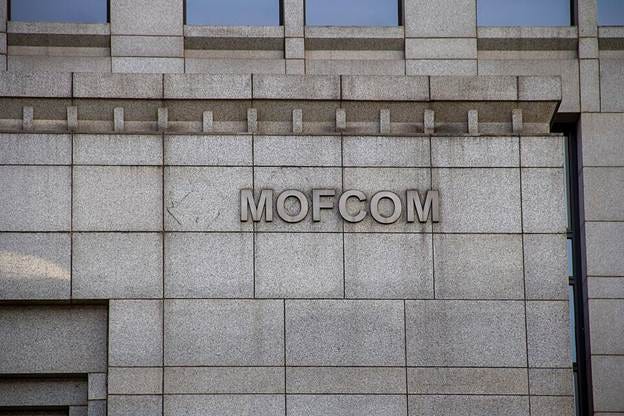
“MOFCOM” by 維基小霸王 is licensed under CC BY-SA 4.0.

On August 5, China announced a coordinated package of countermeasures in response to recent US restrictions on Chinese technology companies and supply chains. The measures place seven US entities on countermeasures lists, subject controlled drones and related items destined for the US to stricter licensing review, suspend the use of US-based certification bodies for certain factory inspections and open a national-security investigation into imported office equipment using foreign software. Unlike China’s July 24 retaliation against European companies, which relied principally on entity-specific dual-use export restrictions, the latest response spans several agencies and legal authorities.
The package signals a broader change in how Beijing applies economic pressure. China is increasingly targeting the compliance infrastructure through which US restrictions operate. Yet the measures remain targeted and potentially reversible, allowing Beijing to impose costs without resorting to country- or sector-wide cutoffs.
Targeting the Infrastructure Behind US Restrictions
Under China’s Anti-Foreign Sanctions Law (AFSL), the Ministry of Commerce (MOFCOM) prohibited organizations and individuals within China from engaging in relevant transactions, cooperation, or other activities with seven US entities. One company was listed for allegedly supporting the Federal Communications Commission’s (FCC) decision to block the import of new foreign-produced humanoid and quadruped robots, which affects Chinese companies. Six companies were listed for allegedly supporting recent US sanctions related to forced labor in Xinjiang.
MOFCOM acted days after the Department of Homeland Security added 43 Chinese entities to the Uyghur Forced Labor Prevention Act Entity List (UFLPA). US importers must trace supply chains to rebut the law’s presumption that goods produced wholly or in part by listed entities are inadmissible to be sold in the US. The countermeasures signal Beijing’s willingness to retaliate against entities that help make foreign restrictions enforceable, even if the immediate effect varies with each entity’s exposure to China.
China also tightened, but did not prohibit, exports to the US of drones, key components, and related technology already included on China’s dual-use control list. Effective immediately, MOFCOM will review license applications strictly on a case-by-case basis and will not apply licensing-facilitation measures. Further, China’s certification regulator suspended Chinese bodies designated under the China Compulsory Certification system from commissioning US-based certification bodies to conduct post-certification factory follow-up inspections. And the most novel measure may be MOFCOM’s first-of-its-kind foreign-trade national-security investigation, looking into imported office equipment with printing or copying functions containing system software developed, tested, or maintained by foreign persons.
Calibrated Pressure, Broader Precedent
Together, the measures closely resemble the structure of the US actions that China is responding to. Washington has used an array of trade barriers and national-security determinations to narrow Chinese access to the US market. Beijing is increasingly responding through its expanded legal and regulatory systems, which have allowed it to better target countermeasures. The systems are not completely equivalent, but technical regulatory processes are becoming instruments of geopolitical competition.
MOFCOM characterized the response as restrained, said China wished to preserve the “hard-won stability” in bilateral economic relations, and warned that new US restrictions would bring further countermeasures. The package may be more important for the model it establishes than for the immediate disruption any one measure produces. If Beijing repeats this approach, private compliance providers and the technical systems that determine whether products and supply chains can enter a market will move closer to the front line of US-China economic competition.
The timing also places the measures in the run-up to Xi’s planned September 24 visit to Washington, where President Trump has said the leaders will discuss artificial intelligence and are expected to review the trade and investment framework established at their May summit in Beijing. Rather than abandoning the “strategic stability” endorsed at that meeting, Beijing appears to be defining its limits, with high-level engagement allowed to continue, but new US technology and forced-labor restrictions still drawing a response. The measures may therefore serve both as retaliation and as bargaining leverage, giving China several targeted tools that could be altered as negotiations develop.
US Developments
Senate Passes Lindsey O. Graham Sanctioning Russia and Iran Act of 2026
On August 7, the US Senate passed the Lindsey O. Graham Sanctioning Russia and Iran Act of 2026 by a bipartisan vote of 86-11. The bill, previously known as the Sanctioning Russia Act of 2026, now moves to the House of Representatives, which is in recess until September.
Originally introduced in April 2025, the legislation gained momentum after President Donald Trump signaled support last November, subject to him gaining new tariff authorities and retaining flexibility over the imposition of sanctions. We covered several of the most notable revisions included in the July 16, 2026 version of the bill in a prior update. The version passed by the Senate grants the President waiver authority in relation to the Russia-related sanctions, and authorizes the President to impose tariffs of up to 100 percent on the largest purchasers of Russian oil and natural gas, as well as countries facilitating Russian oil sanctions evasion. In addition to the inclusion of these key administration priorities, lawmakers amended the bill to extend the Iran Sanctions Act of 1996 through 2031 after President Trump’s July 30 call for Congress to add Iran-related tariffs to the legislation.
Although the bill passed the Senate with broad bipartisan support, some lawmakers have expressed concerns about its expanded tariff authorities. We previously reported that Senator Ron Wyden (D-OR) and Representative Richard Neal (D-MA) opposed the measure, arguing that it grants the president excessive unilateral tariff authority. A subsequent amendment offered by Senators Rand Paul (R-KY) and Wyden to remove the tariff provision failed by a vote of 64-32. The bill now heads to the House, where it faces uncertain prospects for passage, with concern driven by the new sanctions waiver authority and tariff authorities.
US Imposes Sanctions on Iran-linked Financial Networks, Exchange Houses, and Crypto Exchanges
On August 7, 2026, the Department of the Treasury’s Office of Foreign Assets Control (“OFAC”) sanctioned seven entities and five individuals for allegedly “enabling Iran’s ‘rahbar’ banking system to move hundreds of millions of dollars.” Among the designations are two UAE-based exchange houses allegedly involved in supporting Shahr Bank’s role in helping the Iranian regime retrieve revenue from overseas oil sales. The Treasury Department said multiple shell and front companies “work with and enable other actors throughout Iran’s shadow banking apparatus,” including entities based in Hong Kong, Singapore, and Dubai.
In a separate action on the same day, OFAC sanctioned a multinational cryptocurrency exchange network and related entities for allegedly facilitating illicit financial activity and supporting Iran’s Islamic Revolutionary Guard Corps (“IRGC”). OFAC also designated a digital asset exchange pursuant to E.O. 13902 for operating in Iran’s financial sector.
These actions were taken pursuant to Executive Order (“E.O.”) 13902, which targets persons operating in Iran’s financial and petroleum sectors, and E.O. 13224, which targets persons who commit or support terrorism.
US Issues Cuba-Related Designations and FAQ
On August 6, the State Department designated five Cuba-related entities and six individuals allegedly related to Cuba’s armed forces and military-industrial sector. The action was taken pursuant to E.O. 14404, which authorizes the imposition of sanctions on individuals and entities connected to Cuba’s government. According to the State Department, the entities and individuals facilitated the Cuban government’s foreign military cooperation and the procurement of military equipment, including for Cuba’s Ministry of the Revolutionary Armed Forces and security services.
Alongside the designations, OFAC issued Frequently Asked Question (“FAQ”) 1264, which states that it does not intend to target non-US persons under E.O. 14404 when providing food; agricultural commodities; medicine; or medical devices and related parts or software updates to Cuba for humanitarian purposes. This policy applies even when transactions involve E.O. 14404-designated persons or entities in which such designated persons own, directly or indirectly, individually or in the aggregate, a 50 percent or greater interest.
OFAC Extends the Delay of PdVSA Bond-Related Authorizations
On August 3, OFAC issued Venezuela-related General License (“GL”) 5Y, which authorizes certain transactions related to, the provision of financing for, and other dealings in the Petróleos de Venezuela, S.A. 2020 8.5% Bond that are otherwise prohibited by EO 13835, as amended, on or after September 17, 2026. GL 5Y is the most recent extension in a long-running delay in the effective date of GL 5’s authorization. Unlike the recent 60-day extensions of GL 5, GL 5Y only extends the delay of the authorization by approximately six weeks, which suggests that OFAC may be prepared to allow the authorization to come into effect in the near future.
UK Developments
UK Announces Further Russia Sanctions Targeting Banks, Shadow Fleet and Military Supply Chains
The UK Government has announced a further package of sanctions under the Russia (Sanctions) (EU Exit) Regulations 2019, designating one individual, 12 entities and six vessels in a continued effort to disrupt Russia’s war economy. According to a UK Government press release, the measures target six Russian banks, six recently acquired shadow fleet tankers used to circumvent Western sanctions, and four Russian companies involved in importing tantalum and niobium, rare metals critical to Russia’s military-industrial base. The designations also seek to disrupt the financial institutions and procurement networks that enable Russia to sustain military production and generate revenue despite existing sanctions.
The latest package forms part of the UK’s continuing strategy to increase economic pressure on the Kremlin by targeting key sectors underpinning Russia’s war effort, including finance, maritime transport and military supply chains. It also reflects the UK’s continued focus on countering sanctions evasion, particularly through the shadow fleet and the acquisition of critical materials used in the manufacture of military equipment.
OFSI Expands Russian Oil Exempt Projects General Licence
OFSI has amended General Licence INT/2025/5635700 (Russian Oil Exempt Projects) to include the Kurdistan Export Pipeline as an exempt project until October 14, 2027 (the “GL”). The GL permits specified business operations involving subsidiaries of certain UK-designated Russian energy companies where they relate to strategically important international energy projects, including the making and receipt of payments and other activities necessary to support those projects, subject to the licence’s conditions. The Kurdistan Export Pipeline now joins a number of existing exempt projects covered by the GL, reflecting the UK’s continued approach of safeguarding critical international energy infrastructure while maintaining broader sanctions against Russia’s energy sector. Businesses intending to rely on the GL should review the amended version to ensure compliance with its updated permissions and conditions.
EU Developments
EU Council Updates Russia Asset Freeze Sanctions Listing
The EU Council recently designated five individuals under the Russia asset freeze regime for materially supporting Russia’s military and industrial complex. The newly listed individuals hold senior positions in Russian companies involved in the development, production, or supply of military technology and equipment, including ballistic missile systems, military communication systems, software for unmanned aerial vehicles, and space-related military technologies. Among those listed are Ramil Nailevich Badgutdinov, General Director of JSC Serpukhov Plant “Metallist”, whose company is involved in the manufacture of navigation systems for the Iskander-M ballistic missile, and Aleksandr Yurevich Dyukarev, General Director of JSC “Krasnoyarsk Machine-Building Plant”, which produces the RS-28 “Sarmat” ballistic missile.
The designations follow the EU Council’s call in its June Conclusions to step up pressure on Russia through further sanctions in response to Russia’s continued war of aggression against Ukraine and its intensified attacks against civilians and civilian infrastructure. As a result of their designation, the individuals are subject to asset freezes, a prohibition on making funds or economic resources available, and an EU travel ban.
Asia-Pacific Developments
Australian Sanctions Reportedly Fail to Curb Israeli Settler Funding
On August 7, 2026, Independent Australia reported that Israeli government support for the settler movement had increased despite three rounds of Australian sanctions since July 2024 targeting Hilltop Youth, associated individuals, outposts and other entities, including Finance Minister Bezalel Smotrich and National Security Minister Itamar Ben-Gvir. Several media outlets reported that Israel allocated about AUD 41 million for young settlers in West Bank outposts, including stipends and other assistance, and that Ben-Gvir’s ministry granted an estimated USD 1.3 million to Havat Gilad, a sanctioned settler organization. Although Hilltop Youth’s decentralized structure complicates enforcement, direct government funding for a named sanctioned entity raises questions about the effectiveness of existing measures.

Listen to the news:
Global
El Niño is set to disrupt the global food supply, with weather patterns causing severe rains and droughts, aggravating world hunger. The UN World Food Programme estimates that 49 million more people could face acute hunger because of El Niño beginning in September. Central America and southern Africa are expected to be among the hardest-hit regions. El Niño is expected to peak between September and December 2026, but the effects will be felt throughout 2027 in many countries, owing to impacts on future harvests. The UN is scaling up anticipatory action plans to help high risk nations prepare.
The European Central Bank calculates that strong El Niño events typically raise global food commodity prices by 9%. Strong El Niño events primarily threaten staple grains and heat-sensitive soft commodities like rice, maize, cocoa, and coffee. Arabica coffee prices have risen about 30% since early June. Unusually warm waters can impact fishing. In Peru, anchovy fishing was suspended from May due to unusually warm waters in the Pacific.
Read More: United Nations, Financial Times [paywall], UN Food and Agriculture Organization
Europe
US intelligence agencies warn that Russia may escalate “hybrid” warfare against NATO allies by this autumn. The intelligence assessment suggests that Moscow’s risk tolerance of provoking a NATO ally will increase as Russia struggles to make battlefield gains and to defend domestic energy infrastructure from Ukrainian long-range strikes. Moscow’s options range from established tactics like cyberattacks to new methods like attributing a false flag attack to Ukraine, or conducting a small-scale land incursion by troops not directly attributed to the Russian state (i.e., “little green men”). Moscow’s goal would be to divide the alliance and deter further aid to Ukraine, but operate at a level below triggering NATO’s Article 5.
Russia’s “grey zone” activity has increased over the past few years. In September 2025, Russia probed NATO’s integrated air defense by sending 19 drones over Poland, three of which were armed with explosives. The tempo of further airspace breaches has remained consistent but normalized. Last week, a drone armed with Semtex, which is about as explosive as C-4, was found at Leipzig Halle airport, a logistics hub for Ukrainian cargo company Antonov. Russia has not officially been attributed, but German authorities believe that Ukrainian planes were the intended target.
Read More: CBS News, The Wall Street Journal [paywall], Stepwise Risk Outlook
Asia-Pacific
Seoul today announced a host of large-scale funds dedicated to expanding its domestic semiconductor industry, aligned with President Lee Jae Myung’s semiconductor megaproject initiative launched in June. The funds include 5 trillion won ($3.2 billion) for a semiconductor fund supporting chip materials, components, equipment and fabless companies; 5 trillion won in trade finance for suppliers; and 1 trillion won for a 10-year program supporting cooperation between large companies and suppliers across the semiconductor supply chain. Moreover, Seoul is looking to pass its Mega Special Zone Act, which would expedite permitting, environmental reviews and infrastructure construction.
The measures come as intensifying US-China tech competition forces countries to navigate an increasingly complex regulatory environment. South Korea’s booming semiconductor industry, which saw exports jump 119.5% year-on-year in June 2026 to $44.8 billion, accounting for 43.8% of total exports, remains reliant on China as both a major market and production base. While South Korean firms continue to invest in their Chinese operations, next-generation chip investments are increasingly being directed toward the US. Seoul’s push to strengthen domestic semiconductor capacity reflects a broader effort to build resilience against geopolitical and supply-chain disruptions while preserving its position across both the US and Chinese markets.
Read More: Reuters [paywall], East Asia Forum, Policy Center for the New South
Americas
A car bomb attack on Colombia’s Pan-American highway on Saturday was attributed to FARC dissident groups by the Colombian army. The attack on a highway toll booth in the southwest of the country, which injured two security personnel, came just a day after the August 7 inauguration of President Abelardo de la Espriella in Cali. De la Espriella has pledged to crack down on criminal armed groups in Colombia. In his inaugural speech, he warned armed groups to either submit to the government or face military confrontation. After the bombing, De la Espriella pledged a forceful response.
In a statement on August 7, the US State Department announced plans to provide Colombia with $1 billion in security assistance. In response to De la Espriella’s election, the Western War Front of the decentralized ELN guerilla group vowed to go on the offensive against the Colombian government, threatening to attack in cities and rural areas alike. The US support to Colombia will focus on strengthening the government’s security forces to combat transnational narco-terrorism networks, as well as unlocking economic opportunity through a Bilateral Prosperity Dialogue as a platform to create opportunities for US investors.
Read more: The Guardian, AP, Al Jazeera
Geoeconomics
Canada is considering major concessions to prevent a new 50% US tariff package from taking effect on August 19. Ottawa may remove tariffs on US automobiles, accept Washington’s interpretation of Canadian dairy quotas and urge provinces to restore US alcohol sales. In exchange, Washington would withdraw the new duties and reduce existing tariffs on Canadian steel and aluminum. The threatened package covers nearly $20 billion in annual imports, including wine, dairy, cement and furniture, and would apply even to USMCA-compliant products. Canadian and US negotiators are expected to meet daily through the deadline, although neither government has indicated that an agreement is close.
The negotiations create more complications for USMCA talks. Conceding ahead of trade agreements renewal would secure Canada immediate tariff relief at the cost of weakening Prime Minister Carney’s economic-resilience strategy, indicating that Washington can use unilateral tariff threats to obtain sector-specific gains outside the pact’s formal negotiations.
Read More: Reuters [paywall], Global News, CSIS
Disruptive Technology
Peak Energy, a California-based startup, is advancing toward the first operational sodium-ion battery manufacturing facility in the US by early 2027. Sodium-ion batteries currently make up about 1% of the global battery market, but some financial analysts believe they could comprise a third of the market by 2030. Sodium is abundant, making the production of sodium-ion batteries scalable; moreover, sodium-ion batteries are less prone to overheating or a “thermal runaway” leading to fire. This is an advantage for sodium-ion batteries when deployed on the grid, as they require fewer cooling systems, maintenance, or replacement—which comprise 90% of the operational cost of conventional lithium-ion batteries on the grid. In early July, Peak Energy announced plans to open its mega-facility by 2027 and produce up to four gigawatt-hours of storage capacity per year.
Read More: The Wall Street Journal [paywall], yahoo!news
Energy
Russian oil output ticked up in July after months of decline due to Ukrainian targeting of oil infrastructure. Production only moved up approximately 100,000 barrels per day (bpd) out of total production of around 9 million bpd, but the change is nonetheless welcome for Russia’s budget and economy. The changes are likely the result of strong export numbers as well as Moscow’s improving efforts to bring about recovery in refining output. However, it is unclear if this change will last. Ukraine has refocused its strike campaign against Russian shipping in the Black Sea, which could force a reduction in output if producers struggle to get crude oil out of the country. In 2025 Russian average oil output was 9.129 million bpd, according to OPEC.
More aggressive American sanctions are potentially also on the horizon for Russian energy exports. The US Senate recently passed the sanctions legislation of the late Senator Lindsay Graham, which would introduce new sanctions on Russia as well as provide the White House with authority to tariff top purchasers of Russian oil and gas. However, the bill will still need ot pass the House, which is in recess until September.
Read More: Reuters [paywall], Oilprice.com, CNN
Transnational Crime & Corruption
The UAE extradited the head of an alleged transnational organized crime group to Ireland. Daniel Kinahan is Ireland’s most wanted criminal since being charged with directing his criminal gang between 2015 and 2017, including during a violent gang war in Ireland. Kinahan was arrested by UAE authorities in April and lost a local appeal against being extradited.
Kinahan lived openly in the UAE for years before an increase in Emirati law enforcement cooperation. Another senior member of Kinahan’s gang was extradited from the UAE to Ireland earlier this year and was sentenced to 24 years in prison in June.
Read More: Financial Times [paywall], The Irish Times [paywall]
Defense
The Senate has confirmed a slate of new Pentagon appointees, including a new comptroller. Jules Hurst was confirmed as comptroller on Friday, after a year and a half during which the Pentagon had had no confirmed comptroller. Hurst had been performing the duties of the comptroller since August 2025 and only stepped back from the role when the White House chose to nominate him for the position permanently. Hurst’s confirmation hearing focused on three priorities: passing an audit by 2028, adapting the Pentagon’s budget to new trends in warfare while building the defense industrial base, and improving financial management systems.
Hurst will immediately face several challenges following his confirmation. He will have to craft the Pentagon’s FY28 budget request, manage spending and supplemental funding for the war with Iran, and simultaneously move over $150 billion in reconciliation spending to actual contracts.
The Senate also confirmed other Pentagon figures alongside Hurst. Erich Hernandez-Baquero was confirmed as the Air Force assistant secretary for space acquisition and integration, where he will manage all acquisitions for the Space Force and oversee a rapidly growing budget. Roger Mason also received confirmation to lead the National Reconnaissance Office (NRO).
Read More: Breaking Defense, The Hill


Contact Us
Karl Hopkins
Partner
+1 202 429 6499
khopkins@steptoe.com
Melissa B. Mahle
Senior Advisor
+1 202 261 0577
mmahle@steptoe.com
Anni Coonan
Senior Intelligence Analyst
+1 212 506 3979
acoonan@steptoe.com
Samuel Bloebaum
Senior Due Diligence Analyst
+1 602 410 6240
sbloebaum@steptoe.com
Zayna Dembinski
Analyst
+1 202 778 3567
zdembinski@steptoe.com
Thomas Goldstein
Analyst
+1 202 862 6735
tgoldstein@steptoe.com
Ian Cameron
Analyst
+1 202 327 6908
icameron@steptoe.com
Elton Smole
Analyst
+1 202 261 0556
esmole@steptoe.com
Carter Spahn
Intelligence Fellow
+1 202 261 7555
cspahn@steptoe.com
Chris Dantes
Intelligence Fellow
+1 202 327 6904
cdantes@steptoe.com
Legal disclaimer: This Substack is for educational and informational purposes only and does not constitute the rendering of legal counseling or other professional services. Reading, subscribing to, or communicating through this Substack does not create an attorney-client relationship. Do not send confidential information through this platform. Consult qualified legal counsel regarding your specific circumstances.