


The Sanctions Update, compiled by attorneys from Steptoe’s award-winning International Regulatory Compliance team and the Stepwise: Risk Outlook editorial team, publishes every Monday (subscribe here). Guided by the knowledge of Steptoe’s industry-leading International Trade and Regulatory Compliance team, the Sanctions Update compiles and contextualizes weekly developments in international regulatory enforcement and compliance, as well as offers insights on geopolitical context, business impacts, and forthcoming risks, and non-sanctions news updates.
For more detailed analysis on related issues, see Steptoe’s International Compliance Blog. For information on industry-specific monitoring or bespoke services, please contact the team here.
By Evan T. Abrams, Meredith Rathbone, Karl Hopkins, Guy Soussan, Alexandra Melia, Wendy Wysong, Ali Burney, Quentin Johnson, Elliot Letts, Algirdas Semeta, Melissa B. Mahle, Anni Coonan, Thomas Goldstein, Zayna Dembinski, Samuel Bloebaum, Elton Smole, Ian Cameron, Wilson Zhao, Zoey Hong, Kiki Dong, Kuangqi Zhong, Andy Xu Sofia, Jake Fitzpatrick, Carter Spahn, Chris Dantes

Listen to the sanctions update:
The Lede
US Senators Propose Lebanon Sanctions Bill as Peace Plan Faces Early Roadblocks
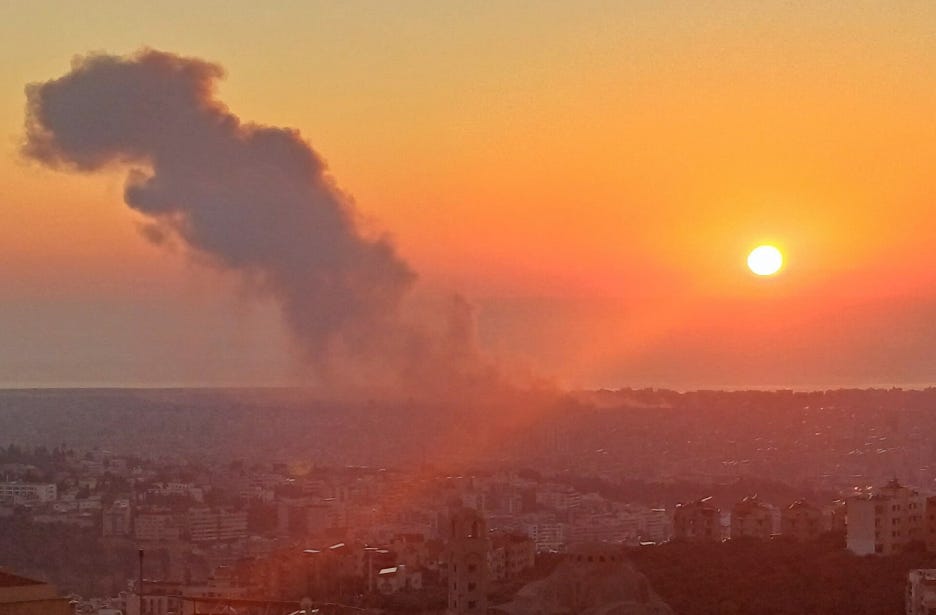
“Hizballah Headquarters Airstrike” by Jimmyp84 - Public Domain

On August 7, US Senators James Lankford (R-OK) and Jeanne Shaheen (D-NH) introduced the Lebanon Sanctions, Stabilization, and Support Act which aims to sanction foreign persons aiding Hizballah and support the Lebanese government’s efforts to disarm the group. The bill would expand Foreign Military Financing and other security assistance to the Lebanese Armed Forces (LAF) and Internal Security Forces (ISF), conditioned on verifiable and meaningful progress toward Hizballah’s disarmament. If passed, the bill could strengthen US efforts to broker a durable settlement in Lebanon by building the security and governance capacity of the Lebanese government. However, mutual distrust between Hizballah and Israel as well as misaligned US and Israeli objectives risk derailing the Trump administration’s peace plan, potentially limiting the effectiveness of future sanctions and security assistance.
The proposed legislation would impose sanctions on foreign persons that support Iran’s financing of Hizballah, obstruct efforts by the LAF and ISF to exercise a state monopoly over all arms, or impede reforms to the country’s banking and financial sector. The bill also authorizes $200 million annually in security assistance to the LAF and ISF, with the opportunity to increase this amount to $300 million if the Secretary of State certifies that there is demonstrated progress toward disarming Hizballah. The proposed assistance follows a $230 million security package to the LAF and ISF, which was approved in October 2025 following commitments by the Lebanese government to disarm all nonstate armed groups. An additional component of the bill is humanitarian assistance and the creation of an incentive fund for the reconstruction of government services and infrastructure.
If passed, the act could reinforce the Trump administration’s ongoing efforts to broker a lasting peace agreement between Hizballah and Israel. Under the US’ proposed framework, Lebanese forces are expected to assume control of southern Lebanon as Israeli forces withdraw, while Hizballah is expected to disarm and dismantle its military infrastructure as the withdrawal proceeds. Sanctions could further constrain Hizballah’s illicit financial networks, making it more difficult for the group to finance or rebuild its military capabilities.
Beyond weakening Hizballah, the bill seeks to address the other driver of instability and conflict: limited capacity and legitimacy of the Lebanese state. Increased security assistance could bolster the capabilities of the LAF and ISF, ensuring the government can maintain control in southern Lebanon after Israeli forces withdraw. Furthermore, the bill’s incentive fund could support stabilization efforts by helping the Lebanese government provide basic services to communities historically reliant on Hizballah for security and social assistance. By strengthening state institutions and reducing Hizballah’s ability to provide those services, the act could gradually diminish sources of the group’s influence.
A major obstacle, however, is mutual distrust between Hizballah and Israel. Hizballah has rejected disarmament so long as Israeli forces remain in Lebanon. Meanwhile, Israel has maintained that Hizballah must completely disarm before it can withdraw, arguing that the group still poses a threat to its northern territory. Peace talks have stagnated as both sides remain unwilling to make concessions until the other does so first. Should the US fail to convince both sides that the process will be reciprocal and enforceable, sanctions and stabilization efforts are unlikely to make meaningful progress.
Compounding this issue are the mismatched objectives between the US and Israel. For the US, brokering peace in Lebanon has become intertwined with ending its own war with Iran, as Tehran continues to condition a broader peace deal on Israel’s withdrawal from the country. Rising domestic criticism of the war and operational costs have placed greater pressure on the US to secure a comprehensive peace deal. By contrast, Israel has signaled little urgency in ending the conflict. Israeli withdrawals from “pilot zones” in Lebanon occurred following US pressure but were limited. Israeli Defense Minister Israel Katz stated last week that the IDF was prepared to maintain long-term occupation of designated security zones in southern Lebanon, drawing criticism from the US. The Trump administration’s 15-point peace plan in Gaza has also contributed to the widening rift between the US and Israel. Israeli Prime Minister Benjamin Netanyahu rejected the plan, stating that Israel would withdraw only when Hamas is “genuinely disarmed.”
With increasingly conflicting strategic objectives between Netanyahu and the Trump administration, Israel may delay or resist implementation of the US framework for Lebanon if it determines that the enforcement mechanisms are insufficient. Given bipartisan support for disarming and demobilizing Hizballah, it is possible that the bill is taken up next year by a new Congress. Even if the act is passed, however, its effectiveness will ultimately depend on whether Washington can secure reciprocal commitments from Hizballah and Israel and maintain the process long enough for Lebanese state institutions to assume greater control over the country’s security.
US Developments
OFAC Reaches Settlement Agreement with Wisconsin Manufacturer for Exports to Iran by Its Italian Subsidiary
On August 12, 2026, the Department of the Treasury’s Office of Foreign Assets Control (“OFAC”) announced a $60,764 settlement with Rice Lake Weighing Systems, Inc. (“Rice Lake”), a Wisconsin-based manufacturer of weighing equipment, in which Rice Lake agreed to settle its and its Italian subsidiary’s potential civil liability for eight apparent violations of the Iranian Transactions and Sanctions Regulations § 560.215(a). According to OFAC, Rice Lake’s Italian subsidiary, Dini Argeo S.r.l. (“Dini Argeo”), exported goods to Iran through a distributor in the United Arab Emirates (“UAE”) while knowing that the goods were ultimately destined for Iran. OFAC does not allege that Rice Lake knew of the exports, but rather that it failed to take sufficient steps to ensure Dini Argeo understood and complied with the prohibitions of US sanctions on Iran. The amount of the settlement agreement reflects OFAC’s determination that the apparent violations were voluntarily self-disclosed and non-egregious.
The settlement agreement highlights the potential sanctions liability US companies with global operations face for the activities of their subsidiaries or affiliates. OFAC has consistently communicated that US parent companies bear some responsibility for the sanctions compliance of their non-US subsidiaries. The Iran sanctions regime in particular extends primary sanctions prohibitions to non-US entities owned by US persons. Notably, Dini Argeo’s alleged conduct also took place while the EU’s blocking statute restricted EU companies from complying with certain US sanctions against Iran that were previously suspended or waived pursuant to the Joint Comprehensive Plan of Action, which underscores the compliance challenges faced by foreign subsidiaries of US companies operating under potentially conflicting legal regimes.
Treasury Secretary Scott Bessent Signals Further Escalation of Pressure on Iran
On August 13, 2026, Treasury Secretary Scott Bessent announced that the Trump administration will introduce additional measures against Iran next week as part of its “maximum pressure” campaign, with the goal of further isolating Iran economically. Bessent said the administration’s “Economic Fury” strategy has targeted Iran’s financial system, oil sector, sanctions-evasion networks, weapons procurement activities, and cryptocurrency holdings, disrupting significant revenue streams for Iran and its proxies. He also indicated that new economic measures will be paired with continued restrictions on Iranian maritime trade and port access.
The anticipated measures follow a renewed sanctions and enforcement campaign launched in July 2026 after President Trump resumed military operations against Iran and reinstated a blockade of the Strait of Hormuz. Recent actions included OFAC’s July 14 designations targeting an alleged oil-shipping network of Iranian businessman Mohammad Hossein Shamkhani and July 15 sanctions against seven individuals and entities allegedly involved in weapons procurement activities on behalf of the Islamic Revolutionary Guard Corps.
Senate Democrats Ask Why Administration Hasn’t Resumed Russia Sanctions Updates
On August 12, 2026, Senator Elizabeth Warren (D-MA) and Senator Chris Coons (D-DE) sent a letter to Secretary of State Marco Rubio and Secretary Bessent demanding an explanation for the Trump administration’s 17-month pause in issuing regular Russia-related sanctions, despite administration officials acknowledging that peace talks with Moscow have stalled. In the letter, the Senators argue that the lack of routine sanctions and counter-evasion measures has weakened US leverage and may have allowed more than 1,000 companies, individuals, and vessels supporting Russia’s military-industrial base to operate without US sanctions.
This letter comes after Members of the House introduced the Senate-passed Lindsey O. Graham Sanctioning Russia and Iran Act of 2026, which grants the President waiver authority in relation to certain Russia-related sanctions and authorizes the President to impose tariffs of up to 100 percent on the largest purchasers of Russian oil and natural gas, as well as countries facilitating Russian oil sanctions evasion.
UK Developments
OFSI Amends and Extends Lukoil International and Lukoil Bulgaria General Licences
OFSI has amended General Licence INT/2025/8031092 (Continuation of Business of Lukoil International Entities) (the “Lukoil International Licence”) and General Licence INT/2025/7895596 (Continuation of Business of Lukoil Bulgaria Entities) (the “Lukoil Bulgaria Licence”) (together, the “GLs”). The GLs were originally introduced to permit the continuation of certain business operations involving Lukoil International GmbH and its subsidiaries, and specified Bulgarian subsidiaries of PJSC Lukoil, respectively, notwithstanding applicable Russia asset-freeze restrictions. Permitted activities include certain payments under existing or new obligations or contracts and the provision and receipt of economic resources. The amended GLs introduce a new one-off notification requirement: entities relying on either licence must notify OFSI and provide current contact details within 14 days of first use where this occurs on or after August 12, 2026, while existing users must notify OFSI within 14 days of that date. Further notification is required if contact details subsequently change, and OFSI makes clear that notification does not constitute confirmation that the relevant activity is permitted. The Lukoil International licence has also been extended until February 26, 2027, while the amended Lukoil Bulgaria licence currently expires on October 29, 2026.
Asia-Pacific Developments
Japan weighs sanctions after Putin’s first visit to disputed Kuril Islands
On August 14, 2026, a senior Japanese Foreign Ministry official stated that Japan may impose additional measures on Russia, potentially including new sanctions. The statement followed President Vladimir Putin’s visit to the island chain off Hokkaido, which prompted strong protests from Tokyo. The visit has further intensified tensions over the long-standing territorial dispute between Japan and Russia regarding the islands, preventing the two countries from concluding a peace treaty after World War II.
Chinese Spokesperson Says Expanded US Sanctions Against Russia Could Harm US Interests
On August 11, 2026, Liu Chang, a spokesperson for the Chinese Embassy in Washington, criticized proposed new US sanctions on Russia, arguing that the measures and broader pressure tactics will ultimately backfire on the US rather than achieve their intended goals. The comments came after the US Senate approved a sanctions bill targeting Russia, which includes restrictions on major Russian banks, a ban on new US investment in Russia, limits on purchases of Russian sovereign debt, and potential tariffs of up to 500% on Russian goods.

Listen to the news:
Global
The US plans to compel countries to choose between China and the US on AI cooperation. Reportedly, the US State Department is planning to tell the 35 countries that have signed the US AI Opportunity Statement that they cannot benefit from the US framework while also benefiting from Beijing’s competing framework, “World Artificial Intelligence Cooperation Organization,” which promotes Chinese open-weight technology in a challenge to US influence over emerging technologies. Of the 35 countries, which include major technology partners such as Japan, Australia and South Korea, only one country – Kazakhstan – has joined both frameworks.
AI Opportunity Statement is a non-binding diplomatic agreement signed in June 2026. It establishes a shared, pro-growth, and pro-innovation vision for artificial intelligence regulation, digital infrastructure, and trusted tech supply chains aligned with the US. The US intends to use the leverage of access to Pax Silica’s trusted supply chain, which includes advanced manufacturing, critical minerals, chips and AI infrastructure, to create a US-influenced ecosystem for technology and innovation.
Read More: Reuters [paywall], US State Department, US State Department
Europe
Russia steps up strikes on Ukrainian cargo vessels on the Black Sea, cutting off Ukrainian grain exports. The campaign appears to be retaliation after Ukraine’s sustained long-range strikes on Russian military and “shadow fleet” vessels in the interconnected Sea of Azov and the Black Sea ports of Novorossiysk, Taman, and Tuapse. Since June, at least 50 Ukrainian vessels have been hit. Typically, Ukraine exports 90% of its grain and seeds through the Black Sea, putting significant logistical and cost pressure on Ukrainian farmers. The supply glut could affect global markets, as Ukraine comprises 50% of the global sunflower seeds and oil supply, 18% of global barley, and 12% of global wheat.
Türkiye has attempted to mediate a new Black Sea ceasefire, but Russia has refused to sign on. Moscow wants to prevent Ukraine from continuing its “kinetic sanctions” against energy and export infrastructure, essentially escalating to de-escalate. Ukraine has approached Poland and Romania about reopening the “solidarity lanes” initiative where Ukrainian products were exported by river and land through EU states. However, this flooded local agricultural markets and hurt farmers, a key constituency before Poland’s 2027 parliamentary elections, plus it is less profitable.
Read More: Politico, Euractiv, The Conversation, Stepwise Risk Outlook
Middle East
The US-Iran MOU expires today, with no clear plan for what comes next. The MOU, which fell apart everywhere but on paper last month, was already effectively dead, but some voices had signaled hope that the milestone could trigger new talks (with erroneous reporting last week even claiming that both capitals had renewed the ceasefire). Instead, the lapsed MOU highlights the strategic quagmire the war is in: a war of economic attrition with escalating global costs and growing fatigue.
Iran is reportedly exploring options to escalate. Arab intelligence has reportedly picked up evidence of a strategic shift inside Iran, with hard-line IRGC figures pushing for broader escalation against the US and its allies in the region (alarming the US’ Gulf partners, already apparently increasingly agitated with the US). The reporting is in line with Iran’s growing efforts to dictate the pace of the conflict, an effort that has successfully given Tehran significant power over the direction of war.
Meanwhile, the US is seeking new ways to pressure Iran economically. President Trump vowed on Friday to hit Iran hard economically, following comments by Treasury Secretary Bessent that the US would impose measures that had “never been seen.” Efforts will likely include further sanctions on Iranian weapons and fuel networks, potentially Iranian customers (like Chinese teapot refineries), and maybe even a land blockade. But economic measures have had little impact on Iran thus far, given years of insulation and no consumer input.
Read More: Al Jazeera, Wall Street Journal [paywall], Reuters [paywall]
Asia-Pacific
President Trump instructed the Pentagon to substantially reduce joint military exercises with Seoul, citing their cost, South Korea’s refusal to support US actions against Iran and his relationship with North Korean leader Kim Jong Un. The announcement came just hours before the annual Ulchi Freedom Shield joint exercises began. The 11-day exercise, which commenced Monday as scheduled, runs through August 27 and is designed to strengthen US-ROK readiness against threats to the Korean Peninsula, including drones, GPS jamming and cyberattacks.
Trump said the drills send a “signal that is totally inappropriate and hostile” to North Korea, underscoring his preference for preserving an opening to Kim. The announcement came one day after Trump posted a photo with Kim, writing that the two “get along great.” While reducing exercises could support Trump’s efforts to revive personal diplomacy with Pyongyang, it risks creating a tradeoff between that diplomatic strategy and the credibility of US-ROK deterrence.
The directive comes as alliance tensions have grown under Trump, who has pressed Seoul to assume greater responsibility for regional security and repeatedly criticized South Korea’s financial support for the roughly 28,500 US troops stationed there. Further reductions could deepen uncertainty in Seoul over Washington’s long-term commitment to the alliance—and concern among other US allies that Washington may be willing to scale back military commitments despite North Korea’s expanding nuclear and missile capabilities and growing alignment with Russia.
Read More: Truth Social, Reuters [paywall], New York Times [paywall], Military.com, Peninsula Dispatch
Americas
Defense Secretary Pete Hegseth traveled to Panama last week to attend the Americas Counter Cartel Coalition (A3C) forum. A3C is a US-led security initiative launched by the Trump administration to combat transnational criminal organizations across the hemisphere. During meetings with defense ministers and military leaders from 19 partner countries, Hegseth emphasized expanding cooperation against drug trafficking networks, stating that Colombia, Honduras, and Ecuador were among the countries working with Washington on enhanced counter-cartel efforts. Hegseth met with Panamanian President José Raúl Mulino and observed joint military training activities including jungle operations training with US and Panamanian service members.
The forum comes amid growing US counter-narcotics operations across Latin America. Since returning to office, the Trump administration has designated several Latin American criminal groups as foreign terrorist organizations and broadened military operations targeting trafficking networks, including maritime strikes in the Caribbean and eastern Pacific. Washington is now seeking closer operational cooperation with regional partners, particularly right-wing governments that are prioritizing tougher anti-crime policies, to expand strikes on land. The US approach has raised concerns among some regional governments, like Mexico, over sovereignty, civilian casualties, and long-term political risks of a larger US military footprint.
Read More: AP, Department of War, New York Times [paywall]
Africa
The release of an American held hostage by jihadists in Niger was reportedly facilitated by Libya, underscoring Khalifa Haftar’s emerging role as a power broker for the Trump administration across the Sahel. US missionary Kevin Rideout was abducted by Islamic State militants in October 2025 and later moved to Mali. Securing his release has been among the primary drivers of the Trump administration’s recent engagement with the central Sahelian states. Negotiations were reportedly assisted in part by Cherif Oud Tahar, a prominent regional drug trafficker with ties to terrorist groups, but sources also stated that the Libyans paid a ransom to free Rideout. A senior source within Haftar’s Libyan National Army (LNA) gave a different account, claiming the LNA launched a military operation to rescue him.
The reported ransom payment reflects a broader trend in which al-Qaeda and Islamic State affiliates increasingly rely on hostage payments to fund their operations. The UN Sanctions Monitoring Team found that a $50 million ransom payment reportedly paid by the UAE to free an Emirati hostage was used by al-Qaeda affiliate Jama’at Nusrat al Islam wal Muslimin (JNIM) to finance its April 2026 offensive against Malian and Russian forces. Portions of the ransom payment were also allocated to al-Qaeda in the Arabian Peninsula (AQAP) in Yemen and al-Qaeda in the Islamic Maghreb (AQIM). Ransom payments provide jihadist groups with financing to sustain more sophisticated operations and regional networks. Accordingly, foreign nationals face an elevated risk of kidnapping in Mali, Niger, and Burkina Faso, and businesses or governments may be compelled to pay substantial sums to secure their release.
Read More: ABC, Reuters [paywall], Reuters [paywall], United Nations Analytical Support and Sanctions Monitoring Team
Geoeconomics
Russian state development bank VEB dismissed chief economist Andrei Klepach after his warning that Russia was losing the economic and technological competition with the US, China and, in some respects, Ukraine. Klepach argued that mounting war costs and deteriorating governance could eventually produce a social crisis. His assessment broadly matches official data: the Bank of Russia expects growth of just 0%–1% in 2026, after GDP expanded 0.8% year over year in the second quarter, and forecasts further slowing to 0.5% in the third. Annual inflation remained near 6% in July, while the central bank’s 14% policy rate continues to restrict borrowing and investment.
As a result of the war, there is a divided economy in which the government prioritizes military production at the expense of civilian business sectors. Defense manufacturers benefit from state orders and subsidized credit, but other businesses face high financing costs, additional taxes, labor shortages and restricted access to Western technology. Russia’s federal deficit reached 6.46 trillion rubles, or 2.8% of GDP, during the first seven months of 2026, already well above the government’s full-year target, while oil and gas revenue fell 16.8% despite the temporary global energy windfall. However, low public debt, capital controls, state-directed banks and continued trade with China and India make a sudden collapse unlikely.
Russia is risking cumulative deterioration as war spending crowds out civilian investment, directed lending conceals weaker bank assets and attacks on refineries raise domestic fuel and transportation costs. Klepach’s firing suggests the Kremlin is prepared to tolerate that erosion rather than reconsider the economic demands of a prolonged war.
Read More: Reuters [paywall], Bank of Russia, KSE Institute
Disruptive Technology
France’s Constitutional Council struck down a social media ban for under-15s, providing a legal obstacle to the EU’s broader social media plans. The Council clarified that the bill, slated for enforcement in September, disproportionately infringed on the freedom of speech of minors due to the blanket ban on social media. French President Emmanuel Macron instructed Prime Minister Sébastien Lecornu to begin working on a new “legally robust” version of the bill with a target of implementation in Spring 2027. The new draft will likely have to loosen the social media restrictions or allow some exceptions to the ban. The Council emphasized that freedom of speech is a fundamental freedom, implying that it is covered by the European Convention on Human Rights and applicable across the bloc.
The European Commission will have to refine its anticipated social media restrictions to the French ruling. Commission President Ursula von der Leyen personally backs social media restrictions for minors and is anticipated to advance a specific proposal by September. The Commission has already formed a working group on the issue that proposed a phased unlocking of social media and online platform rights. The legal obstacle to France’s blanket ban could cast a larger shadow over how social media restrictions are implemented across the EU.
Read More: Euractiv, AP, Politico
Defense
President Donald Trump has opened the possibility of the Navy using foreign-built ships. Trump recently signed a national security memorandum on naval issues that includes allowing foreign shipbuilders to build American naval vessels in their parent shipyards. However, there are conditions attached to the possibility. Only foreign shipbuilding companies that have made “substantial and durable investments” would be eligible for this. Specifically, the yards would need to either build a new shipyard in the US or take “ownership or a majority equity position” of an existing yard. They would also only be allowed to build up to two ships in foreign shipyards as a bridge solution for gaps in the US Navy.
Trump linked the decision to issues with the US shipbuilding industry. The memorandum also tasked the DOW with reintroducing “both capacity and competition to the maritime industrial base” as part of the administration’s efforts to develop the American shipbuilding industry. The change is significant since, by law, American warships are required to be built in the US, although the president has wide authority to waive that requirement. Congress has voiced objections to the push for foreign shipbuilding.
The Trump administration is already pursuing this model with the Coast Guard. The administration is working with Finland on icebreaker production to have two different icebreaker classes, one built in the US and one built simultaneously in Finland. The memorandum cites this model as how the Department of War (DOW) should approach these new possibilities for partnering with foreign shipyards.
Read More: Reuters [paywall], USNI News, Breaking Defense


Contact Us
Karl Hopkins
Partner
+1 202 429 6499
khopkins@steptoe.com
Melissa B. Mahle
Senior Advisor
+1 202 261 0577
mmahle@steptoe.com
Anni Coonan
Senior Intelligence Analyst
+1 212 506 3979
acoonan@steptoe.com
Samuel Bloebaum
Senior Due Diligence Analyst
+1 602 410 6240
sbloebaum@steptoe.com
Zayna Dembinski
Analyst
+1 202 778 3567
zdembinski@steptoe.com
Thomas Goldstein
Analyst
+1 202 862 6735
tgoldstein@steptoe.com
Ian Cameron
Analyst
+1 202 327 6908
icameron@steptoe.com
Elton Smole
Analyst
+1 202 261 0556
esmole@steptoe.com
Carter Spahn
Intelligence Fellow
+1 202 261 7555
cspahn@steptoe.com
Chris Dantes
Intelligence Fellow
+1 202 327 6904
cdantes@steptoe.com
Legal disclaimer: This Substack is for educational and informational purposes only and does not constitute the rendering of legal counseling or other professional services. Reading, subscribing to, or communicating through this Substack does not create an attorney-client relationship. Do not send confidential information through this platform. Consult qualified legal counsel regarding your specific circumstances.