

The Sanctions Update, compiled by attorneys from Steptoe’s award-winning International Regulatory Compliance team and the Stepwise: Risk Outlook editorial team, publishes every Monday (subscribe here). Guided by the knowledge of Steptoe’s industry-leading International Trade and Regulatory Compliance team, the Sanctions Update compiles and contextualizes weekly developments in international regulatory enforcement and compliance, as well as offers insights on geopolitical context, business impacts, and forthcoming risks, and non-sanctions news updates.
For more detailed analysis on related issues, see Steptoe’s International Compliance Blog. For information on industry-specific monitoring or bespoke services, please contact the team here.
By Evan T. Abrams, Meredith Rathbone, Karl Hopkins, Guy Soussan, Alexandra Melia, Wendy Wysong, Ali Burney, Quentin Johnson, Elliot Letts, Algirdas Semeta, Melissa B. Mahle, Anni Coonan, Thomas Goldstein, Zayna Dembinski, Samuel Bloebaum, Elton Smole, Ian Cameron, Wilson Zhao, Zoey Hong, Hoi Chung Liu, Andy Xu Sofia, Jake Fitzpatrick, Carter Spahn, Chris Dantes

Listen to the sanctions update:
The Lede
China Imposes Export Bans on European Companies in Retaliation Against EU Sanctions
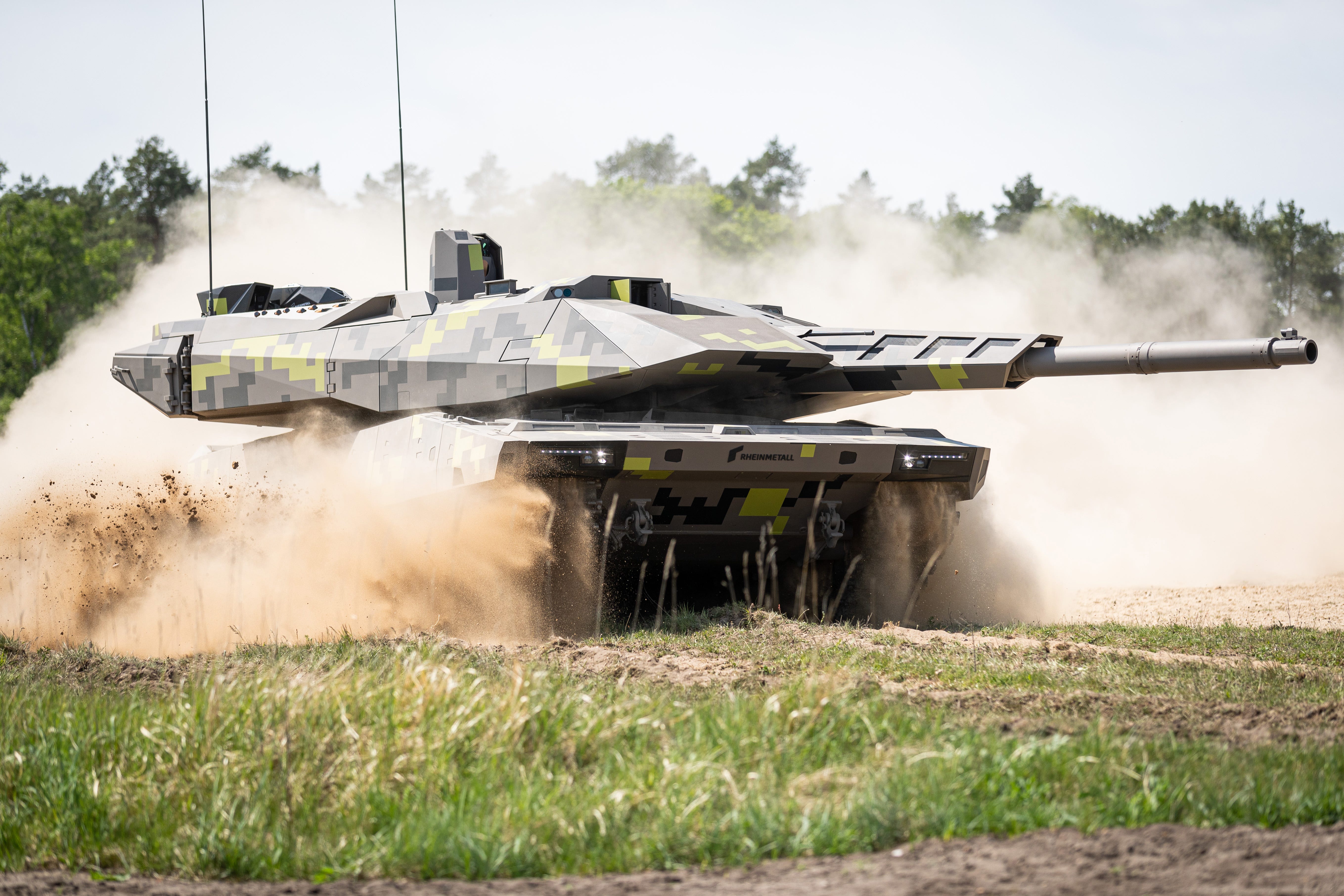
"Rheinmetall kf51 dynamisch hohe aufloesung 1XII0825" by Rheinmetall Defence is licensed under CC BY-SA 4.0.
On July 24, China’s Ministry of Commerce (MOFCOM) added 14 European companies to its export control list, prohibiting the supply of dual-use items of Chinese origin. Beijing explicitly linked the bans to the EU’s 21st sanctions package approved the previous day that imposed sanctions on 14 enterprises from China and Hong Kong for allegedly supporting Russia’s war effort. These sanctions and counter-sanctions reflect the expanding risks of Ukraine war spillover onto EU-Chinese trade relations and, more broadly, risks to western strategic supply chains.
Politics Behind Sanctions Countermeasures
On July 23, EU leaders adopted the 21st package of restrictive measures against Russia in response to its war of aggression against Ukraine. The EU seeks to further undermine Russia’s economy and war machine, limiting Moscow’s ability to deliberately target civilian infrastructure, including energy, water and health facilities, cultural and religious sites, and causing severe hardship for the civilian population. Among the multi-sector sanctions, the EU imposed export restrictions on 51 new entities, including 27 third-country entities supporting Russia’s military and industrial complex and assisting Russia’s circumvention of export restrictions – among these are 14 entities from China and Hong Kong.
The following day, MOFCOM retaliated against the EU action by adding 14 European companies operating in the technology, chemical, and defense sectors to its Export Control List with immediate effect. The action was taken under the authority of the Export Control Law of the People’s Republic of China and the Regulations of the People’s Republic of China on Export Control of Dual-Use Items. Alongside prohibiting Chinese exporters from supplying controlled dual-use items to the 14 European companies, Beijing added an extraterritorial application by banning overseas organizations and individuals from transferring or providing them with Chinese-origin dual-use items. The restrictions apply to goods with both civilian and military uses. Beijing cited national security and the need to fulfill international obligations “such as non-proliferation” in response to what it described as “egregious actions” by the EU.
The export controls indicate Beijing’s commitment to its trading relationship with Russia by raising the cost to the EU for trying to pressure China over the issue. The speed signals Beijing’s decisiveness and intention to establish escalatory dominance. Since 2020, Beijing has been overhauling its export control framework to consolidate and modernize existing legislation, expand its ability to counter what it considers unlawful extraterritorial jurisdiction and establish a legal basis for extraterritorial applications for export control. These efforts closely mirrored the US system, providing countermeasures to expanding US trade restrictions on China. Beijing’s trade tools have proven effective, forcing some guardrails in the evolving US-China trade war.
Potential Impact on EU-Chinese Trade Relations and Strategic Supply Chains
The export control countermeasures come as the European Commission seeks to develop new trade defense tools to tackle the EU’s unsustainable trade deficit with China and Beijing’s industrial production model. Existing EU trade defense tools include anti‑dumping and anti‑subsidy measures, safeguard measures, the Foreign Subsidies Regulation, and increasingly strict foreign investment screening mechanisms. The EU is considering expanding the scope of these instruments and/or deploying them more aggressively in sectors seen as strategically important. As part of a de-risking strategy, EU leaders are implementing trade policy to help European businesses more quickly diversify the supply of critical components concentrated in one or two countries to avoid critical chokepoints that can be weaponized. These trade defense instruments may be presented as early as September in European Commission President Ursula von der Leyen’s State of the Union address.
Beijing’s measures could weaken political support within the EU for additional trade measures under discussion by imposing immediate costs on EU sanctions. Beijing does not define which dual-use items are subject to export bans for each designated entity. But the list of companies, including Germany’s Rheinmetall AG, Poland’s Vigo Photonics and France’s InPACT, operating in the defense, technology, and chemical sectors respectively, suggests that China is seeking to further leverage its dominance over critical minerals to put pressure on the EU’s strategic supply chain. Almost all of the global capacity for rare-earth-metal conversion and alloy making is in China. Rather than imposing a country-wide export ban on specific critical minerals, which could risk a trade rupture – such as the 2025 flare-up between the US and China – the current approach is more targeted and calculated to compel the EU to negotiate and walk back any additional trade measures in the works. If the EU persists, it could risk a broader set of Chinese measures that could hamper Europe’s defense modernization program. Alternatively, the EU could try to accelerate diversification by adopting more expansive industrial policies and defense trade tools, forging new strategic partnerships with resource-rich countries and allied technology partners.
US Developments
Sanctioning Russia Act Passes the Senate
On July 28, 2026, the Senate voted 86-12 to advance the “Lindsey O. Graham Sanctioning Russia Act of 2026,” a sweeping Russia sanctions bill. The vote clears the way for House deliberation, although the House’s August recess is expected to delay further action.
We covered the latest push for the bill in our previous Sanctions Update on July 20, 2026. The legislation was first introduced in April 2025 and garnered strong bipartisan support in the Senate. Previously, we reported that the bill regained momentum after U.S. President Donald Trump signaled support in November 2025, provided he regained flexibility over its sanctions and tariffs. In addition, we noted that the late Senator Graham had said President Trump “greenlit” the Act in January 2026, though it was not voted on at that time.
The most recent version of the legislation seeks to increase economic pressure on Russia and Iran while granting Trump new tariff authority. Under the bill’s tariff provision, Trump would be able to impose tariffs of up to 100% on the top five importers of Russian energy.
The bill’s tariff provisions remain a point of debate. On July 30, 2026, Trump said Congress should add tariffs on Iran to the Russia sanctions bill. Some House Democrats have voiced opposition to the tariff provisions, including Representative Richard Neal (D-MA) and Senator Ron Wyden (D-OR), who released a joint statement criticizing the bill for granting Trump new tariff authority.
OFAC Continues to Target Iranian Maritime, Petroleum, and Procurement Networks
On July 29, 2026, the Office of Foreign Assets Control (“OFAC”) designated two entities allegedly involved in an Iranian maritime insurance scheme that compels commercial vessels transiting the Strait of Hormuz to purchase approved insurance coverage. The action was taken pursuant to Executive Order (“E.O.”) 13902, which targets key sectors of Iran’s economy, including the petroleum sector.
In the same action, OFAC designated eight vessels that OFAC said were “responsible for transporting millions of barrels of Iranian crude oil and petroleum products.” Additionally, eight entities were designated pursuant to E.O. 13902 for “operating in the petroleum sector of the Iranian economy.” The designations build on OFAC actions taken on July 14, 2026, April 15, 2026, and July 30, 2025, targeting a shadow shipping network. Collectively, those actions sanctioned more than 200 individuals, entities, and vessels alleged to facilitate Iran’s illicit petroleum trade.
On July 30, 2026, OFAC designated six entities and individuals in China, India, Russia, and Iran for allegedly supporting Iranian carrier Mahan Air. According to OFAC, Mahan Air “play[s] a central role in enabling the Islamic Revolutionary Guard Corps (‘IRGC’), providing travel services for IRGC‑Qods Force personnel, facilitating military training, and supporting Iran’s procurement and transport of unmanned aerial vehicle (‘UAV’) systems and weapons.” The sanctioned parties include entities and individuals that allegedly served as sales agents for, or provided transportation-related assistance to, Mahan Air. This action is pursuant to E.O. 13224, which targets terrorist groups, their supporters, and those who aid acts of terrorism, and in furtherance of the National Security Presidential Memorandum 2, which directs the U.S. government to deny IRGC access to assets and resources.
Treasury Announces Second Round of Sanctions Removals
On July 27, 2026, OFAC removed 84 individuals and entities from the Specially Designated Nationals and Blocked Persons List (“SDN List”), including deceased individuals, defunct entities, and targets sanctioned more than 20 years ago that were no longer considered U.S. national security or foreign policy priorities.
This action builds on Secretary of the Treasury Scott Bessent’s announcement that Treasury would modernize its sanctions to ensure that U.S. sanctions remain targeted, effective, and aligned with U.S. economic, foreign policy, and national security priorities. OFAC’s first round of removals on May 28, 2026 resulted in the removal of 76 individuals and entities, including deceased individuals, scrapped or decommissioned vessels, persons designated as part of illicit financial networks that no longer exist, and individuals designated more than 10 years ago who lack sufficient identifiers for continued screening and do not appear to pose an ongoing threat.
UK Developments
HMRC Publishes Technical Note on Trade Sanctions Enforcement
HMRC has published a technical note on trade sanctions enforcement for the 2025 – 2026 period. The note states that HMRC, in collaboration with Border Force and UK prosecution authorities has undertaken a wide range of enforcement activity in the reporting period, including 58 seizures of sanctioned goods, one compound settlement for violation of the UK’s Russia trade sanctions regime, 18 HMRC warning letters issued following voluntary disclosures, and 3 positive charging decisions across two cases that are pending criminal trials. The note also highlights that HMRC received 44 enforcement referrals from OFSI during the reporting period.
The note also confirms that in 2026 / 2027 HMRC plans to seek new legal powers to strengthen its ability to publish details of companies that agree to a compound settlement for strategic export controls and sanctions offences. The purpose of this new approach is to improve transparency and increase consistency of approach between HMRC and other trade sanctions enforcement agencies across government.
HMRC Issues Two Compound Penalties for Unlicensed Exports of Military Items
HMRC has published anonymised details of two recently concluded compound settlements with two UK exporters. In June 2026, two UK exporters paid compound settlements of £216,530.30 and £20,889.15 to HMRC, in each case relating to unlicensed exports of military-listed goods and related activity prohibited by the Export Control Order 2008 and contrary to the Customs and Excise Management Act 1979. These enforcement actions underscore a continued focus on enforcement by HMRC.
EU Developments
EU Council Updates Sanctions Listing under EU Global Human Rights Regime
The EU Council recently designated seven individuals and three entities under the EU Global Human Rights Sanctions Regime for their involvement in serious human rights violations connected to the operation of scam centers in Southeast Asia. The new listings target Cambodia-based conglomerates Prince Holding Group and Jin Bei Group, together with their respective chairmen, Chen Zhi and Zhu Zhongbiao, as well as the Democratic Karen Benevolent Army (DKBA) and five senior DKBA officials. According to the Council, the designated entities and individuals were involved in, or facilitated, large-scale scam-center operations in Cambodia and Myanmar/Burma, where victims were allegedly trafficked or lured under false pretenses, held against their will, forced to participate in online fraud schemes, and subjected to abuse, torture, kidnapping, and illegal detention.
Newly designated individuals and entities are subject to asset freezes, a prohibition on making funds or economic resources available, and, in the case of the listed individuals, an EU travel ban.
EU Council Revises Sanctions Regimes Targeting Iran
The EU Council introduced a series of updates to the restrictive measures against Iran established under Decision 2010/413/CFSP and Regulation (EU) 267/2012. Following a review of the sanctions list, the Council delisted three senior Islamic Revolutionary Guard Corps (IRGC) and updated the statement of reasons for the designation of the Research Centre for Explosion and Impact (METFAZ). The Council also designated Iranian businessman Ali Ansari and the MAPNA Group, citing their support for the Government of Iran, with MAPNA additionally designated for supporting Iran’s proliferation-sensitive nuclear activities.
In addition, the EU Council introduced new derogations under Regulation (EU) 267/2012 and Regulation (EU) 2023/1529, to facilitate humanitarian activities and the functioning of EU and Member State diplomatic representations in Iran. Under the new provisions, Member State competent authorities may authorize the sale, supply, transfer, transit or export of goods and technology referred to in Article 2(1) of Regulation (EU) 2023/1529 and Articles 2(1) and 5(1) of Regulation (EU) 267/2012, as well as related technical and financial assistance, where necessary for medical, pharmaceutical or humanitarian purposes, or for the official purposes of diplomatic representations of the EU and Member States, including delegations, embassies and missions, in Iran.
The newly introduced derogations are intended to facilitate the official functions of EU and Member State diplomatic representations in Iran by allowing the use of goods and software needed for the processing of visa applications. In the case of the derogation under Regulation (EU) 267/2012, authorizations remain subject to applicable export control requirements under the EU Dual-Use Regulation and, for items controlled under the Nuclear Suppliers Group and Missile Technology Control Regime lists, to additional non-proliferation safeguards and prior case-by-case review.
EU Council Renews Restrictive Measures Addressing Iran’s Military Support to Russia, Armed Groups and Entities in the Middle East and the Red Sea Region, and Actions Undermining Freedom of Navigation in the Middle East
On July 24, the EU Council renewed the sanctions regime in view of Iran’s military support to Russia’s war of aggression against Ukraine and to armed groups and entities in the Middle East and the Red Sea region, as well as Iran’s actions undermining freedom of navigation in the Middle East under Council Decision (CFSP) 2023/1532 for another year, until July 27, 2027. Alongside the renewal, four individuals were removed from the sanctions list.
Asia-Pacific Developments
China Warns of Retaliation Against Potential US AI Sanctions
China said it would take “all necessary measures” to protect its interests if the US imposes sanctions on Chinese AI companies over accusations that they used American AI models to train their own systems through a technique known as model distillation. China’s Ministry of Commerce rejected the allegations as unfounded and politically motivated, calling them an example of “AI hegemony” and criticizing what it described as a US smear campaign. The dispute intensified after US Treasury Secretary Scott Bessent said Washington would examine Chinese AI models for evidence of intellectual property theft, reflecting concerns previously raised by various US companies. China defended distillation as a widely used industry practice, argued that some Chinese models have achieved leading capabilities on their own merits, and also claimed that US firms have used Chinese models in similar ways. Despite the sharp rhetoric, Beijing urged greater US-China dialogue and cooperation on AI governance and development.
China Urges US to End Threats and Sanctions Against Cuba
Chinese Foreign Ministry spokesperson Mao Ning said that the US should immediately stop threatening Cuba with force and end its unilateral blockade and sanctions against the country. Responding to reports that Washington has been considering various options for possible military action against Cuba, Mao stated that China has consistently expressed its position on the issue and reaffirmed Beijing’s firm support for Cuba’s efforts to safeguard its national sovereignty and resist foreign interference. She added that China will continue working with the international community to uphold fairness, justice, and the principles of international law.

Listen to the news:
Global
Suspected Iranian cyberattacks on US water systems demonstrate growing global capabilities of state-sponsored hackers. At least seven US states are reporting malicious attacks causing operational disruption, like flooding and pressure loss. The FBI stated that hackers remotely accessed internet-connected controls and changed administrator passwords, interrupting service at an undisclosed number of facilities, but not compromising water quality. The attacks are similar to a 2023 cyberattack on a Pittsburgh municipal water facility, attributed to CyberAv3ngers, a hacking group affiliated with the Islamic Revolutionary Guard Corps.
Tehran views cyber operations as part of its hybrid war capabilities, including sabotage, influence operations and non-attributable physical or kinetic attacks. Iran state-sponsored hackers have targeted critical infrastructure in the Middle East, Europe and the US. In 2022, Iranian hackers targeted the Albanian government, crippling government websites, with denial-of-service attacks, ransomware and disk-wiping software. Since the start of the Iran war, Iranian cyberattacks against Israel have surged dramatically, targeting critical infrastructure, government agencies and commerce.
Read More: New York Times [paywall], Time Magazine, Reuters [paywall], Center for Strategic & International Studies
Europe
Tomorrow, EU member states discuss migration policy in reaction to the Ceuta incident. Late last week, nearly 60,000 people rushed into Ceuta, a Spanish enclave bordering Morocco, in a single day. The rush may have been triggered by misinformation about a recent Spanish regularization scheme for unauthorized residents—which would not have applied to any new unauthorized arrivals—and a month-old Spanish supreme court ruling clarifying that migrant arrivals by sea must undergo the same due process as those by land. Some migrants to Ceuta claimed that Moroccan authorities encouraged the rush, reflecting a potential instrumentalization of migration after Spanish Prime Minister Pedro Sánchez’s late July visit to Algeria, which supports the independence of Western Sahara. Many of the 60,000 migrants swam around the border wall between Ceuta and Morocco, leading to the drowning of at least 72 people.
The Ceuta incident has ignited European debates about migration and the Schengen Area. On Saturday, leaders of 22 EU member states circulated a letter implicitly condemning Spain’s regularization scheme and expressing readiness to reimpose “temporary border controls” in the bloc. This follows France and Italy imposing border checks against Spain on Friday, which is allowed under Schengen rules but undermines the pact’s freedom of movement principles. Sánchez fired back, calling the letter signatories “selfish” and their response “unlawful,” emphasizing that the Ceuta incident was a Spanish law enforcement matter (the vast majority of the 60,000 have been escorted out of Ceuta).
Read More: Politico, Financial Times [paywall], The New York Times [paywall]
Middle East
The US and Iran sent mixed messages about the status of the conflict over the weekend. President Trump walked back threats to escalate strikes on Iran on Sunday after announcing that the US’ Gulf allies had reached a framework deal with Iran to halt the conflict and reopen the Strait of Hormuz. On Monday, Iran denied that any negotiations with the US were taking place (although this notably does not preclude indirect talks via Gulf interlocutors, as Trump implied).
Tehran sees the US’ deescalation as proof that its strategy of widening the war is giving it the upper hand. Iran’s strategy throughout the war has been to escalate global economic costs and bet that Washington is more sensitive to domestic economic sentiment and international economic shockwaves than Tehran. By unilaterally escalating (including the closure of the Bab al-Mandeb to Saudi oil, and striking first in the most recent ceasefire breakdown), Iran is further demonstrating its ability to dictate the conflict. Ultimately, Iran wants to convince the US that containing the crisis is more costly than accommodating its demands in the Strait.
Read More: AP, New York Times [paywall], Reuters [paywall]
Asia-Pacific
China has revised its regulations protecting integrated-circuit layout designs as Beijing pushes for greater technological self-reliance and makes semiconductors a central pillar of its emerging industries. Signed by Premier Li Qiang last month and set to take effect in October, the State Council decree strengthens registration requirements and legal protections for chip designs, improves mechanisms for investigating infringements and expands the range of actions deemed violations. Regulators are now able to deny applications that do not meet Beijing’s originality standards, a move signaling China is raising the bar for firms seeking to protect chip design in an increasingly competitive semiconductor market.
The measures reflect the growing importance Beijing places on strengthening China’s domestic technology manufacturing capabilities. The US and its allies continue efforts to restrict China’s access to advanced semiconductor technologies, seeking to constrain its progress in AI and high-end chip development. These restrictions have instead reinforced Beijing’s longstanding drive for technological self-reliance, prompting greater state-industry coordination to localize critical supply chains and reduce dependence on foreign technology. The revisions are part of a broader push to strengthen China’s control over the intellectual property underpinning its semiconductor sector as competition over advanced technology intensifies.
Read More: Xinhua, Reuters [paywall], South China Morning Post [paywall], Center for Strategic and International Studies
Americas
Peru’s former President Ollanta Humala was released from prison on Friday after the Constitutional Court overturned his 15-year sentence. Humala was convicted last year of money laundering along with his wife Nadine Heredia, who received political asylum in Brazil, after Humala allegedly received illegal campaign contributions from the Brazilian construction giant Odebrecht and the Venezuelan government. Odebrecht was central to the infamous Lava Jato anti-corruption probe in Brazil, which revealed that Odebrecht’s executives had paid millions in bribes in exchange for contracts across Latin America. The charges against Humala concerned funds for his 2011 campaign against Keiko Fujimori, in which Humala won 51.1% of the vote. The court overturned the sentence on the grounds that the campaign contributions did not constitute money laundering at the time.
Keiko Fujimori, who took office as Peru’s first female president in July, was facing similar charges as recently as last year regarding her 2011 campaign. The court overturned proceedings against her last year on similar grounds as in the case of Humala. Odebrecht has admitted to paying $29 million in bribes to Peruvian officials in exchange for contracts between 2005 and 2014. Alejandro Toledo, who served as Peru’s president from 2001 to 2006, remains in prison serving a 33-year sentence over ties to Odebrecht. In a statement, President Fujimori expressed her approval of the court’s decision to overturn Humala’s sentence, highlighting the similarities to her own case.
Read More: Reuters [paywall], Al Jazeera, BBC [paywall]
Africa
Clashes in Ethiopia’s Tigray region risk triggering another civil war. Ethiopian federal forces and the Tigray People’s Liberation Front (TPLF), a political party and separatist group that fought a war with Addis Ababa from 2020 to 2022, exchanged heavy fire near the Sudanese border over the weekend. Both sides blame the other for initiating the fighting. The renewed violence follows months of mounting tensions as the TPLF gradually reasserted administrative control over much of the region, challenging the federal government’s authority and unraveling the 2022 Pretoria Agreement.
Renewed fighting in Tigray could also draw in Eritrea, raising the risk of a broader regional conflict and exacerbating insecurity in the Red Sea. Relations between Ethiopia and Eritrea have deteriorated sharply since Prime Minister Abiy Ahmed reiterated Ethiopia’s desire for access to the Red Sea, remarks that Asmara has interpreted as a threat to its sovereignty. Eritrea has cultivated ties with the TPLF to counterbalance Ethiopia’s regional ambitions, further worsening relations. A wider Ethiopia-Eritrea conflict would increase regional instability and could threaten Red Sea shipping.
Read More: BBC [paywall], Council on Foreign Relations, Stepwise Risk Outlook
Geoeconomics
Washington and Tokyo confirmed a coordinated yen-buying intervention to prevent the currency from weakening further after it fell to a roughly 40-year low against the dollar. The yen strengthened more than 1% to around 155.20 per dollar following Japan’s Finance Minister Satsuki Katayama’s confirmation Monday, raising the yen from its 40-year low against the dollar. Japan has already spent billions of dollars supporting the yen this year, but the currency has remained under pressure from the widening US-Japan interest-rate gap, higher energy costs and concerns over Japan’s fiscal outlook. This intervention, coupled with Treasury Secretary Scott Bessent’s comment that Washington would “not hesitate” to intervene again, was widely seen as lending greater credibility to future interventions and bolstering market confidence, although analysts have cautioned intervention alone would not reverse the underlying forces driving the yen’s depreciation.
The intervention marked the first coordinated US-Japan yen-buying operation since 1998 and the first joint intervention of any kind since 2011. Its significance extends beyond currency stabilization: Washington’s participation signals excessive yen weakness has become a shared geoeconomic concern, particularly as the Trump administration seeks to strengthen US manufacturing and reduce trade imbalances. A weaker yen boosts Japanese exporters’ competitiveness and could complicate those efforts, while sustained yen weakness could increase pressure on Tokyo to tighten monetary policy. Higher Japanese rates could, in turn, make Japanese investors less inclined to hold US assets, potentially affecting demand for Treasuries and US borrowing costs.
Read More: Financial Times [paywall], Wall Street Journal [paywall], New York Times [paywall], Stepwise Risk Outlook
Disruptive Technology
As of Sunday, core obligations of the EU AI Act are enforced. The grace period for generative AI model developers to comply with mitigating the most serious risks has ended. These risks include an AI-enabled chemical, biological, or nuclear weapons attack; lost control of an AI model; an AI-enabled cyberattack; or large-scale AI manipulation. Now, the EU could impose fines of up to 3% of global turnover or ban certain models if companies are found to violate their obligations to assess, mitigate, and disclose those risks. A new office within the European Commission, the AI Office, will handle those investigations, as well as evaluate models before their public release, similar to the US’ voluntary framework under the Department of Commerce.
Read More: European Commission, TRT World, Politico
Energy
Germany is expanding its support for nuclear fusion research and development. The German government has announced the locations and specific focuses of three regional research centers, referred to as hubs, for fusion energy research. The first hub will focus on magnet technologies and the second on laser technologies for fusion reactors, and the third hub will concentrate on materials and fuel research. According to Germany’s minister of research, Dorothee Bär, up to nine billion dollars of public money could flow into fusion technology as Germany ramps up its fusion energy program. After that, Berlin expects private business to take over much of the financing.
Berlin has set a goal of building the world’s first fusion reactor. In late 2025, Germany’s government revealed an action plan for the development of fusion technology as a way to merge the country’s energy-intensive economy with Berlin’s energy transition ambitions. Germany’s desire to promote fusion research falls in line with a number of other countries like the US, China, Japan and the UK, all of which have poured major sums of money into driving progress in nuclear fusion technology. Germany has a long and complicated history with nuclear power that ultimately resulted in the country shutting off all its nuclear reactors.
Read More: Golem.de [in German], Handelsblatt [in German], Deutsche Welle


Contact Us
Karl Hopkins
Partner
+1 202 429 6499
khopkins@steptoe.com
Melissa B. Mahle
Senior Advisor
+1 202 261 0577
mmahle@steptoe.com
Anni Coonan
Senior Intelligence Analyst
+1 212 506 3979
acoonan@steptoe.com
Samuel Bloebaum
Senior Due Diligence Analyst
+1 602 410 6240
sbloebaum@steptoe.com
Zayna Dembinski
Analyst
+1 202 778 3567
zdembinski@steptoe.com
Thomas Goldstein
Analyst
+1 202 862 6735
tgoldstein@steptoe.com
Ian Cameron
Analyst
+1 202 327 6908
icameron@steptoe.com
Elton Smole
Analyst
+1 202 261 0556
esmole@steptoe.com
Carter Spahn
Intelligence Fellow
+1 202 261 7555
cspahn@steptoe.com
Chris Dantes
Intelligence Fellow
+1 202 327 6904
cdantes@steptoe.com
Legal disclaimer: This Substack is for educational and informational purposes only and does not constitute the rendering of legal counseling or other professional services. Reading, subscribing to, or communicating through this Substack does not create an attorney-client relationship. Do not send confidential information through this platform. Consult qualified legal counsel regarding your specific circumstances.