

The Sanctions Update, compiled by attorneys from Steptoe’s award-winning International Regulatory Compliance team and the Stepwise: Risk Outlook editorial team, publishes every Monday (subscribe here). Guided by the knowledge of Steptoe’s industry-leading International Trade and Regulatory Compliance team, the Sanctions Update compiles and contextualizes weekly developments in international regulatory enforcement and compliance, as well as offers insights on geopolitical context, business impacts, and forthcoming risks, and non-sanctions news updates.
For more detailed analysis on related issues, see Steptoe’s International Compliance Blog. For information on industry-specific monitoring or bespoke services, please contact the team here.
By Evan T. Abrams, Meredith Rathbone, Karl Hopkins, Guy Soussan, Alexandra Melia, Wendy Wysong, Ali Burney, Quentin Johnson, Elliot Letts, Algirdas Semeta, Melissa B. Mahle, Anni Coonan, Thomas Goldstein, Zayna Dembinski, Samuel Bloebaum, Elton Smole, Ian Cameron, Wilson Zhao, Zoey Hong, Kiki Dong, Isabella Rao, Jonathan Eaton, Carter Spahn, Chris Dantes

The Lede
US Renews Economic Pressure on Iran with New Sanctions
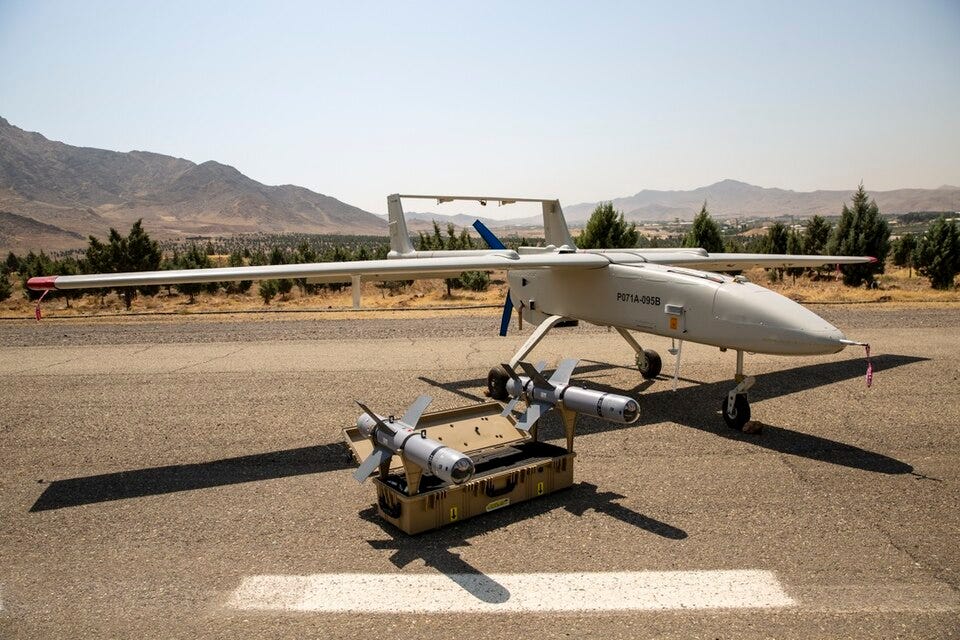
"IRGC Ground New Equipment 2021 (09)" by Hadi Hirbodvash is licensed under CC BY 4.0.
Over the last week, the US has implemented or re-imposed several sanctions measures on Iran as it attempts to ramp up military and economic pressure on Tehran once again. Following the breakdown of the June memorandum of understanding (MOU) that paused the active Iran conflict and established high-level talks on the nuclear issue, the resumption of economic pressure pairs with military strikes as part of a broader effort to secure more concessions from Iran amid a deadlocked negotiation process. But the renewal of sanctions (and airstrikes) is unlikely to secure a new deal in the short term, given the previous failure of economic or kinetic pressure to compel concessions from Tehran.
On July 15, the US Department of the Treasury’s Office of Foreign Assets Control (OFAC) sanctioned seven individuals and entities involved in the Islamic Revolutionary Guard Corps’ (IRGC) international weapons procurement network. The sanctions package targets individuals and entities in Iran, Nigeria, Italy and Russia pursuant to EO 13382, which targets weapons of mass destruction (WMD) proliferators and their supporters. On July 14, OFAC sanctioned more than 50 individuals linked to the illicit shipping and sanctions evasion network of Mohammad Hossein Shamkhani, an Iranian oil magnate who has been the target of numerous rounds of US sanctions. Entities and individuals in Iran, Dubai, the British Virgin Islands, Denmark and elsewhere were sanctioned pursuant to EO 13902, which provides authority to the Secretary of the Treasury to identify and impose sanctions on key sectors of Iran’s economy. And on July 10, OFAC sanctioned Iranian financier Ali Ansari (and entities associated with him) and currency exchange houses in an effort to disrupt financial support to the IRGC and Supreme Leader Mojtaba Khamenei. Ansari and exchange houses were sanctioned pursuant to EOs 13876 and 13224 for providing material support to Khamenei or acting on behalf of the IRGC. The new sanctions also followed the revocation of the temporary sanctions waiver allowing the sale of Iranian oil, originally intended to expire August 21.
The designations are happening against the backdrop of the breakdown of the June memorandum of understanding (MOU) between the US and Iran and the reignition of active hostilities in the Gulf. Since active conflict restarted in early July following Iranian targeting of several commercial vessels in the Strait of Hormuz, both sides have escalated rapidly (although the kinetic conflict remains below the level reached prior to the signing of the MOU). Iran has struck military and civilian targets throughout the Gulf, including a desalination plant in Kuwait, military bases in Jordan (a rare target throughout the conflict), and continued harassment of shipping in the Strait. The US has retaliated with strikes on military and oil infrastructure, broadening at the end of last week to include civilian infrastructure like Iran’s power grid, ports and bridges.
The US is seeking to renew pressure on Iran in a bid to secure further concessions outside of a deadlocked negotiating process. New sanctions against Iran’s weapons procurement and oil shipping network constitute a parallel effort to increase economic pressure alongside military strikes. Last week, the US also restarted its blockade on Iranian ports, a renewed effort to deny Iran any revenues from its heavily-sanctioned oil trade (which almost exclusively transits the Strait to reach customers, mostly in China). President Trump restarted strikes after reportedly being convinced by aides that Iran was not negotiating in good faith in ongoing nuclear talks, and that Tehran was using the time to reconsolidate and rearm rather than seek a comprehensive agreement. Misalignments over the text of the MOU were also beginning to grate; the 14-point agreement permitted Iran to “make arrangements” for safe passage of commercial vessels in the Strait following a 60-day period of guaranteed free passage. The US expected Iran to provide free passage indefinitely (in line with international maritime law), while Iran was seeking to establish tolls and policing. The breakdown of talks and return to military action was in part precipitated by Iranian objections to a US-facilitated Omani corridor that would have bypassed Iranian jurisdiction. The ships that Iran struck in early June, kicking off this round of escalation, were using the southerly Omani route.
Chances are slim that this renewed pressure campaign will compel Iran to offer concessions on the nuclear or maritime front that were not secured by more severe and sustained efforts this spring. Months of conflict have demonstrated that Iran has a higher threshold for military strikes and economic pain than the US, at least for now. Tehran does not trust Washington to make good on its promises of sanctions relief or even the release of cash, and is seeking to entrench permanent global leverage in the form of control of the Strait rather than relying on a new bargain. That reality makes it difficult to imagine any timely or comprehensive resolution to the conflict. However, there are signs that both sides are seeking deescalation, and intermittent pauses or fragile ceasefires are not unlikely in the coming months (especially as midterm elections approach). Still, the instability around the Iran sanctions regime, kinetic strikes throughout the Gulf, and the closure of the Strait of Hormuz signal continued uncertainty for global energy markets and businesses.
US Developments
US Sanctions Shamkhani Oil-Shipping Network and Iran Weapons Procurement Network
On July 13, 2026, President Donald Trump formally notified Congress that the US has resumed military strikes on Iran. The same day, Trump reinstated a blockade of the Strait of Hormuz. Likewise, it appears that the US Department of the Treasury’s Office of Foreign Assets Control (“OFAC”) has resumed its sanctions campaign against Iran.
On July 14, 2026, OFAC expanded sanctions targeting the alleged illicit shipping network of Iranian businessman Mohammad Hossein Shamkhani (“Shamkhani”), citing its role in facilitating Iran’s oil exports following renewed attacks in the Strait of Hormuz. The action sanctioned more than 50 individuals, companies, and vessels allegedly linked to Shamkhani’s network operating across the UAE, Singapore, Hong Kong, India, and other jurisdictions.
The action builds on OFAC’s April 15, 2026, and July 30, 2025, designation actions targeting the Shamkhani network. Treasury has now sanctioned more than 200 individuals, entities, and vessels allegedly operating within Shamkhani’s network.
On July 15, 2026, OFAC sanctioned seven individuals and entities allegedly involved in an international network supporting weapons procurement efforts on behalf of the Islamic Revolutionary Guard Corps (“IRGC”).
The action builds on OFAC’s May 8, 2026, and June 10, 2026, designations, which targeted alleged procurement networks that sourced weapons for the IRGC and Iran’s Center for Innovation and Technology Cooperation. The sanctions are pursuant to Executive Order (E.O.) 13382, which targets weapons of mass destruction proliferators and their supporters.
Senators Push Forward on Russian Sanctions Bill
On July 10, 2026, Senator Jeanne Shaheen (D-NH), the Ranking Member of the Senate Foreign Relations Committee, alongside Senators Roger Wicker (R-MS), the Chair of the Senate Armed Services Committee, the late Lindsey Graham (R-SC), and Richard Blumenthal (D-CT), released a statement announcing that they had “reached an agreement with the Trump Administration to move [their] updated Russia sanctions legislation [the Sanctioning Russia Act] forward.”
The Sanctioning Russia Act is a sweeping sanctions and tariff-related bill first introduced in April 2025 that has received strong bipartisan support in the Senate. On July 7, 2026, lawmakers reportedly sought Secretary of the Treasury Scott Bessent’s support for the bill during the NATO summit in Türkiye. Previously, we reported that the Act saw a renewed push in Congress in late November 2025 following President Trump’s indication that he would support the legislation, provided that he retained ultimate decision-making flexibility with respect to the sanctions and tariffs contained therein. We also reported that the late Senator Graham had said President Trump “greenlit” the Act in January 2026, though it was not voted on at that time.
On July 14, 2026, a revised version of the bill, now titled the “Sanctioning Russia Act of 2026”, was introduced in the Senate. The bill has been the subject of lengthy negotiation between its supporters and the Trump administration and it has been significantly revised. The revisions include:
· The removal of the “covered determination” framework which required the President to determine that Russia undertook certain activities adverse to Ukraine before most sanctions would be activated. The current bill generally imposes sanctions after a certain number of days after passage of the legislation without a “covered determination” being made.
· A reduction of mandatory tariffs on Russian goods from at least 500 percent on imports to no more than 500 percent.
· A reworked secondary tariff authority, which authorizes the imposition of tariffs of up to 100% on countries that, after enactment, continue making new purchases of Russian-origin crude oil or natural gas and are among the five largest importers of those products or the top five countries facilitating Russian oil sanctions evasion. Countries whose imports of Russian natural gas account for less than 15% of Russia’s total natural gas exports and that are reducing those imports would qualify for an exception.
· The expansion of the sanctions authority to include activities supporting the Russian defense industrial base, including the selling, leasing, or providing of CNC tools, lubricant additives, chemical coatings, fiber optic cables with military applications, and items on the Common High Priority List.
· The expansion of maritime and shadow fleet sanctions by specifically authorizing sanctions against persons and vessels transporting Russian oil, liquid natural gas, uranium, coal, petroleum products, or arms.
· A broader investment restriction that prohibits any new US investment in Russia, the provision of certain services to Russia, and the financing or facilitation of transactions by foreign persons that would otherwise be prohibited if performed by a US person.
In addition, the bill would impose mandatory sanctions on Russian President Vladimir Putin, top Russian officials, the Russian military, major Russian banks, foreign persons supporting Russia’s military, and Russia’s shadow fleet of oil tankers. Many of these sanctions are already in place, but the revised bill ensures the sanctions are statutorily mandatory.
The amended bill would authorize the President to waive the application of any sanctions or restrictions under the Act. The President would be required to certify to Congress that the issuance of the waiver is in the national interests of the United States and provide a report outlining its reasoning.
Senators supporting the Act have expressed optimism that Congress will pass it this summer, especially following the death of Senator Graham, who was one of the bill’s chief architects and proponents. It is unclear, however, whether the bill will pass the House, as some House Democrats have expressed opposition to the provisions that would give the President broader authority to impose tariffs without congressional approval.
OFAC Issues Venezuela-related FAQ
On July 7, 2026, OFAC issued Frequently Asked Question (“FAQ”) 1263, which clarifies that General License (GL) 60 does not require payments to the Government of Venezuela related to authorized earthquake relief efforts to be made into the Foreign Government Deposit Funds Account (“FGDF”).
However, FGDF requirements under other Venezuela-related general licenses (such as GLs 46C, 48B, 49A, 50B, 51B, 52A, and 54A) still apply. Activities authorized under those licenses must continue to use the FGDF where required and cannot be relabeled as earthquake relief to avoid that requirement.
US Designates Cuban Entities and Issues Cuba-related FAQ
On July 13, 2026, the Department of State designated ten entities to “further the Trump Administration’s comprehensive push to end the Cuban regime’s malign activities both in Cuba and across [the western] hemisphere.” Specifically, the State Department designated four entities for their “direct roles in carrying out, enabling, and financing the Cuban regime’s campaign of violent repression” and six state-owned entities, including Grupo Empresarial del Comercio Exterior (“GECOMEX”) and Grupo Empresarial de Transporte Marítimo Portuario (“GEMAR”), for funding the Cuban regime.
Relatedly, OFAC issued a FAQ 1262, which states that non-US persons, including foreign financial institutions, generally will not be targeted for engaging in transactions ordinarily incident and necessary to the wind-down of dealings with these GECOMEX or GEMAR, or any entity in which GECOMEX or GEMAR owns, directly or indirectly, a 50 percent or greater interest, through August 12, 2026. However, OFAC cautions that transactions involving the return of assets to these entities or the transfer of these assets to another jurisdiction “could expose non-US persons to significant sanctions risk.” US persons remain prohibited from dealing with GECOMEX or GEMAR absent OFAC authorization.
These designations follow recent actions taken by the Trump administration to exert pressure on the Cuban regime on June 23, June 11, June 4, May 18, and May 7, 2026.
OFAC Updates and Removes Hong Kong-related Designations
On July 17, 2026, the national emergency declared in Executive Order (E.O.) 13936 of July 14, 2020, “The President’s Executive Order on Hong Kong Normalization,” expired. As a result, OFAC removed nine persons designated under E.O. 13936 from the List of Specially Designated Nationals and Blocked Persons (“SDN List”). In addition, OFAC removed 39 individuals from the SDN List and added them to OFAC’s Non-SDN Menu-Based Sanctions List (“NS-MBS List”) pursuant to the Hong Kong Autonomy Act of 2020. Among these individuals are notable Hong Kong and PRC officials, including former Chief Executive Carrie Lam, Chief Executive John Lee, and Commissioner of Police Chris Tang.
OFAC Sanctions Alleged Cybercriminals
On July 13, 2026, OFAC sanctioned two individuals and one entity for allegedly enabling the malign activities of ransomware actors and other cybercriminals, most notably ransomware attacks against Americans. More specifically, OFAC stated that one individual and the entity provided virtual private network (“VPN”) services to ransomware groups and the other individual sold tools to disguise ransomware and malware.
The sanctions were coordinated with the United Kingdom’s Foreign, Commonwealth & Development Office, which also sanctioned alleged cybercriminals. OFAC noted that the sanctions were issued in furtherance of E.O. 14390, which orders, among other things, US government agencies to take action to protect Americans from the threat posed by foreign actors engaged in cybercrime.
Trump Administration Expands Efforts to Combat “Far-Left Terrorism”
On July 16, 2026, the Trump Administration convened an international ministerial to combat “the rise of far-left political terrorism as a transnational threat.” At the meeting, Treasury Secretary Bessent announced expanded efforts to “identify organizations that abuse charitable and nonprofit structures as vehicles for illicit finance.” After referencing OFAC, the Financial Crimes Enforcement Network, and IRS Criminal Investigation, Bessent said the US would “mobiliz[e] some of the same tools... deployed against terrorists abroad to confront this emerging threat here at home.” Separately, Secretary of State Marco Rubio signaled that additional Foreign Terrorist Organization (FTO) designations are forthcoming and indicated an intention to use “financial targeting and disruption” against terrorist networks. On the same day, the State Department announced a new visa restriction policy for “far-left terrorist groups.”
The latest developments build on previous Trump Administration actions to “combat far-left terrorism.” In September 2025, Trump designated Antifa as a “domestic terrorist organization” and signed the National Security Presidential Memorandum on “countering domestic terrorism and organized political violence.” In November 2025, the State Department designated four Europe-based “Antifa groups” as FTOs and Specially Designated Global Terrorists, with additional designations under review. In December 2025, the State Department announced that its Rewards for Justice program is offering up to $10 million for “information leading to the disruption of the financial mechanisms” of the designated groups.
UK Developments
UK Makes New Designations Under Cyber and Russia Sanctions Regimes
The UK has designated 13 individuals and one entity for their suspected involvement in cyber activity undermining the integrity, prosperity or security of the United Kingdom under the UK’s cyber thematic sanctions regime, including a number of individuals associated with the GRU, Russian military intelligence service. A further ten individuals have been designated under the UK’s Russia sanctions regime for their suspected involvement in the destabilization of Ukraine through their roles at Rybar LLC.
According to a policy paper updated to coincide with the designations, these actions are part of efforts to scale up cooperation with European partners on hybrid and information threats, including through the UK-EU Security and Defence Partnership, as well as cooperation between teams in the UK, France, Germany, Poland and Brussels, to deliver a pan-European response to this threat.
UK Makes New Designation Under Iran Sanctions Regime
The UK has designated the Islamic Movement of Companions of the Right (IMCR) due to its involvement in hostile activity by the Government of Iran that undermines the security of the UK, as well as for its involvement in attacks against persons and assets, including the sabotage of assets. According to a UK government press release announcing the designation, IMCR was targeted in particular for its involvement in recent attacks on Jewish locations.
OFSI Extends Brokerage General Licence
OFSI has published a one year extension to General Licence INT/2025/6641960, addressing non-designated third party brokerage accounts held at designated brokerage firms (Brokerage GL) under the UK’s Russia and Belarus sanctions regimes. The Brokerage GL authorizes non-designated persons who have made investments through designated brokers to transfer their funds to a non-designated broker. The expiry date of the Brokerage GL has been extended until 16 July 2027. Any persons intending to use Brokerage GL should consult a copy for full details of the permissions and usage requirements.
UK Makes New Designation Under Global Anti-Corruption Sanctions Regime
The UK has designated Anna Kosakova for her suspected involvement in serious corruption under its Global Anti-Corruption sanctions regime. Specifically, Ms. Kosakova was designated due to her suspected involvement in the improper diversion, granting, or allocation of funds originating from the Central Bank of Lebanon while Riad Salameh was its Governor.
UK Designates Eleven Under the Sudan Sanctions Regime
The UK has designated four individuals and seven entities for their suspected involvement in providing financial or logistical support to the two primary warring factions under the UK’s Sudan sanctions regime. According to a press release accompanying the designations, they specifically target the conflict gold trade in Sudan, as well as related procurement networks and financial facilitators providing revenue for Sudan’s war.
UK Implements UN Democratic Republic of Congo Designations
The UK has designated six individuals and two entities under the UK’s Democratic Republic of Congo sanctions regime, implementing a decision of the UN Security Council Sanctions Committee. The newly designated persons include senior commanders of the Allied Democratic Forces, March 23 Movement, and the Democratic Forces for the Liberation of Rwanda, with the designations seeking to disrupt the leadership and financing of these organizations.
EU Developments
EU Council Strengthens Sudan Sanctions Regime
On July 13, the EU Council strengthened the restrictive measures against Sudan by introducing new sectoral measures targeting the war economy. The measures expand the scope of the existing sanctions framework under Council Regulation (EU) 2023/2147 by introducing restrictions targeting the gold sector, which the EU Council identified as a key source of revenue sustaining the conflict. The new restrictions prohibit the purchase, import, or transfer of gold originating in Sudan when exported after July 15, 2026. In addition, the EU banned the sale, supply, transfer, or export of mercury and sodium cyanide and sodium cyanide oxides to Sudan, identifying these chemicals as key inputs for gold mining and gold exploitation. Both measures are accompanied by prohibitions on the provision of related services, including technical assistance, brokering services, and financial assistance.
Limited exceptions apply to the restrictions on mercury and cyanide, including for humanitarian purposes, public health emergencies, and natural disaster response activities. Lastly, a transitional period until January 16, 2027, is introduced for the execution of certain contracts involving sodium cyanide concluded before July 15, 2026.
EU Council Adopts New Listings Under the Russia Cyber-Attacks and Destabilizing Activities Sanctions Regimes
The EU Council recently adopted a set of restrictive measures in response to Russian cyber-attacks and other destabilizing activities directed against the EU, its Member States, and international partners. Under the horizontal sanctions regime addressing cyber-attacks, the EU Council designated eight individuals and four entities for their involvement in cyber-attacks that constitute an external threat to the EU or its Member States. The new listings target actors linked to major cybercriminal operations, including the Bullet Proof Hosting service provider Media Land LLC, its owner Alexander Volosovik, and its affiliated infrastructure provider ML.Cloud. The EU Council also designated the pro-Russia hacktivist group Z-Pentest, its founder Yuliya Pankratova, and hacker Denis Degtyarenko for their involvement in cyber operations targeting critical infrastructure, including the energy and water sectors. The listings also include LLC Impuls and its owner Evgeniy Bashev for supporting cyber operations conducted by GRU Unit 29155, a unit of Russia’s military intelligence agency. In addition, the EU Council designated individuals involved in the development and distribution of the LummaC2, TrickBot, and Conti malware.
In parallel, under the sanctions regime in view of Russia’s destabilizing activities, the EU Council designated Ivan Kasyanenko, deputy commander of the Special Operations Service of the GRU. The EU Council cited Kasyanenko’s alleged involvement in activities connected to Unit 29155, including operations in Afghanistan, the 2018 Novichok poisonings, covert Russian activities in Europe, the management of Wagner Group networks in Africa, and military technical cooperation initiatives involving Iran. The restrictive measures include an asset freeze and a prohibition on making funds or economic resources available to listed persons and entities. Designated individuals are also subject to a travel ban.
EU Council Amends EU Global Human Rights and Russia Human Rights Sanctions Regimes
The EU Council adopted new listings under both the EU Global Human Rights Sanctions Regime and the sanctions regime in view of the situation in Russia. First, the EU Council designated eight individuals and one entity under Council Regulation (EU) 2020/1998 in connection with their responsibility for torture and other cruel, inhuman and degrading treatment of Ukrainian prisoners of war (POWs) and civilian detainees in the occupied Ukrainian territories. Second, the EU Council designated 11 individuals and five entities under Council Regulation (EU) 2024/1485 for serious human rights violations and abuses in Russia. The listings include the Russian technology company VK and its subsidiary Communication Platform LLC, both associated with the development and operation of the state-supported Max application, as well as Russian companies Citadel, VAS Experts, and Norsi-Trans, involved in the development, supply, and maintenance of SORM, Russia’s state surveillance system for internet and mobile communications.
EU Council Updates Sanctions Listings Targeting Actions Undermining the Territorial Integrity, Sovereignty and Independence of Ukraine
On July 17, the EU Council adopted new listings under Council Regulation (EU) 269/2014 in response to Russia’s continued aggression against Ukraine and recent large-scale drone and missile attacks targeting civilian infrastructure. In particular, the EU Council designated one individual and five entities associated with the ABS Electro group of companies, a Russian conglomerate involved in the development and manufacture of electronic and radio-electronic components used in drone warfare. According to the Council, companies within the ABS Electro group contribute to the development of systems that enhance the resistance of Russian unmanned aerial vehicles, including Shahed and Geran type drones, to electronic warfare.
Additionally, the EU Council noted that several of the recently listed entities are active in the Russian energy sector through the production of automated control systems for oil and gas infrastructure, a sector that provides a substantial source of revenue to the Russian government. All listed persons and entities are subject to an asset freeze and a prohibition on making funds or economic resources available, while designated individuals are also subject to a travel ban.
Asia-Pacific Developments
China Criticizes Expanded US Sanctions on Cuba and Proposed Measures Targeting Russian Energy Buyers
During a regular press briefing on July 15, 2026, China strongly criticized recent US sanctions measures affecting Cuba and proposed US legislation targeting major purchasers of Russian energy. Responding to reports that Washington had imposed new sanctions on Cuban entities and tightened restrictions affecting fuel supplies, Foreign Ministry spokesperson Lin Jian said the more than six-decade US blockade and sanctions regime had caused significant hardship for the Cuban people and urged the United States to end what he described as coercive and unjust measures. Addressing a question on proposed US legislation that could impose tariffs of up to 100% on leading buyers of Russian oil and gas, including China, Lin reiterated Beijing’s opposition to unilateral sanctions that lack a basis in international law or authorization from the UN Security Council. He stated that China would “take necessary measures to firmly defend the legitimate rights and interests of Chinese businesses and citizens,” arguing that double standards, economic coercion, and pressure tactics are ultimately counterproductive.
China Signals Possible Return of US Trade Privileges for Hong Kong Amid Sanctions Shift and Improving Bilateral Ties
On July 17, 2026, China welcomed the United States’ decision not to renew Executive Order 13936, the Hong Kong-related national emergency measure first issued in 2020, describing the move as “an important step” in implementing commitments discussed during bilateral trade talks in Madrid. Beijing and the Hong Kong government characterized the policy shift as a positive development that could help restore normal economic and trade exchanges, while media reports suggested it may contribute to improving US-China relations ahead of an expected visit by President Xi Jinping to the United States later this year.
India’s Strategic Chabahar Port Project Left in Limbo Amid US Strikes on Iran
On July 17, 2026, concerns grew in India after reported US airstrikes caused significant damage to Iran’s Chabahar port, including infrastructure linked to commercial operations at the strategically important facility. The development has renewed uncertainty surrounding India’s approximately Rs 800 crore investment in the port, which New Delhi has viewed as a key gateway to Afghanistan, Central Asia, and beyond while bypassing Pakistan. Although India signed a 10-year agreement in 2024 to operate the Shahid Beheshti terminal, US sanctions reinstated under the Trump administration have effectively frozen active operations, prompting India to reduce its operational exposure to avoid potential penalties. While India has fulfilled its financial commitments under the project, the future of its role at Chabahar remains unclear amid ongoing sanctions and regional conflict. Iranian officials have continued to encourage India’s participation, describing the port as a major symbol of bilateral cooperation and a critical transit hub for regional connectivity and trade.

Global
Resurging conflict in the Middle East extends volatility in the global energy market. Oil surged above $90 a barrel briefly on Monday, with the Strait of Hormuz once again in the military crosshairs and the Yemeni Houthis threatening to impose a naval blockade on Saudi Arabia. The latter threatens Saudi exports through the Bab el-Mandeb into the Red Sea. A full closure of the Bab el-Mandeb would reduce global oil supply a further 7%, adding to the massive cuts from the closure of the Strait of Hormuz. The current oversupply in the market risks flipping back to increased risks of crude shortages and surging prices.
The disrupted supply of crude oil is increasing risks of shortages in the downstream supply chain of refined products. With Arab Gulf refineries undergoing continued production shut-ins and Russian refineries under Ukrainian drone attacks, global refining capacity and inventories are dropping. Estimates range from somewhere between 25% and 45% of Russian refining capacity now being offline. Diesel inventories in the US, the Amsterdam–Rotterdam–Antwerp (ARA) hub, Fujairah and Singapore are below the five-year seasonal range. Europe is facing an acute diesel supply crunch, with inventories falling to multi-year lows.
Read More: Reuters [paywall], Reuters [paywall], OilPrice.com
Europe
Andy Burnham becomes the UK’s new Prime Minister. King Charles III granted Burnham, the former Manchester Mayor, permission to form a government. Burnham inherits Starmer’s supermajority but will face uphill challenges. First, Burnham’s domestic priority is to decentralize power from London towards the regions to improve local governance in places like North England, a historical Labour stronghold now contested by the far-right Reform UK, the leading party in the polls. This likely means strengthening the Prime Minister’s executive discretion, such as fielding a “No. 10 North” in Manchester to focus attention on regional priorities, at the expense of the civil service in Whitehall. Second, Burnham must overcome Labour’s factionalism, which caused Starmer to hesitate on an incrementalist agenda. Internal disputes over the party’s direction could grow as Labour dips in the polls and faces calls for a snap election due to the leadership change.
Burnham means foreign policy continuity for the UK. While relatively inexperienced in international affairs, Burnham will inherit Starmer’s foreign policy team and has signaled he will continue to prioritize the repair of the UK-EU relationship. Burnham’s hope for reindustrialization could align with the US’ emphasis on economic security, but bilateral relations between the US and the UK remain icy amid non-coordination in the Iran war.
Read More: AP, Politico, Foreign Policy [paywall]
Middle East
Kuwait and Pakistan are reportedly negotiating an expanded defense pact in exchange for energy cooperation and investment. The talks, leaked to news outlets over the weekend, are reportedly in early stages, but would build upon the more limited defense deal, which includes training and joint exercises, signed in 2023.
The pact - similar to the Saudi-Pakistani deal signed earlier this year - signals growing Gulf security diversification, but could be complicated by a widening Iran war. The Saudi pact is already complicating Pakistan’s growing engagement in the Middle East, where it acts as the key mediator between the US and Iran. Last week, Pakistan reportedly told Iran that it would consider attacks on the Kingdom as attacks on itself following new Houthi strikes, sparking concerns in Islamabad that it could be drawn into the war. Both pacts exemplify the Gulf’s growing search for defense alternatives amid declining trust in the US, but it is unclear how transformative even a mutual defense pact will be, given Pakistan’s hesitance and Saudi’s continued reliance on Washington.
Read More: Reuters [paywall], Middle East Eye, Reuters [paywall], Stepwise Risk Outlook
Asia-Pacific
Thousands of supporters of India’s youth-led Cockroach Janta Party (CJP) clashed with police this morning as they tried to march on parliament despite authorities denying permission for the protest. Police and paramilitary personnel, who had deployed to the protest site ahead of time, fired tear gas and charged at the protesters. Protesters are demanding the resignation of India’s education minister over alleged failures in the country’s education system, 10 million Indian rupees in compensation for each exam aspirant who died by suicide and the release of Sonam Wangchuk. The demonstration builds on a wider surge of Gen-Z-led, anti-government movements that spread across Asia over the past year demanding political reform and greater accountability.
The movement has emerged as one of the most significant youth-led challenges to Prime Minister Narendra Modi’s third term as frustration over education, unemployment and limited economic opportunities for young Indians grows. The party emerged in May after a Supreme Court justice compared unemployed young Indians to “cockroaches,” days after more than 2.2 million students were ordered to retake the country’s medical entrance exam following a major paper-leak scandal. Since then, the movement has broadened beyond the exam controversy into a wider expression of youth disillusionment with governance and economic opportunity.
Tensions escalated on Saturday after police forcibly removed educator-activist Wangchuk from the CJP’s sit-in. Wangchuk has been on a hunger strike for three weeks, reviving a form of protest with deep roots in India’s political history. CJP founder Abhijit Dipke, who began an indefinite hunger strike following Wangchuk’s detention, has also called for Modi’s resignation. Indian courts have refused to release Wangchuk from what is being described as an “illegal detention” in a New Delhi hospital.
Read More: Reuters [paywall], The Cockroach Janta Party, The Guardian, Al Jazeera, BBC [paywall]
Americas
A 5.5-magnitude earthquake struck Peru’s central Junín region on Saturday night, killing six people, injuring at least 21, and displacing hundreds of residents. The earthquake hit near the rural district of Chongos Bajo and damaged dozens of homes, while approximately 300 people sought shelter in a local sports stadium amid continued aftershocks. The tremor also damaged historic religious buildings and caused power outages across several communities near the epicenter. According to Peru’s National Institute of Civil Defense, emergency crews remain focused on assessing structural damage and restoring basic services to affected areas.
The aftermath of the disaster will be an early test for the transition of President-elect Keiko Fujimori, who is due to take office on July 28. On Sunday, Fujimori expressed her condolences to the families of those killed and voiced support for affected communities, while urging the outgoing government to continue deploying all necessary resources to protect residents and assist displaced families. She also praised the initial emergency response coordinated by the Presidency of the Council of Ministers. The earthquake is likely to place disaster preparedness and emergency response capacity higher on the agenda as Fujimori prepares to begin her administration amid growing scrutiny of the state’s ability to respond to natural disasters in Peru’s vulnerable Andean regions.
Read More: New York Times [paywall], Reuters [paywall], AP
Geoeconomics
France and Germany have agreed to develop a joint roadmap by September to strengthen the EU’s response to what both governments describe as China’s unfair trade practices. Following Friday’s annual joint cabinet meeting, French President Emmanuel Macron and German Chancellor Friedrich Merz tasked their finance and economic ministers with drafting proposals for safeguard measures, including emergency trade measures and early-warning procedures for the European Commission. Both leaders argued surging Chinese imports, the EU’s roughly $1 billion-a-day trade deficit with China and the alleged undervaluation of the yuan are placing mounting pressure on European industry.
The initiative signals growing Franco-German convergence on China and could pave the way for a more coordinated EU trade policy. While Paris has long advocated stronger trade defenses against China, Berlin has traditionally taken a more cautious approach because of its deep commercial ties with China, though both leaders have stressed they are seeking to rebalance trade rather than decouple from China. Merz’s shift reflects the mounting pressure on German manufacturers, which have lost market share to Chinese competitors across an expanding range of industries. A more unified Franco-German position would strengthen the European Commission’s political backing as it debates a new China strategy.
Read More: Financial Times [paywall], Euronews, Stepwise Risk Outlook, Wall Street Journal [paywall], EU Today
Disruptive Technology
Last week, China’s Moonshot released its latest AI model, Kimi K3, undermining the US’ tech edge. Kimi K3 has 2.8 trillion parameters, a size that dwarfs Anthropic’s Claude Opus 4.8, thought to be somewhere between 1.5 trillion and 2 trillion. According to Moonshot, Kimi K3 performs better in front-end coding tasks than Anthropic’s most powerful model, Fable, but is not as powerful in most benchmarks. Kimi K3 is an open-weight model, meaning that AI developers can tinker with the parameters to improve their own models or create AI use cases. Kimi K3 is also 40% cheaper than leading American models, offering a compelling alternative to companies seeking to cut down on token costs.
Kimi K3 signals a disrupted AI balance of power. China has developed creative ways to circumvent American chokepoints on the AI stack by developing homegrown compute, bundling less powerful chips, and training models on the outputs of American frontier models (known as “distillation”). An emphasis on open-weight models also helps other Chinese start-ups rapidly develop models more efficiently, as well as shape the general AI ecosystem (for example, US-based Thinking Machines built its latest model, Inkling, on DeepSeek V3). However, until China’s homegrown chips match the compute of the US, they will likely not define the frontier. The difference now is that Chinese models are weeks rather than months away from parity.
Read More: Axios, CNBC, Financial Times [paywall]
Energy
The Caspian Pipeline Consortium (CPC) is pausing oil loading at its black sea export terminal due to a drone strike. While two tankers were loading at the terminal, they were attacked by a drone, although the ownership of the drone is not known. The drone attack caused a fire on one of them, although there was no reported spill and no actual damage to the terminal infrastructure. The CPC is an almost 1000-mile oil pipeline that connects Kazakhstan’s oil production in the Caspian Sea to Russia’s Novorossiysk port, from which Kazakh oil can reach world markets. The CPC makes up about 80% of all Kazakh oil exports, and Kazakhstan’s foreign ministry condemned the attacks on CPC infrastructure.
Fighting in the Black Sea between Russia and Ukraine has escalated sharply in recent weeks. Ukraine has stepped up its strike campaign against Russia’s energy infrastructure and energy income through strikes on vessels connected to Russia’s shadow fleet in the Sea of Azov and in the entire Black Sea. Kyiv has successfully struck a large number of shipping vessels in the Sea of Azov, such as a series of strikes that hit 17 Russia-linked oil tankers and 2 gas carriers on July 15.
The complications with energy shipping in the Black Sea come at a delicate moment for global energy markets. Brent crude futures reached over $90 per barrel on the back of escalating fighting between the US and Iran and increased risks in the Strait of Hormuz, and it’s unclear how the conflict between Tehran and Washington will develop. Further constraints on oil coming from Russia and Kazakhstan could exacerbate shortages, although spiking prices could be beneficial for Russia as they had been earlier this year.
Read More: Wall Street Journal [paywall], Reuters [paywall], Bloomberg [paywall], Oilprice.com, Eurasianet
Transnational Crime & Corruption
Indonesia’s anti-corruption drive is opening rifts between the country’s law enforcement agencies. Last week, Indonesian police initiated criminal charges against Former Attorney General for Special Crimes Febrie Adriansyah for alleged procurement corruption. Febrie allegedly organized corrupt supply deals for state-owned power plants that contributed to nationwide blackouts in June. Police forces seized almost $30 million in gold and cash from his private residence.
Civil society groups accused Indonesian elites of targeting Febrie for his own anti-corruption investigations. Febrie’s agency investigated alleged corruption involving Indonesia’s multi-billion-dollar free school meals program, prosecuted a major tech entrepreneur for procurement corruption and cracked down on alleged illegal forestry activities. Major international credit rating agencies and index providers are taking rule of law concerns into account as they review Indonesia’s ratings.
Read More: Organized Crime and Corruption Reporting Project, Financial Times [paywall], South China Morning Post [paywall]


Contact Us
Karl Hopkins
Partner
+1 202 429 6499
khopkins@steptoe.com
Melissa B. Mahle
Senior Advisor
+1 202 261 0577
mmahle@steptoe.com
Anni Coonan
Senior Intelligence Analyst
+1 212 506 3979
acoonan@steptoe.com
Samuel Bloebaum
Senior Due Diligence Analyst
+1 602 410 6240
sbloebaum@steptoe.com
Zayna Dembinski
Analyst
+1 202 778 3567
zdembinski@steptoe.com
Thomas Goldstein
Analyst
+1 202 862 6735
tgoldstein@steptoe.com
Ian Cameron
Analyst
+1 202 327 6908
icameron@steptoe.com
Elton Smole
Analyst
+1 202 261 0556
esmole@steptoe.com
Carter Spahn
Intelligence Fellow
+1 202 261 7555
cspahn@steptoe.com
Chris Dantes
Intelligence Fellow
+1 202 327 6904
cdantes@steptoe.com
Legal disclaimer: This Substack is for educational and informational purposes only and does not constitute the rendering of legal counseling or other professional services. Reading, subscribing to, or communicating through this Substack does not create an attorney-client relationship. Do not send confidential information through this platform. Consult qualified legal counsel regarding your specific circumstances.