


The Sanctions Update, compiled by attorneys from Steptoe’s award-winning International Regulatory Compliance team and the Stepwise: Risk Outlook editorial team, publishes every Monday (subscribe here). Guided by the knowledge of Steptoe’s industry-leading International Trade and Regulatory Compliance team, the Sanctions Update compiles and contextualizes weekly developments in international regulatory enforcement and compliance, as well as offers insights on geopolitical context, business impacts, and forthcoming risks, and non-sanctions news updates.
For more detailed analysis on related issues, see Steptoe’s International Compliance Blog. For information on industry-specific monitoring or bespoke services, please contact the team here.
By Evan T. Abrams, Meredith Rathbone, Karl Hopkins, Guy Soussan, Alexandra Melia, Wendy Wysong, Ali Burney, Quentin Johnson, Elliot Letts, Algirdas Semeta, Melissa B. Mahle, Anni Coonan, Thomas Goldstein, Zayna Dembinski, Samuel Bloebaum, Elton Smole, Ian Cameron, Wilson Zhao, Zoey Hong, Kiki Dong, Kuangqi Zhong, Jonathan Eaton, Carter Spahn, Chris Dantes

The Lede
US Intensifies Attrition Strategy Towards Cuba while Weighing Military Options
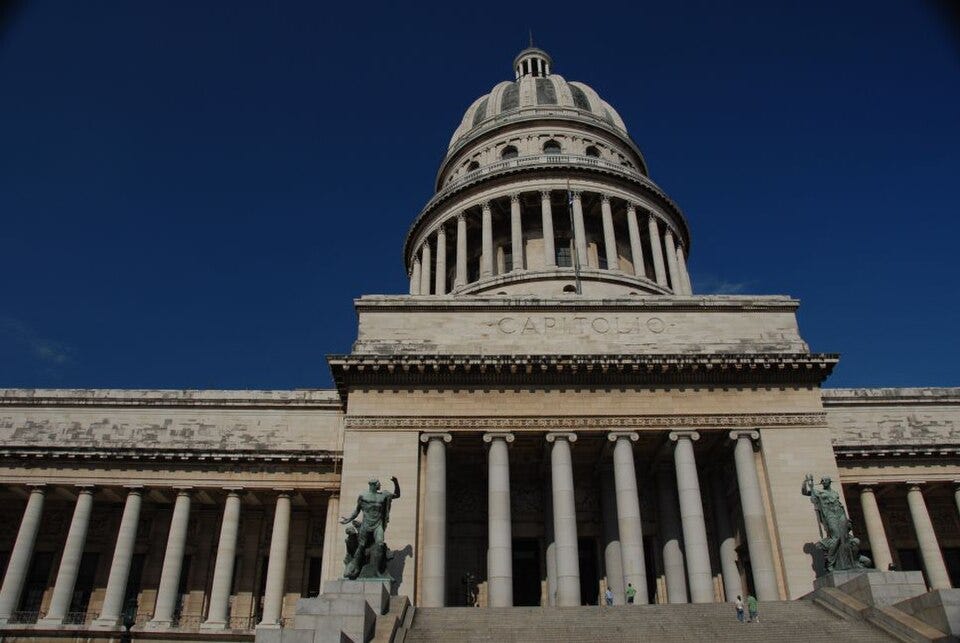
https://commons.wikimedia.org/wiki/File:Capitolio_1_Havana_Cuba.jpg
The US is utilizing a multi-pronged approach to pursue the Trump administration’s goal of ending Communist rule in Cuba. On July 23, the Office of Foreign Assets Control (OFAC) added 11 more Cuba-related persons to the Specially Designated Nationals and Blocked Persons List, following additional designations throughout May and June. Last week, humanitarian aid shipments from Miami to Havana coincided with the State Department’s release of a new report alleging the Cuban regime’s promotion of domestic terrorism within the US. All of this comes as the ongoing oil blockade has incapacitated the island’s energy system and has led to rolling blackouts. As the Cuban regime seeks to maintain its grip on power, the US is increasingly weighing options for military action. However, the risks of a potential engagement with Cuba and a recent surge of US forces to the Middle East make a continuation of the status quo more likely in the near term.
The State Department’s July 20 report titled “Cuba: The Capital of 21st Century Communism” describes Cuba as a unique threat to American homeland security, accusing the Cuban regime of cultivating hostile left-wing extremist elements within the US and infiltrating the US government. The report, which follows a US indictment of Raul Castro that was unsealed in May, was widely interpreted as a pretext for US military action against the Cuban regime. In late June, following Secretary of War Pete Hegseth’s visit to the Guantanamo Bay Naval Base, the US Department of War reportedly held a concept-of-operations briefing to discuss plans for possible military action, including a potential air assault by the US Army. The US Navy has intermittently deployed assets to the Caribbean in recent months, including the USS Nimitz carrier group. The Navy and Air Force have also been operating surveillance aircraft and drones around the island.
On the other hand, as the US reinforced its military presence in the Middle East last week to expand options in the war with Iran, the US strategy towards Cuba remains geoeconomic. This has mainly been carried out through a sanctions framework under Executive Order 14404 of May 1 aimed at financially isolating the Cuban regime. The sanctions announced on July 23 targeted sanctions evasion networks, individuals in the energy sector, and Cuba’s overseas medical missions. Cuban medical diplomacy, through which Cuba sends doctors and supplies overseas, is one of its strongest forms of soft power and foreign revenue. Prior designations on July 13 covered state-owned enterprises, para-police groups, and civil society. Previous designations targeted the tourism industry, as well as the Cuban military conglomerate GAESA, which was identified by the State Department as the backbone of the Cuban regime’s security apparatus and was estimated to control between 40% and 70% of the Cuban economy.
This approach has brought the island to the brink of economic collapse, especially following the disruption of oil flows to the island from Venezuela and other regional allies. The resulting humanitarian crisis has drawn condemnation from international bodies as well as from within the US Congress. Secretary of State Marco Rubio’s $100 million humanitarian assistance package, which kicked off this week with aid shipments to Cuba distributed through Catholic Relief Services, will give the Trump administration more leeway to extend its attritional strategy in the hope of sufficiently weakening the regime to provoke a political collapse. However, Cuba’s resilient political system has withstood periods of economic hardship in the past, most notably during the “Special Period” in the 1990s following the collapse of the Soviet Union.
While the outcome of this strategy remains to be seen, Cuba retains an outsized role in the geopolitics of the region. In the context of a broader right-wing shift across Latin America, which has aligned Colombia, Peru, Chile, Bolivia, Honduras, Ecuador, Argentina, and others with the Trump administration, Beijing and Moscow are both strengthening ties with Havana. China is investing in the island’s energy and mining sectors while Russia has sent multiple oil shipments to Cuba, one of which was seized in January while the other in March was allowed to pass through the US blockade. In this geopolitical balance, the risk of a miscalculation by either side raises the stakes of any potential military engagement with Cuba. In the absence of such a move, the status quo of economic strangulation is likely to continue.
US Developments
US Targets More Than 50 in Cartel de Jalisco Nueva Generacion Action
On July 23, 2026, the US Department of the Treasury’s Office of Foreign Assets Control (“OFAC”) designated over 50 Mexican persons allegedly linked to the Foreign Terrorist Organization and Specially Designated Global Terrorist Cartel de Jalisco Nueva Generacion (“CJNG”). The action was taken pursuant to Executive Order (“E.O.”) 14059, which targets the international proliferation of illicit drugs and their means of production, and pursuant to E.O. 13224, as amended, which targets terrorists and their supporters. Notably, among the designated individuals is a dual Mexican-U.S. national who is allegedly the new leader of the CJNG.
The sanctions designations reflect coordination between OFAC and agencies participating in the Homeland Security Task Force, including the Federal Bureau of Investigation, Homeland Security Investigations, and the Drug Enforcement Administration. OFAC has sanctioned more than 250 CJNG-linked individuals and entities since 2015.
OFAC issues Venezuela-related FAQ
On July 24, 2026, OFAC issued a Venezuela-related Frequently Asked Question (“FAQ”) 1239, which explains that parties needing to make authorized payments into the Foreign Government Deposit Funds account established under E.O. 14373 must first contact the State Department at DepositorInquiries@state.gov to obtain payment instructions. It provided guidance regarding the information to be provided, and advised that deposits may be rejected if this process is not followed. Once a deposit is accepted, the State Department will issue confirmation that can be shared with the other parties involved in the transaction.
OFAC Extends Russia-related General License Related to the Sale of Lukoil International
On July 24, 2026, OFAC issued Russia-related GL 131H, “Authorizing Certain Transactions for the Negotiation of and Entry Into Contingent Contracts for the Sale of Lukoil International GmbH and Related Maintenance Activities.” The license extends the general authorization for transactions ordinarily incident and necessary to the negotiation of and entry into contingent contracts for the sale of Lukoil International GmbH (“LIG”) and its subsidiaries through August 22, 2026. GL 131H also extends the general authorization for transactions ordinarily incident and necessary to the maintenance or wind down of LIG operations.
OFAC Sanctions Alleged Muslim Brotherhood and Hamas Financial Networks
On July 23, 2026, OFAC designated an alleged senior Egyptian Muslim Brotherhood official, along with three individuals and three entities that have allegedly provided material support to Hamas. Two of the designated entities are allegedly sham charities tied to the Muslim Brotherhood that funneled substantial funding to Hamas’s military wing.
The sanctions build on OFAC’s prior actions announced on March 12, 2026, and January 21, 2026, which targeted Hamas’s alleged global network of financial facilitators, operatives, and sham charities that support its terrorist activities. The designations were issued pursuant to E.O. 13224, Blocking Property and Prohibiting Transactions with Persons Who Commit, Threaten to Commit, or Support Terrorism.
UK Developments
OFSI Publishes New Guidance on Basic Needs Allowance Licences
OFSI has published six new FAQs (FAQs 197–202) providing guidance on Basic Needs Allowance (BNA) licences. BNA licences allow designated persons to access a capped monthly amount from otherwise frozen funds to meet essential living expenses. The new OFSI FAQs confirm that the allowance is benchmarked against median household income and is intended to cover basic needs and not to preserve a designated person’s pre-designation lifestyle. Accordingly, particularly for high net worth designated persons, the amount permitted under a BNA licence may be substantially below their previous level of expenditure.
The new FAQs provide further clarity on the purpose and scope of BNA licences, the types of expenditure that may be permitted, applicable reporting requirements and the treatment of any unused monthly allowance. They also explain that costs falling outside the BNA may be considered separately under other applicable licensing grounds. The guidance is relevant both to designated persons and to banks, professional advisers and other parties involved in facilitating payments under BNA licences.
OFSI Publishes Guidance on Identifying Fraudulent Communications
OFSI has published new guidance to help individuals and businesses verify whether communications claiming to originate from OFSI are genuine. The guidance warns that fraudsters may use official-looking government branding, documents and language, and confirms that OFSI will not contact individuals via text message or WhatsApp. Suspicious communications should not be responded to, and recipients should avoid clicking links, opening attachments, making payments or using contact details contained within the communication. Instead, OFSI recommends verifying communications using its official contact information published by the UK Government.
The guidance also identifies several indicators of potential fraud. In particular, OFSI does not charge fees for licence applications, request payments or cryptoassets to unfreeze assets or avoid enforcement action or unexpectedly request sensitive banking or security information. Communications demanding urgent payments or threatening immediate enforcement consequences should therefore be treated with caution. Suspected phishing communications can be reported to the National Cyber Security Centre, while individuals who have suffered financial loss or otherwise fallen victim to a scam are encouraged to report the matter to the relevant UK fraud reporting or law enforcement authorities.
UK Implements UN Designation of Vessel Involved in Illicit Libyan Petroleum Exports
The UK has added the vessel AVAX (IMO 9058713) to the UK Sanctions List under the Libya sanctions regime, following its designation by the UN Security Council Committee concerning Libya on July 22, 2026. The Cameroon-flagged vessel, operated by Nazar Maritime SA, was designated for attempting to illicitly export petroleum from Libya and was added to the UK Sanctions List on July 24, 2026. AVAX is now subject to shipping sanctions under the Libya (Sanctions) (EU Exit) Regulations 2020. These include restrictions on accessing UK ports and powers to issue port barring, detention, port entry and movement directions, as well as to terminate UK ship registration where applicable. At UN level, the designation also prohibits the vessel from loading, transporting or discharging petroleum from Libya, entering ports, receiving bunkering or other vessel services, and engaging in financial transactions relating to Libyan petroleum. The UN designation is currently effective until July 22, 2027, unless terminated earlier by the relevant UN Committee.
EU Developments
EU Council Adopts 21st Sanctions Package Against Russia
On July 23, the EU Council adopted its 21st sanctions package against Russia, following final concessions granted to Greece. The new sanctions package marks the largest set of individual listings of the last four years, including the designation of 48 individuals and 168 entities to the EU Russia asset freeze sanctions regime and 2 entities under the Belarus sanctions regime. The set of restrictive measures focuses on Russia’s finance, energy, military and trade sectors, with the aim of increasing pressure on Russia to stop its war of aggression against Ukraine and come to the negotiation table.
In the financial sector, the 21st sanctions package imposes a transaction ban on 33 additional Russian credit and financial institutions. Additionally, the transaction ban has been extended to several non-Russian financial institutions, including a Kyrgyz bank connected to the Russian System for Transfer of Financial Messages (SPFS), a Mongolian bank, and two Indian banks. The package also extends the transaction ban to 14 crypto asset service providers and cryptocurrency exchanges established in Belarus, Georgia, Kyrgyzstan, Panama, the United Arab Emirates and the Marshall Islands. Furthermore, the EU has introduced the possibility of prohibiting all transactions with entities providing crypto-asset services established in certain third countries that are considered to facilitate the circumvention of EU restrictive measures.
The energy sector is one of the principal targets of the sanctions package. Among the key measures, the package suspends the operation of the oil price cap adjustment mechanism for one year, until July 15, 2027. As a result, the oil price cap will remain fixed at USD 44.10 per barrel during that period. The 21st sanctions package also strengthens measures against Russia’s shadow fleet through the designation of 41 additional vessels, bringing the total number of listed vessels to 673. Additional restrictive measures targeting the shadow fleet ecosystem include the designation of 8 entities and one individual under EU asset freeze sanctions, including shipping companies and, for the first time, a crewing agency providing support to the shadow fleet. The package further designates 18 entities and one individual linked to the oil sector, including three Russian refineries, a major Belarusian refinery, and a company established to market Belarusian petroleum products within Russia. In addition, the EU has added five UAE-based oil traders to the list of entities subject to a transaction ban for significantly frustrating prohibitions relating to Russian crude oil and petroleum products.
In addition, the package creates the possibility to prohibit transactions with listed refineries in Russia and in third countries which process or refine Russian origin crude oil or petroleum products, or otherwise facilitate, engage in, or significantly frustrate EU restrictive measures. As a result, the EU has imposed a transaction ban, effective in six months, on a refinery in Georgia engaged in the trading and processing of Russian oil. In relation to LNG, the package introduces a notification obligation for any sale or transfer of ownership of an LNG tanker by an EU person to a third country, enabling the EU to monitor transactions that could facilitate the transport of Russian LNG. Additional energy-related measures target critical infrastructure supporting Russia’s energy exports and broader trade flows, including the designation of a key cross-border energy supplier and the imposition of transaction bans on two Russian ports and four Russian airports.
In the trade sector, the sanctions package expands existing export bans to include items and technologies used by Russia’s military industry, such as nickel powders, metal and alloys used in corrosion-resistant coatings in jet engines, self-adhesive films, tapes and strips used in the aerospace and defense sectors, as well as aviation items specific to unmanned aerial vehicles (UAVs). The EU has introduced further restrictions on the import of goods that generate significant revenues for Russia, such as copper ores, nickel ores, lead ores, precious-metal ores, unwrought zinc, among other items. The newly adopted trade measures against Russia have been mirrored in the Belarus sanctions framework under Decision 2012/642/CFSP and Regulation (EC) 765/2006.
Additional measures include the listing of persons and entities linked to Russia’s military industrial complex, as well as 51 additional entities made subject to stricter export restrictions on dual-use goods and technologies, including third country entities involved in the circumvention of EU export controls.
EU Council Designates Six Individuals Responsible for Serious Human Rights Violations in Iran
The EU Council recently designated six individuals under the sanctions framework targeting persons and entities in view of the situation in Iran. Established under Council Decision 2011/235/CFSP, the sanctions framework targets individuals and entities responsible for serious human rights violations in Iran, as well as those who are complicit in or responsible for directing or implementing grave violations of the right to due process, torture, cruel, inhuman and degrading treatment, or the indiscriminate, excessive and increasing application of the death penalty.
The newly listed individuals comprise five judges of regional Iranian Revolutionary Courts and the Tehran Second Degree Criminal Court, as well as Nima Salehi, an Iranian hacker and computer engineer identified as a founder and leading figure of the Ashiyane cyber group. According to the Council, the judges were responsible for serious human rights violations, including imposing death sentences, long prison sentences, flogging, fines and other punishments on political dissidents, human rights activists, and members of religious minorities. Additionally, the Council determined in its statement of reasons for Nima Salehi’s designation that the Ashiyane cyber group cooperates closely with the EU-listed Cyber Police (FATA) and the Islamic Revolutionary Guard Corps (IRGC) and is responsible for intensive cyber-attacks against both domestic opponents and reformists as well as foreign institutions.
Following the latest designations, the sanctions framework now extends to a total of 269 individuals and 53 entities.
EU Council Renews Lebanon Sanctions Framework
The EU Council renewed the restrictive measures in view of the situation in Lebanon for another year, until July 31, 2027. The decision follows the annual review of the sanctions framework established under Council Decision (CFSP) 2021/1277, which provides for the possibility of targeting individuals and entities who are responsible for undermining democracy or the rule of law in Lebanon. The restrictive measures consist of asset freezes, a prohibition on making funds or economic resources available to listed persons and entities, and an EU travel ban.
European Commission Publishes Updated FAQs on Broadcasting Ban Targeting Russian Media Outlets
The European Commission published updated FAQs on sanctions against Russia, with a focus on the broadcasting ban under Article 2f of Council Regulation (EU) 833/2014, which prohibits operators from broadcasting, enabling, facilitating or otherwise contributing to the broadcasting of content originating from the Russian media outlets listed in Annex XV.
The updated FAQs clarify the concept of “operator” in light of the Court of Justice of the European Union’s judgment in Case C‑67/25. The Commission explains that the term “operator” includes any natural or legal person directly or indirectly responsible for making that content available to, or transmitting it to, the public, irrespective of whether the activity is economic in nature. The guidance further reflects the Court’s clarification that neither the extent nor the duration of the broadcasting activity is relevant for determining whether a person qualifies as an operator.
Asia-Pacific Developments
South Korea Detains Cargo Ship Linked to Alleged Violations of UN Sanctions on North Korean Coal Exports
On July 22, 2026, Seoul’s foreign ministry announced that South Korea has detained the Tanzanian-flagged cargo ship Prada (formerly known as Sophia) at the port of Pyeongtaek since March after investigating evidence that it was involved in violating UN sanctions on North Korea. Authorities found indications that the vessel participated in illicit maritime activities linked to North Korean exports of coal and iron ore, key sources of foreign currency for Pyongyang. Investigators and international monitoring groups allege the ship concealed visits to North Korean waters by manipulating its tracking signals and masking its movements as originating from Russian ports. The Prada, which has changed names and flags multiple times and is reportedly linked to Chinese shipping interests, was among several vessels recently recommended for UN sanctions designation. The detention reflects South Korea’s ongoing efforts to enforce international sanctions against North Korea and follows similar actions against other ships suspected of sanctions evasion.
China Temporarily Eases Customs Restrictions, Signaling Potential Expansion of Economic Cooperation with North Korea
On July 22, 2026, to deal with international sanctions, a source in China who works with North Korean trade contacts said that China has quietly introduced a temporary customs arrangement that allows certain civilian-use equipment and materials destined for North Korea to pass through official Chinese customs channels. Although the arrangement currently appears limited in scope and duration, the move could be more than a one-off gesture tied to the 65th anniversary of the China-North Korea Treaty of Friendship.

Global
China is bracing for its third typhoon this month, with Typhoon Noul bringing torrential rain across southern China. Beijing issued its highest-level alert for flash floods in parts of Jiangxi, Hunan, Guangdong, Sichuan, Shaanxi, Gansu and southeastern Xinjiang. Earlier this month, China evacuated nearly two million people in the path of monster Typhoon Bavi, which spanned 620 miles (about the width of France). Typhoon Maysak hit central and southern China in early July, spawning tornadoes.
According to insurance company Munich Re, the 2026 Asian typhoon season is tracking significantly above average in frequency and intensity, driven by an emerging El Niño pattern and high sea surface temperatures. Key trends include an unusually early start with storm formation running about 25% to 40% higher than normal, a higher probability of rapid storm intensification, and tracks shifting northward toward East Asia, heavily impacting China, Taiwan, Japan, and South Korea.
Read More: Reuters [paywall], BBC, Munich Re
Europe
Former Polish Prime Minister Mateusz Morawiecki will create his own party, poaching 44 MPs from the Law and Justice (PiS), Poland’s main opposition to the current government led by the Civic Coalition (KO). This occurs after Morawiecki, who served as Prime Minister from 2017 to 2023, created his own pro-business association within PiS called Development Plus. It was created to offer a different direction for the party after Przemysław Czarnek, Poland’s former hardline Education Minister, was nominated as PiS’ candidate for Prime Minister in April. Longtime PiS leader Jarosław Kaczyński viewed Development Plus as incompatible with a united party, expelling Morawiecki and his followers on Thursday night.
Morawiecki and his associates believe that PiS must recapture the political center from KO before parliamentary elections in 2027. PiS’ poll numbers have slipped behind KO by six points since the presidential elections in 2025, which PiS won by a razor-thin margin. Polish President Karol Nawrocki has vetoed most of the KO-led government’s agenda, a defiant stance that has partially backfired due to the ensuing gridlock. In terms of policy differences, Morawiecki’s faction has a more pragmatic view on the EU. Czarnek seeks to oppose Brussels’ digital and green regulations, and Nawrocki sought to prevent the SAFE defense initiative earlier this year; meanwhile, Morawiecki seeks to maximize Poland’s funding from the EU budget.
A splintered far-right could help KO gain a plurality of votes, changing the math on government formation. This will not guarantee a KO-led government, as Morawiecki is currently opposed to Tusk and may seek to extract additional concessions through a coalition with PiS. Nonetheless, KO will get the first pass at forming a government, undermining the far-right’s leverage.
Read More: AP, Euractiv, Politico
Middle East
Israeli Prime Minister Netanyahu is in the US this week for visits to the White House and the UN. Netanyahu will meet with President Trump in Washington on Tuesday, followed by a visit to the UN headquarters in New York City. The visit has already been shadowed by controversy: Netanyahu has reportedly sought the Washington visit since April, but has been delayed by growing tensions with President Trump, and his UN visit has been marred by suggestions that NYC Mayor Mamdani would arrest Netanyahu pursuant to an International Criminal Court arrest warrant.
The meeting comes as tensions with President Trump over the Iran war, about to enter its sixth month, rise. The two countries began the conflict in lockstep but have increasingly diverged over how to carry out or end the war. Israel has chafed under the inclusion of Lebanon in the Iran portfolio, and the US has come to weigh economic issues (like the reopening of the Strait of Hormuz) more heavily than Israel, which prioritizes security. Both sides are managing domestic fallout from upcoming elections, which may make it harder to meet in the middle.
Israel will seek to keep the focus on Israel, while the US will likely press Israel on Gaza and Lebanon. Washington wants Israel out of southern Lebanon to safeguard a deal with Iran, while Israel needs further security assurances and is hoping for more progress on the stalled Gaza peace deal (especially if Trump is serious about linking the Saudi civil nuclear agreement to normalization). Over the weekend, an Israeli official announced that the country will allow in the multinational peacekeeping force that President Trump envisioned for postwar Gaza, rare progress on that portfolio that may be a concession to Trump. But the end result could be less affirming for the bilateral relationship than Netanyahu likely hopes.
Read More: Axios, Politico, BBC, Atlantic Council
Asia-Pacific
Indonesia has been hit with a series of high-profile resignations in recent days, raising questions about stability within key state institutions. Bank Indonesia (BI) Governor Perry Warjiyo unexpectedly resigned today after eight years in office, citing personal reasons and five days earlier, the head of Indonesia’s National Nutrition Agency (BGN), which oversees President Prabowo’s flagship free meals program, also stepped down. Although the two departures appear unrelated, their close timing has prompted questions about stability and continuity within Indonesia’s government.
The resignations come as Prabowo’s administration faces mounting fiscal and governance challenges. The government’s ambitious spending agenda—including its flagship free meals program—has raised concerns about budget sustainability and financing, while recurring corruption scandals and longstanding transparency issues continue to weigh on public confidence in state institutions. The National Nutrition Agency has become embroiled in a major corruption investigation, with its former chief and two other officials arrested on allegations of self-enrichment and causing state losses. Meanwhile, Warjiyo’s resignation comes amid broader leadership changes in the government’s economic team, including the ousting of Indonesia’s finance minister in September. Warjiyo’s departure has already begun to fuel questions about the central bank’s independence. Taken together, the two resignations have intensified scrutiny of the administration’s economic management and institutional stability.
Read More: Nikkei Asia [paywall], Channel News Asia, Reuters [paywall], Reuters [paywall], Jakarta Globe, Al Jazeera
Americas
Former Honduran President Juan Orlando Hernández returned to Honduras on Sunday after a court suspended an outstanding arrest warrant and Interpol red notice against him. Hernández, who led the country from 2014 to 2022, was extradited to the United States in 2022, convicted on drug trafficking charges, and sentenced to 45 years in prison before receiving a presidential pardon from US President Donald Trump in December 2025. He now faces corruption-related charges in the so-called Pandora I case, which alleges that millions of dollars in public funds were diverted through foundations and shell entities to support political campaigns, including Hernández’s own. Hernández denies the allegations and is scheduled to appear before a judge on August 3.
His return has reignited debate over the state of anti-corruption efforts and judicial independence in Honduras. Human rights advocates and former anti-corruption officials have expressed concern that Hernández could avoid significant legal consequences, pointing to the dismissal of related cases and recent changes within the country’s anti-corruption institutions. The controversy comes six months after President Nasry Asfura of Hernández’s National Party took office, raising questions among critics about whether the former president will receive favorable treatment. As a result, the case is likely to become a major test of the Asfura administration’s commitment to accountability and the rule of law.
Read More: AP, Reuters [paywall], Al Jazeera
Geoeconomics
The latest round of US tariffs has drawn sharp resistance from trading partners and US industries alike. The measures launched on Friday impose duties ranging from 10% to 12.5% on imports from more than 80 countries under the Trump administration’s Section 301 forced labor probe. Governments swiftly rejected the administration’s claim they failed to curb imports made with forced labor, arguing the findings ignored evidence and labor standards they submitted during the investigation. Several countries called the decision “arbitrary” and “unjustified” and demanded the tariffs be withdrawn, though none has yet announced retaliatory measures and others remain cautiously optimistic that it would not alter economic ties drastically, including US-ASEAN ties. Internal resistance came immediately too, with a coalition of small US businesses filing a suit on Friday, arguing the administration lacked the legal authority to impose the tariffs without meeting country-specific statutory requirements.
The latest measures reflect the administration’s continued use of tariffs as it seeks a more durable legal basis following court challenges to earlier actions. Since returning to office, President Trump has made tariffs central to his effort to revive US manufacturing and reshape trade relationships. Friday’s tariffs are understood as another stopgap trade measure after the Supreme Court struck down the administration’s “Liberation Day” tariffs in February. While the latest wave of tariffs was widely expected, they prolong uncertainty for businesses already navigating global energy and supply chain disruptions. Unlike earlier measures, however, the forced labor probe could provide a more durable legal basis if the tariffs are challenged again.
Read More: CNBC, NBC, The Hill, South China Morning Post [paywall]


Contact Us
Karl Hopkins
Partner
+1 202 429 6499
khopkins@steptoe.com
Melissa B. Mahle
Senior Advisor
+1 202 261 0577
mmahle@steptoe.com
Anni Coonan
Senior Intelligence Analyst
+1 212 506 3979
acoonan@steptoe.com
Samuel Bloebaum
Senior Due Diligence Analyst
+1 602 410 6240
sbloebaum@steptoe.com
Zayna Dembinski
Analyst
+1 202 778 3567
zdembinski@steptoe.com
Thomas Goldstein
Analyst
+1 202 862 6735
tgoldstein@steptoe.com
Ian Cameron
Analyst
+1 202 327 6908
icameron@steptoe.com
Elton Smole
Analyst
+1 202 261 0556
esmole@steptoe.com
Carter Spahn
Intelligence Fellow
+1 202 261 7555
cspahn@steptoe.com
Chris Dantes
Intelligence Fellow
+1 202 327 6904
cdantes@steptoe.com
Legal disclaimer: This Substack is for educational and informational purposes only and does not constitute the rendering of legal counseling or other professional services. Reading, subscribing to, or communicating through this Substack does not create an attorney-client relationship. Do not send confidential information through this platform. Consult qualified legal counsel regarding your specific circumstances.