

The Sanctions Update, compiled by attorneys from Steptoe’s award-winning International Regulatory Compliance team and the Stepwise: Risk Outlook editorial team, publishes every Monday (subscribe here). Guided by the knowledge of Steptoe’s industry-leading International Trade and Regulatory Compliance team, the Sanctions Update compiles and contextualizes weekly developments in international regulatory enforcement and compliance, as well as offers insights on geopolitical context, business impacts, and forthcoming risks, and non-sanctions news updates.
For more detailed analysis on related issues, see Steptoe’s International Compliance Blog. For information on industry-specific monitoring or bespoke services, please contact the team here.
By Evan T. Abrams, Meredith Rathbone, Karl Hopkins, Guy Soussan, Alexandra Melia, Wendy Wysong, Ali Burney, Quentin Johnson, Elliot Letts, Algirdas Semeta, Melissa B. Mahle, Anni Coonan, Thomas Goldstein, Zayna Dembinski, Samuel Bloebaum, Elton Smole, Ian Cameron, Wilson Zhao, Zoey Hong, Kiki Dong, Isabella Rao, Jonathan Eaton, Carter Spahn, Chris Dantes

The Lede
US Sanctions Persian Gulf Strait Authority, Mounting Pressure on Iran Amid a Fragile Ceasefire Agreement
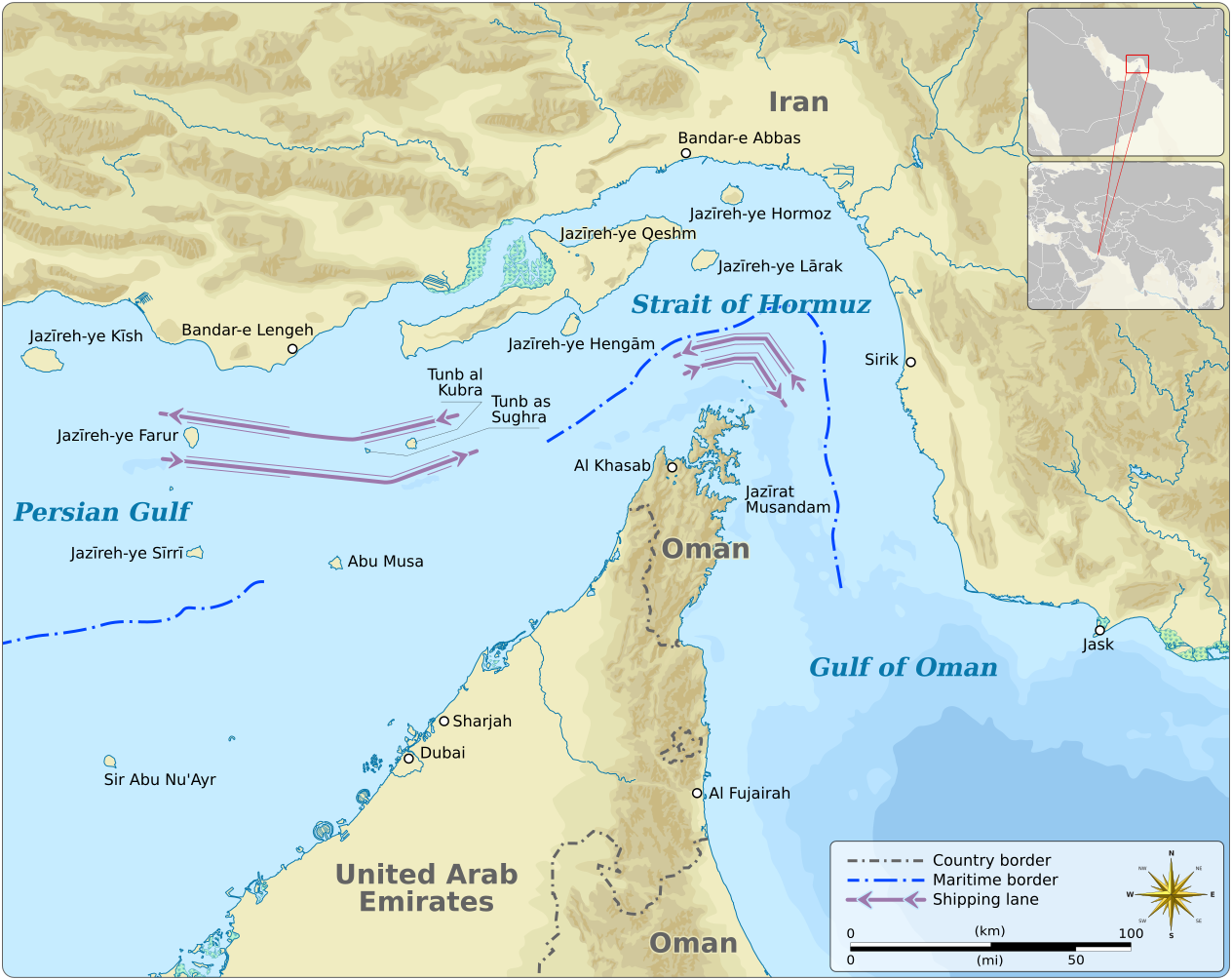
"Strait of Hormuz-svg-en" by Goran_tek-en is licensed under CC BY-SA 4.0.
On May 27, the US Office of Foreign Assets Control (OFAC) added Iran’s Persian Gulf Strait Authority (PGSA) to its Specially Designated Nationals List. The designation is part of the Treasury Department’s “Economic Fury” campaign to maximize economic pressure against Iran and entities perceived as being aligned with the regime. Reportedly linked to the Iranian Revolutionary Guard Corps (IRGC), the PGSA was formed in early May to formalize a toll system Iran has enforced in the Strait of Hormuz since mid-March.
The Trump administration has sought to reestablish freedom of navigation in the strait, with Secretary of State Marco Rubio pledging the strait would be reopened “one way or another.” On Thursday, the US and Iran reached an uncertain 60-day ceasefire agreement, which would include reopening the strait. However, strikes resumed over the weekend, and President Trump has not approved the agreement, reportedly pressing for stronger concessions regarding the Strait of Hormuz and the removal of Iran’s enriched uranium, a driving factor of the conflict. The US will likely preserve sanctions on PGSA to prevent further expansion of the institution, particularly in the event of a complete breakdown in talks.
Pursuant to the United Nations Convention on the Law of the Sea (UNCLOS), vessels are permitted to transit through international waterways unimpeded, including by the imposition of tolls. Iranian Foreign Ministry spokesman Esmail Baghaei claimed that the regime has not implemented tolls, but customary fees for providing navigation and ecosystem protection services. Regardless, the PGSA has mandated coordination from any ships passing through its “supervisory zone” between Qeshm Island and Umm al-Quwain in the west, funneling passage fees to the IRGC according to the Treasury. Some vessels have reportedly paid $2 million to the PGSA for their transit, and economists project Iran could collect $70-90 billion in annual revenue if its toll system continues.
US-Iran negotiations over reopening the strait have repeatedly stalled as both sides exchanged strikes and accused the other of obstructing talks. Rhetoric over the future of the strait escalated following reports that Iran and Oman discussed arranging a permanent toll system and splitting the profits. Following threats from President Trump against Oman, Treasury Secretary Scott Bessent stated that the Treasury Department would “aggressively target any actors involved—directly or indirectly—in facilitating tolls” for the strait. Baghaei responded that Iran would support Oman in the event of a potential attack.
US military action against Oman is highly unlikely given its status as a longstanding ally and host for American forces. However, joint management of the strait may inadvertently normalize the toll collection system and entrench IRGC influence over maritime traffic through the strait. Perceived facilitation of PGSA control is likely to prompt additional sanctions packages targeting Omani entities. Moreover, such an arrangement could strain Muscat’s relationship with other Gulf states, which also do not want permanent Iranian management of the strait.
If the ceasefire agreement is approved by President Trump and fully implemented, both parties will open and demine the strait, the US will issue limited sanctions waivers on Iranian oil sales, and negotiations toward a nuclear deal will continue. Mutual distrust poses a substantial challenge to fulfilling these conditions. Iran and the US have sharply conflicting views over how to address Iran’s enriched uranium stockpile. It is also unknown which sanctions would be waived and how this would impact the PGSA. Given the Trump Administration’s hardline stance on opening the strait, US negotiators will likely press for the organization’s dissolution. The postwar management of the Strait of Hormuz remains unsettled. Accordingly, Economic Fury sanctions will likely remain in place to enforce the conditions of the ceasefire or serve as a safeguard if it breaks down. Secondary sanctions may also be imposed on vessels that pay tolls to the PGSA. The measures may remain in effect for one to three months, depending on progress toward reopening the strait and advancing discussions on a new nuclear deal.
US Developments
OFAC, State Continue to Issue New Designations under “Economic Fury”
The Office of Foreign Assets Control (OFAC) and the Department of State have continued to increase sanctions pressure on Iran amid negotiations to extend the ceasefire and reopen the Strait of Hormuz.
On May 27, 2026, OFAC sanctioned the Persian Gulf Strait Authority (PGSA), which Iran’s Islamic Revolutionary Guard Corps (IRGC) had been using to impose tolls on commercial traffic and force vessels to follow Iranian direction in return for safe passage.
On May 28, 2026, OFAC sanctioned an alleged network of individuals, entities, and vessels that facilitate trade in Iranian oil or derivative products.
Concurrently, the Department of State sanctioned numerous entities, individuals, and vessels it alleged were also involved in the sale or transportation of Iranian petroleum or petrochemical products.
The Department of State also said that it would be offering a reward of up to $15 million for information leading to the disruption of the financial mechanisms of the IRGC and its various branches through the “Rewards for Justice” program.
The sanctions were the most recent in the Trump administration’s “Economic Fury” campaign against Iran, which the Trump administration has claimed will be the “financial equivalent” of a bombing campaign to increase pressure on Tehran unless and until a framework to end the war is agreed upon. The May 27 and May 28, 2026, sanctions follow multiple similar actions taken by OFAC over the previous two months.
State Designates Brazilian Criminal Organizations as SDGTs
On May 28, 2026, the Department of State sanctioned two alleged criminal organizations with operations in Brazil as Specially Designated Global Terrorists (SDGTs). Notably, the Department said that it intends to designate the groups as Foreign Terrorist Organizations (FTOs) as well, effective June 5, 2026.
According to the Department of State’s press release, Comando Vermelho (CV) and Primeiro Comando da Capital (PCC) are two of the “most violent” criminal organizations in Brazil, commanding thousands of members and orchestrating brutal attacks against Brazilian police officers, public officials, and civilians. The Department said that its influence and networks extend “far beyond Brazil’s borders,” including into the United States.
While the Department’s designation of criminal organizations as SDGTs (and eventually FTOs) is not new, these particular designations are notable for a variety of reasons.
For example, as the New York Times reports, these designations came just days after former Brazilian President Jair Bolsonaro’s sons visited President Trump — including one, Flávio Bolsonaro, who is expected to run for office against the current Brazilian President, Luiz Inácio Lula da Silva (“Lula”) in the coming months.
The outcome of the Bolsonaros’ lobbying effort is expected to politically aid Flávio Bolsonaro, who celebrated the announcement on social media. President Lula issued a statement condemning the designations and the Bolsonaros’ encouragement of foreign intervention in Brazilian affairs.
OFAC Amends Lukoil-related GL
On May 28, 2026, OFAC issued an amended Russia-related general license (GL) 131F, “Authorizing Certain Transactions for the Negotiation of and Entry Into Contingent Contracts for the Sale of Lukoil International GmbH and Related Maintenance Activities.”
We covered GL 131 in previous Sanctions Updates on November 17 and December 8, 2025. Broadly, GL 131 authorizes certain transactions related to the negotiation of and entry into contracts with PJSC Lukoil (Lukoil) or any of its affiliates for the sale, disposition, or transfer of Lukoil International GmbH (LIG) or any of its majority-owned entities, subject to certain restrictions. GL 131F extends the term of the GL by around 30 days, from May 30, 2026, to June 27, 2026.
Alongside GL 131F, OFAC issued two amended Russia-related FAQs, which reflect the change to the license: FAQ 1224 and FAQ 1225.
Treasury Begins Removing Outdated Entries from Sanctions List
On May 28, 2026, OFAC removed 76 individuals, entities, and vessels from its List of Specially Designated Nationals and Blocked Persons (the “SDN List”). OFAC said the removals were part of the Department of the Treasury’s ongoing “sanctions modernization effort,” which is aimed at ensuring US sanctions remain “targeted, effective, and aligned with” US priorities.
OFAC said the removals include “deceased individuals, scrapped or decommissioned vessels, persons designated as part of illicit financial networks that no longer exist, and individuals designated more than 10 years ago who lack sufficient identifiers for continued screening and do not appear to pose an ongoing threat.” All went through interagency vetting.
The list of individuals, entities, and vessels that were removed from the SDN List can be found here. Notably, OFAC said it would be “reviewing sanctions programs that have not delivered measurable outcomes or no longer support” US priorities, suggesting that more removals and a reconfiguration of certain outdated sanctions programs may be on the horizon.
UK Developments
OFSI Updates FAQs to Address Sanctions Status of HTX Cryptocurrency Exchange
Following the UK Government’s recent designation of Huobi Global S.A. (Huobi) under the UK’s Russia sanctions regime, OFSI has issued new FAQ 186 on the application of UK financial sanctions to the HTX cryptocurrency exchange (HTX). The new FAQ confirms that OFSI considers HTX to be subject to UK financial sanctions due to Huobi holding more than 50 percent of the shares in HTX. Consequently, HTX is subject to asset freeze and making available sanctions, as well as correspondent banking and payment processing sanctions.
EU Developments
EU Council Renews Russia Human Rights Sanctions Regime
The EU Council recently renewed the restrictive measures in view of the situation in Russia under Council Decision (CFSP) 2024/1484 for another year, until May 28, 2027. The sanctions regime targets individuals and entities responsible for serious human rights violations or abuses, repression of civil society and democratic opposition, as well as actions that undermine democracy and the rule of law in Russia.
Currently, the EU restrictive measures apply to 72 individuals and one entity and comprise asset freezes, a prohibition on making funds or economic resources available, and travel bans within the EU.
EU Council Lists Extremist Israeli Settlers and Entities under the EU Global Sanctions Regime
Following the political agreement reached by EU foreign ministers on May 11, the EU Council has amended the EU Global Human Rights Sanctions regime to designate Israeli extremist settlers and entities supporting settlement activities in the West Bank. Specifically, Decision 2020/1999 and Regulation 2020/1998 were revised to include three individuals and four entities for their involvement in serious and systematic human rights abuses against Palestinians in the West Bank.
The newly listed individuals comprise three leaders of Israeli settler organizations who have played key roles in promoting and financing illegal settlement expansion and violence against Palestinians in the occupied West Bank. In addition, the Council has listed Israeli NGOs Regavim and Hashomer Yosh, along with the cooperative association Amana and the Nachala Settlement Movement. These individuals and entities are subject to restrictive measures, including asset freezes, a prohibition on making funds or economic resources available, and travel restrictions within the EU.
EU Council Expands Scope of Sanctions Regime Targeting Facilitators of Violent Actions by Hamas and the Palestinian Islamic Jihad
On May 28, the EU Council expanded the scope of the existing sanctions regime under Council Decision (CFSP) 2026/1173 concerning Hamas and the Palestinian Islamic Jihad to also target members of the Political Bureau of Hamas, known as the Politburo. According to the Council, Politburo members play a significant role in the decision-making process within Hamas and exert considerable influence over its actions, including its violent activities.
With this update, ten members of the Politburo have been added to the EU sanctions list, bringing the total of listed individuals and entities to 21 individuals and three entities subject to restrictive measures. Those listed are now subject to asset freezes, an EU travel ban, and a prohibition on making funds or economic resources available.
Asia-Pacific Developments
China Reaffirms Support for Cuba Amid Sanctions
Chinese Foreign Minister Wang Yi reaffirmed China’s commitment to supporting Cuba’s economic development and people’s livelihood during a meeting with Cuban Foreign Minister Bruno Rodríguez in New York on the sidelines of a UN Security Council session. Wang emphasized that China will continue to advocate for Cuba, uphold its sovereignty, and oppose external blockades and “power politics,” while praising the Cuban people’s resilience in resisting outside pressure. Rodríguez expressed gratitude for China’s consistent support and assistance, noting that Cuba is facing its most severe crisis since the revolution due to US sanctions and a recent oil embargo that has intensified fuel shortages and power outages. He also reiterated Cuba’s backing of China on issues such as Taiwan. The exchange comes as China provides material aid, including a 15,000-ton rice shipment, and continues to call for the lifting of US sanctions on the island nation.
India Linked to Supply of Sanctioned Aircraft Parts to Russia
India has become a key intermediary in channeling sanctioned Western-made aircraft parts to Russia, allowing its aviation sector to continue operating despite US, EU, and allied sanctions. Investigations show that Russian airlines have bypassed sanctions by obtaining critical components—originally produced by firms like Boeing and Airbus—through Indian intermediaries, which re-export them to Russia. Shipment tracking, including serial numbers, indicates that parts moved from Western suppliers to Indian companies before reaching Russian users, revealing a complex “shadow supply chain.” The findings align with customs data showing that over $50 million worth of aviation equipment—such as generators, sensors, propeller blades, and cockpit systems—was routed via India to Russia between 2023 and 2024, often without the manufacturers’ awareness.

Global
2025 was the costliest year on record for wildfires across the globe. According to a new report published in Nature, wildfires accounted for 38% of all insured natural hazard losses globally. The January Los Angeles fire ranked among the top 5 costliest natural disasters in world history, with an estimated $140 billion in total losses. South Korean authorities estimate total damage for the February/March wildfire at $1.35 billion. Europe recorded record wildfires driven by drought and extreme heat, with Spain, Portugal, France, and the UK combating megafires. Between 2014 and 2023, wildfires caused an estimated USD 106 billion in economic losses and USD 74 billion in insured losses globally – far exceeding losses in the previous decade, as found by the 2025 Global Assessment Report on Disaster Risk Reduction (GAR 2025).
The global fire risk is shifting, with less acreage being burned, but at higher costs. In 2025, wildfires consumed 335 million hectares, 16% below the long-term average. The Nature report authors attribute this paradox to expanding urban areas where housing developments have encroached on wildlands. Extreme heat and drought are rendering areas with wildland vegetation vulnerable to conditions for the rapid spread of wildfire.
Read More: Nature, United Nations Office for Disaster Risk Reduction
Europe
Tensions are rising between China and the EU as Beijing warns Brussels against strengthening trade defense measures. China has threatened to respond in kind should the EU go forward with its intention to adopt new “Buy European” measures and to boost its own industrial capacity by restricting Chinese access to Europe’s market. Prior to China’s warning, the Commission had held an orientation debate on EU-China trade relations, and the Commission released a statement promising a more “robust and coherent” European approach to the issue. The sharper posture reflects the scale of the imbalance, with Industry Commissioner Stéphane Séjourné stating that the EU’s daily trade deficit with China has reached roughly €1 billion and claimed 29 million jobs are at risk from Chinese overproduction.
Berlin is potentially switching its approach to China after years of caution on EU-China trade policy, but Spain is retreating from its tougher stance. Germany has consistently balked at calls from France, Brussels, and some other member states to tighten trade restrictions on China, but Berlin’s stance may be shifting. On the same day as the Commission’s orientation debate, Germany signaled a new willingness to discuss stronger trade defense measures. However, Spain has already distanced itself from a French-led initiative after initially appearing to support it, with Madrid arguing that Europe should engage China “from equal to equal” and attract Chinese investment that creates value inside Europe.
June will see several international gatherings for Europe to focus on developing its China policy. There will be an EU leaders’ summit on June 18 and 19, which will give the bloc’s members the chance to discuss trade defense measures and China policy. The G7 will also have a meeting focused on China in mid-June.
Read More: Reuters [paywall], Politico EU, Politico EU, Le Monde [paywall], New York Times [paywall], Politico EU, European Council on Foreign Relations
Middle East
The proposed US-Iran deal was still in limbo after a weekend of mixed messages and renewed strikes. Over the weekend, the US struck Iranian air defenses, drones, and a ground control station, while Iran was accused of shooting down a US drone and claimed attacks on a US airbase, potentially in Kuwait. Oil prices gained more than 3% on Monday in response.
President Trump reportedly made edits to the proposed deal, potentially signaling delays. Reports conflicted about the edits sought by the US, potentially including post-war administration of the Strait of Hormuz, the removal of highly enriched uranium, and the timeline for Iranian access to billions in assets frozen by US sanctions. Some outlets reported that the edits were an effort to speed Iranian agreement to an earlier draft, but the process could also bog down negotiations, especially as Iranian mediators have reportedly struggled to contact the Supreme Leader, who is in hiding following injuries from US airstrikes.
Tensions have also been fueled by new Israeli gains in southern Lebanon. Over the last week, Israeli Prime Minister Netanyahu ordered expanded bombing in southern Beirut, and Israeli forces captured a crusader castle that had been a focus of fighting in previous Israeli incursions. US efforts to push for a renewed ceasefire or peace deal in Lebanon have fizzled amid continued fighting with Iran and Israeli efforts to expand bombing in Beirut.
Read More: Reuters [paywall], New York Times [paywall], BBC, New York Times [paywall], Axios
Americas
Aberaldo de la Espriella took the lead in the first round of Colombia’s presidential elections, setting up a runoff with Ivan Cepeda on June 21. Cepeda, a leftist candidate who seeks to continue the policies of current president Gustavo Petro, won 41% of the vote, while de la Espriella received 44%. However, de la Espriella will have even more of an advantage in the runoff as right-wing competitors are eliminated. Paloma Valencia was the conservative establishment candidate backed by former President Álvaro Uribe. She was the favorite to face off with Cepeda until de la Espriella’s anti-establishment brand gained popularity. Valencia, who received 7% of the vote on Sunday, has said she will back de la Espriella.
De la Espriella’s campaign is the latest force in a right-wing shift taking place across Latin America. He has drawn comparisons to El Salvador’s Nayib Bukele, proposing a tough-on-crime approach to combating drug trafficking, including the construction of 10 mega-prisons. Recent outbreaks of violence in Colombia have made security a key concern for voters. De la Espriella is a lawyer who has never held public office. His opponent, Cepeda, is the son of a Communist leader who was murdered by a paramilitary group in 1994. Cepeda has proposed to continue Petro’s approach of negotiating peace with armed groups in Colombia. De la Espriella accused the left of wanting to turn Colombia into a version of neighboring Venezuela.
A victory from de la Espriella in the June runoff would signal a dramatic shift in relations between the United States and Colombia. Petro was the first leftist president in Colombia’s history, and his relationship with President Trump has been volatile. Meanwhile, Trump has rallied right-wing leaders across the region through the Shield of America’s alliance, which Colombia would be likely to join under de la Espriella. Colombia is currently a member of the Belt and Road Initiative (BRI). De la Espriella has expressed support for aligning Colombia with the Trump administration, while Colombia is key to the Trump campaign’s goal of eradicating drug cartels due to its central role in Latin American drug trafficking.
Read more: New York Times [paywall], AP, Time, Reuters [paywall]
Africa
Amid an increase in deaths and suspected cases of Ebola, African countries are taking steps to contain the outbreak. Since Sunday, there have been 282 confirmed cases of Ebola and 43 deaths in the DRC and Uganda. The African Union’s Centres for Disease Control and Prevention is currently investigating 1,100 suspected cases. The health ministers of the DRC, Uganda, and South Sudan also adopted a $319 million response plan, the details of which are unclear.
The international community is also mobilizing resources to assist African nations. The US pledged to commit $13.5 million to Kenya’s response and an additional $112 million in bilateral assistance to the regional response. A biocontainment center for exposed Americans was also planned to be constructed in Kenya, but has been halted in a Kenyan court following concerns that the facility could inadvertently expand the outbreak. Meanwhile, China has deployed medical specialists to the DRC. Despite these efforts, concerns remain that the shutdown of USAID will undermine the global response.
Read More:Barron’s, Reuters [paywall], Reuters [paywall], Department of State, Semafor Africa, Semafor Africa
Energy
Russia’s diesel production is continuing to fall amid Ukrainian strikes against Russian oil infrastructure. Output of diesel in Russia fell another 10% in May, after having already fallen 10% in April. However, exports of the fuel have risen due to elevated global prices, which creates risks for Moscow at home if there is a domestic supply shortage amid high demand from agricultural consumers. The Russian government has actually considered an export ban on diesel, although industry figures have indicated such a ban would be unlikely as it would complicate refineries’ operations.
Ukraine successfully struck a range of Russian oil infrastructure targets on May 31 in Kyiv’s campaign against the Russian energy industry. Ukraine’s General Staff reported that Ukraine had damaged an oil refinery belonging to state-owned company Rosneft and a fuel depot, both in southwestern Russia, as well as a pumping station north of Moscow. However, Ukraine denied claims by Russia that a Ukrainian drone had struck the Zaporizhzhia nuclear plant, which is in a Russian-occupied region of Ukraine.
Despite Ukraine’s strikes, Moscow continues to benefit from the consequences of the global energy crisis. Russian state oil and gas revenue jumped almost 40% year on year in May from the global price spike caused by the US war in Iran. However, revenues in May are down 17% from April due to the structure of taxes on energy profits and increasing subsidies to refineries. Oil and gas revenues to Russia’s federal budget also declined by approximately one-third year on year in the period from January to May.
Read More: Reuters [paywall], Reuters [paywall], NBC News, Chatham House
Transnational Crime & Corruption
The US Department of State designated two Brazilian organized crime groups as terrorist organizations, continuing a trend of using anti-terrorism tools to fight Latin American narcotraffickers. Comando Vermelho (CV) and Primeiro Comando da Capital (PCC) are major cocaine traffickers in South America and Europe. The PCC designation creates significant secondary sanctions risks due to its reported investments in Brazilian real estate, fintechs, and gas stations.
The designations are perceived as a US intervention in Brazilian politics. Gang violence is a key Brazilian electoral issue and a major source of criticism against President Luiz Inácio Lula da Silva. Flavio Balsonaro, an opposition Brazilian presidential candidate, claimed that he convinced President Trump to designate CV and PCC during a White House meeting on Tuesday. Some Brazilian state governments have also engaged in unilateral gang crackdowns despite criticism from Lula’s federal government.
Read More: New York Times [paywall], Financial Times [paywall], US Department of State, Center for Strategic and International Studies


Contact Us
Karl Hopkins
Partner
+1 202 429 6499
khopkins@steptoe.com
Melissa B. Mahle
Senior Advisor
+1 202 261 0577
mmahle@steptoe.com
Anni Coonan
Senior Intelligence Analyst
+1 212 506 3979
acoonan@steptoe.com
Samuel Bloebaum
Senior Due Diligence Analyst
+1 602 410 6240
sbloebaum@steptoe.com
Zayna Dembinski
Analyst
+1 202 778 3567
zdembinski@steptoe.com
Thomas Goldstein
Analyst
+1 202 862 6735
tgoldstein@steptoe.com
Ian Cameron
Analyst
+1 202 327 6908
icameron@steptoe.com
Elton Smole
Analyst
+1 202 261 0556
esmole@steptoe.com
Carter Spahn
Intelligence Fellow
+1 202 261 7555
cspahn@steptoe.com
Chris Dantes
Intelligence Fellow
+1 202 327 6904
cdantes@steptoe.com
Legal disclaimer: This Substack is for educational and informational purposes only and does not constitute the rendering of legal counseling or other professional services. Reading, subscribing to, or communicating through this Substack does not create an attorney-client relationship. Do not send confidential information through this platform. Consult qualified legal counsel regarding your specific circumstances.