

The Sanctions Update, compiled by attorneys from Steptoe’s award-winning International Regulatory Compliance team and the Stepwise: Risk Outlook editorial team, publishes every Monday (subscribe here). Guided by the knowledge of Steptoe’s industry-leading International Trade and Regulatory Compliance team, the Sanctions Update compiles and contextualizes weekly developments in international regulatory enforcement and compliance, as well as offers insights on geopolitical context, business impacts, and forthcoming risks, and non-sanctions news updates.
For more detailed analysis on related issues, see Steptoe’s International Compliance Blog. For information on industry-specific monitoring or bespoke services, please contact the team here.
By Evan T. Abrams, Meredith Rathbone, Karl Hopkins, Guy Soussan, Alexandra Melia, Wendy Wysong, Ali Burney, Quentin Johnson, Elliot Letts, Algirdas Semeta, Melissa B. Mahle, Anni Coonan, Thomas Goldstein, Zayna Dembinski, Samuel Bloebaum, Elton Smole, Ian Cameron, Wilson Zhao, Zoey Hong, Kiki Dong, Sophia Yang, Jonathan Eaton, Carter Spahn, Chris Dantes

The Lede
UK, Canada, France, and Norway Sanction Networks Enabling West Bank Settler Violence
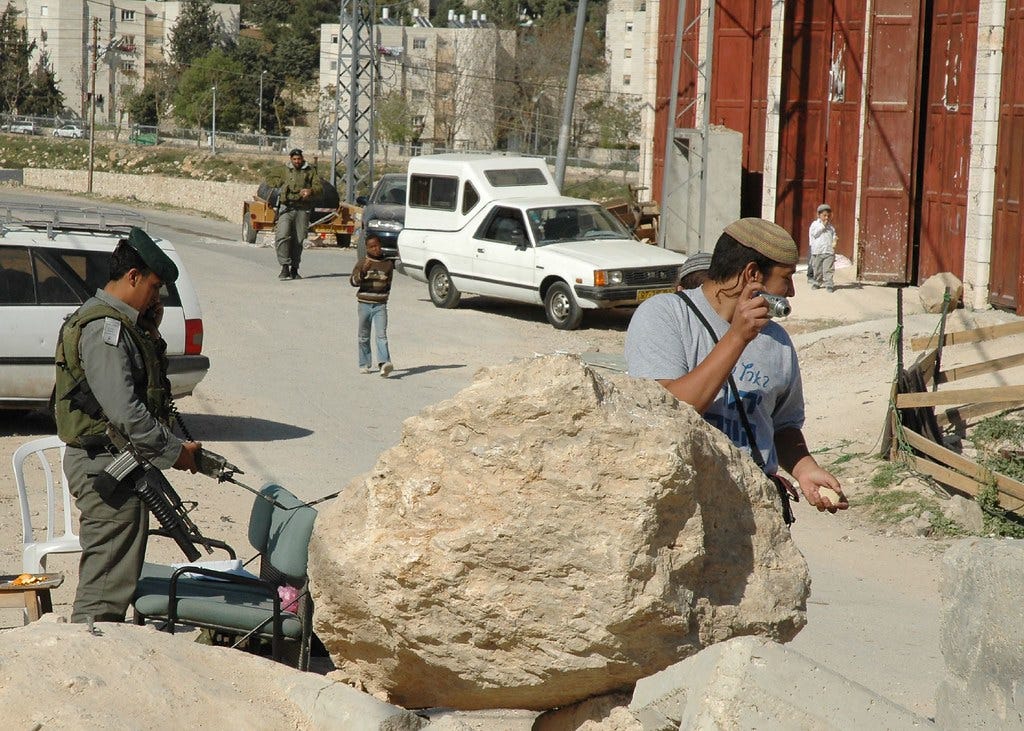
"Israeli settlers and guards in Hebron" by nagillum is licensed under CC BY 2.0.
In coordinated action last week, the UK, Canada, France, and Norway announced sanctions against Israeli settlers and settler organizations alleged to be responsible for financing, enabling, and carrying out attacks against Palestinians in the West Bank. In their joint statement, the European foreign ministers stated the purpose of the sanctions is to hold extremist settlers accountable for “horrific levels” of settler violence against Palestinian civilians. The statement called on the Israeli government to ensure meaningful accountability for violence in the West Bank, through swift and thorough investigations and actions against settler outposts and organizations that allow violence to flourish.
While the announcement was coordinated, the targets of the sanctions differ by country.
The UK sanctions targeted six Israeli entities and one individual involved in financing, enabling, and carrying out settler violence in the occupied West Bank. The restrictive measures include asset freeze and making available sanctions, as well as travel bans and director disqualification sanctions for the individuals designated.
Canada sanctioned two individuals and five entities for their role in directly or indirectly facilitating, supporting, providing funding for, or contributing to the use or attempted use of violence by extremist settlers against Palestinian civilians or their property. The sanctions prohibit the provision of goods and services by Canadian nationals and impose travel bans.
France banned Israeli Finance Minister Bezalel Smotrich for actively promoting the annexation of the West Bank. Paris also barred four leaders of settler organizations and 21 settlers from entering France. Earlier this year, Paris barred Israeli National Security Minister Itamar Ben-Gvir from entering France.
Norway imposed entry bans on more than 20 violent settlers, in addition to aligning with EU sanctions imposed in May.
These new sanctions are being imposed against the backdrop of growing criticism by Western governments of Israel’s disengagement with the Palestinian peace process. Chief among concerns is the viability of the two-state solution given the continued expansion of Israeli settlements. Of particular concern is the E1 settlement, whose expansion threatens to bifurcate the West Bank, rendering contiguous territory impossible for a future Palestinian state.
For the first time, the UK’s official guidance also explicitly advises businesses against economic and financial activity in settlements. The guidance notes the risks of disputed title to the land, water, mineral, or other natural resources, in addition to risks of being associated with human rights abuses. The UK joins a number of European countries that have issued advisories warning their businesses of the legal, financial, and reputational risks for commercial dealings within the settlements. In response to settlement expansion and other concerns, the UK, Canada, and France have adopted the New York Declaration on the Peaceful Settlement of the Question of Palestine and the Implementation of the Two-State Solution and have recognized Palestinian statehood.
Nations issuing sanctions see these measures as supporting their two-state solution policy. But the sanctions and growing international backlash to settler activity in general are unlikely to shift attitudes or actions in Jerusalem. The Israeli government rejects foreign sanctions on Israelis and entities in the West Bank, asserting that Jews have a right to live on this land. Israeli sentiment is likely only to harden as the country approaches a general election in fall 2026 – its first in four years. Most viable challengers to Prime Minister Binyamin Netanyahu lean right and see the cementing, if not growth, of Israeli West Bank gains as an imperative. Prime Minister Netanyahu, with erratic performance in the polls and a fractious far-right coalition, may still come out on top – if only in a caretaker role as political parties attempt to form a coalition. No party is polling close to the threshold to form a government. In that case, Netanyahu will continue to seek to appease his ultra-conservative government to shore up parliamentary support. Abroad, the US continues to support Jerusalem, no longer explicitly backing the two-state solution and lifting previously imposed sanctions on settlers.
US Developments
US and Iran Reach Cease-Fire Agreement
On Sunday, June 14, President Trump announced that the US reached an agreement with Iran to reopen the Strait of Hormuz and end the US naval blockade on Iranian ports. The agreement reportedly includes a 60-day cease-fire, but does not resolve key sticking points between the countries, including Iran’s nuclear program and sanctions relief.
The agreement follows two months of the Trump Administration’s “Economic Fury” sanctions campaign against Iran, which aimed to pressure the Iranian government to reach a deal while, at the same time, the US reduced its use of military force in the conflict. As recently as last Wednesday, OFAC and the State Department had issued new sanctions targeting persons for their alleged support of Iran. More specifically:
On June 10, 2026, OFAC sanctioned nine individuals and entities alleged to have supported weapons procurement on behalf of Iran’s Islamic Revolutionary Guard Corps (IRGC) and Ministry of Defense and Armed Forces Logistics (MODAFL). Among those designated by OFAC were China- and Hong Kong-based individuals and companies that are alleged to have facilitated the procurement of weapons for the IRGC and MODAFL, as well as a Hong Kong-based company that allegedly attempted to facilitate weapons procurement-related transactions.
On the same day, the State Department designated four Iran- and Belarus-based individuals and entities alleged to be involved in the procurement of arms and related materiel intended to support Iran’s military.
The future of the Economic Fury initiative remains uncertain. If the Trump Administration believes its negotiations with Iran over its nuclear program are progressing well, it is possible that the pace of Iran sanctions designations will return to the frequency prior to Economic Fury. However, if negotiations stall or the current deal falls apart, the Trump Administration has repeatedly shown its willingness to use sanctions to bring Iran to the negotiating table.
State Designates Cuba’s State-Owned Oil and Gas Company
On June 11, 2026, the Department of State designated Cuba’s state-owned oil and gas company, Union Cuba-Petroleo (CUPET), pursuant to Executive Order (EO) 14404, which President Trump signed on May 1, 2026, and which we covered in the May 4, 2026 edition of the Sanctions Update. These designations follow related actions taken by the Trump administration on June 4, May 18, and May 7, 2026.
In the accompanying press release, Secretary of State Marco Rubio stated that “energy has long been weaponized by Cuba’s Communist government as a tool of repression and self-serving regime kleptocracy,” and that the Trump administration, through this and future designations, “will continue to target Cuba’s ability to leverage energy trade to further its corrupt agenda and repressive security apparatus.”
OFAC Amends Multiple Venezuela-related GLs
On June 10, 2026, OFAC published seven amended Venezuela-related general licenses (GLs), namely:
GL 46C, “Authorizing Certain Activities Involving Venezuelan-Origin Oil or Petrochemical Products;”
GL 47A, “Authorizing the Sale of U.S.-Origin Diluents to Venezuela;”
GL 48B, “Authorizing the Supply of Certain Items and Services to Venezuela;”
GL 50B, “Authorizing Transactions Related to Oil or Gas Sector Operations in Venezuela of Certain Entities;”
GL 51B, “Authorizing Certain Activities Involving Venezuelan-Origin Minerals, Including Gold;”
GL 52A, “Authorizing Certain Transactions Involving Petróleos de Venezuela, S.A.;” and
GL 54A, “Authorizing the Supply of Certain Items and Services for Minerals Operations in Venezuela.”
Each amendment expands the permissible venues for dispute resolution—related to contracts entered into with the Government of Venezuela, PdVSA, or entities in which PdVSA owns, directly or indirectly, a 50 percent or greater interest (“PdVSA Entities”) pursuant to the respective general license—to include the UK, France, and Singapore, subject to conditions. Moreover, each amendment introduced a provision authorizing the inclusion of contract terms that “recognize that certain aspects of the underlying activity in Venezuela may be subject to applicable Venezuelan laws and regulations.”
A new FAQ (FAQ 1260) issued with the amended licenses clarifies that the requirement in each license that the terms of contracts be “construed and interpreted in accordance with the laws of a state or other jurisdiction within the United States” does not necessarily mean that US law must govern each aspect of the underlying activity. Instead, OFAC says the requirement means “the laws of a state or other jurisdiction within the United States must govern questions of contract law between the parties relating to the contract, including interpretation, contractual performance obligations, breach, contractual remedies, payment obligations, termination, validity, assignment or novation, and enforceability of the contract.”
Separately, OFAC issued another new FAQ (FAQ 1259) on the same day, clarifying that private and commercial flights are authorized to arrive in and depart from airports in Venezuela, and are also authorized to receive ground services in-country, under Venezuela-related GL 30B.
OFAC Extends the Terms of Russia-related GLs
On June 11, 2026, OFAC issued two amended Russia-related GLs, namely:
GL 55F, “Authorizing Certain Services Related to Sakhalin-2;” and
GL 115D, “Authorizing Certain Transactions Related to Existing Civil Nuclear Energy Projects.”
Each license extends the term of its previous version by six months, from June 18, 2026, to December 18, 2026. No other substantive amendments to the licenses were made.
Alongside the amended licenses, OFAC published eight amended Russia-related FAQs reflecting the changes to GLs 55 and 115, namely FAQs 967, 978, 999, 1011, 1117, 1182, 1203, and 1216.
UK Developments
OFSI Publishes Mandatory Corporate Action FAQ
OFSI has published FAQ 187 addressing how mandatory corporate actions engage the UK’s Russia and Belarus sanctions regimes for those trading transferable securities and money market instruments. FAQ 187 explains that new instruments, created through a mandatory corporate action, will not automatically engage the transferable security and money-market provisions under Regulation 16 of the Russia Regulations or Regulation 15A of the Belarus Regulations. Instead, whether these restrictions apply will depend on the specific facts on a case-by-case basis. FAQ 187 is intended to support firms to continue trading whilst remaining compliant with UK sanctions.
OFSI Publishes New Transneft-related FAQs
OFSI has published new FAQs 188 to 195, which clarify how UK financial sanctions apply in relation to Transneft and activity associated with Transneft-owned or controlled ports. The new FAQs provide additional guidance to industry on how relevant prohibitions operate in practice and set out when licensing may be required. The new FAQs have been issued in response to stakeholder queries with the goal of supporting a consistent understanding of the relevant restrictions with a view to reducing the risk of sanctions circumvention. The new FAQs are of particular relevance to insurers, financial institutions, and maritime operators, who should take the guidance into consideration in their internal compliance processes.
EU Developments
EU Presents 21st Sanctions Package Against Russia
On June 9, European Commission President Ursula von der Leyen officially presented the EU’s 21st sanctions package against Russia. The proposed package focuses on the energy, financial services and trade sectors, with the aim of increasing pressure on Russia’s war economy.
In the energy sector, the new sanctions package proposes to temporarily suspend the adjustment mechanism of the Russian oil price cap until January 2027. The package also expands restrictive measures against Russia’s shadow fleet by adding 30 vessels to the sanctions list. As a further step, the 21st sanctions package targets vessels that assist the shadow fleet by providing services, such as bunkering. Further measures include restrictions targeting infrastructure involved in the transport and processing of Russian oil, such as ports, airports and refineries, and a ban on the sale of LNG tankers to Russia.
In the financial sector, the package expands transaction bans to an additional 31 Russian banks and introduces restrictions targeting entities in third countries, including banks, crypto-asset service providers and oil traders involved in facilitating sanctions circumvention. Notably, the proposal introduces the possibility of imposing a full prohibition on the provision of crypto-asset services to certain third countries hosting platforms that assist Russia in evading EU sanctions.
In the trade sector, the 21st sanctions package proposes new export restrictions on goods and technologies contributing to Russia’s military and industrial capabilities, including additional metals and alloys used in the aerospace and defense sectors. New import bans are also proposed on certain goods, such as metals, metal ores and automotive components. The package further extends restrictive measures to the fisheries sector, introducing both partial and full import bans on certain Russian fish products. Additionally, Russian trade restrictions will be mirrored in the Belarusian sanctions regime to prevent circumvention. According to High Representative of the EU Kaja Kallas, the export control measures will target 50 companies, including entities based in China, Türkiye, Kyrgyzstan, Kazakhstan, the United Arab Emirates and India.
Lastly, the Commission proposes a comprehensive ban on entry into the EU for individuals who have served in the Russian Armed Forces since the beginning of the war.
EU foreign ministers are expected to make progress towards agreement on the 21st sanctions package at the June 15 Council meeting.
EU Council Lists IRGC Navy Unit and Iranian Individuals for Actions Undermining Freedom of Navigation in the Strait of Hormuz
The EU Council adopted restrictive measures against two Iranian individuals and the Hormozgan Provincial Command of the Islamic Revolutionary Guard Corps Navy (IRGCN) under Decision (CFSP) 2023/1532 for their role in implementing actions and policies undermining freedom of navigation in the Middle East, in particular in the Strait of Hormuz.
According to the Council, the IRGCN has assumed control over the Strait of Hormuz and established a toll system requiring vessels to submit identifying documentation, as well as cargo and destination information, through intermediaries. This information is subsequently transmitted to the Hormozgan Provincial Command, which screens vessels and determines whether they may be authorized to transit the Strait of Hormuz, in some cases subject to the payment of a toll. On this basis, the Council determined that the IRGCN’s Hormozgan Provincial Command implements Iran’s actions and policies undermining freedom of navigation in the Middle East.
The two newly listed individuals are Mohammad Akbarzadeh, Deputy Commander for Political Affairs of the IRGCN, and Hamid Hosseini, spokesperson for Iran’s Oil, Gas and Petrochemical Products Exporters’ Union, who have been designated for their involvement in measures restricting lawful transit through the Strait of Hormuz, including through public statements and the promotion of transit requirements imposed on vessels.
With the update, restrictive measures under the recently expanded sanctions framework now apply to 26 individuals and 27 entities.
CJEU Judgment on the Interpretation of the “Supporting, Materially or Financially” Criterion under the EU Russia Asset Freeze Regulation
The Court of Justice of the European Union (CJEU) delivered its judgment in Case C‑801/24 P, following an appeal brought by NKO AO National Settlement Depository (NSD) against the General Court’s ruling upholding its inclusion on the EU Russia asset freeze sanctions list. The listing was based on Article 3(1)(f) of Council Regulation (EU) 269/2014, which provides for the freezing of funds and economic resources of persons or entities “supporting, materially or financially” the Russian Government.
The Court confirmed that criterion (f) must be interpreted broadly, as covering any form of support capable, by its quantitative or qualitative importance, of providing the Russian Government with material or financial resources or facilities enabling it to pursue actions destabilizing Ukraine. It further clarified that the application of the criterion does not depend on a direct transfer of funds or goods, nor is it necessary to establish a link between the support provided and specific actions destabilizing Ukraine. The Court also distinguished criterion (f) from the concept of “financial assistance” under Council Regulation (EU) No 833/2014, which concerns the disbursement or commitment of a person’s own funds or economic resources.
Lastly, the Court noted that criterion (f) aims to exert pressure on the Russian Government by targeting entities that play a crucial role in its financial system. Accordingly, the Court held that NSD’s position as a systemically important central securities depository enables the functioning of Russia’s financial infrastructure and therefore constitutes support within the meaning of that criterion.
Asia-Pacific Developments
China Imposes Sanctions on Philippine Defense Secretary
On June 11, 2026, China’s Ministry of Foreign Affairs (MOFA) announced sanctions against Philippine Defense Secretary Gilberto Teodoro Jr., citing what it described as “irresponsible remarks” that undermine China’s interests and bilateral relations, and imposed measures prohibiting him, his spouse, and child from entering mainland China, Hong Kong, and Macao, as well as barring Chinese individuals and entities from engaging in transactions with them. In response, the Philippine government described the sanctions as an “unfriendly act” that complicates bilateral relations and undermines efforts to build trust. It added that such measures do not support constructive engagement between the two countries. Teodoro stated he would continue performing his duties and indicated that the sanctions reflect China’s response to criticism of its conduct.
Japan and the Republic of Korea Reaffirm Sanctions Coordination in Trilateral Talks on North Korea
On June 12, 2026, Japan and the Republic of Korea convened trilateral meetings in Tokyo with the United States, focusing on developments relating to the Democratic People’s Republic of Korea, during which the parties reaffirmed their shared commitment to the denuclearization of North Korea and to the strict implementation of United Nations and autonomous sanctions targeting its nuclear and ballistic missile programs.
China Condemns US Designation of Companies on the Chinese Military Companies List
On June 13, 2026, China strongly criticized the United States following the U.S. Department of Defense’s June 2026 update to its list of Chinese Military Companies, with the Ministry of Commerce stating that the designation of additional Chinese firms, including major technology and manufacturing companies, “abuses state power” and undermines recent bilateral consensus on stabilizing relations. The Ministry further called on the United States to reverse the listings and warned that, failing such action, China would take “resolute and forceful countermeasures,” holding the United States responsible for any resulting consequences. The response highlights Beijing’s opposition to the reputational and commercial impact of the US measure.

Global
The G7 meets today with a high-stakes agenda on peace and security. The Group of Seven wealthy nations will be discussing the ceasefire agreement between the US and Iran, efforts to start negotiations to end the Ukraine war, and global economic imbalances. The terms of the Iran ceasefire have not yet been shared, nor what may be required to support the ceasefire, but all group members have strong interests in seeing the Strait of Hormuz reopened without restrictions on free navigation. With the Ukrainian President present for the Ukraine-related discussions, G7 European members want the US to support direct negotiations between Zelensky and Russian President Putin. French President Macron is advancing the agenda to forge a consensus for a pathway to correct global economic imbalances, caused by Chinese overproduction, American over-consumption, and Europe’s underinvestment.
The G7 has influenced global affairs for 50 years, but this year is different. The G7 has not faced the current multitude of global insecurity while being so internally divided. Policy disagreements with the US over global trade and political priorities have spilled over into the effectiveness of cooperation, both bilateral and multilateral. G7 leaders have been reluctant to directly oppose President Trump, but also are not being helpful. They opposed the US unilateral decision to start the Iran war, declined support beyond meeting NATO obligations, and avoided joining a maritime effort to force open the Strait of Hormuz. The US has not consulted European leaders on US-Russian talks on Ukraine and has significantly scaled down military and economic support to Ukraine. The US is approaching trade as a zero-sum game, supporting punishing tariffs that have harmed allies’ economies and global growth. The challenge before the G7 will be finding meaningful ways to cooperate. Expectations are low, with members just hoping to avoid further inflaming festering political resentments.
Read More: NBC News, Reuters [paywall], Wall Street Journal [paywall], Politico
Europe
The EU officially launches accession talks with Ukraine and Moldova today. On Friday, EU member state representatives approved the European Commission to open the first cluster of accession negotiations on “fundamentals.” This will enable Ukraine and Moldova, whose membership bids are linked, to begin formal discussions on aligning their judicial institutions, democratic rights, and public administration transparency with the rest of the bloc. The opening of the first cluster follows an agreement between Hungary and Ukraine, in which Kyiv agreed to protect the language and cultural rights of Hungarian ethnics who predominantly live in the country’s western provinces. Hungary subsequently dropped its veto on advancing Ukraine’s membership bid.
There is strong political momentum to close accession negotiations fast, but they could still take years. Some EU candidates, like the current frontrunner Montenegro, have engaged in formal accession negotiations for over a decade. Ukraine, whose economy would face a fiscal cliff if not for IMF and EU loans reaching about €97 billion in 2026, will struggle to make significant civilian government reforms during wartime. Zelenskyy’s government has already been under pressure from anti-corruption investigations, albeit this is a sign that judicial institutions remain independent and functional. Moldova’s pro-EU government has staked its legitimacy on significant progress in accession negotiations (if not closing them), but a new government in 2029 could alter this path.
The EU must also negotiate internal reforms to prepare for new members. Some member states, like France, have suggested they cannot approve new member states without moving some foreign policy decision-making from unanimity to a qualified majority. Meanwhile, fierce fights on preserving EU budget privileges for current winners, like Poland and Romania, could also delay Ukraine and Moldova’s membership.
Read More: The Kyiv Independent, Reuters [paywall], Stepwise Risk Outlook
Middle East
The US and Iran announced a deal to end fighting, open the Strait, and renew negotiations on nuclear issues. The text of the deal has not been published, but US and Iranian sources generally agree that the deal will “permanently” end fighting, effective immediately, reopen the Strait upon signing on Friday in Switzerland, open a 60-day negotiating window on nuclear issues, put sanctions relief on the table, and end fighting in Lebanon.
The implementation of the deal could be hampered by misalignments on what is included and realities on the ground. Iranian and US sources did not appear completely in sync on what the deal would include: Iranian officials said that the US had agreed to release $25 billion in frozen assets and not impose any new sanctions until a permanent deal is reached; President Trump has insisted that Tehran will receive no money or sanctions relief until it has delivered on its commitments. The US also claimed the Strait would be “toll-free forever,” while Iranian officials told media they intended to “regulate” Strait traffic in coordination with Iran. Most problematically, the success of the deal will rely on Israel ending its military campaign in Lebanon. Iran may not agree that Jerusalem maintaining a presence in southern Lebanon and conducting defensive strikes on Hizballah targets, as it has asserted it will continue to do, constitutes a ceasefire.
The deal leaves core issues, and original war aims – Iran’s nuclear program and regional power projection – unresolved or unaddressed, although President Trump has hinted at progress. Both countries appear to agree that Iran will halt nuclear activity and permit the dilution of its existing nuclear stockpile, but specifics – including the enrichment level (3.67% under President Obama’s nuclear deal, for example), whether the stockpile would remain in Iran (Tehran says yes, Washington says no), and the sunset on the agreement (Trump has publicly said 20 years, but recently hinted at a compromise at 15) remain unresolved. Coverage of the deal includes no mention at all of negotiations on Iran’s regional power projection capabilities, including its ballistic missile program, the curtailing of which was among the US’ initial core war objectives.
Read More: Reuters [paywall], Axios, New York Times [paywall], Atlantic Council
Asia-Pacific
Asian stock markets soared on Monday following the announcement of a US-Iran peace framework. Japan’s Nikkei 225 benchmark index jumped 5.5%, South Korea’s Kospi went up by 5.7%, and Taiwan’s Taiex climbed 2.7%. Asian economies have been especially impacted by the closure of the Strait of Hormuz. Major Japanese tech stocks saw gains between 7% and 10% in Monday trading. Markets most likely had already priced in the likelihood of a deal, but the confirmation itself had an immediate impact, also sending Brent crude down by about 5% to $83 per barrel.
The government of Pakistan helped broker the deal and announced that a signing ceremony would take place on Friday. Pakistani Prime Minister Shehbaz Sharif credited Field Marshal Asim Munir, a Pakistani military chief, with keeping the negotiations alive during the final stretch. Sharif also highlighted Qatar, Saudi Arabia, Turkiye, and China for the roles they played in the mediations. If successfully implemented, the deal includes a cessation of sanctions on Iranian oil, the release of frozen Iranian assets, and a resumption of regular shipping through the Strait.
Read More: Al Jazeera, CNBC, Reuters
Americas
A US military strike last week killed the leader of the Tren de Aragua gang in Venezuela, US officials announced on Friday. The strike targeted Hector Rusthenford Guerrero Flores, better known as Niño Guerrero, who was a founder of the transnational gang. The CIA provided the intelligence that led to the strike on a compound in Bolívar state.
The operation was conducted alongside Venezuelan security forces. General Francis L. Donovan of the US Southern Command described the strike as a joint operation. The Venezuelan government also released a statement claiming that the operation was a result of intelligence sharing between the US and Venezuela.
The Trump administration has taken numerous actions against the Tren de Aragua gang. It was designated as a foreign terrorist organization last year. The notorious gang was formed in a Venezuelan prison and has since expanded across the Americas. In addition to drug and human trafficking, criminal groups in Venezuela are also known to engage in illegal mining of gold and minerals. The government of acting President Delcy Rodríguez has sought to reassure mining companies as the Trump administration has sought to revive investment in the country’s energy and mining sectors.
Read More: New York Times, AP, Reuters
Africa
Negotiations aimed at ending the war in Sudan have stalled as the SAF and RSF undermine the peace process. The Sudanese Armed Forces (SAF), Rapid Support Forces (RSF), and other Sudanese political groups met in Addis Ababa to discuss a ceasefire and permanent political settlement. However, political factions aligned with the SAF and RSF have hindered progress. Members of the pro-SAF Democratic Bloc pulled out of the talks due to participation by Tasis, the RSF’s political body. Meanwhile, Tasis refused to accept the proposed roadmap toward a ceasefire.
The RSF has moved to establish parallel governance structures in captured territory as drone strikes continue. The militia group is institutionalizing its control over all population centers in western Sudan. The RSF appointed local governance councils and established security forces to defend the area from SAF incursions. Drone strikes continue and have become an increasingly prominent feature of the conflict.
The war is likely to persist through the remainder of the year if the SAF and RSF continue to oppose the participation of each other’s political representatives in negotiations. A prolonged conflict risks further escalation across the Horn of Africa. External actors, including Ethiopia and South Sudan, have provided ideological or military support to the warring parties. Failure to establish a productive political dialogue risks increasing external involvement and further destabilizing the region.
Read More: BBC [paywall], Critical Threats
Disruptive Technology
Over the weekend, Anthropic disabled access to its latest Mythos 5 and Fable 5 AI models after the US Commerce Department issued an export control directive restricting non-US citizens, whether in or outside the country, from access. The US government directive reportedly warns of a method to bypass, or “jailbreak,” Fable 5’s guardrails against offensive cyberattacks. According to a statement by Anthropic, the government’s order may be based on a misunderstanding, citing specific vulnerabilities that were previously known and not capable of a “universal jailbreak,” or a broad bypass of a model’s safeguards.
The Commerce order escalates AI safety regulation from a voluntary to a potentially mandatory framework. Despite efforts like Project Glasswing—in which Anthropic previewed its latest Mythos model with leading tech, financial, and public sector actors to shore up cyber defenses—it appears that the US is concerned by the use of powerful AI models from rivals or malign actors. In a way, the Commerce directive could also be interpreted as an update to the suspended “Diffusion rule,” which would have restricted the export of advanced AI-enabling semiconductors from most countries. In other words, the US wants to maintain an edge in AI development and capabilities, even potentially at the expense of AI companies.
The Commerce order could speed up efforts for countries to develop sovereign competitive AI models. The EU’s recently released Tech Sovereignty package, among other things, aims to support the adoption of European alternatives across the US-dominated digital stack. China, which leads in open-source AI models that can be tinkered for specific use-cases, could seize the opportunity to lead in markets that are restricted from accessing the latest US AI models.
Read More: CNBC, Reuters [paywall]
Energy
Norway is doubling down on efforts to convince the EU that increased energy production in the Arctic is in Europe’s best interests. Norway’s Prime Minister Jonas Gahr Støre criticized the EU’s opposition to new oil, coal, and gas extraction in the Arctic, arguing that importing energy from Norway was more reliable and better for energy security than buying from the Gulf or from the United States. Since February, Brussels has signaled potential willingness to reassess its position against new Arctic drilling, a change Oslo has lobbied hard for in recent months as part of a larger strategy to recast the Arctic as a strategic asset rather than a climate policy issue. Although Norway is not a member of the EU, a change in the EU’s rules would make it easier to attract financing from European banks.
Since Russia’s invasion of Ukraine, US exports of LNG to Europe have surged, becoming the continent’s primary source of LNG. In May 2026, the US provided over 60% of all EU imports of LNG, with the second largest provider of LNG being Russia. However, in terms of total gas imports, Norway provides more than the US. In Q1 2026, Norway exported slightly over 25 million cubic meters of gas to the EU in comparison with approximately 22.5 million cubic meters from the US, and such quantities of American imports still place the US as a cornerstone of European energy supply. US President Donald Trump’s efforts to acquire Greenland and his administration’s continued rhetoric on the topic have created concerns across Europe about dependency on the US and have turned the Arctic into a security priority for Europe. The war in Iran has likewise exacerbated concerns in Europe about ensuring energy security.
Read More: Financial Times [paywall], Reuters [paywall], Oilprice.com, Bruegel


Contact Us
Karl Hopkins
Partner
+1 202 429 6499
khopkins@steptoe.com
Melissa B. Mahle
Senior Advisor
+1 202 261 0577
mmahle@steptoe.com
Anni Coonan
Senior Intelligence Analyst
+1 212 506 3979
acoonan@steptoe.com
Samuel Bloebaum
Senior Due Diligence Analyst
+1 602 410 6240
sbloebaum@steptoe.com
Zayna Dembinski
Analyst
+1 202 778 3567
zdembinski@steptoe.com
Thomas Goldstein
Analyst
+1 202 862 6735
tgoldstein@steptoe.com
Ian Cameron
Analyst
+1 202 327 6908
icameron@steptoe.com
Elton Smole
Analyst
+1 202 261 0556
esmole@steptoe.com
Carter Spahn
Intelligence Fellow
+1 202 261 7555
cspahn@steptoe.com
Chris Dantes
Intelligence Fellow
+1 202 327 6904
cdantes@steptoe.com
Legal disclaimer: This Substack is for educational and informational purposes only and does not constitute the rendering of legal counseling or other professional services. Reading, subscribing to, or communicating through this Substack does not create an attorney-client relationship. Do not send confidential information through this platform. Consult qualified legal counsel regarding your specific circumstances.