


The Sanctions Update, compiled by attorneys from Steptoe’s award-winning International Regulatory Compliance team and the Stepwise: Risk Outlook editorial team, publishes every Monday (subscribe here). Guided by the knowledge of Steptoe’s industry-leading International Trade and Regulatory Compliance team, the Sanctions Update compiles and contextualizes weekly developments in international regulatory enforcement and compliance, as well as offers insights on geopolitical context, business impacts, and forthcoming risks, and non-sanctions news updates.
For more detailed analysis on related issues, see Steptoe’s International Compliance Blog. For information on industry-specific monitoring or bespoke services, please contact the team here.
By Evan T. Abrams, Meredith Rathbone, Karl Hopkins, Guy Soussan, Alexandra Melia, Wendy Wysong, Ali Burney, Quentin Johnson, Elliot Letts, Algirdas Semeta, Melissa B. Mahle, Anni Coonan, Thomas Goldstein, Zayna Dembinski, Samuel Bloebaum, Elton Smole, Ian Cameron, Wilson Zhao, Zoey Hong, Kiki Dong, Hoi Chung Liu, Jonathan Eaton, Carter Spahn, Chris Dantes

The Lede
EU Member States Negotiate 21st Sanctions Package against Ticking Clock
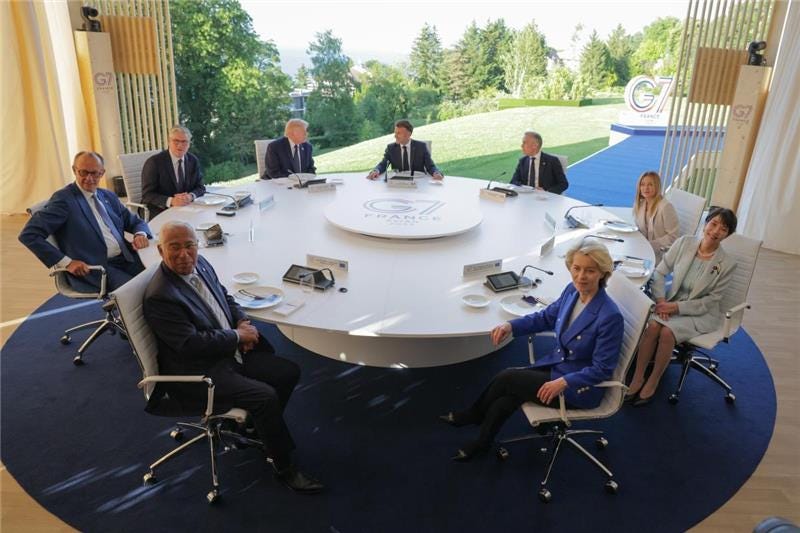
"Participation of Ursula von der Leyen, President of the European Commission, in the G7 summit" by Audiovisual Service of the European Commission is licensed under CC BY 4.0
European Union (EU) Member States are currently discussing the details of the bloc’s 21st proposed sanctions package related to Russia, introduced by the European Commission on June 15. The process is influenced by timing considerations linked to the Russian oil price-cap mechanism and by differing positions among Member States on proposed listings. These factors may affect the pace and scope of negotiations as the EU aims to conclude discussions by mid-July, before the summer recess in Brussels.
Tight Deadline for Consensus on Russian Oil Exports
The 27 EU Member States have approximately three weeks left to agree on the details of the new sanctions package. This timeline is relatively short, as negotiations on the 20th sanctions package earlier this year lasted a little over six weeks.
Under the EU’s current revised price-cap mechanism, the cap is automatically adjusted based on the average price of Russian Urals crude. Recent disruptions in the Strait of Hormuz caused global oil prices, including for Russian Urals crude, to increase sharply. If the price-cap adjustment were to occur as scheduled on July 15, the formula would potentially raise the cap to approximately $70 per barrel, allowing Russia to earn more from oil exports. To avoid this, Commission President Ursula von der Leyen proposed freezing the cap at $44.10 until January 2027.
Although the EU can amend its own sanctions, the oil price cap is fundamentally a G7 measure. Its effectiveness depends on coordinated implementation by coalition members providing shipping, insurance, and financial services for oil transactions under the mechanism. Reports indicate the Commission has been consulting with G7 partners, expecting support from the UK and Canada, but coordination remains an important political consideration. Interestingly, the 21st sanctions package appears to have been intentionally timed to coincide with the G7 summit in France, allowing EU leaders to discuss the package and raise key objections and concerns early in the negotiation process. During the summit, G7 members confirmed in a joint communique that it was “the right moment to proceed” with renewed sanctions on Russian energy exports.
Third-Country Sensitivities
Beyond Russia, the proposed 21st EU sanctions package includes transaction bans on 20 third-country banking, cryptocurrency, and oil trading firms, and introduces a full prohibition on cryptocurrency transactions between Russia and entities in third countries. An EU official later indicated that the affected countries include India, China, Türkiye, Kyrgyzstan, Kazakhstan, and the United Arab Emirates. Sanctions on Indian firms would mark a notable expansion of EU measures beyond previous targets, which focused mainly on entities in China, the UAE, and Central Asia.
Observers have noted ongoing concerns regarding Indian companies’ purchases of Russian oil and the export of dual-use goods to Russia. Past US sanctions against Indian entities for similar activities led to diplomatic and commercial frictions between Washington and New Delhi. Any comparable EU measures could have implications for EU–India relations, particularly as the two sides finalize a free trade agreement. They will also bring the EU closer to the imposition of secondary sanctions. Member States are therefore expected to consider carefully how such sanctions are implemented to balance enforcement objectives with broader economic and diplomatic interests.
Intra-EU Divisions
Bulgaria has publicly raised objections to an aspect of the sanctions package. On June 17, Foreign Minister Velislava Petrova said that Bulgaria opposed proposed sanctions targeting Russian oil giant Lukoil and Patriarch Kirill, the head of the Russian Orthodox Church. She argued that targeting Lukoil would be too disruptive for European countries still reliant on Russian energy facilities. Bulgaria’s only oil refinery is owned and operated by Lukoil. Similar proposed sanctions on Kirill in 2022 were previously dropped following opposition from Hungary.
The targeting of Lukoil will follow the sanctions recently imposed on its subsidiary, accused of operating unsafe “shadow fleet” vessels in the recent “mini sanctions package” released by the EU on the 15th.
Expected Agreement
Historically, the European Union has reached compromise decisions on sanctions, which require unanimous approval and renewal every six months. Recent developments suggest a potential shift in the renewal practice. According to press reports following the European Council summit of June 18, EU leaders agreed to extend the renewal period for Russia sanctions from six to twelve months. This change would reduce the frequency of renewal negotiations and could ease pressure on Member States to repeatedly secure consensus within short timeframes.
While Member States may raise objections regarding specific sanctions targets, effective early negotiations at the G7 conference and limited Member State objections increase the likelihood that the EU will reach agreement on the proposed package before the July 15 deadline.
US Developments
US-Iran MOU Provides for Sanctions Relief, but Questions Remain
On June 17, 2026, the trajectory of US sanctions against Iran took a significant turn when President Trump and Iranian President Masoud Pezeshkian signed a 14-point Memorandum of Understanding (MOU) for further negotiations to end the Iran War.
As it relates to sanctions, the MOU broadly outlines three types of relief for Iran, which can be thought of as (i) immediate relief, (ii) benchmarked relief, and (iii) long-term relief.
Immediate Relief
Paragraph 9 of the MOU provides for a “sanctions moratorium” while a final agreement is negotiated. During this period, the US “will not impose any new sanctions” on Iran, effectively pausing the Trump administration’s “Economic Fury” campaign and related actions under National Security Presidential Memorandum 2 (“NSPM-2”).
Paragraph 10 of the MOU commits the US Department of the Treasury to issuing waivers for the “export of Iranian crude oil, petroleum products and derivatives, and all associated services including banking transactions, insurances, [and] transportation” immediately upon signing by the two parties.
On June 22, 2026, OFAC implemented this commitment through the issuance of Iran-related General License X. With certain limitations, the GL broadly authorizes “all transactions prohibited by the above-listed authorities that are ordinarily incident and necessary to the production, sale, delivery, or offloading of crude oil, petrochemical products, or petroleum products of Iranian origin….” This includes transactions involving vessels blocked under a number of sanctions authorities. The GL is valid through 12:01 a.m. Eastern Daylight Time, August 21, 2026.
Benchmarked Relief
As opposed to the relief which enters into force upon signing of the MOU, there are a few levers which will only be pulled if and when the Iranian regime meets certain “benchmarks.”
For example, Paragraph 11 of the MOU states that the US will, upon signing of the MOU, undertake to make fully available for use the frozen or restricted funds and assets of Iran. Moreover, the US will undertake to issue all “necessary licenses and authorizations” for the release of these funds.
However, Paragraph 11 also states that the US and Iran “will mutually agree on the procedures related to the release of these funds during the negotiations” (emphasis added), signalling that a release mechanism has not yet been determined and may be subject to negotiation. However, Paragraph 11 does not expressly condition the release of funds on the completion of a final agreement.
Long-term Relief
While the MOU holds that a sanctions moratorium and licenses for the export of Iranian crude oil and related activities will take effect immediately, and while Paragraph 11 carves out room for discussions on the release of frozen or restricted funds and assets, there are yet more provisions within the MOU that will only enter into force after a final agreement is reached.
Paragraph 6 states that the US, with its “regional partners,” will develop a mutually agreed plan for the reconstruction and economic development of Iran. The US will only grant the required “licenses, waivers, and permissions” for relevant transactions after a final agreement is reached. Notably, Vice President JD Vance has said that any reconstruction fund would not include American taxpayer dollars; instead, it will come from “investment from other countries,” which suggests that the role the US will play in the implementation of Paragraph 6 will be largely confined to licensing, facilitating, or supporting Gulf countries’ investments—again, after a final agreement is reached.
Finally, Paragraph 7 commits the US to terminating “all types” of sanctions against Iran, including United Nations Security Council (UNSC) resolutions, International Atomic Energy Agency (IAEA) Board of Governors resolutions, and all “unilateral US sanctions,” including both primary and secondary sanctions. However, similar to Paragraph 6, the implementation of Paragraph 7 will only come “in an agreed-upon schedule as part of the final agreement.”
Conclusion and Outlook
As mentioned above, the MOU and pending final agreement represent a potentially significant shift in US sanctions policy toward Iran. However, much remains unknown about the final form of any sanctions relief, and the relief provided to date is temporary and could potentially be rolled back at any time should negotiations break down.
With G7, US Agrees to Support Ukraine, Strengthen Sanctions on Russia
On June 17, 2026, the Group of Seven (“G7”) leaders issued a joint statement committing to “increase pressure on the Russian war economy,” including by strengthening their sanctions on Russia’s oil and gas sector. The G7 placed this commitment in the broader context of supporting Ukraine, and said that they consider this the “right moment” to proceed with additional measures given the promise of a deal with Iran to reopen the Strait of Hormuz, which President Trump and Iranian President Masoud Pezeshkian signed shortly after the G7 published its joint statement. Separately, in the hours before the G7’s joint statement was published, President Trump hinted to reporters that he may reimpose certain oil sanctions on Russia, which were eased during the Iran conflict, although such measures had mostly expired prior to President Trump’s statement.
If President Trump does seek to pursue additional sanctions against Russia, there are multiple bills currently in Congress which could potentially find themselves under consideration for the Trump administration’s support.
Sen. Lindsey Graham (R-SC), for instance, said on January 7, 2026, that the Trump administration had “green lit” his and Sen. Richard Blumenthal’s (D-CT) bill, the Sanctioning Russia Act of 2025. The bill has not yet been subject to a vote in either Chamber of Congress.
Rep. Gregory Meeks’s (D-NY) bill, the Ukraine Support Act, which would require sanctions on Russian financial institutions, oil and mining companies, and tankers that violate the international price cap, among others, had already passed the House on June 4, 2026, by a vote of 226-195. It is now in the Senate.
If this measure were to pass the Senate, it could face a veto by President Trump. Administration officials have expressed concerns about bills that do not provide President Trump with flexibility in imposing or removing sanctions, which the Ukraine Support Act does not.
Russia sanctions could also find their way into the National Defense Authorization Act for Fiscal Year 2027 (NDAA).
Reps. Joe Wilson (R-SC) and Jimmy Panetta (D-CA), for example, have proposed an amendment to the NDAA that would impose sanctions on individuals and entities involved in kidnapping Ukrainian children.
As it relates to the NDAA, note that Reps. Wilson and Panetta’s amendment, as all other amendments at this stage (at least in the House), must first be approved for consideration by the House Committee on Rules. Amendments that progress to floor consideration and are then incorporated into the House NDAA may then be subject to reconsideration when the Senate, with its own version of the NDAA, negotiates (or reconciles) a final version.
The Trump administration has not yet imposed any new sanctions on Russia, despite its commitment to the G7 and calls from lawmakers, such as Sen. Dick Durbin (D-IL), to do so. However, it has elected not to renew Russia-related General License (GL) 134C, which expired on June 17, 2026. As we covered previously, GL 134 authorized certain transactions that were ordinarily incident and necessary to the sale, delivery, or offloading of crude oil or petroleum products of Russian origin, subject to certain conditions.
OFAC Sanctions Hizballah-Aligned Officials
On June 18, 2026, OFAC sanctioned multiple Hizballah-aligned officials, as well as multiple Hizballah-associated businesses that are allegedly part of a network overseen by Alaa Hassan Hamieh, a Specially Designated Global Terrorist (“SDGT”).
According to OFAC, the Hizballah-aligned officials “have used their influence to obstruct Lebanon’s peace process and delay the disarmament of Hizballah.” The businesses, OFAC said, are “interlocutors” for Hamieh located in Lebanon, Syria, Iraq, and Oman, who raise funds, execute contracts, and operate front companies as a means to generate revenue for Hizbillah.
These designations follow recent sanctions against Hizballah-aligned individuals and entities on May 21, 2026.
OFAC Issues New, Amended Venezuela GLs
On June 18, 2026, OFAC issued two amended Venezuela-related GLs (GLs 5X and 24A) and one new Venezuela-related GL (GL 59).
GL 5X, “Authorizing Certain Transactions Related to the Petróleos de Venezuela, S.A. 2020 8.5 Percent Bond on or After August 4, 2026,” extends the term of GL 5 from June 19, 2026, to August 4, 2026.
GL 24A, “Certain Transactions Involving the Government of Venezuela Related to Telecommunications and Mail Authorized,” updates the language of GL 24, which was issued on August 5, 2019, to reflect that certain transactions otherwise prohibited specifically by Executive Order (EO) 13884 are permitted, subject to conditions.
It also expands the authorizations for transactions of common carriers to include those incident to the receipt or transmission of mail and packages to, from, or within Venezuela—not just between the US and Venezuela.
GL 59, “Authorizing the Supply of Certain Items and Services Involving Consorcio Venezolano de Industrias Aeronáuticas y Servicios Aéreos, S.A. (Conviasa),” authorizes certain transactions involving Consorcio Venezolano de Industrias Aeronáuticas y Servicios Aéreos, S.A. (“Conviasa”), all of its 50 percent or more-owned entities (“Conviasa Entities”), and aircraft in which it or the Conviasa Entities hold an interest, that are ordinarily incident and necessary to the provision from the United States or by a US person of goods, technology, software, or services for the maintenance, repair, upgrade, refurbishment, improvement, safety, or airworthiness of such aircraft.
These changes and additions to the Venezuela licensing regime come shortly after OFAC amended seven Venezuela-related GLs on June 10, 2026, which we covered in the previous edition of the Sanctions Update here.
UK Developments
UK Announces Major Russia Sanctions Package Targeting Shadow Fleet, Military Procurement and Sanctions Evasion
The UK Government has designated 11 individuals and 32 entities, and specified 27 ships, under the Russia Sanctions Regime that are linked to Russia’s war effort and sanctions circumvention activities. According to a UK Government press release, the measures focus on three key areas: Russia’s shadow fleet, military procurement networks and illicit financial channels used to evade Western sanctions. The package includes sanctions on more than 20 additional oil tankers, shipping service providers and insurers connected to Russia’s shadow fleet, as well as several LNG vessels supporting Russia’s Arctic LNG 2 project. The UK has now sanctioned more than 600 shadow fleet and Russian LNG vessels and almost 500 individuals, entities and ships under the Russian regime during 2026 alone.
The package also targets a Russian military intelligence procurement network centred on GRU-linked company LLC Neptune Co Ltd, with sanctions imposed on entities and individuals accused of acquiring Western technology for Russia’s military. In addition, the UK designated suppliers in China, Thailand and Turkey alleged to be providing critical military equipment and dual-use goods to Russia, alongside entities involved in facilitating sanctions evasion and illicit financial flows, including links to the A7 network. The measures underscore the UK’s continued focus on disrupting Russia’s energy revenues, military supply chains and sanctions circumvention networks in coordination with G7 partners.
OFSI Imposes Russia-related Civil Monetary Penalty on Sabre Global Technologies Limited
OFSI has published details of a £1,000,920.59 civil monetary penalty imposed on Sabre Global Technologies Limited (“SGTL”), for violating the prohibitions on making funds and economic resources available to, or for the benefit of, a UK designated person, as well as the sanctions circumvention prohibition under Regulations 13, 14, and 19 of the Russia (Sanctions) (EU Exit) Regulations 2019. The SGTL penalty represents the largest civil monetary penalty imposed under the UK’s Russia sanctions regime since Russia’s February 2022 invasion of Ukraine. The enforcement action is notable because it represents the first use of OFSI’s civil enforcement powers in relation to sanctions circumvention, as well as for underscoring the breadth with which the concept of economic resources is interpreted by OFSI. Several useful hints as to OFSI’s enforcement approach and compliance expectations for businesses required to comply with UK sanctions can be discerned from the SGTL case, which affected businesses should factor into their UK sanctions compliance efforts.
OFSI Amends Lukoil International General Licence
OFSI has amended General Licence INT/2025/8031092, which permits the continuation of business involving Lukoil International GmbH and its subsidiaries (the “GL”). The amendment removes the restriction previously contained in paragraph 4.2 of the GL, which had required funds otherwise payable to Lukoil International or its subsidiaries to be paid into a frozen account while the entities remained owned or controlled by PJSC Lukoil. The GL continues to authorise a wide range of business activities involving Lukoil International entities, including payments under existing or new contracts and the provision or receipt of economic resources, subject to the licence conditions. The amendment represents a further adjustment to the UK’s approach to facilitating the continuation of legitimate business activities involving Lukoil’s international operations. However, the amendment does not permit funds to be returned to PJSC Lukoil. Parties relying on the GL should review the updated version carefully to understand the revised permissions and compliance requirements.
EU Developments
EU Council Adopts New Sanctions Listings Targeting Russia’s Military-Industrial Complex, Shadow Fleet and Hybrid Activities
On June 15, the EU Council adopted a set of restrictive measures in response to Russia’s continued war of aggression against Ukraine, adding 34 individuals and 47 entities to the sanctions lists under Council Regulations 269/2014, 2024/2642, and 2024/1485. The designations target actors materially supporting Russia’s military and industrial complex, including manufacturers and suppliers of drones and military equipment. The listings also extend to third-country enablers, including three Chinese companies, among them Xinxiang Richful Lubricant Additive Company, a major manufacturer of lubricant additives supplying components used in support of Russia’s military capabilities.
The restrictive measures further address Russia’s energy revenues by designating individuals and entities involved in the transport of crude oil and petroleum products through the shadow fleet, including Tahir Garayev and Konstantin Rogach, as well as shipping operators such as Lukoil Western Siberia, Liberia-based Moonstone Maritime Corporation, and additional companies based in Türkiye, the United Arab Emirates, Azerbaijan and Hong Kong.
The package also expands listings targeting foreign information manipulation and interference, as well as serious human rights violations and repression in Russia. Newly designated individuals include propagandists and influencers such as Alexandra Jost and Anatoly Kuzichev. In parallel, 15 individuals and one entity, IPJSC NTK, were listed for their involvement in the persecution, poisoning and death of Alexei Navalny, including members of the Federal Security Service, as well as Russian judges and prosecutors.
Additionally, Council Regulation (EU) 2026/1336 introduces a derogation from EU asset freeze measures in respect of the Chinese IDM manufacturer Yangzhou Yangjie Electronic Technology Co., Ltd. The derogation allows, subject to prior authorization by national competent authorities, the release of funds strictly necessary for the wind-down of contracts concluded before April 23, 2026, until December 31, 2026, and for limited purchases of critical components until March 15, 2027, with a view to enabling EU operators to transition to alternative sources of supply.
Following the annual review, the EU Council also renewed the restrictive measures in response to the illegal annexation of Crimea and the city of Sevastopol until June 23, 2027.
EU Council Publishes Updated FAQs on Import Ban for Refined Products Obtained from Russian Crude Oil
The European Commission published updated FAQs on sanctions against Russia, with a focus on the prohibition on the purchase, import, or transfer of refined petroleum products obtained from Russian crude oil, including where such products are imported via third countries.
The updated FAQs clarify the enhanced due diligence obligations for EU operators importing refined products from third-country refineries that process Russian crude oil and provide more detailed guidance on when such imports may be permitted. The FAQs also set out the information that segregated refinery operators must include in written attestations accompanying each export cargo, as well as the applicable timing requirements and the conditions under which independent verification must be carried out.
EU Council Designates Six Individuals Under Moldova Sanctions Framework
The EU Council recently updated its sanctions framework targeting Moldova by designating six individuals responsible for actions aimed at destabilizing, undermining or threatening the sovereignty and independence of the Republic of Moldova. The listings target members of successor entities linked to the ȘOR political party involved in interference with the September 2025 parliamentary elections, including disinformation activities, vote‑buying schemes and coordinated influence operations connected to Ilan Shor and the non-governmental association organization Evrazia.
The sanctions framework now applies to 29 individuals and five entities. The restrictive measures include asset freezes, a prohibition on making funds or economic resources available, and travel bans preventing listed individuals from entering or transiting through the EU.
EU Council Amends Libya Sanctions Framework
The EU Council introduced targeted amendments to the restrictive measures in view of the situation in Libya, following an update at the UN level. Changes to Council Regulation (EU) 2016/44 implement UN Security Council Resolution 2819 (2026) of April 14, which updates the listing criteria for individuals and entities subject to restrictive measures and modifies the scope of measures applicable to the Libyan Investment Authority.
In particular, the amendments incorporate the new UN designation grounds and provide that, subject to prior notification to and approval by the UN Sanctions Committee, competent authorities of EU Member States may authorize the use of certain frozen cash reserves of the Libyan Investment Authority for investment in low‑risk time deposits or fixed income instruments with financial institutions located in the Member State where the funds are held, in accordance with the conditions set out in the relevant UN Security Council resolutions. The amendments further provide, subject to notification by the Member State concerned and approval by the UN Sanctions Committee, for the transfer of certain frozen funds or economic resources between custodial institutions within the same jurisdiction to enable a change of global custodian, provided that the assets remain frozen and their value is preserved.
Asia-Pacific Developments
China Expands Financial Legal Toolkit to Counter External Sanctions
China’s Vice-Premier He Lifeng announced plans to incorporate anti-sanctions provisions into financial legislation to counter what Beijing views as unjust foreign pressure, highlighting draft rules that enable blocking and retaliatory measures against unilateral restrictions. Speaking at the Lujiazui Forum, he said similar provisions will be extended across financial laws to strengthen the country’s regulatory toolkit, while emphasizing that China does not seek conflict but will firmly resist external containment. The initiative, supported by recent steps such as a blocking order against certain US sanctions and rules targeting extraterritorial jurisdiction, is anchored in a proposed overarching financial law that allows countermeasures against discriminatory actions.
China Imposes Sanctions on Philippine Defense Chief
China has imposed sanctions on Philippine Defense Secretary Gilberto Teodoro Jr. and his immediate family, barring them from entering mainland China, Hong Kong, and Macao, in response to statements Beijing claims have damaged its sovereignty and strained bilateral ties. The measures also prohibit Chinese individuals and organizations from conducting any form of business or cooperation with the sanctioned parties. While Beijing has not specified the exact remarks that prompted the action, it characterized them as repeated statements harmful to China’s core concerns, reflecting ongoing political and security tensions between China and the Philippines.
China Pushes Back Against UK Sanctions Over Russia Links
China has criticized the United Kingdom for imposing sanctions on several entities, including four Chinese firms, accused of supplying key military-related goods to Russia, urging London to reverse what it described as an erroneous move. According to a statement from the Chinese embassy in Britain, Beijing has conveyed strong dissatisfaction and warned that it will take necessary steps to protect the legitimate rights and interests of its companies. China maintained that it has consistently advocated for peace efforts in the Ukraine conflict and strictly regulates exports of dual-use items, arguing that standard economic and trade cooperation between China and Russia should not be disrupted.
Cambodian Minister Moves to Counter Potential US Sanctions
Cambodia’s Deputy Prime Minister and Interior Minister has hired two American law firms to contest his possible designation under proposed U.S. legislation targeting global online scam networks. The legal teams are tasked with engaging U.S. authorities and lawmakers to address his inclusion in a bill that would require the U.S. president to assess whether named foreign individuals should face sanctions. His appearance in the draft legislation has been linked in past reports to alleged connections with entities associated with transnational fraud operations, stemming in part from previous business affiliations with figures later subjected to sanctions. He has denied any involvement in such activities, while officials from his ministry stated that the move to retain legal counsel is intended to defend both his personal reputation and that of Cambodia against what they characterize as unfounded accusations.

Global
Heat wave in Europe hits historic highs, leading the globe in warming seasonal temperatures. Extreme heat warnings cover large swaths of Europe, with the region registering 4.1 °C above 1961-1990 norms. In Spain, the town of San Sebastian is expected to register 40 °C today, more than double its historic average for June 22. A heat dome has trapped hot air driven from the Sahara. Regional authorities are responding by cancelling outdoor events, reducing or adjusting work schedules, and cutting back on public transportation, with risks of overheated power lines. Asia and North America are also registering temperatures above average this month, 2 °C and 1.3 °C above the historic norm.
May 2026 was the second-warmest May globally on record. According to the Copernicus Climate Change Service, the average surface air temperature was 15.81°C. This is 0.55°C above the 1991–2020 average and 1.42°C above estimated pre-industrial levels (1850–1900). During the second half of the month, large parts of western Europe experienced an exceptionally early and intense heatwave that broke multiple May temperature records, particularly in France and the UK. Sea surface temperature over the extra-polar ocean was the second highest for May, with exceptionally high values in the tropical Pacific.
Extreme heat is projected to create a major drag on the world’s largest economies. According to a new report by Allianz Trade, by 2030, cumulative GDP losses could reach 5% to 7% in the countries most exposed to rising temperatures. Japan faces the largest risks, estimated at $354 billion over the next five years. France leads for potential European costs, with potential losses of $240 billion. Allianz attributes massive losses to four primary systemic challenges: decline in productivity with extreme heat impacting sectors like manufacturing, construction, and agriculture; surging energy costs; fiscal pressures that reduce tax revenues and force high public spending on emergency infrastructure; and stagflationary shocks with lower-than-expected returns on capital dragging down investments.
Read More: Reuters [paywall], Deutsche Welle, Allianz Trade
Europe
Keir Starmer announced his resignation as Prime Minister this morning. He will remain as Prime Minister until a Labour leadership contest concludes, which will formally begin on July 9 when the nominations process opens. The frontrunner is Andy Burnham, who has served as mayor of Greater Manchester for nearly ten years. Burnham is endorsed by Wes Streeting, the former Health Minister, who appeared to be a strong contender but may not have acquired the requisite support of 81 Labour MPs to mount a leadership challenge. If there is no serious challenger to Burnham, he may become Prime Minister by the end of July.
Starmer’s successor inherits a challenging governance environment. Regional and local elections in May 2026 reflect a new reality in British politics—the end of the party duopoly between Labour and the Conservatives, with Reform UK now leading the pack and the Greens polling about the same as Labour. Current polling data conflicts with the mandate given to Labour in the July 2024 parliamentary elections, in which it won a supermajority of seats. Therefore, a new Prime Minister, the seventh since 2016, will be pressured by the opposition to call snap elections. Labour’s unpopularity, much the same as other incumbents across Europe, stems from persistent inflation and low economic growth.
The UK’s political instability will undermine foreign policy flexibility. The EU has suggested that a planned July 22 “reset” summit may be postponed or called off, adding ambiguity to the UK’s post-Brexit foreign policy strategy. The UK’s status in the E3 could also take a hit. The format has not publicly articulated a clear strategy on the Iran war or delivered details on a political settlement to the Russia-Ukraine war, although the E3 has said it seeks to mediate, and the UK sought to lead a “reassurance force” as part of a security guarantee.
Middle East
US-Iran peace talks started off rocky, but mediators expressed optimism for ongoing talks. The first day of US-Iran negotiations on a permanent, long-term peace and nuclear framework – stipulated by the 60-day ceasefire deal signed last week – had a rough start. Israel bombed Lebanon over the weekend despite a new ceasefire announced on Friday, prompting Iran to announce the closure of the Strait of Hormuz (although the US claimed some ship traffic continued to flow). Nonetheless, Qatari and Pakistani mediators claimed that the first round – continuing today – resulted in “encouraging progress.”
The conflict in Lebanon remains the biggest early flashpoint in the negotiations. A cessation of fighting on that front was included in the ceasefire, and Iran has proven determined to protect Hizballah, one of its most powerful proxies. Israel, on the other hand, is not a formal party to the peace talks and is already chafing under the inability to maneuver in Lebanon. Netanyahu, furthermore, would not accept a permanent end to hostilities with Hizballah without overwhelming nuclear and missile concessions from Iran, which will be hard to get.
Read More: BBC, New York Times [paywall], Wall Street Journal [paywall]
Asia-Pacific
Taiwan began a five-day “Immediate Combat Readiness Exercise” on Monday. The drills are a test of how rapidly Taiwanese military units are able to deploy in a defensive scenario. Taiwan’s Ministry of Defense said in a statement that the drills are intended to be realistic, describing them as “real-time, live-fire and on-site.” Taiwan holds regular military exercises, recently launching rockets from a US-supplied HIMARS system into the Taiwan Strait for the first time in June. The military drills are aimed at improving logistics, battlefield operations, and command mechanisms. Taiwan is also scheduled to hold its annual Han Kuang war games in August.
The launch of this week’s drills coincided with the deployment of 23 Chinese aircraft towards Taiwan, according to the Ministry of Defense. The ministry stated that the Chinese planes included J-16 fighters, KJ-500 aircraft, and Y-20 aerial refuelers. They were reportedly engaged in “long-distance training over open seas.” The planes were accompanied by seven navy ships and five other government vessels. China’s People’s Liberation Army regularly engages in military exercises in the waters to its south, near the island of Taiwan. Taiwanese military training includes real-time responses to Chinese military drills.
Read More: Reuters, AP, The Washington Post [paywall]
Americas
Abelardo de la Espriella has won Colombia’s presidential election according to initial counts. The electoral authorities released a quick count showing the right-wing challenger with 49.7% of the vote. His leftist opponent, Iván Cepeda, received 48.7%. De la Espriella is a lawyer and political outsider with no previous experience in office. His surprising success in the Colombian race is a rejection of the incumbent Gustavo Petro, whose four-year term was the first of a leftist president in Colombia’s history. Cepeda sought to continue Petro’s policies and has called for a full vote count to be completed before the winner is officially announced. All ballots will be counted in the coming days, although quick count results have historically been accurate in Colombian elections.
De la Espriella’s campaign focused on crime and security amid recent outbreaks of violence in Colombia. He gained support in major cities, where voters fear a return to the era when armed rebel groups from the countryside would bomb or kidnap residents of urban areas, including Bogotá. Armed groups are currently fighting to control drug-trafficking routes and illegal gold mines in rural Colombia. The uptick in violence impacted the presidential race after one candidate, Miguel Uribe, was assassinated last year. De la Espriella campaigned from behind bulletproof glass and wearing a bulletproof vest, vowing to end Petro’s “Total Peace” strategy of negotiating with rebels.
A victory by de la Espriella would be the latest example of the rightward shift occurring in Latin America during President Trump’s second term. De la Espriella modeled his campaign after El Salvador’s Nayib Bukele, announcing his intentions to build megaprisons. The right is also in power in Chile, Bolivia, Argentina, Costa Rica, and is likely to win in Peru, according to preliminary results of another razor-thin election. In addition to the focus on combatting narcoterrorists, de la Espriella campaigned on conservative social values, rejecting “gender ideology” and emphasizing religion and family. He had received an endorsement from President Trump and will likely realign Colombia with the United States.
Read More: New York Times [paywall], NPR, Reuters
Africa
The US plans to end PEPFAR funding to South Africa amid ongoing strains in relations. A Department of State official stated the decision was due to Pretoria’s “failure to make demonstrable progress on policy requests by the administration.” US-South Africa relations have deteriorated following criticism from Washington over Pretoria’s perceived discrimination against white Afrikaners and its relations with Iran. The decision has raised concerns that the withdrawal of HIV/AIDS funding could weaken public health response in a country with the world’s largest HIV-positive population.
The US is increasingly conditioning health assistance on policy objectives that extend beyond public health. The move follows friction between several African governments and the Trump administration over its America First Global Health Strategy, which prompted concerns that health funding was being tied to critical minerals access. Such perceptions could make partner governments more skeptical of US engagement and reduce Washington’s diplomatic leverage over time. Moreover, scaling back PEPFAR, an important source of US soft power, could strengthen the position of geopolitical competitors.
Read More: Semafor Africa, Business Insider Africa, Center for Strategic and International Studies
Geoeconomics
The Fed held rates steady at 3.50% to 3.75% at its June meeting, but the updated dot plot showed a clear hawkish shift. The decision was unanimous and marked the fourth consecutive meeting without a rate move, yet nine of 19 officials now expect at least one rate increase by year-end, compared with none in March, while only one official projected a cut. The Fed also removed the prior easing bias from its statement, signaling that raising inflation and a resilient labor market pushed the committee closer to tightening than cutting.
The meeting also marked Kevin Warsh’s first FOMC as Fed chair, and he immediately changed how the Fed communicates. The June statement was shorter and stripped of most forward guidance, giving fewer clues about the committee’s future policy path. Warsh also declined to submit his own dot-plot projection, saying he did not want to guide markets toward a specific rate outcome. This is a meaningful break from the Powell-era approach, which favored greater Fed communication, especially in times of crisis, to reduce market volatility. Warsh also announced new task forces focused on Fed communications, the balance sheet, inflation, productivity, and real-time data, pointing to a broader effort to remake the institution’s post-crisis operating style.
Markets treated the meeting as a hawkish reset. The two-year Treasury yield, which is most sensitive to Fed policy expectations, rose about 16 basis points after the decision to roughly 4.21%, its highest level since February 2025, while the 10-year yield rose to about 4.46%, and stocks turned lower after the statement and press conference. Rate expectations have also shifted quickly: markets are now pricing about 42 basis points of hikes in 2026, while Bank of America changed its forecast from no rate moves this year to three 25-basis-point hikes in September, October, and December. President Trump is likely frustrated by the hawkish shift, especially because Warsh was expected to be more supportive of easing than Powell.
Read More: Reuters [paywall], Wall Street Journal [paywall], Brookings Institute
Energy
Russia is experiencing shortages of gasoline due to Ukraine’s successes in targeting Russian oil infrastructure. Ukraine has damaged Russian oil refining capacity to the point that gasoline prices are skyrocketing and that some areas are having to contend with restrictions on fuel sales, both of which increasingly bring the war home to ordinary Russians. Ukraine’s efforts have reportedly put around 20% of Russian oil refining capacity out of operation. The areas closest to the front, such as Russian-occupied Crimea, have borne the brunt of Ukraine’s drone campaign. However, Ukraine has also managed to strike Moscow itself, such as an attack that hit a refinery in Moscow that produces one-third of the fuel supply for the city and its surrounding areas.
Russian crude exports are actually rising as a result of the campaign, but oil prices are falling in light of events in the Middle East. Exports of Russian crude reached a record level since the beginning of the war in mid-June, as Russia has exported oil that it is currently unable to refine for domestic use. However, despite the rise in export volumes, the price of Russian Urals oil has moved sharply downwards since the news of the US-Iran agreement and the intention to open the Strait of Hormuz. However, given the uncertainty around operations in the Strait of Hormuz and the potential for shifts in US-Iran tensions, oil prices may move upwards again depending on how negotiations between Washington and Tehran proceed.
Read More: Wall Street Journal [paywall], The Bell, Reuters [paywall], Oilprice.com
Transnational Crime & Corruption
Corruption allegations against Spanish Prime Minister Pedro Sánchez’s inner circle escalated over the weekend. On Saturday, a Spanish investigative judge ordered that Sánchez’s wife, Begoña Gómez, would stand trial for alleged misuse of public funds and influence peddling. The judge found that Gómez was a flight risk and ordered her to surrender her passport and report to court twice a month.
Sánchez’s government alleged that the judge was part of a politically motivated campaign to undermine Sánchez. The investigation into Gómez originated from a complaint filed by Manos Limpias, an anticorruption group characterized by Sánchez’s allies as biased against the ruling socialist party. On Monday, Spain’s justice minister publicly accused the investigative judge of issuing “incomprehensible” and illegal rulings. Spain’s interior minister also requested that the country’s oversight body for judges investigate whether the flight risk finding was proper. The government’s increasingly open criticism of Spain’s judiciary will further politicize the overlapping corruption investigations into Sanchez’s family and associates.
Read More: Financial Times [paywall], Financial Times [paywall]


Contact Us
Karl Hopkins
Partner
+1 202 429 6499
khopkins@steptoe.com
Melissa B. Mahle
Senior Advisor
+1 202 261 0577
mmahle@steptoe.com
Anni Coonan
Senior Intelligence Analyst
+1 212 506 3979
acoonan@steptoe.com
Samuel Bloebaum
Senior Due Diligence Analyst
+1 602 410 6240
sbloebaum@steptoe.com
Zayna Dembinski
Analyst
+1 202 778 3567
zdembinski@steptoe.com
Thomas Goldstein
Analyst
+1 202 862 6735
tgoldstein@steptoe.com
Ian Cameron
Analyst
+1 202 327 6908
icameron@steptoe.com
Elton Smole
Analyst
+1 202 261 0556
esmole@steptoe.com
Carter Spahn
Intelligence Fellow
+1 202 261 7555
cspahn@steptoe.com
Chris Dantes
Intelligence Fellow
+1 202 327 6904
cdantes@steptoe.com
Legal disclaimer: This Substack is for educational and informational purposes only and does not constitute the rendering of legal counseling or other professional services. Reading, subscribing to, or communicating through this Substack does not create an attorney-client relationship. Do not send confidential information through this platform. Consult qualified legal counsel regarding your specific circumstances.