
The Sanctions Update, compiled by attorneys from Steptoe’s award-winning International Regulatory Compliance team and the Stepwise: Risk Outlook editorial team, publishes every Monday (subscribe here). Guided by the knowledge of Steptoe’s industry-leading International Trade and Regulatory Compliance team, the Sanctions Update compiles and contextualizes weekly developments in international regulatory enforcement and compliance, as well as offers insights on geopolitical context, business impacts, and forthcoming risks, and non-sanctions news updates.
For more detailed analysis on related issues, see Steptoe’s International Compliance Blog. For information on industry-specific monitoring or bespoke services, please contact the team here.
By Evan T. Abrams, Meredith Rathbone, Karl Hopkins, Guy Soussan, Alexandra Melia, Wendy Wysong, Ali Burney, Warren Geary, Algirdas Semeta, Melissa B. Mahle, Anni Coonan, Thomas Goldstein, Zayna Dembinski, Samuel Bloebaum, Elton Smole, Ian Cameron, Wilson Zhao, Zoey Hong, Kiki Dong, Savannah Zishan Chen, Andy Xu Sofia, Jake Fitzpatrick, Carter Spahn, Chris Dantes

Listen to the Lede:
The Lede
EU Moves to Tighten Russia Sanctions as Peace Talks Continue
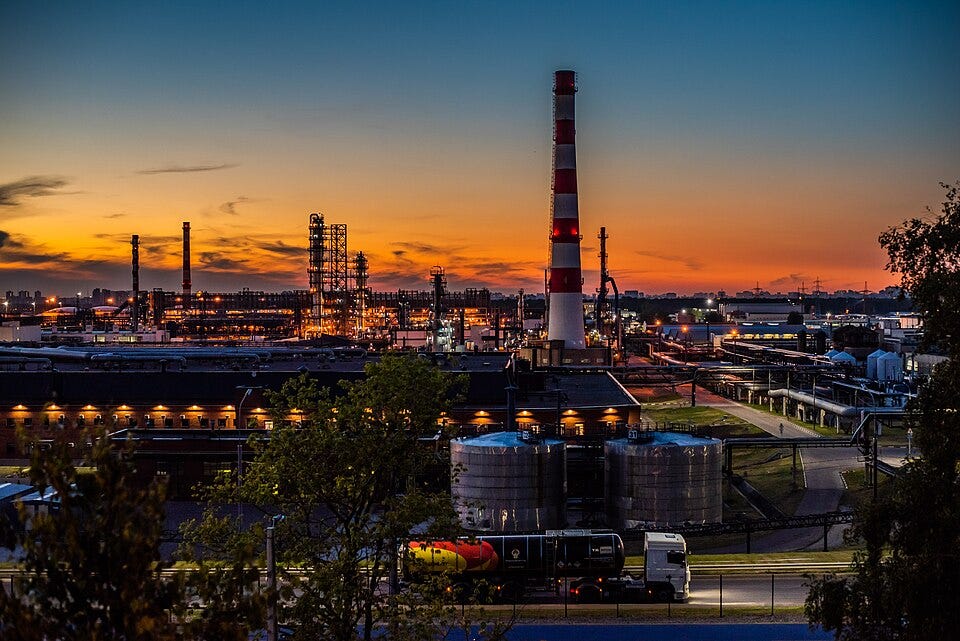
“Moscow oil refinery” by kishjar? is licensed under CC BY 2.0.

On November 16, the Council of the European Union listed an additional 101 entities and 12 individuals under the EU’s Russia asset freeze sanctions framework, for their roles in economic sectors that provide substantial revenue to the Russian government and support its shadow fleet. The economic measures cover nearly 50 Russian banks and financial institutions, energy businesses, overseas shadow-fleet intermediaries and individuals associated with the online retailers Wildberries and Ozon. The measures further target companies in third countries, including the United Arab Emirates, Hong Kong, Seychelles, and Oman, involved in Russian oil trading or in owning, managing, operating, financing, or insuring vessels transporting Russian oil. In parallel, the Council added 30 individuals and one entity to the EU sanctions list targeting Russia’s hybrid activities, including foreign information manipulation and interference (FIMI). The Council also listed an additional entity under the EU sanctions framework concerning cyber-attacks threatening the Union or its Member States. The Council formally adopted the listings after EU member state ambassadors agreed on November 11 to add approximately 145 entries to Russia-related sanctions lists. By reaching beyond Russian producers to the businesses that process payments, transport oil and facilitate procurement, the EU is seeking to make Russia’s export earnings harder to generate and its wartime supplies harder to obtain.
The adopted energy listings extend pressure on companies that refine Russian oil and organize its export. They could also compound the damage from Ukrainian strikes, which have increasingly targeted complex refinery units used to produce gasoline, diesel and jet fuel. Russian refinery output in June was roughly 30% below the year earlier. Serious damage to these units can take six to eight months to repair, while existing Western sanctions restrict access to some replacement-equipment suppliers. Additional EU listings could prolong these losses if they disrupt damaged refineries’ remaining equipment or financing relationships. Higher global prices, however, can offset some of this pressure. Russia’s estimated oil-export revenues rose 25% in September from the previous month, to $17.7 billion, as the Middle East war pushed up global prices, even as export volumes remained below their level a year earlier.
US efforts to relax restrictions on Russian diesel sales and discourage Ukrainian attacks on Russian refineries could also ease pressure on Russia’s energy sector. President Trump has repeatedly demanded that Ukraine cease its attacks on Russian refineries. On October 9, the US Treasury also issued General License 135, authorizing transactions involving Russian diesel sales and deliveries, including imports into the United States, until April 7, 2027. The administration’s stated aim is to ease fuel prices by bringing additional Russian supplies onto global markets. The license could also make Russian diesel easier to sell and finance in other markets by reducing US sanctions risk for covered transactions. However, US banks and importers have been reluctant to handle Russian diesel because of legal questions and commercial risks; as of November 12, none of the four tankers initially expected to deliver Russian diesel to the United States had unloaded their cargo at a US port.
The preliminary October sanctions draft included smaller regional banks, citing lenders that gave Russian military personnel extra time to repay loans. Russia had responded to earlier financial restrictions partly by shifting trade payments from dollars to yuan, as China’s growing importance as a trading partner made its currency a practical alternative. Russian businesses could receive yuan from Chinese customers and use that currency to pay Chinese suppliers. However, the yuan’s share of payments for Russian exports has fallen to 22%, roughly half its mid-2024 peak, while rubles accounted for 69% of payments for exports to Asia. This could be a result of large Chinese banks being cautious about dealing with sanctioned Russian entities because they fear losing access to dollar markets. A Bank of Finland study also found that transactions had been moving through smaller intermediaries, with increased payment delays and high transaction costs.
Europe’s sanctions also depend on how consistently its members enforce them. Governments agree to common restrictions at the EU level, while national competent authorities, including customs authorities, check shipments and apply the rules. In a report on sanctions covering non-energy goods published on November 10, the European Court of Auditors found that sanctions had reduced direct exports of critical military goods to Russia. However, unclear rules allowed countries to interpret exemptions differently, while inconsistent checks and information sharing created opportunities for circumvention. Businesses could route trade through member states with weaker controls, undermining restrictions that other countries enforced more strictly.
Closing these enforcement gaps would help Europe sustain economic pressure on Russia while peace talks proceed. The G7 declaration published on November 11 paired support for US-led negotiations and a comprehensive, reciprocal ceasefire with continued sanctions coordination. Ministers identified a mutual halt to attacks on energy infrastructure and in the Black Sea as an initial step toward peace, while identifying insurers, oil traders and other shadow-fleet intermediaries as priorities for further action.
The talks also concern the protections Ukraine would receive after an agreement. On November 10, EU, French, German, Italian, British, Ukrainian, US and NATO representatives met in Abu Dhabi before the separate US-mediated negotiations involving Russia and Ukraine. They backed a settlement preserving Ukraine’s sovereignty and ability to make independent decisions, supported by credible security guarantees. The purpose of those guarantees is to make a ceasefire more durable by deterring a future attack on Ukraine. The joint statement endorsed that objective without specifying military commitments or an agreed response to renewed aggression.
Discussions on Europe’s security architecture give European governments a direct stake in the outcome, even though their negotiating role remains contested. Russia is demanding Ukrainian withdrawal from territory still held by Kyiv and a broader agreement on Europe’s security arrangements, while Ukraine wants a ceasefire before territorial discussions. European and NATO representatives held side consultations in Abu Dhabi but did not join the direct trilateral talks, and Russia’s lead negotiator questioned their involvement. The two-day meeting produced an agreement in principle on a major prisoner exchange, leaving the central disputes unresolved. With the central disputes unresolved, EU sanctions remain one means of applying economic pressure as European governments seek a greater role in negotiations that will shape their own security.
US Developments
US Designates Three Guatemalan Groups as Terrorists Over Alleged Cartel Ties
On November 13, the Department of the Treasury’s Office of Foreign Assets Control (“OFAC”) designated Guatemala-based Los Mendoza Drug Trafficking Organization (“DTO”) and Los Huistas DTO as Specially Designated Global Terrorists (“SDGTs”) for allegedly providing material support to the Sinaloa Cartel and, in the case of Los Huistas, Cartel de Jalisco Nueva Generacion (“CJNG”). The Department of State designated both cartels as Foreign Terrorist Organizations (“FTOs”) and SDGTs in February 2025. Also on November 13, the State Department designated Los Lorenzanas as an FTO and an SDGT.
Los Mendoza and Los Huistas allegedly control trafficking corridors along Guatemala’s borders with Mexico and Honduras and serve as logistics partners for the Sinaloa Cartel and CJNG, according to Treasury. Los Mendoza allegedly provides access to border crossings, clandestine airstrips, storage facilities, and local protection networks in three Guatemalan departments. Los Huistas allegedly serves as a key link in the cocaine trafficking supply chain and has used ties to local businessmen, law enforcement officials, and politicians to shield its operations.
Treasury Secretary Scott Bessent said the action exposes ties between “politically influential Guatemalan criminal organizations” and Mexican FTOs, and the US Embassy in Guatemala has reportedly called for vigilance at the presidential, legislative, and municipal levels ahead of Guatemala’s 2027 elections, though the Trump Administration has not to date extend sanctions designations to Guatemalan officials who allegedly protect these groups.
Democratic Congress Could Revisit Russian Diesel License
Democrats won control of both the House and the Senate on November 3, according to Associated Press race calls, and will organize the new Congress when it convenes in January 2027. Rep. Gregory Meeks (D-NY), the top Democrat on the House Foreign Affairs Committee, introduced a bipartisan bill on October 16 that would nullify the OFAC general licenses authorizing Russian diesel imports and bar future ones. Lawmakers from both parties also warned banks and ports against those imports in October, as we covered in our November 2 update. Whether the new majorities use hearings or legislation to constrain Russia-related GL 135 remains unclear, and any such bill would need the President’s signature or a veto override.
UK Developments
UK Imposes New Russian Energy-Related Sanctions
The UK Government has designated nine entities and specified 11 ships under the UK’s Russia sanctions regime. According to a UK Government press release, these measures target shadow fleet vessels involved in the transport of Russian oil and LNG, major coal companies, and Rosneft’s flagship Arctic oil and gas project, LLC Vostok Oil. The UK Government has also designated PJSC Oil and Gas Company Slavneft, making the UK the first country in the world to have sanctioned all of Russia’s top ten oil producers. Those designated also include PJSC Sibur Holding and JSC Nipigazpererabotka. The newly designated entities are now subject to asset freezes, trust services, director disqualification, and transport sanctions. The newly specified ships are now subject to shipping sanctions and, in the case of several of the specified vessels, trade sanctions. The measures build on previous rounds of UK sanctions relating to the Russia energy sector and reflect the UK Government’s continued focus on targeting Russia’s energy revenue chain across the oil and gas sectors to further constrain Russia’s ability to generate revenue and finance its war in Ukraine.
OFSI Publishes Overseas Business Information Sheet
OFSI has published an information sheet for overseas businesses to assist them in understanding their obligations under UK sanctions, identifying potential sanctions risks, and taking appropriate steps to manage UK sanctions risks. The information sheet includes QR codes to support overseas businesses in accessing information about UK sanctions and, when necessary, to submit confidential reports to OFSI.
EU Developments
EU to Present its 22nd Sanctions Package Against Russia
In a joint statement on November 12, European Commission President Ursula von der Leyen and President of the European Council António Costa announced that the Commission will present its 22nd sanctions package against Russia at the European Council meeting on November 26–27. The package’s presentation will coincide with discussions on Ukraine’s financing needs for 2027.
According to reports, the 22nd sanctions package is expected to include new restrictions on banks, cryptocurrencies and crypto platforms, as well as measures to address circumvention through third countries. A ban on Russian and Belarusian athletes competing in international sporting events in the EU and visa restrictions on Russian former combatants are also reportedly under discussion. Further details on the scope and content of the proposed restrictive measures are expected when the Commission presents the package.
The announcement comes amid renewed diplomatic efforts to end Russia’s war against Ukraine, including peace talks in Abu Dhabi and discussions at the European Political Community summit in Dublin, where Presidents von der Leyen and Costa met with Ukrainian President Volodymyr Zelenskyy. The joint statement reaffirmed the EU’s support for a just and lasting peace in Ukraine that safeguards the country’s sovereignty and territorial integrity. Von der Leyen and Costa also underscored the importance of continued financial and military assistance and further sanctions to strengthen Ukraine’s negotiating position and press Russia to engage genuinely in the peace process.
EU Council Adopts New Sanctions Listings Targeting Hamas and the Palestinian Islamic Jihad
On November 16, the EU Council added the social media news outlet Gaza Now and its founder, Mustafa Moin Ayash, to the EU sanctions list targeting Hamas and the Palestinian Islamic Jihad.
According to the statements of reasons accompanying the new listings, Gaza Now has solicited donations for Hamas, including through cryptocurrency. The EU Council therefore considers both Ayash and Gaza Now to be participating in the financing of Hamas. With these additions, 22 individuals and four entities are designated under the EU sanctions framework against Hamas and Palestinian Islamic Jihad and those who support, facilitate or enable their violent actions.
European Court of Auditors Publishes Special Report on EU Trade Sanctions Against Russia
The European Court of Auditors (ECA) has issued Special Report 30/2026 examining whether the European Commission effectively supported and monitored Member States’ implementation of EU trade sanctions against Russia. The Report recognizes the Commission’s extensive coordination efforts and finds that trade sanctions, together with anti-circumvention measures, have significantly reduced EU–Russia trade. According to the Report, direct EU exports to Russia of common high-priority goods, including restricted dual-use goods and advanced technology items used in Russian military systems, have almost ceased since 2023. However, legal ambiguities, divergent national enforcement practices and insufficient information-sharing continue to limit uniform and effective implementation.
The ECA identifies “forum-shopping” as a key risk undermining the effective implementation of EU trade sanctions. Specifically, differences in national customs controls create opportunities for businesses to deliberately choose authorization offices or customs points in Member States applying less stringent controls. The Report also identifies uncertainty surrounding terms in EU sanctions law such as “best efforts” and “strictly necessary”, gaps in the Commission’s non-binding guidance, and uneven use of EU information-exchange systems.
With a target implementation date of 2027, the ECA recommends that the Commission improve legal certainty in its proposals and guidance by avoiding ambiguous terms and addressing operational issues arising from differences between customs and sanctions terminology. It also recommends an in-depth analysis of whether Member States uniformly implement and enforce EU trade sanctions. For 2028, the ECA recommends that the Commission encourage EU Member States’ authorities to make full use of information-exchange systems, strengthen monitoring through integrated data collection, analysis and compliance tracking, and propose effectiveness criteria for EU trade sanctions, with regular assessments based on those criteria.
Asia-Pacific Developments
China Introduces Anti-Cross-Border Corruption Law with Countermeasures Provision
The Standing Committee of the National People’s Congress adopted the Anti-Cross-Border Corruption Law of the People’s Republic of China, which will strengthen China’s framework for combating cross-border corruption and promoting international anti-corruption cooperation. Of particular note, similar to China’s Anti-Foreign Sanctions Law, Article 6 of the new anti-corruption law authorizes China to take corresponding countermeasures where a foreign state, under the pretext of anti-corruption enforcement or through the extraterritorial application of its domestic laws, is deemed to undermine China’s sovereignty, contain or suppress China, or impose discriminatory restrictions on Chinese citizens, enterprises, or other organizations. Available measures may include counter-sanctions and blocking measures. The law contains 47 articles covering enforcement mechanisms, governmental responsibilities, case handling, and international cooperation.
China Extends Sanctions Suspension on Hanwha Ocean by 2 Months
China has extended by two months the suspension of countermeasures imposed on five U.S. subsidiaries of Hanwha Ocean. The measures were originally adopted following allegations that the subsidiaries cooperated with a U.S. Section 301 investigation concerning China’s shipbuilding and maritime industries. According to China’s Ministry of Commerce, the extension was made pursuant to the Anti-Foreign Sanctions Law and related implementing regulations. The decision continues the suspension of countermeasures established under MOFCOM Decree No. 6 of 2025.
Australia Imposes Magnitsky-Style Sanctions on Sudanese Military Leaders
Australia has imposed targeted Magnitsky-style sanctions and travel bans on four Sudanese individuals, as well as targeted financial sanctions on one entity, in response to the ongoing conflict and humanitarian crisis in Sudan. The designations include senior leaders of both the Rapid Support Forces (RSF) and the Sudanese Armed Forces (SAF), including SAF Commander-in-Chief Abdel Fattah Abdelrahman al-Burhan and RSF Commander Mohamed Hamdan Dagalo Mousa. The new measures build upon sanctions previously imposed by Australia under the United Nations Security Council sanctions framework for Sudan.
Russia Places Japan Tobacco’s Russian Assets Under Temporary State Management
Russian President Vladimir Putin signed a decree placing assets of Japan Tobacco International (JTI) in Russia under the temporary management of a Russian entity. The measure affects four JTI manufacturing facilities, including cigarette factories located in St. Petersburg, Rostov-on-Don, Lipetsk, and the Leningrad region. According to Russian state media, the action was taken pursuant to a presidential decree issued in April 2023 establishing a mechanism for the temporary administration of assets belonging to entities from countries designated as “unfriendly” by Russia. The measure is the latest in a series of retaliatory actions against companies from jurisdictions that have imposed sanctions on Russia in connection with the war in Ukraine.

Listen to the news:
Europe
European heads of government agreed that the E5—Germany, France, the UK, Italy, and Poland—and the EU will represent Europe at future iterations of US-led Russia-Ukraine talks. Practically, this means that E5 capitals will begin iteratively interacting with the US team led by presidential envoys Jared Kushner and Steve Witkoff. Although the delegation to the E5 adds some clarity to the European variable of negotiations, the collection of many countries still fragments European representation. Some leaders, like Italian Prime Minister Giorgia Meloni, advocated for a single European envoy rather than a large group. However, others believed that no single person could promise concessions on behalf of the Europeans collectively.
The E5 format consists of Europe’s economic heavyweights rather than a cohesive political bloc. The UK and France, the most capable of expeditionary missions, have led the effort to establish a “Coalition of the Willing” to deploy in Ukraine as part of a postwar security guarantee, likely in a civilian mandate. Meanwhile, Germany and Italy are reluctant to join such a mission, and Poland is more focused on shoring up its own defenses as part of NATO’s eastern flank. The E5 also differ on the degree of support for Ukraine’s EU candidacy. Germany is the most bullish on this issue, while Poland is cautious of potential economic shocks, particularly due to the potential influx of Ukrainian grain and other agricultural goods.
Read More: Aljazeera, yahoo!news, Politico
Middle East
Houthis retook territory along Yemen’s Red Sea coast and the Bab al-Mandeb Strait over the weekend. Saudi-backed Yemeni government fighters reported that forces had fallen back to Aden, a southwestern port city on Yemen’s Gulf of Aden coast and the capital of the internationally recognized government, ceding coastal areas around the Bab al-Mandeb Strait to the Houthis. Saudi-backed forces had seized key territories in a lightning offensive in October, but struggled to hold them amid Houthi entrenchment and limited on-the-ground aid from the Saudi-led coalition.
The seizure could increase Houthi risks to Red Sea shipping, which had been limited by Saudi-backed presence around the Bab al-Mandeb. The effect of the Houthis’ declared blockade on Saudi Red Sea shipping (a key avenue through which Riyadh is getting its oil to market in light of the still-contested status of the Strait of Hormuz) had been blunted by the ability of Yemeni government forces to control key ports and islands in western Yemen. Their inability to hold those areas could increase the intensity and effectiveness of the blockade, with ramifications for Saudi exports, liquidity in the global energy market, and potentially Red Sea shipping more generally.
Read More: Reuters [paywall], BBC, New York Times [paywall]
Americas
The deadline passed on Sunday for candidates to register to run in Haiti’s planned 2027 elections. Both presidential and parliamentary elections are scheduled for July 18, with a second round on October 4, 2027. Three women and 30 men registered to run by Sunday’s deadline. They include the widow of former President Jovenel Moïse, who was killed in 2021, as well as an economist, a prosecutor and a former president. The potential candidates will now be reviewed by the provisional electoral council, which is expected to release the list of approved candidates in January.
Despite this milestone, it remains uncertain if the country will be ready to hold a vote in the proposed timeframe. It would be Haiti’s first election in a decade, at a time when multiple independent security forces are combating the country’s widespread gangs, often without coordinating their operations. With 12 million people, Haiti is the most populous country in the Caribbean. So far, nearly a million have been registered to vote, with a threshold of 3-6 million registered voters needed to hold elections that will be considered legitimate. The elections will be a test of whether the country can find a path to long-term stability, although in the short term, there is a risk that the elections will exacerbate political turmoil and friction between various factions.
Read More: AP, El País [Spanish], Haiti Policy House
Disruptive Technology
Yesterday, several Pax Silica members agreed to elevate economic security coordination mechanisms. The San Francisco Declaration on the Secure Foundations of Enduring Prosperity defines what AI-defining technologies need to be protected and diversified and enshrines a commitment to facilitate information-sharing on supply chain vulnerabilities. The signatories also agreed to establish working groups to discuss various issues around securing the AI value chain. The signatories currently include Japan, Australia, Israel, the UK, South Korea, India, Qatar, and the UAE, while Germany, the Netherlands, Sweden, and the European Commission are slated to sign later this week.
The San Francisco pledges begin to move Pax Silica club toward an institutionalized framework. Pax Silica currently remains a loose commitment for countries to align their AI-enabling supply chains, particularly in critical minerals, with US frameworks, enabling other diplomatic efforts such as FORGE (which discusses price floors for new critical mining projects, among other things). Pax Silica’s looser structure and small minimum baseline commitments have enabled a diverse cast of countries to join, but some members may hesitate to elevate their commitments. EU countries, for example, would likely prefer to discuss economic security measures in a more formal format interlinked with other trade issues, and would hesitate to make any regulatory concessions in the AI sector.
Read More: Financial Times [paywall], Euronews
Energy
Norway’s government has lost a major climate case regarding oilfields. Norway’s Supreme Court has issued a ruling against the government, saying that three offshore development permits the government issued are invalid due to a lack of consideration for environmental issues. For the government, the next steps are to reevaluate the permits and see if they can be reissued with the correct environmental considerations. Although the ruling also does not force oil companies to curb their output, it will likely make the general permitting process more difficult.
Norway’s push for energy development is running into political hurdles. The lawsuit was brought by Greenpeace and Young Friends of the Earth, and it is part of a large political pushback against the Norwegian government’s efforts to expand the country’s energy industry. Financial institutions and investors have also voiced their opposition to Arctic oil and gas projects.
Oslo has been pushing for more energy development projects. Norway has lobbied the EU to drop its resistance to new energy drilling in the Arctic and has pushed to expand the country’s energy sector. While Oslo failed to convince Brussels to reconsider its moratorium, the EU will drop its calls for a global ban.
Read More: Reuters [paywall], Yahoo Finance, New York Times [paywall], Financial Times [paywall], Stepwise Risk Outlook
Transnational Crime & Corruption
The EU imposed new human rights-related sanctions on four Haitian armed groups, signaling increased concern over the continued deteriorating situation in the country. The EU listed 5 Segond, Gran Ravine, 400 Mawozo and Krazé Baryè under its Global Human Rights Sanctions Regime for recruiting child soldiers and gender-based violence. Competition and cooperation between these armed factions, many of whom enjoy support from Haitian elites, have contributed to severe humanitarian issues in the country. The groups are currently combating several internationally backed stabilization forces, including a Salvadoran expeditionary force that claimed to have destroyed a 400 Mawozo headquarters last week.
Read More: European Council, Fox News
Defense
The US has greenlit a permanent military presence in Poland. The Pentagon is reportedly moving towards a decision to permanently station US troops in Poland, a decision that Warsaw is pushing for. A potential military presence could be up to 5,000 service members and infrastructure for up to 25,000 people. The final decision belongs to the White House, but the Pentagon’s green light is another sign of strong US-Poland defense relations; earlier this year, Poland was selected to be the location for a Patriot interceptor repair facility.
Poland is a growing player in European security, but political issues are undermining its ambitions. Warsaw’s spending on defense has surged in recent years as the country adapts to an increasingly risky environment and renewed risks emanating from Russia. However, Poland has also been pulled back into a political crisis over judicial independence that is worsening political polarization. This could turn defense spending, generally an area of relative consensus, into a political football between the government and opposition as they fight over the details of defense policy.
Read More: Defense News, Reuters [paywall], Stepwise Risk Outlook


Contact Us
Karl Hopkins
Partner
+1 202 429 6499
khopkins@steptoe.com
Melissa B. Mahle
Senior Advisor
+1 202 261 0577
mmahle@steptoe.com
Anni Coonan
Senior Intelligence Analyst
+1 212 506 3979
acoonan@steptoe.com
Samuel Bloebaum
Senior Due Diligence Analyst
+1 602 410 6240
sbloebaum@steptoe.com
Zayna Dembinski
Analyst
+1 202 778 3567
zdembinski@steptoe.com
Thomas Goldstein
Analyst
+1 202 862 6735
tgoldstein@steptoe.com
Ian Cameron
Analyst
+1 202 327 6908
icameron@steptoe.com
Elton Smole
Analyst
+1 202 261 0556
esmole@steptoe.com
Carter Spahn
Intelligence Fellow
+1 202 261 7555
cspahn@steptoe.com
Chris Dantes
Intelligence Fellow
+1 202 327 6904
cdantes@steptoe.com
Legal disclaimer: This Substack is for educational and informational purposes only and does not constitute the rendering of legal counseling or other professional services. Reading, subscribing to, or communicating through this Substack does not create an attorney-client relationship. Do not send confidential information through this platform. Consult qualified legal counsel regarding your specific circumstances.