

The Sanctions Update, compiled by attorneys from Steptoe’s award-winning International Regulatory Compliance team and the Stepwise: Risk Outlook editorial team, publishes every Monday (subscribe here). Guided by the knowledge of Steptoe’s industry-leading International Trade and Regulatory Compliance team, the Sanctions Update compiles and contextualizes weekly developments in international regulatory enforcement and compliance, as well as offers insights on geopolitical context, business impacts, and forthcoming risks, and non-sanctions news updates.
For more detailed analysis on related issues, see Steptoe’s International Compliance Blog. For information on industry-specific monitoring or bespoke services, please contact the team here.
By Evan T. Abrams, Meredith Rathbone, Karl Hopkins, Guy Soussan, Alexandra Melia, Wendy Wysong, Ali Burney, Warren Geary, Elliot Letts, Algirdas Semeta, Melissa B. Mahle, Anni Coonan, Thomas Goldstein, Zayna Dembinski, Samuel Bloebaum, Elton Smole, Ian Cameron, Wilson Zhao, Zoey Hong, Kiki Dong, Isabella Rao, Andy Xu Sofia, Jake Fitzpatrick, Carter Spahn, Chris Dantes

Listen to the sanctions update:
The Lede
China Proposes New Measures to Protect Trade Secrets Following US Sanctions
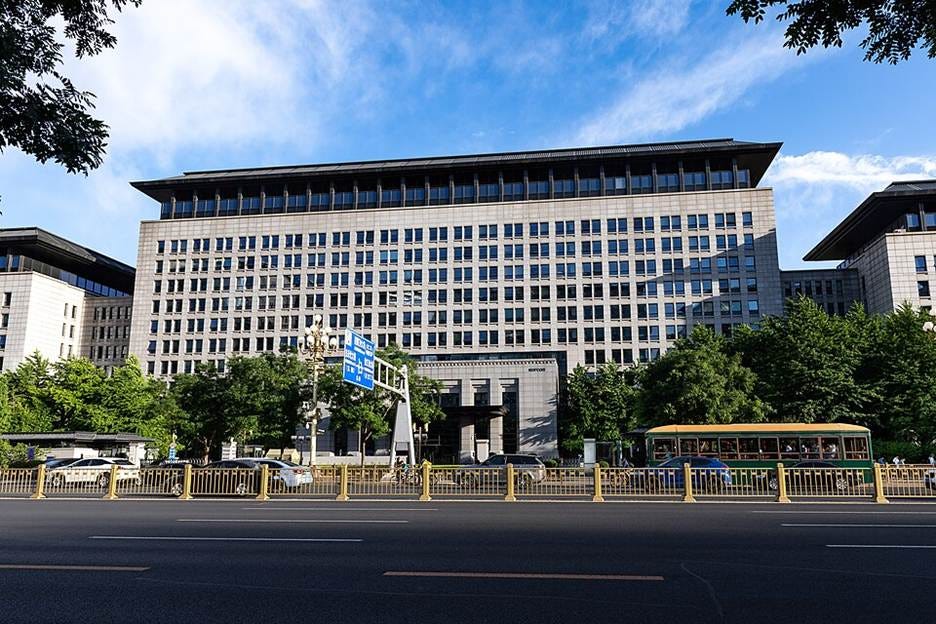
“Ministry of Commerce of China“ by N509FZ is licensed under the Creative Commons Attribution-Share Alike 4.0 International license.

On October 26, China’s Ministry of Commerce (MOFCOM) released the draft Special Provisions on the Protection of Chinese Trade Secrets. The draft rules establish an enforcement mechanism to target foreign entities accused of infringing on Chinese trade secrets that endanger or pose a “real threat” to China’s sovereignty, security or development interests. The proposal reflects Beijing’s efforts to strengthen IP protections as it develops more commercially valuable technology and increasingly treats technological innovation as a strategic national asset. The proposal comes exactly a week after Washington sanctioned five Chinese companies under the Protecting American Intellectual Property Act (PAIPA) over alleged theft of proprietary US technology, against which China vowed to take necessary measures if the US did not reverse the sanctions. The initiative is part of the broader context of US-China competition over the protection and control of strategically important technology.
Under the proposed rule, MOFCOM can impose measures against a foreign entity following an investigation finding that it has allegedly engaged in trade secret infringement that endangers or threatens to endanger China’s national interests. The draft authorizes MOFCOM to restrict or prohibit targeted entities from making new investments in China; personnel from entering China; or engaging in trade involving goods, technology, and services related to China. Authorities could also restrict or revoke work permits and residence status for personnel. Many of the measures mirror those available under China’s Unreliable Entity List mechanism and Anti-Foreign Sanctions Law. The draft allows MOFCOM to modify or lift countermeasures if the targeted entity takes proactive corrective measures, including ceasing infringement or compensating for losses. It also provides exemptions when Chinese entities present a genuine need to conduct business with the accused foreign entity. The draft is open for public comment until November 24.
The proposal follows Washington’s October 19 sanctions against five Chinese entities pursuant to PAIPA over alleged theft of trade secrets related to Google’s AI technology. The sanctions marked PAIPA’s second-ever use and its first use against Chinese entities. MOFCOM rejected the allegations, arguing Chinese AI companies’ progress reflects sustained investment in research and innovation, rather than trade secret theft. US officials have long accused China of acquiring US IP through cyber espionage and coercive technology-transfer practices. As China becomes an innovation powerhouse, it increasingly has a strategic interest in protecting its IP, echoing PAIPA’s treatment of trade secret theft as a national security concern rather than solely a commercial dispute. A notable difference from PAIPA in China’s proposed provisions is that the rules would allow MOFCOM to intervene when a potential infringement could pose an “actual threat” to China’s interests, even before the threatened harm has materialized.
The proposal comes amid broader efforts by Beijing this year to prevent strategically important technology and know-how from leaving China without government oversight. In June, China expanded its trade secrets protections to explicitly cover digital assets, including data and algorithms, and introduced strict confidentiality requirements for cross-border collaboration and remote work. Effective September 15, China can bar citizens from leaving the country if they are determined to have violated export controls or technology-import and export rules that endanger national or technological security. And on October 16, MOFCOM and the Ministry of Science and Technology proposed adding 40 technologies across AI, biomedicine, and photovoltaics to China’s catalogue of technologies prohibited or restricted from export. While the catalogue revision remains open for public comment until November 15, a mandatory pre-export registration requirement took effect immediately, preventing companies from front-loading exports ahead of the rule.
Moreover, Beijing has demonstrated its willingness to intervene when Chinese-developed technology moves overseas. The case of Beijing’s decision to bar the co-founders of Manus, a Chinese AI startup headquartered in Singapore, from leaving China during its review of a US acquisition, followed by its order to block the deal, illustrates the range of measures Beijing is ready to deploy to retain influence over strategically important technology and talent even after a company relocates overseas. Together, the developments underscore Beijing’s broader objective to control technology outflows and retain influence over how its innovations are commercialized overseas.
The rules’ impact on businesses will depend heavily on how MOFCOM interprets and implements key factors, including the geographic reach of the rules and whether they affect trade secrets held by foreign companies operating in China. The prospect of facing restrictions that effectively exclude a foreign entity from the Chinese market may prompt foreign companies to reassess their exposure to China and Chinese-origin technologies. Meanwhile, Chinese companies operating overseas could face greater uncertainty when protecting the outflow of proprietary technology to foreign subsidiaries and partnerships. Although the provisions for corrective action and exemptions offer potential avenues for companies to mitigate restrictions, they underscore the considerable discretion authorities wield over which infringements threaten China’s national interests, which entities face countermeasures, and when commercial relationships may continue, leaving companies vulnerable to geopolitical volatility. As Chinese firms develop more advanced and competitive technologies, Beijing will have greater incentives to strengthen safeguards to retain control over how its IP is used abroad.
US Developments
US Resolves Extreme Networks Case Over Exports to Blocked Russian Defense Manufacturer
On October 27, OFAC announced a $1.53 million settlement with Extreme Networks, Inc. (“Extreme”) to resolve nine apparent violations of the Ukraine-/Russia-Related Sanctions Regulations, 31 C.F.R. part 589, arising from exports to a blocked Russian defense manufacturer between September 2018 and March 2022. OFAC determined that the apparent violations were voluntarily self-disclosed but egregious.
The apparent violations involved exports from the United States to JSC Moskovskiy Mashinostroitelniy Zavod Avangard (“MMZA”), a Russian missile manufacturer majority owned by the sanctioned state-owned defense company JSC Concern Almaz Antey. Although MMZA was not formally designated until 2022, it was considered blocked throughout the relevant period under OFAC’s 50 Percent Rule.
According to OFAC, the compliance failures stemmed from the March 2018 purchase by Extreme’s Russian subsidiary of customer accounts and contracts from a Russian networking company, including a contract naming MMZA as an end user. Although Extreme’s US-led compliance team reviewed the purchase, OFAC said Extreme did not conduct sufficient due diligence to recognize that MMZA was blocked and later approved nine purchase orders that falsely named another Russian company as the end user, despite numerous red flags, including MMZA email addresses or MMZA’s Moscow office address appearing on several of the orders.
The same day, the Department of Justice announced a non-prosecution agreement under which Extreme will pay $975,721.84 in criminal penalties. The DoJ said the company’s disclosure was not timely because it came under imminent threat of disclosure by a news publication, but that the company fully cooperated and remediated the violations, referring to it as a “near-miss” case under its 2026 Corporate Enforcement and Voluntary Self-Disclosure Policy. OFAC credited $487,861 of Extreme’s payment to the Justice Department against its settlement, leaving $1,041,824 owed to OFAC.
OFAC said the case highlights the need for sanctions diligence before acquiring a company or its assets and for oversight of foreign affiliates. OFAC treated the disclosure as voluntary while the Justice Department found it untimely, demonstrating that the timeliness of the disclosures can be viewed differently by the two agencies.
Bipartisan Lawmakers Warn Banks and Ports Against Russian Diesel Imports Despite OFAC License
On October 24, Senators Jeanne Shaheen (D-NH), Ron Wyden (D-OR), Sheldon Whitehouse (D-RI), Chris Coons (D-DE), Elizabeth Warren (D-MA), and Thom Tillis (R-NC) and Representative Gregory Meeks (D-NY) sent letters to US banks, port authorities, and fuel distributors warning against facilitating imports of Russian diesel, including transactions described in General License No. 135, which OFAC issued on October 9. We covered that license in our October 13 update.
The lawmakers argue that the Ending Importation of Russian Oil Act of 2022 generally bars these imports unless the President makes certain certifications to Congress, and that the Trump Administration did not complete the congressional review required by Section 216 of the Countering America’s Adversaries Through Sanctions Act. They warn that companies may face criminal and civil liability under 18 U.S.C. § 545 and 19 U.S.C. § 1595a, and that criminal penalties may reach any company that knowingly buys Russian diesel or facilitates its importation, not just the importer of record. They further demand that recipients preserve related records, confirm those measures in writing by October 28, and state whether they have been involved in or know of any such transaction.
The letters are an unusual step that reflects continuing tension between some members of Congress and the President on Russia sanctions. The Trump Administration authorized these transactions through a general license, yet lawmakers from both parties now warn that companies relying on it may still face criminal penalties. General License No. 135 applies to transactions prohibited by two OFAC regulations and does not mention the 2022 Act.
An October 11 press release also saw seven senators from both parties state the President’s decision “runs directly counter to” the 2022 Act, and Secretary Bessent told Fox News that anyone in Congress who says “an old bill or the current Lindsey Graham bill” prohibits the deal “is wrong.” Members of both parties also criticized the President’s October 16 waivers under the Lindsey O. Graham Sanctioning Russia and Iran Act of 2026, which we covered in our October 19 update.
Treasury Sanctions Alleged Facilitators of DPRK IT Worker Fraud Schemes
On October 28, the Department of the Treasury’s Office of Foreign Assets Control (“OFAC”) sanctioned 10 individuals and one entity for allegedly supporting the Democratic People’s Republic of Korea (“DPRK”) government-run information technology (“IT”) worker schemes that allegedly defraud US companies and generate revenue for North Korea’s weapons and missile programs. OFAC designated four individuals pursuant to Executive Order (“E.O.”) 13687 and the entity and six individuals pursuant to E.O. 13722.
The action builds on Treasury’s March 12, 2026, designation of a separate DPRK IT worker network, which we covered in our March 16 update, and reflects a broader effort by the United States and its partners to disrupt illicit revenue streams supporting the DPRK government.
The sanctions are part of a wider coordinated effort by the United States, Australia, and the European Union to target the DPRK’s use of overseas workers, malicious cyber activities, and actors involved in unlawful DPRK-Russia cooperation. The designations build on reporting by the Multilateral Sanctions Monitoring Team.
Treasury Sanctions Rwandan Ministry of Defense and Financial Institution Over Alleged Support for M23
On October 28, OFAC sanctioned the Rwandan Ministry of Defense for allegedly supporting the Rwanda Defense Force (“RDF”), which OFAC sanctioned on March 2, and Zigama Credit and Savings Society, a Rwanda-based financial institution, for allegedly supporting the RDF, the March 23 Movement (“M23”), and its political wing, the Congo River Alliance.
M23 is a US- and UN-designated armed group that is alleged to have seized territory across eastern Democratic Republic of the Congo with support from Rwanda’s security apparatus, including military personnel, equipment, logistics, and training. Treasury alleged that M23 has perpetrated human rights abuses, taken control of gold and coltan mining areas, and contributed to a humanitarian crisis marked by mass displacement.
The action was taken pursuant to E.O. 13413, as amended, which blocks property of persons contributing to the conflict in the Democratic Republic of the Congo.
The State Department urged partners and the private sector “to examine their supply chains closely,” citing forced labor and illegal taxation in gold and coltan mining areas under M23 control, including Rubaya in North Kivu. It remains unclear whether Treasury will sanction persons engaged in the Rwandan mineral trade in order to target supporters of the RDF and M23.
OFAC Issues Amended Iran-Related General License
On October 29, OFAC issued Iran-related General License (“GL”) FF-1, replacing and superseding GL FF. The new license maintains the existing authorization for transactions ordinarily incident and necessary to wind down dealings involving the International Development Bank for Investment and Finance, a.k.a. Iraq Development Bank, and any entity in which it owns, directly or indirectly, a 50 percent or greater interest, while extending the wind-down period from 12:01 a.m. EDT, October 30, 2026, to 12:01 a.m. EST, December 1, 2026. Any payment to a blocked person must go into a blocked account.
UK Developments
UK Sanctions 15 Sudanese Military Commanders over Alleged Atrocities
The UK Government has designated 15 senior military commanders from Sudan’s Rapid Support Forces (RSF) and Sudanese Armed Forces (SAF). According to a UK Government press release, these individuals have been designated for their suspected involvement in atrocities committed during the conflict, including conflict-related sexual violence and abuses associated with the siege and fall of El Fasher. Those designated include Hussein Abu Jalak, an RSF colonel linked to atrocities during the siege, and Al-Nour Ahmed Adam (Al-Qubba), who allegedly played a prominent role in attacks on the city. These individuals are now subject to asset freezes and travel bans. These designations follow UK-funded investigations by the Centre for Information Resilience documenting the alleged systematic use of starvation, sexual violence and obstruction of humanitarian assistance against civilians by parties to the conflict. The measures build on previous rounds of UK sanctions relating to Sudan and reflect the UK Government’s continued focus on holding suspected perpetrators accountable while addressing the worsening humanitarian crisis.
OFSI Updates Legal Services General Licence and Accompanying FAQs
OFSI has published an updated Legal Services General Licence (INT/2026/11112108), which took effect at 00:01 on October 29, 2026, and expires on April 28, 2027. The updated licence refreshes the applicable legal fees and expenses caps under Parts A and B for the six-month period, providing continued authorisation for qualifying legal services payments involving UK designated persons, subject to the licence’s conditions. In addition to revising the financial thresholds, OFSI has introduced further amendments to the licence, outlined in an accompanying publication notice and newly issued FAQ 206. OFSI has also amended FAQs 64, 71 and 75 to reflect the updated licensing arrangements. Legal practitioners, UK designated persons and other parties seeking to rely on the General Licence should review the revised permissions, fees and expenses limits, and applicable reporting and record-keeping requirements to ensure continued compliance. Where proposed payments fall outside the scope of the General Licence, a separate specific licence may be required.
OFSI Extends Lukoil Bulgaria General Licence Until February 2027
OFSI has amended the Lukoil Bulgaria General Licence (INT/2025/7895596), extending its expiry date from October 29, 2026, to February 26, 2027. The licence was originally introduced to facilitate the continuation of certain business operations involving Lukoil’s Bulgarian subsidiaries, providing businesses with a mechanism to maintain permitted commercial activities while mitigating disruption to Bulgaria’s energy sector. In particular, the licence authorises specified transactions, including payments and the provision of funds or economic resources, involving relevant Lukoil entities that would otherwise be restricted under UK financial sanctions. Persons relying on the licence should review its full terms and conditions, including applicable notification and record-keeping requirements, to ensure that their activities remain within the scope of the authorisation.
OTSI Issues Guidance on Complying with Sanctions on Specified Ships
OTSI has issued guidance on compliance with shipping and trade sanctions relating to specified ships under the UK’s Belarus, DPRK, Iran, and Russia sanctions regimes. The guidance summarises the scope of the shipping and/or trade sanctions targeting specified ships under each relevant regime, as well as the availability of exceptions to relevant prohibitions. The guidance also states that OTSI is responsible for the implementation and civil enforcement of prohibitions on the provision and procurement of services relating to specified ships and can refer cases to HMRC to consider criminal investigation where appropriate.
OTSI Issues Guidance on Complying with Russia Construction Services Sanctions
OTSI has issued guidance on compliance with the professional and business services sanctions targeting construction services under the UK’s Russia sanctions regime. The guidance provides information regarding the types of services falling within the scope of the prohibition when provided to persons connected with Russia, as well as details of available exceptions and licensing grounds. OTSI’s broader professional and business services guidance has also been amended to incorporate additional coverage on the construction services prohibition.
EU Developments
EU Council Renews ISIL (Da’esh) and Al-Qaeda Sanctions Regime
The EU Council renewed the sanctions regime targeting ISIL (Da’esh) and Al-Qaeda for another year, until October 31, 2027. Established under Council Decision (CFSP) 2016/1693, the regime provides for autonomous restrictive measures against ISIL (Da’esh), Al-Qaeda, and individuals, groups, and entities associated with them. At present, 15 individuals and 8 groups are designated under the sanctions regime. The restrictive measures complement those imposed by the UN Security Council and include asset freezes, a prohibition on making funds or economic resources available, and a travel ban within the European Union.
EU Council Amends Sanctions Regime Targeting the Democratic Republic of Congo
The EU Council recently amended the sanctions regime in view of the situation in the Democratic Republic of the Congo (DRC) following updates at the UN level. Changes to Council Decision 2010/788/CFSP and Council Regulation (EC) 1183/2005 reflect earlier UN Security Council decisions. Among the key changes, the amendments to Council Regulation (EC) 1183/2005 introduce a definition of “financing or financial assistance” and a ban on the direct or indirect sale, supply, transfer or export of EU Common Military List goods and technology, as well as specified firearms, their parts and essential components, and ammunition, to any non-governmental entity or person operating in the DRC. Restrictions on related technical assistance, brokering services, other services, and financing or financial assistance have been updated to reflect the new trade ban. The derogations applicable to the trade ban and related service restrictions have also been updated accordingly.
A new designation criterion has also been added to Article 2a(1) of Council Regulation (EC) 1183/2005 for listings in Annex I, covering individuals and entities deliberately and gravely obstructing the implementation of MONUSCO’s mandate, including by denying access, restricting freedom of movement or interfering with patrols and monitoring activities. MONUSCO is the United Nations Organization Stabilization Mission in the DRC. Further changes to the DRC sanctions regime strengthen reporting and information sharing between national competent authorities and the Commission, including exchanges concerning frozen funds, authorizations and suspected sanctions violations.
EU Council Extends Sanctions Regime Targeting Moldova Until October 2027
The EU Council extended the sanctions regime targeting the leadership of the Transnistrian region of the Republic of Moldova for another year, until October 31, 2027. Under Council Decision 2010/573/CFSP, individuals listed for designing and implementing the campaign of intimidation and closure against Latin-script Moldovan schools in Transnistria are subject to an EU travel ban. Currently, no individuals are designated under the sanctions regime.
Asia-Pacific Developments
China Condemns Additional US UFLPA Listings and Signals Countermeasures
On October 29, 2026, China’s Ministry of Commerce criticized the US Department of Homeland Security’s October 28 addition of three Chinese entities to the Uyghur Forced Labor Prevention Act (UFLPA) Entity List. The ministry rejected the forced-labor allegations, characterized the measures as unilateral protectionism, and said the latest listings included Chinese biotechnology enterprises. It also stated that “the listings run counter to the consensus reached by the two countries’ leaders, seriously undermine the stability of China-US economic and trade relations, and violate humanitarian principles. The US should immediately stop political manipulation and smear campaigns, and cease its unjustified suppression of Chinese companies. China will take necessary measures to resolutely safeguard its interests.”
Report Exposes Alleged North Korean Forced-Labor Network Evading UN Sanctions in Russia
On October 29, 2026, Global Rights Compliance announced findings from a nine-month investigation into a labor-brokering network allegedly supplying North Korean workers to Russian businesses. According to the report, Moscow businessman Vladimir Sokolov’s KNDR.su platform recruits workers through fictitious college enrolment and student visas to circumvent UN sanctions restricting North Korean overseas labor. Workers reportedly face document confiscation, restricted movement and working days of up to 18 hours, while surrendering 90% of their earnings to the North Korean government. The report estimates that overseas forced labor generates USD 450 million–USD 800 million for Pyongyang and links those revenues to its ballistic missile program. It also identifies connections to Russia’s war economy, including documented visits by North Korean officials to US-sanctioned metalworking plant Agrisovgaz, raising concerns about potential forced labor in defense supply chains.
South Korea, Japan, and US Reaffirm North Korea Sanctions Enforcement
On October 30, 2026, the top diplomats from South Korea, Japan, and the US reportedly called for full implementation of UN Security Council resolutions targeting North Korea during trilateral talks on the sidelines of a G20 meeting in Atlanta. The three ministers emphasized enforcing “sanctions prohibiting activities that generate revenue for Pyongyang’s nuclear and ballistic missile programs” and commended the Multilateral Sanctions Monitoring Team for exposing sanctions violations and evasion. They reaffirmed their commitment to North Korea’s “complete denuclearization” and “agreed to maintain a robust deterrence posture” through close coordination while pursuing peace and stability through dialogue and diplomacy. South Korean Foreign Minister Cho Hyun also pledged to support renewed dialogue between Washington and Pyongyang.

Listen to the news:
Europe
Poland’s Constitutional Tribunal suspended its president, Bogdan Święczkowski, for refusing to swear in eight new members appointed by the Sejm, Poland’s lower legislative chamber. The current government, led by the center-right Civic Coalition (KO), campaigned on restoring the independence of the Constitutional Tribunal. Most of the judges, including Święczkowski, were appointed by the previous government led by the populist-right Law and Justice party (PiS). Święczkowski’s refusal to swear-in new judges has prevented the KO’s reform agenda.
Święczkowski and allied judges may not view the suspension as legitimate because it occurred when he was not present for the session. Supporters of PiS view the move as a “coup d’etat” after the government’s deployment of riot police around the Tribunal building on Friday evening. The European Commission and the European Court of Human Rights have sided with the KO-led government, emphasizing that the eight unsworn judges were lawfully appointed and an independent judiciary is an EU obligation. Polish President Karol Nawrocki, a member of PiS, cut short a state visit to Senegal due to the crisis and invited parties for crisis talks on Saturday, but KO did not send a delegation, arguing that the crisis is caused by PiS’ attempts to stack the courts in their favor.
The episode over the Constitutional Tribunal could increase Poland’s polarization ahead of elections next year. Polarization over the Court undermines the legitimacy of its decision-making and confidence in the rule of law, risking Poland’s eligibility for EU funds.
Read More: AP, France24, Euronews, The New York Times [paywall]
Middle East
Iranian and Qatari mediators held three days of talks on ending the war over the weekend. The details of Iran’s proposal for a ceasefire have not been fully revealed, but seem to involve the release of $6 billion of Iranian assets and a halt to immediate hostilities in exchange for the reopening of the Strait of Hormuz within two days and the restart of negotiations on Iran’s nuclear program. Oil flows in the Strait of Hormuz have touched prewar levels in recent weeks, although the cost to US forces is high and persistent Iranian strikes (including the reported use of limpet mines) have kept tensions and prices high.
The talks come amidst an effort to avert escalation after the US midterm elections tomorrow. President Trump has repeatedly warned of a “short, intense” renewal of hostilities following the midterm elections, and he was briefed on options by Adm. Brad Cooper, commander of the US’ Fifth Fleet, last week (Cooper was briefing Trump in person for the first time since July). The lengthy stalemate, degrading Iranian leverage over the Strait, and persistently high oil prices have renewed US interest in a military approach – although it is difficult to see how renewed escalation will change the fundamental calculus that has left the war unsolved for over nine months.
Read More: Reuters [paywall], The Guardian, CNBC, Wall Street Journal [paywall], Wall Street Journal [paywall]
Asia-Pacific
South Korea hosted German Chancellor Friedrich Merz on Friday to end his five-day visit to Asia. Merz spoke from the demilitarized zone, drawing parallels between the division of Germany and that of the Korean peninsula. North Korea fired 10 short-range missiles shortly after Merz’s arrival there. In his statement, Merz expressed his wish for reunification of Korea, a message which was received with skepticism by many young Koreans who see reunification as neither realistic nor desirable.
Merz’s visit to South Korea was the last stop in a tour of Asia that included Japan and Singapore. He travelled with a large business delegation that included several defense companies, positioning Germany as a security partner for countries in Asia concerned about their own security capabilities. More broadly, Merz criticized what he described as a world order defined by eroding international norms and sought to promote a political alliance of middle powers in his speeches in Seoul and Tokyo. However, the recent proposal from France and Germany on Made in Europe rules for the automotive industry was a major point of tension due to Asian countries’ concerns about being at a competitive disadvantage.
Read More: Politico, DW, Reuters [paywall]
Americas
Maria Corina Machado renewed calls for 2027 elections in Venezuela, in her first public remarks since returning from exile. Last Thursday, she spoke in Caracas on Venezuela’s political transition, citing US Secretary of State Marco Rubio’s support for a transition process leading to democratic elections. Machado also highlighted priorities including the release of remaining political prisoners and called the path toward democracy irreversible. She has also openly criticized Washington’s oil deal with NABEP. Rubio acknowledged those comments but defended the deal.
The first shipment of Venezuelan crude under the US-NABEP deal arrived in Texas last week. NABEP said in a statement that it had provided 1 million barrels to the US, which the Trump administration said came at no cost. The oil will be sold by the US government to refineries. NABEP also reported significant increases in its output. It controls 17 oil fields with an estimated 65 billion barrels of oil reserves. The future of the agreement with the US, however, is unclear in a scenario where Venezuela holds elections, in which Maria Corina Machado will likely run.
Read More: Reuters [paywall], DW, Wall Street Journal [paywall]
Geoeconomics
Canada and the EU launched an “Alliance for the Future” to deepen economic integration as Ottawa seeks to reduce its dependence on the US. At their October 30 summit in Montreal, Prime Minister Mark Carney said he hoped to conclude negotiations by June 2027 on a partnership that could make Canada the EU’s first “associate member.” That status has no established legal meaning, and opposition from Germany and other member states kept the term out of the joint declaration. The summit nevertheless produced concrete agreements: the two sides concluded negotiations on digital trade rules covering cross-border data flows, electronic contracts and invoicing, although formal approval remains outstanding. Canada also completed negotiations with the European Investment Bank on an agreement intended to facilitate European investment in Canadian resources, particularly critical minerals.
The objective is to reduce regulatory barriers and connect Canadian resources with European investment and manufacturing. Canada and the EU’s free trade agreement, CETA, already removes most tariffs, so deeper cooperation could help businesses through simpler compliance requirements, financing and access to industrial supply chains. Proposed mutual recognition of digital identities, AI assessments and cybersecurity requirements could reduce duplicated compliance work, while closer mineral cooperation could connect Canadian production with European processing capacity. However, ten EU countries have still not ratified CETA, leaving some investment protections unavailable nearly a decade after its provisional implementation. Canada’s existing regulatory ties to the US also complicate alignment with European rules.
Read More: Reuters [paywall], Government of Canada, European Commission, Peterson Institute for International Economics
Energy
Japan is poised to overtake China as the world’s largest LNG importer for 2026. Forecasts now show Japanese demand narrowly outstripping China’s demand as both structural and temporary factors push China’s demand downwards. China’s options for cheaper alternatives, such as pipeline gas and renewable energy sources, have grown in recent years, contributing to a general downturn in LNG demand. For this year, China has already mostly filled its storage capacity for the winter, and the winter is also expected to be mild this year, further pushing down demand. The last time Japan bought more LNG than China was in 2022.
Japan has been on an investment spree in the global gas business. Japanese companies have undertaken a more than $21 billion spree of energy deals following the disruption to global energy markets from Russia’s invasion of Ukraine and the war in Iran. This has largely focused on investment in American energy capacity around the Gulf Coast, which has allowed Japan to overtake the UK, Canada and Australia as the largest source of foreign investment into American gas production. Beyond the US Japanese LNG buyers have also directed their attention towards Indonesia and Australia.
Read More: Reuters [paywall], Oilprice.com, Financial Times [paywall]
Transnational Crime & Corruption
The Financial Action Task Force (FATF) updated its “gray list” of countries deemed to have insufficient procedures for anti-money laundering (AML), countering the financing of terrorism (CFT) and countering proliferation financing (CPF). Bulgaria, Côte d’Ivoire, the Democratic Republic of the Congo and Monaco were all removed from the gray list after completing their respective reform action plans. While no new countries were added to the list, the FATF “expresses significant concern” over Vietnam’s AML/CFT/CPF programs. The FATF also adopted new evaluations of Mexico and the US, to be published later this month.
Read More: FATF; Reuters [paywall]
Defense
The UK is going to begin conditioning major defense contracts on investment commitments. Starting in April 2027, the UK will adopt an offsets policy requiring foreign defense firms that receive contracts of £50 million ($67 million) or more to invest in local production suppliers and to transfer technologies. As part of the new policy the UK Ministry of Defense will create a new “Offset Authority” to “agree, value and monitor delivery” of contracts with foreign defense companies.
The UK is working to increase defense spending and to ensure that its own economy profits. The offsets policy announcement comes as London has recently committed to push defense spending to 3% of GDP by 2030, putting the UK in position to meet its commitments to NATO. The offsets policy will help London retain the benefits of its defense spending. Similarly, other countries like Germany and the US are also increasingly linking their defense spending to their economic and industrial policy goals.
Read More: Defense Post, Reuters [paywall]


Contact Us
Karl Hopkins
Partner
+1 202 429 6499
khopkins@steptoe.com
Melissa B. Mahle
Senior Advisor
+1 202 261 0577
mmahle@steptoe.com
Anni Coonan
Senior Intelligence Analyst
+1 212 506 3979
acoonan@steptoe.com
Samuel Bloebaum
Senior Due Diligence Analyst
+1 602 410 6240
sbloebaum@steptoe.com
Zayna Dembinski
Analyst
+1 202 778 3567
zdembinski@steptoe.com
Thomas Goldstein
Analyst
+1 202 862 6735
tgoldstein@steptoe.com
Ian Cameron
Analyst
+1 202 327 6908
icameron@steptoe.com
Elton Smole
Analyst
+1 202 261 0556
esmole@steptoe.com
Carter Spahn
Intelligence Fellow
+1 202 261 7555
cspahn@steptoe.com
Chris Dantes
Intelligence Fellow
+1 202 327 6904
cdantes@steptoe.com
Legal disclaimer: This Substack is for educational and informational purposes only and does not constitute the rendering of legal counseling or other professional services. Reading, subscribing to, or communicating through this Substack does not create an attorney-client relationship. Do not send confidential information through this platform. Consult qualified legal counsel regarding your specific circumstances.