

The Sanctions Update, compiled by attorneys from Steptoe’s award-winning International Regulatory Compliance team and the Stepwise: Risk Outlook editorial team, publishes every Monday (subscribe here). Guided by the knowledge of Steptoe’s industry-leading International Trade and Regulatory Compliance team, the Sanctions Update compiles and contextualizes weekly developments in international regulatory enforcement and compliance, as well as offers insights on geopolitical context, business impacts, and forthcoming risks, and non-sanctions news updates.
For more detailed analysis on related issues, see Steptoe’s International Compliance Blog. For information on industry-specific monitoring or bespoke services, please contact the team here.
By Evan T. Abrams, Meredith Rathbone, Karl Hopkins, Guy Soussan, Alexandra Melia, Wendy Wysong, Ali Burney, Warren Geary, Elliot Letts, Algirdas Semeta, Melissa B. Mahle, Anni Coonan, Thomas Goldstein, Zayna Dembinski, Samuel Bloebaum, Elton Smole, Ian Cameron, Wilson Zhao, Zoey Hong, Kiki Dong, Kuangqi Zhong, Andy Xu Sofia, Jake Fitzpatrick, Carter Spahn, Chris Dantes

Listen to the sanctions update:
The Lede
New US Sanctions Disrupt Shadow Fleet Flagging Registries
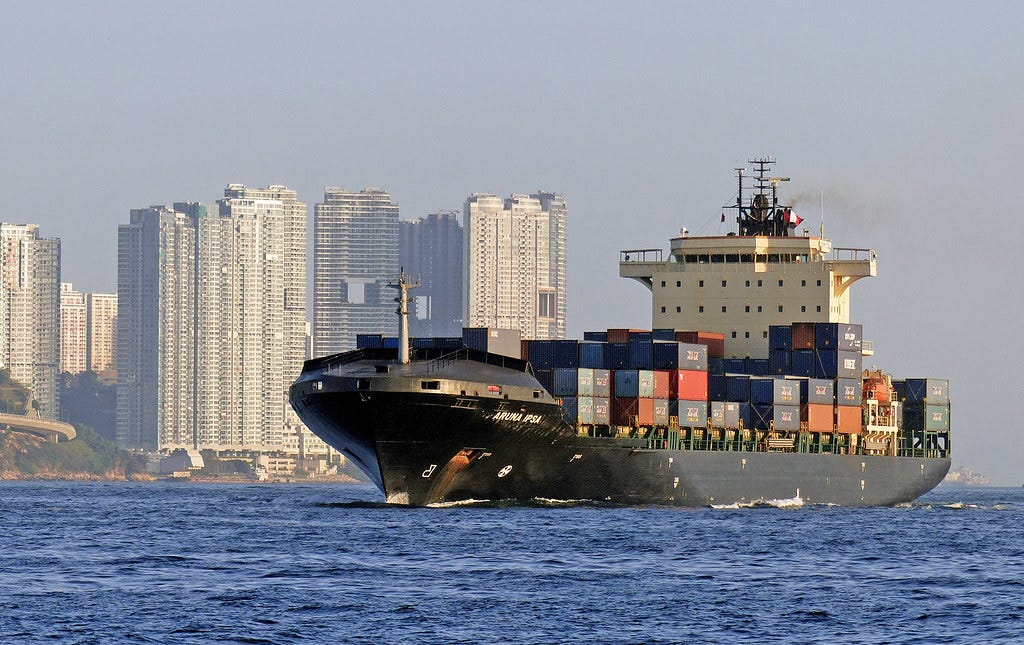
“ARUNA IPSA (Container Ship)“ by Bernard Spragg is marked with CC0 1.0.
“Shadow fleet” sanctions evasion networks centering on Russian and Iranian energy exports have created demand for a growing industry of facilitating maritime service providers. New US sanctions seek to disrupt these shadow fleet enablers. On November 4, the US Department of the Treasury’s Office of Foreign Assets Control (OFAC) designated an alleged network of fraudulent maritime flagging and registration companies that facilitated Iranian oil exports. According to OFAC and the US Department of State, the married Indian nationals Suniel Kumar Sharma and Jaspreet Preeti Shahid have operated a network of fraudulent maritime flag registries and other ship certification providers for over a decade. The move could signal an increasing willingness by the US to go beyond designating individual shadow fleet ships and their chartering services and instead target a wider range of facilitators. Future targets could include crew staffing agencies, insurers, and other maritime logistics companies that knowingly provide support services to sanctioned vessels.
International maritime law requires all merchant ships to be actively registered in a country’s ship registry and to fly that country’s flag. A ship’s “flag state” governs certain regulatory standards that apply to the ship, including labor and tax laws. The country where a ship is flagged often has no relation to where the ship was constructed or the nationalities of its owners, management, or charterer. Many countries subcontract the management of their flag registries to foreign private companies. For instance, Liberia, which boasts the most popular maritime flag in the world and is highly rated by international maritime compliance authorities, has subcontracted its flag registry to a private company based in northern Virginia since the late 1990s.
With mainstream flagging jurisdictions reluctant to register vessels engaged in sanctions evasion, shadow fleet vessels have increasingly sailed under flags with less oversight capacity or even sailed under falsely registered flags. Sharma and Shahid’s OFAC-designated businesses were allegedly emblematic of this practice. Since at least 2014, they have purported to provide flagging services on behalf of jurisdictions from around the world, including Guyana, Aruba, and landlocked Eswatini, despite frequently lacking the legal authorization to do so. Sharma publicly claimed in 2025 that his ventures had set up flag registries in Dominica, Guyana, Samoa, Eswatini and Laos, with later investigations finding that he also ran a purported registry for Nicaragua.
Sharma and Shahid appear to have pursued a strategy of legal ambiguity, a parallel to many of the shadow fleet vessels they serviced. Many of the flag registries they created reportedly grew out of informal arrangements with local government officials, with those arrangements later being cancelled by the countries’ governments. In the case of Micronesia, in 2020, local prosecutors filed criminal charges against Sharma and several Micronesian government officials for setting up an unauthorized registry that sold flagging services to over 100 vessels between 2015 and 2017. Micronesian prosecutors accused the defendants of engaging in bribery and money laundering to secure informal support for the registry. Despite repeated cancellations and allegations of fraud from the governments they engaged with, Sharma and Shahid continued providing flagging services years after any existing legal arrangements had been cancelled. Eswatini claimed that Sharma’s network began issuing maritime flags without any formal or informal arrangements with the country.
Media reports indicate that, in addition to facilitating sanctions evasion, the alleged fraudulent maritime network certified ships that were reportedly unseaworthy or engaged in other criminal activity. Ships flagged by the network included a falsely-Samoan-flagged vessel that ran aground in India in June 2020, a falsely-Guyanese-flagged vessel that was caught smuggling $5.2 million in ammunition into Senegal in December 2021, and a falsely-Guyanese-flagged vessel that engaged in an unauthorized ship-to-ship transfer of crude oil near Malaysia. That last vessel had been sanctioned by the US in 2020 for being an asset of the National Iranian Oil Company. The Center for Advanced Defense Studies additionally linked Sharma and Shahid to a purported flag registry for Sint Maarten, a Caribbean “constituent country” of the Netherlands. The registry’s 56 ships included 22 under US sanctions and three that allegedly facilitated shipping for a Houthi operative.
Sharma and Shahid’s ability to create new flag and maritime certification registries despite years of media reports and intergovernmental regulatory warnings about their illicit activities exposes significant compliance gaps that could continue to be exploited by bad actors. OFAC issued an alert alongside the sanctions against Sharma and Shahid’s network warning commercial actors to avoid doing business with ships using suspicious flag registries or with a history of “flag hopping” from registry to registry. The US will likely continue to work with its partners and multilateral maritime regulators like the UN’s International Maritime Organization to issue public alerts about fraudulent flagging services. They will also likely apply diplomatic pressure to convince countries to dissolve flag registries utilized by sanctions-evading vessels.
US Developments
FinCEN Cuts Off MEXC Global from the US Financial System
On November 6, the Department of the Treasury’s Financial Crimes Enforcement Network (“FinCEN”) issued an order prohibiting US financial institutions from engaging in any transmittal of funds from or to MEXC Global, a Seychelles-based cryptocurrency exchange. FinCEN determined that MEXC Global is a financial institution of “primary money laundering concern” in connection with Russian illicit finance. The order takes effect 30 days after its publication in the Federal Register, and willful violations may result in civil or criminal penalties.
According to FinCEN’s order, MEXC Global facilitated at least $16.7 billion in transactions linked to sanctions evasion, cybercrime, and other illicit activity between May 2021 and May 2026. FinCEN alleged that the exchange processed transactions involving sanctioned Russian entities, including the exchange Garantex and its successor Grinex.
FinCEN further alleged that MEXC Global processed more than $1 billion in direct transactions with Iranian cryptocurrency exchanges, including exchanges subject to US sanctions, and facilitated approximately $22 million in transactions linked to the Central Bank of Iran, the Islamic Revolutionary Guard Corps (“IRGC”), and its Qods Force.
The action was taken under section 9714(a) of the Combating Russian Money Laundering Act, as amended.
The same day, FinCEN and the Federal Reserve Board announced the withdrawal of a 2020 proposed rule that would have amended the Recordkeeping and Travel Rule for convertible virtual currencies.
US Sanctions Cuban Military and Revenue Networks and Expands Cuba Sector Sanctions
On November 5, the Department of State designated eight entities and two individuals, and identified five vessels as blocked property. The action targets actors alleged to be involved in Cuba’s oil transportation networks, state-owned enterprises, government elites, and Chinese companies alleged to have supplied equipment to the Cuban military.
This action was taken pursuant to Executive Order (“E.O.”) 14404, which authorizes sanctions on foreign persons who meet specified criteria related to repression in Cuba and other threats to US national security and foreign policy.
Separately, the Department of the Treasury’s Office of Foreign Assets Control (“OFAC”) issued a determination applying section 2(a)(i)(A) of E.O. 14404 to the electronics, manufacturing, marine, and technology sectors of the Cuban economy, enabling the U.S. government to impose sanctions on any foreign person determined to operate or have operated in those sectors. Prior to this expansion, E.O. 14404 already reached the energy, defense and related materiel, metals and mining, financial services, and security sectors. The determination took effect the same day. The State Department said humanitarian trade, including food, medicine, and medical devices, remains authorized.
OFAC Targets India-based Network Linked to Iran Shadow Fleet and Türkiye-based Ground Handling Company
On November 4, OFAC sanctioned four individuals and nine entities allegedly linked to an India-based network supporting Iran’s shadow fleet. According to Treasury, the network, led by Suniel Kumar Sharma and his spouse, Jaspreet Preeti Shahid, provided false flags and certifications to sanctioned vessels involved in transporting Iranian petroleum, including vessels operating on behalf of Iran’s military and its proxies. Treasury noted that falsely flagged vessels carry no valid protection and indemnity insurance.
Concurrently, OFAC issued an alert warning against the Iranian shadow fleet’s use of false flags. OFAC said that a falsely claimed flag, one claimed without supporting registration, is a strong indicator that a vessel is sanctioned or engaged in sanctionable activity. OFAC encourages insurers, trade-finance providers, and other maritime service providers to conduct enhanced due diligence on vessels with indicia of using a falsely claimed flag.
In the same action, OFAC also sanctioned Türkiye-based Fugo Ground Services Inc. for its alleged activity in Iran’s aviation sector. According to Treasury, the company has direct service agreements with and provides services to several US-sanctioned carriers. The US previously announced aviation sanctions on Iran on September 8.
This action was taken pursuant to E.O. 13902, which targets key sectors of the Iranian economy.
OFAC’s November 4 notice also added the notation “Secondary sanctions risk: See Section 2 of E.O. 13902” to more than 1,000 existing entries on the Specially Designated Nationals and Blocked Persons List, nearly all of them persons designated under E.O. 13902, and to the Sectoral Sanctions Identifications List entry for VTB Bank. Section 2 authorizes Treasury to bar or restrict the US correspondent and payable-through accounts of a foreign financial institution that knowingly facilitates a significant transaction for a person blocked under the order or involving the sale, supply, or transfer to or from Iran of significant goods or services used in a covered sector. The change adds no designations, but compliance systems that screen against OFAC’s list may now display the warning when a transaction matches one of the entries on the list.
Treasury Targets Canadian Money Services Businesses Allegedly Supporting Iranian Sanctions Evasion
On November 6, OFAC designated eight Canada-based money services businesses for allegedly operating in the digital asset sector of the Iranian economy. According to OFAC, the businesses exchange Iranian rials and other currencies for digital assets, and many of them have dealt with sanctioned Iranian cryptocurrency exchanges and digital asset addresses linked to the IRGC.
Treasury coordinated the action with FinCEN, Canada’s financial intelligence unit, and the Drug Enforcement Administration. According to OFAC, several of the designated businesses facilitated transactions for Ryan Wedding, a sanctioned Canadian and former Olympic snowboarder who allegedly trafficked narcotics and used money services businesses to move drug proceeds abroad as digital assets.
This action was taken pursuant to E.O. 13902.
Russian Diesel Shipments to the US Stall Despite OFAC License
As of November 5, two of the three tankers that had declared US East Coast destinations for Russian diesel under Russia-related General License (“GL”) 135, which we covered in our October 13 update, had changed course, and the third had changed its destination from New York to “for orders,” according to ship-tracking data cited by the Associated Press (“AP”). Treasury told the AP that the authorization was consistent with previous actions and “in compliance with all applicable laws.”
On November 2, New Jersey Governor Mikie Sherrill warned the state’s port and terminal operators against accepting Russian diesel, arguing that the Ending Importation of Russian Oil Act does not give the President or Treasury “blanket authority to waive these sanctions through licenses” and that anyone who takes part in an illegal importation faces a penalty equal to the value of the cargo. Her warning follows the October 24 congressional warnings to banks and ports, which we covered in our November 2 update. No court has ruled on the dispute.
BIS Extends Suspension of Affiliates Rule for Two Months
On November 5, the Department of Commerce’s Bureau of Industry and Security (“BIS”) released a final rule extending the suspension of its Affiliates Rule through January 10, 2027. The previous suspension of the rule was set to last through November 9.
BIS originally promulgated the Affiliates Rule as an interim final rule on September 30, 2025, imposing new restrictions on foreign entities that are at least 50 percent owned by one or more parties on the BIS Entity List or the Military End-User List, or by certain persons blocked by OFAC. We discussed the rule in a previous blog post.
Under the Busan Agreement, a trade truce reached by the US and China in October 2025, China suspended its export controls on rare earths, and BIS later stayed the Affiliates Rule through November 9, 2026. On September 23, Treasury Secretary Scott Bessent announced the US and China agreed to extend the Busan Agreement by two months, which we covered in our September 28 update. Secretary Bessent’s announcement, however, did not explicitly mention the Affiliates Rule, leaving exporters uncertain as to whether its suspension would continue. A US official reportedly said the extension would cover the rule, but BIS did not formally act until November 5, and some practitioners advised clients to prepare for the rule to return on November 10.
The final rule extends the stay but does not withdraw the Affiliates Rule. On November 6, Secretary Bessent and US Trade Representative Jamieson Greer held a call with Chinese Vice Premier He Lifeng, in which Secretary Bessent pressed China to implement its Busan commitments “fully and immediately.”
OFAC Sanctions Scam Networks and Their Support Infrastructure
On November 5, OFAC sanctioned five individuals and 41 entities allegedly linked to cyber-enabled fraud networks, most of them said to be supporting the previously sanctioned Prince Group Transnational Crime Organization. OFAC also designated Malaysian national Chui Kok Wa, who allegedly managed a scam network in Madagascar that targeted US citizens.
This action was taken pursuant to E.O. 13581, as amended, which targets transnational criminal organizations, and, for Chui, E.O. 13694, as amended, which targets significant malicious cyber-enabled activities.
OFAC Extends PdVSA Bond Authorization Delay
On November 4, OFAC issued Venezuela-related GL 5AA, which authorizes, on or after December 18, 2026, transactions related to, financing for, and other dealings in the Petróleos de Venezuela, S.A. 2020 8.5 percent bond that would otherwise be prohibited by subsection 1(a)(iii) of E.O. 13835, as amended. GL 5AA replaces and supersedes GL 5Z, whose authorization was scheduled to take effect on November 5. On November 2, Secretary Bessent met Venezuelan Foreign Minister Oliver Blanco and, according to Treasury’s readout, stressed support for “reconnecting the Venezuelan financial sector.”
Treasury Proposes Expanded Outbound Investment Rules
On October 22, Treasury proposed rules to implement Subtitle C of the Comprehensive Outbound Investment National Security Act, which codifies and expands the Outbound Investment Security Program. The proposal would prohibit covered investments involving covered foreign persons that develop any artificial intelligence system and would add biotechnology to the program. Comments are due December 7, 2026. We discuss the proposal in a recent blog post.
UK Developments
House of Lords Approves Global Human Rights and International Humanitarian Law Sanctions Regulations Despite Formal Criticism
The House of Lords has approved the Global Human Rights and International Humanitarian Law Sanctions Regulations 2026 (the “Regulations”), which came into force on October 15, 2026. The Regulations were introduced under the made affirmative procedure, allowing them to take immediate effect subject to parliamentary approval within 28 days to remain in force. Although the House approved the Regulations, it also passed a motion to regret by 94 votes to 90, formally expressing concerns about their implementation and potential implications. The motion calls on the Government to publish clear criteria governing designations under the Regulations, confirm that the measures will not adversely affect lawful trade with Israel, and provide both an impact assessment and annual reports to Parliament assessing their operation. Importantly, the motion is non-binding and does not affect the legal validity or continued operation of the Regulations. The outcome therefore preserves the new sanctions framework while highlighting parliamentary scrutiny of its scope, transparency and potential commercial implications. Businesses with exposure to activities potentially affected by the Regulations should monitor further UK Government guidance, particularly concerning designation criteria and the treatment of lawful trade with Israel.
EU Developments
European Commission announces EU Sanctions Office and launches EU Crypto Sanctions Task Force
The European Commission announced that it will establish a dedicated EU Sanctions Office within the Commission and launched the EU Crypto Sanctions Task Force, signaling a stronger focus on coordinating sanctions implementation and addressing circumvention, particularly in relation to Russia.
Commissioner for Financial Services and the Savings and Investments Union Maria Luís Albuquerque announced the two initiatives following the tenth meeting of the High-Level Group on Union Restrictive Measures on November 5. According to Albuquerque, the EU Sanctions Office is intended to strengthen coordination, provide faster guidance to Member States, and improve data sharing and analysis. It also aims to support closer cooperation with G7 and like-minded partners and improve sanctions implementation within and outside the EU.
In parallel, the EU Crypto Sanctions Task Force will focus on detecting and tackling the circumvention of financial sanctions through crypto-assets. It will bring together national and EU experts to develop measures to address circumvention loopholes. According to reports, the task force is initially envisaged to operate for 12 months and will draw on expertise from third country partners, including Ukraine and the United Kingdom.
European Commission Removes Three Individuals from Sanctions List Targeting ISIL (Da’esh) and Al-Qaeda
On November 3, the European Commission adopted an update to the EU’s sanctions regime targeting ISIL (Da’esh) and Al-Qaeda. The Commission acted under powers delegated to it by the EU Council to update the sanctions list in line with decisions of the UN Security Council Sanctions Committee. The amendment to Council Regulation (EC) No 881/2002 removes three individuals from the sanctions list: Kuwaiti national Shafi Sultan Mohammed Sultan Al-Ajmi, Syrian and Palestinian national Bassam Ahmad Al-Hasri, and Jordanian national Iyad Nazmi Salih Khalil. In addition, the Commission updated the identifying information of three designated individuals.
General Court Upholds Sanctions against the Russian Maritime Register of Shipping and Annuls Withdrawal of its Recognition as a Ship Inspection and Survey Organization
The General Court of the European Union delivered its judgment in Case T‑535/24 concerning an action brought by the Russian Maritime Register of Shipping seeking annulment of Council acts that maintained EU Russia sectoral sanctions against it in 2024 and 2025.
The Court upheld the investment and transaction bans against the Russian State-owned ship inspection and survey organization, corresponding to Article 5(4)(a) and Article 5aa(1)(a) of Council Regulation (EU) 833/2014. It held that the Russian Maritime Register of Shipping fell within the scope of those sectoral measures in its capacity as an entity wholly owned by the Russian State. The Council was therefore not required to establish that it provided material or financial support for the Russian Federation’s actions destabilizing the situation in Ukraine, or to establish, by means of a sufficiently specific, precise and consistent body of evidence, that the applicant was linked to the situation being combated in Ukraine.
At the same time, the Court annulled the provision withdrawing the organization’s EU recognition under Regulation (EC) 391/2009, as maintained by the contested Council decisions. That recognition enabled EU Member States to authorize the Russian Maritime Register of Shipping to conduct inspection, survey, and certification activities in relation to ships flying their flags. Although the Council was competent to withdraw recognition as a sanctions measure, the Court found that suspending it would have been a less onerous means of pursuing the same objective, while still preventing the organization from performing such tasks.
Asia-Pacific Developments
Australia Imposes Human Rights Sanctions on Sudanese Military Leaders
On November 5, 2026, Australia imposed targeted financial sanctions on four Sudanese individuals and one entity, along with travel bans on the four individuals, in response to serious human rights violations and abuses during Sudan’s conflict. Australia also announced that a class-based humanitarian permit had been issued to facilitate certain humanitarian activities otherwise restricted under its autonomous sanctions framework.
Taiwan Lawmakers Consider Tighter Semiconductor Export Controls to China
On November 2, 2026, Taiwan’s legislature held a public hearing on proposals to tighten controls on exports of integrated circuits and key wafer fabrication materials, parts and manufacturing equipment to China. The proposed amendments would introduce penalties of up to 10 years’ imprisonment and NT$10 million in fines, require confiscation of criminal proceeds, and address circumvention through third countries. The Ministry of Economic Affairs expressed support for the amendments, citing stronger coordination with the United States on export controls.

Listen to the news:
Europe
The US will mediate talks between Ukraine and Russia tomorrow and Wednesday in Abu Dhabi, potentially giving shape to a political settlement. Russia is reportedly sending presidential aide Vladimir Medinsky, Deputy Foreign Ministers Sergei Ryabkov and Mikhail Galuzin, and senior general staff officials as part of its delegation. The higher-level team potentially signals increased interest from Moscow to engage in the US-led diplomatic track, but not necessarily that it will change its hardline stance on establishing control over the Donbas. The talks also follow a Thursday meeting between President Trump and Kirill Dmitriev, the head of Russia’s National Wealth Fund and Steve Witkoff’s intermediary. After that meeting, presidential envoy Jared Kushner alluded to a peace outline that includes “permanent security consultations, reliable crisis communications, greater military transparency, reciprocal measures to reduce escalation risks, and an enduring framework for long-term European security and stability.”
European capitals have reacted with caution, emphasizing that discussions over the continent’s security architecture must include them. Kushner emphasized that NATO and the right for countries to join it will not be touched, but the ambiguity of “consultations,” “reciprocal measures,” and “enduring framework” has left European capitals uneasy. As it stands, the Europeans remain reactive to the talks; countries like Italy have called for EU members to appoint a single representative to speak with one voice, while Finland and Norway have facilitated meetings in the US-led track without speaking on behalf of Europe.
Read More: Politico, AP, Financial Times [paywall]
Middle East
Hopes for mediation on the US-Iran war rose over the weekend, despite mixed messages on negotiation progress. In a CNN interview over the weekend, President Trump said a renewed attack on Iran in the near term was “highly unlikely,” and he is set to meet today with the prime minister of Qatar, which has led the recent round of negotiations. The optimism, including an uptick for Gulf bourses and a slight slide in oil prices, comes even as messaging around the particulars of a deal was mixed: Secretary Rubio called some of Iran’s demands “ridiculous,” while Tehran defended its latest proposal (which includes a return to peace and nuclear talks in two days after a full ceasefire, the lifting of the blockade and US sanctions, and the unfreezing of Iranian assets abroad).
The optimism could stem from rising pressure from Gulf allies and some within the White House, rather than actual progress on a deal. Per reporting last week, Vice President Vance is leading a camp pressuring President Trump to make a deal. On the other hand, Defense Secretary Hegseth and Central Command chief Adm. Brad Cooper have advocated a return to combat, arguing that only forcing Iran to surrender its nuclear program will justify the war and secure President Trump’s legacy. Meanwhile, Gulf allies are pushing for negotiation, while Israeli Prime Minister Netanyahu (in power in a caretaker capacity until a new government is seated) has called for renewed strikes.
Read More: CNN, Axios, Reuters [paywall], Wall Street Journal [paywall]
Asia-Pacific
Saudi Arabia and Pakistan launched a new private equity fund on Monday as part of a broader effort to deepen economic ties between the two countries. The fund, established under the Saudi-Pakistan Joint Business Council, will have an initial size in the hundreds of millions of dollars, with the potential to expand as new investment opportunities emerge. According to the council, approximately 75% of the fund’s capital will be invested in Pakistan, with the remainder allocated to projects in Saudi Arabia.
The fund could provide a significant boost to investment in key sectors of Pakistan’s economy while creating new opportunities for Saudi investors. Recent discussions between officials and business leaders from both countries have focused on sectors including agriculture, energy, power distribution, information technology, real estate, ports, and transportation infrastructure. The launch also complements broader efforts to expand bilateral trade, including plans to increase Pakistani agricultural exports to Saudi Arabia and attract Saudi participation in major infrastructure projects such as the Sukkur-Hyderabad Motorway connecting Karachi to Peshawar and Gilgit.
Read More: Reuters [paywall], Dawn
Americas
Brazil’s government released a classification of 27 critical minerals across three degrees of strategic importance last week. The list was approved at the inaugural meeting of the National Council for Industrialization of Critical and Strategic Minerals (CIMCE), which was created under the National Policy for Critical and Strategic Minerals that Lula signed into law in September. Nine minerals fall into the high-priority category: rare earths, graphite, lithium, nickel, cobalt, copper, manganese, silicon and uranium. There are eight minerals in the medium-priority group and ten in the lower-priority group. These classifications are based on the minerals’ significance for national security, industrial growth, and supply chain resilience.
The list forms part of President Luiz Inacio Lula da Silva’s domestic critical mineral strategy. Lula seeks to expand the processing of critical minerals within Brazil, while his political opponent Flavio Bolsonaro planned to open the sector to foreign extraction had he won the October presidential elections. Bolsonaro would have likely abolished CIMCE, which has the power to approve international contracts related to critical minerals and ratify corporate changes at companies working in the industry. Notably, transactions involving changes of control for companies owning assets related to the 27 designated critical minerals will require foreign investment screening through CIMCE.
Read More: Valor, Reuters [paywall], Lefosse, Mattos Filho, Mining.com
Africa
Egypt reopened its embassy in Tripoli for the first time in 12 years, following a rapprochement with Libya’s internationally recognized government. While Egypt backed Khalifa Haftar and the Libyan National Army (LNA) during the Libyan civil war, Cairo has sought to rebalance relations in recent years in response to evolving strategic priorities. Egyptian Foreign Minister Badr Abdelatty also met with Libya’s acting Oil and Gas Minister Khalifa Abdulsadek in Tripoli to discuss completion of efforts to refine Libyan crude in Egypt and re-export it.
Cairo seeks to expand diplomatic and economic ties amid perceived threats to its security and sovereignty. Egypt has recalibrated its partnerships following reports that the LNA supports the paramilitary Rapid Support Forces in Sudan, where fighting has destabilized the Egypt-Sudan border. More recently, the eastern government’s approval of the 2019 maritime boundary agreement with Türkiye has drawn criticism from Cairo, which views the agreement as encroaching on its maritime claims and threatening its energy interests in the eastern Mediterranean, a strategically important area for deepwater oil and gas exploration.
Read More: Al Jazeera, Reuters [paywall], Al Jazeera
Geoeconomics
The US–China trade truce is being extended to January 10, 2027. China announced the measures on November 9, implementing the extension agreed during September’s Washington summit between Presidents Donald Trump and Xi Jinping. Beijing will continue suspending its additional 24% tariff on US goods while keeping a separate 10% additional tariff in place. It also extended suspensions of certain critical-mineral export restrictions and special port fees on US-linked vessels. Washington has likewise prolonged its suspension of measures targeting China’s shipping and shipbuilding sectors, including port fees. The announcements maintain existing concessions ahead of another expected Trump–Xi meeting at the APEC summit later this month.
The short extension leaves disputes over agricultural purchases, mineral supplies and further tariff reductions unresolved. On November 6, Treasury Secretary Scott Bessent and US Trade Representative Jamieson Greer pressed Beijing to fulfill its commitments on rare-earth deliveries and purchases of American farm goods. China, meanwhile, has tied additional agricultural purchases to implementing planned tariff reductions on $60 billion of bilateral trade, which remain unfinished. The underlying bargain is essentially US restraint on new tariffs in exchange for continued Chinese supplies of strategic minerals, with Washington treating Beijing’s desire for a longer truce as negotiating leverage.
Read More: China’s State Council, Reuters [paywall], USTR, Reuters [paywall], CSIS
Disruptive Technology
Sen. Chris Coons, reportedly in line to take the gavel of the Senate Foreign Relations Committee, called for investigations into a reported relationship between Nvidia CEO Jensen Huang and Alice Huang, a Singapore-based executive of a data center company. An intelligence memo circulating among policymakers reportedly accuses Alice Huang of being recruited by China’s Ministry of State Security to spy on Jensen Huang. Nvidia released a statement saying its work will continue and there is “no reason to believe” that company or national security secrets were compromised. Nonetheless, the incoming Congress may pursue the story. Nvidia’s board of directors announced that it is launching an independent investigation.
Democrats may investigate whether corporate espionage played a role in Nvidia’s lobbying for licensing exports of advanced AI semiconductors to China, a policy that Democrats generally do not support. Increased Congressional scrutiny could create greater political and compliance risks for the tech industry.
Read More: CNBC, TechCrunch, The New York Times [paywall]
Energy
The war in Iran is reshaping the global market for renewable energy sources. According to a report by the International Energy Agency (IEA), the growth in demand for renewables is shaping up to increase by 4,800 gigawatts from 2026-2031, an almost 60% jump in comparison to the prior six years. The IEA also forecasts in the report that by 2031 renewables will account for over 40% of electricity generation globally. For some countries this has meant the creation of new strategic plans for renewable energy and for others it has been the acceleration of preexisting policy.
Much of the global shift towards renewables is concentrated in emerging economies. Countries across Africa and Southeast Asia have rapidly expanded their imports of Chinese solar equipment. For example, India is becoming the world’s second-fastest deployer in the field of renewable energy. In contrast, in Europe, the crisis from the Iran war has yet to create a significant change in policy frameworks or in the installation of renewable energy sources. This will mean that for the first time emerging and developing economies are poised to add the same amount of renewable energy capacity as advanced economies over the next five-year period.
Read More: Reuters [paywall], Axios, International Energy Agency
Defense
The midterm election results are going to change how Congress handles defense issues for the next two years. The most pressing defense issue for Congress is the proposed reconciliation bill, which is the foundation for much of the administration’s defense spending plans for fiscal year 2027. The reconciliation bill includes funding for munitions production stemming from needs created by the Iran war, money for the Golden Dome homeland missile defense initiative, as well as a number of other procurement projects. However, it is likely that the new Democratic majorities in the House and Senate will kill the bill. Several major programs are likely to run into opposition from the new Democratic Congress, such as the Golden Dome program, which will likely face new political opposition. Moreover, Adam Smith, the likely new Chair of the House Armed Services Committee, reportedly wants to keep defense spending to $1 trillion – a $500 billion decrease from the administration’s current plans.
Read More: Defense One, Reuters [paywall], Breaking Defense


Contact Us
Karl Hopkins
Partner
+1 202 429 6499
khopkins@steptoe.com
Melissa B. Mahle
Senior Advisor
+1 202 261 0577
mmahle@steptoe.com
Anni Coonan
Senior Intelligence Analyst
+1 212 506 3979
acoonan@steptoe.com
Samuel Bloebaum
Senior Due Diligence Analyst
+1 602 410 6240
sbloebaum@steptoe.com
Zayna Dembinski
Analyst
+1 202 778 3567
zdembinski@steptoe.com
Thomas Goldstein
Analyst
+1 202 862 6735
tgoldstein@steptoe.com
Ian Cameron
Analyst
+1 202 327 6908
icameron@steptoe.com
Elton Smole
Analyst
+1 202 261 0556
esmole@steptoe.com
Carter Spahn
Intelligence Fellow
+1 202 261 7555
cspahn@steptoe.com
Chris Dantes
Intelligence Fellow
+1 202 327 6904
cdantes@steptoe.com
Legal disclaimer: This Substack is for educational and informational purposes only and does not constitute the rendering of legal counseling or other professional services. Reading, subscribing to, or communicating through this Substack does not create an attorney-client relationship. Do not send confidential information through this platform. Consult qualified legal counsel regarding your specific circumstances.