


The Sanctions Update, compiled by attorneys from Steptoe’s award-winning International Regulatory Compliance team and the Stepwise: Risk Outlook editorial team, publishes every Monday (subscribe here). Guided by the knowledge of Steptoe’s industry-leading International Trade and Regulatory Compliance team, the Sanctions Update compiles and contextualizes weekly developments in international regulatory enforcement and compliance, as well as offers insights on geopolitical context, business impacts, and forthcoming risks, and non-sanctions news updates.
For more detailed analysis on related issues, see Steptoe’s International Compliance Blog. For information on industry-specific monitoring or bespoke services, please contact the team here.
By Evan T. Abrams, Meredith Rathbone, Karl Hopkins, Guy Soussan, Alexandra Melia, Wendy Wysong, Ali Burney, Quentin Johnson, Elliot Letts, Algirdas Semeta, Melissa B. Mahle, Anni Coonan, Thomas Goldstein, Zayna Dembinski, Samuel Bloebaum, Elton Smole, Ian Cameron, Wilson Zhao, Zoey Hong, Hoi Chung Liu, Isabella Rao, Andy Xu Sofia, Jake Fitzpatrick, Carter Spahn, Chris Dantes

Listen to the sanctions update:
The Lede
US Conducts Sweeping Crackdown on Cartel Financial Facilitators and Leadership
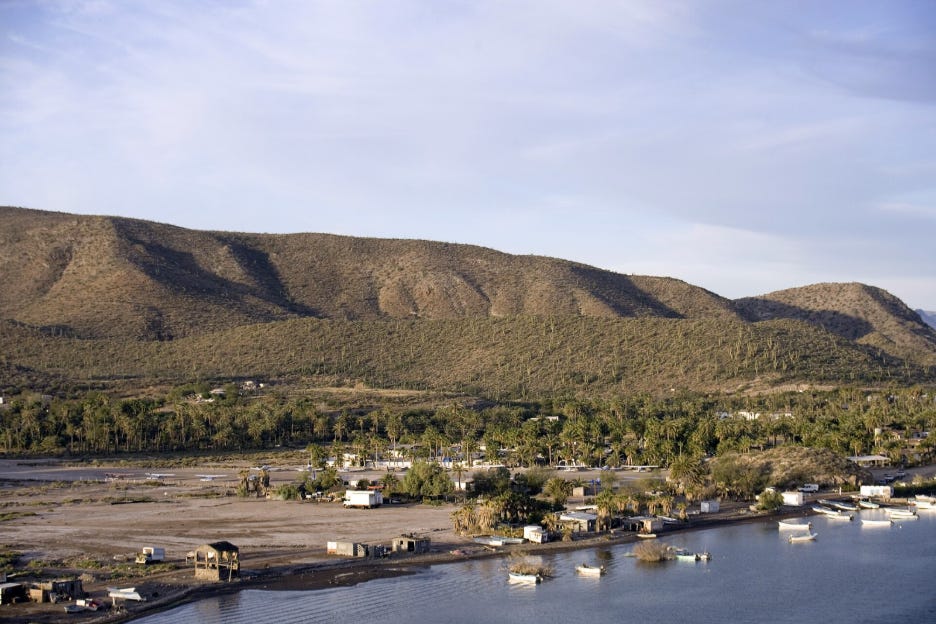
“Baja California Sur” by Comisión Mexicana de Filmaciones is licensed under the Creative Commons Attribution-Share Alike 2.0 Generic license.
.jpg)
The US Department of the Treasury’s Office of Foreign Assets Control (OFAC) last week designated 56 individuals and entities allegedly tied to the Sinaloa Cartel and Tren de Aragua (TdA), marking one of the Trump administration’s heaviest weeks for cartel-related sanctions. The measures targeted not only alleged senior cartel figures but also money launderers, businesses, corrupt officials and other financial facilitators, underscoring Washington’s increasingly network-focused approach to disrupting transnational criminal organizations (TCOs). While the Trump administration expands its use of direct military involvement in Latin America to combat drug trafficking, last week’s designations build on the administration’s stated priority of also targeting the financial networks, including commercial banks and money exchanges, that are believed to sustain cartel operations.
The Sinaloa designations, which targeted 21 individuals and 25 entities, focused on the cartel’s operations in Baja California, where Treasury stated the group controls key trafficking routes into the US and benefits from local government protection. Beyond targeting the alleged leader of Los Mayos (one of Sinaloa’s main factions) and his inner circle, OFAC sought to disrupt the financial and operational networks sustaining the cartel’s presence in Tijuana and Mexicali. These included plaza bosses, individuals carrying out violence on their behalf, and businesses said to be involved in money laundering. One designated money exchange allegedly used cooperating exchanges in Southern California to collect US drug proceeds through “mirror transactions,” illustrating how these networks exploit cross-border financial infrastructure to move illicit funds.
The designations also target alleged links between the Sinaloa Cartel and former Mexican government officials. This includes the ex-husband of Baja California’s current governor and his brother, a former Mexicali public security director, and a former customs official who was also a legislative advisor to the Baja California state government. Treasury claims these individuals provided cartel members with protection, political favors, and assistance in laundering illicit proceeds in exchange for bribes. The inclusion of former officials fits into the broader US pressure campaign that increasingly portrays the cartels as having immense political sway in Mexico. This framing has accompanied US demands for Mexico to investigate and prosecute officials suspected of cartel ties. The April indictment of Sinaloa Governor Rubén Rocha Moya and nine other current and former officials marking a significant escalation as Rocha became the first sitting Mexican governor to face US drug-trafficking charges. While the latest OFAC action targets former officials accused of using their positions to benefit the cartel, it underscores Washington’s determination to increasingly extend pressure beyond criminal organizations themselves to the Mexican officials and institutions allegedly enabling them.
The US also sanctioned 10 targets involved in TdA’s ATM fraud scheme. TdA has reportedly enriched itself through “jackpotting” cyberattacks on US ATMs, in which criminals install malware, known as Ploutus, that forces the machines to release cash without debiting an account. According to OFAC, reported losses from ATM jackpotting attacks in the US totaled $40.73 million across more than 1,500 attacks as of August 2025, though it is unclear how many attacks are TdA-linked or when records began. OFAC sanctioned Anibal Alexander Canelon Aguirre (“Prometheus”), who allegedly created the malware used in ATM jackpotting operations that financially support TdA and facilitated cryptocurrency transactions to launder the proceeds. Alongside Prometheus, OFAC designated six alleged associates and a high-ranking TdA leader.
Last week’s sanctions underscore Washington’s continued effort to undermine cartels by disrupting the financial systems and political support that enable them to operate, alongside interdiction operations. US Ambassador to Mexico Ronald Johnson last month warned Mexico’s commercial banking sector that facilitating cartel money flows could cause them to face isolation from the North American financial system. The pressure comes as Mexico undergoes a new Financial Action Task Force (FATF) evaluation, with results scheduled for discussion this month. While Mexico has strengthened its AML framework since FATF’s 2018 assessment, the organization has previously identified weaknesses in enforcement, including low effectiveness in pursuing money launderers and confiscating illicit assets. The evaluation will assess whether Mexico has strengthened its financial-crime rules and whether authorities and financial institutions are effectively identifying and disrupting the illicit capital flows that sustain cartel networks. A poor evaluation, particularly a gray listing, would negatively impact foreign investment into Mexico by increasing the perceived compliance risks of financial institutions operating in the country.
US Developments
OFAC Publishes Cuba Sanctions Regulations, CACR Amendments, FAQs, and Compliance Alert
On September 29, the Department of the Treasury’s Office of Foreign Assets Control (“OFAC”) announced the publication of the Cuba Sanctions Regulations, which implement the authorities established under Executive Order (“E.O.”) 14404, “Imposing Sanctions on Those Responsible for Repression in Cuba and for Threats to United States National Security and Foreign Policy.” The Cuba Sanctions Regulations, 31 C.F.R. Part 516, authorize blocking sanctions against persons who operate in key sectors of the Cuban economy, support the Cuban government or sanctioned persons, engage in corruption or human rights abuses, or serve as senior officials of the Cuban government or associated blocked entities. The regulations also authorize secondary sanctions against foreign financial institutions that facilitate significant transactions for sanctioned persons and provide for related visa restrictions.
Additionally, OFAC amended the Cuban Assets Control Regulations (“CACR”), 31 C.F.R. Part 515, to implement portions of the Trump Administration’s Cuba policy. In particular, OFAC expanded restrictions on entities on the State Department’s Cuba Restricted List (“CRL”) by prohibiting both direct and indirect transactions with listed entities. OFAC also broadened the criteria for adding entities and subentities to the CRL and eliminated or amended several authorizations under the CACR, including:
· OFAC eliminated the general license authorizing Cuba-related “U-turn” transactions, meaning US financial institutions may no longer process certain Cuba-related transfers that originate and terminate outside the US;
· OFAC removed the authorization allowing US financial institutions to maintain accounts for Cuban independent private-sector entrepreneurs and now requires a specific authorization to unblock related funds; and
· OFAC narrowed general licenses (“GLs”) for educational travel and travel related to professional meetings and conferences in Cuba, subject to limited grandfathering and wind-down provisions.
OFAC issued new and amended Frequently Asked Questions to reflect the regulatory changes. OFAC also published an alert highlighting increased sanctions risks associated with Cuba-related transactions, particularly those involving CRL entities and indirect financial dealings that may implicate the amended regulations. We provide further analysis of these changes to the Cuba sanctions program in a recent blog post.
OFAC Targets Iran’s Industrial Sectors
On October 1, OFAC issued a sectoral sanctions determination covering Iran’s automotive and rail sectors, enabling action against persons determined to operate in either of those sectors. The determination was issued pursuant to E.O. 13902, which enables sanctions on entities or individuals operating in certain sectors of the Iranian economy.
On the same day, OFAC sanctioned 30 parties linked to Iran’s automotive, rail, manufacturing, financial, or metals sectors, including companies based in Hong Kong, China, the UAE, Indonesia, Türkiye, and Germany. The designations were taken pursuant to E.O. 13902, which targets several sectors of the Iranian economy, and E.O. 13871, which targets Iran’s iron, steel, aluminum, and copper sectors.
Notably, Hong Kong- and China-based actors accounted for 12 of the 30 designated parties. OFAC’s latest Iran-related designations were announced approximately one week after the US and China agreed to extend the so-called Busan Agreement. As discussed in our previous update, US Ambassador to China David Perdue stated that the US “made it very clear” to China that any direct or indirect assistance to Iran, including intelligence, parts, or military equipment, was “totally unacceptable.” The latest action suggests that the Trump Administration is likely to continue to sanction Chinese persons allegedly involved in sensitive sectors of the Iranian economy.
Treasury Takes Action Against Russian Banking Network
On October 1, the Treasury Department targeted A7 Network. The Treasury Department alleges that the A7 Network, a Russian shadow banking network, is used by the Iranian regime to evade sanctions and was created and backed by US-sanctioned persons. The A7 Network has purportedly developed a global web of “Sub-Agents,” companies that are structured to disguise payments linked to sanctioned sectors and persons as ordinary commercial activity.
Treasury’s Financial Crimes Enforcement Network (“FinCEN”) proposed a rule that would prohibit transmittals of funds regarding transactions involving the A7 Network’s Sub-Agents. FinCEN also issued an alert to assist financial institutions in detecting, identifying, and reporting suspicious activity related to the A7 Network.
OFAC also sanctioned the A7 Network as a significant transnational criminal organization. OFAC had previously sanctioned entities that were allegedly part of the A7 Network on August 14, 2025.
OFAC Targets Iranian Military Procurement Networks Under Operation Economic Outcast
On September 29, OFAC designated ten individuals and entities as part of Operation Economic Outcast. The designations target procurement networks allegedly supporting Iran’s Ministry of Defense and Armed Forces Logistics (“MODAFL”). OFAC alleges that the designated parties facilitated the acquisition of weapons systems, dual-use components, and other military goods for MODAFL and its affiliates involved in Iran’s missile and UAV programs. This action was taken pursuant to E.O. 13382, which targets proliferators of weapons of mass destruction.
OFAC Amends the Iranian Transactions and Sanctions Regulations to Incorporate E.O. 13902
On September 29, OFAC issued a final rule amending the Iranian Transactions and Sanctions Regulations (“ITSR”), 31 C.F.R. Part 560, to implement provisions of E.O. 13902, “Imposing Sanctions With Respect to Additional Sectors of Iran.” The incorporated authorities authorize the blocking of persons who operate in specified Iranian economic sectors, engage in certain significant sector-related transactions, support persons blocked under the order, or are owned or controlled by, or act for or on behalf of, such persons.
OFAC Sanctions Network of Tren de Aragua
On September 30, OFAC designated nine individuals and two entities allegedly involved in a fraud scheme linked to Tren de Aragua (“TdA”), a Venezuelan transnational criminal organization. According to OFAC, the network targeted US-based automated teller machines (“ATMs”) and used malware to force ATMs to dispense millions of dollars from US financial institutions.
TdA was designated as a Foreign Terrorist Organization by the Department of State on February 20, 2025, for alleged criminal activity including drug trafficking, human trafficking, extortion, and murder-for-hire. OFAC says the latest action is part of a larger campaign that has resulted in over 30 actions against more than 300 targets linked to transnational criminal organizations since 2025.
The action was taken pursuant to E.O. 13581, which blocks the property of transnational criminal organizations, and E.O. 13224, which blocks the property of those who commit or support terrorism.
OFAC Sanctions Sinaloa Cartel Leadership and Networks
On September 29, OFAC designated 25 entities and 21 individuals allegedly linked to the Sinaloa Cartel. The action targeted alleged cartel leadership, financial facilitators, money laundering networks, and corrupt public officials in Mexico’s Baja California region. The action was taken pursuant to E.O. 14059 and E.O. 13224.
OFAC’s designations included Ismael Zambada Sicairos, the alleged current leader of Los Mayos, as well as several of his close associates allegedly involved in drug trafficking, money laundering, extortion, and violence on behalf of the cartel.
OFAC also targeted the cartel’s alleged money laundering and corruption networks, including operators of currency exchanges, real estate ventures, security companies, and entertainment businesses allegedly used to launder money. OFAC also designated several current and former Mexican officials and political figures accused of facilitating cartel activities through bribery, influence, and corruption, including individuals allegedly connected to the cartel-controlled Mexicali trafficking corridor.
OFAC Sanctions Hamas Financing Network
On October 2, OFAC designated three individuals and two entities as part of efforts to target Hamas’s financial network. Specifically, OFAC sanctioned a Gaza-based member of the Hamas military wing and two France-based individuals and their affiliated charities for allegedly supporting Hamas’s fundraising activities. OFAC alleges that the two charities were part of a network that raised over $2 million in funds for Hamas through “deceptive charitable fronts and cryptocurrency channels.” This action was taken pursuant to E.O. 13224, as amended.
OFAC Expands Scope of Three Venezuela-Related GLs to Include Methanol
On September 28, OFAC issued three amended Venezuela-related GLs in order to add methanol to the list of Venezuelan petrochemical products subject to various authorizations under GL 46E, “Authorizing Certain Activities Involving Venezuelan-Origin Oil or Petrochemical Products;” GL 48D, “Authorizing the Supply of Certain Items and Services to Venezuela;” and GL 49B, “Authorizing Negotiations of and Entry Into Contingent Contracts for Certain Investment in Venezuela.” We previously covered the scope of these licenses in our February 2 and February 18 updates.
UK Developments
UK Amends Shah Deniz General Licence Following Introduction of New Iran Sanctions
The UK has amended General Licence INT/2025/7363752, which permits certain activities necessary for the continued operation of the Shah Deniz gas project, to reflect the new Iran sanctions that entered into force on September 29, 2026. The amendment brings within the licence the newly introduced prohibitions under regulations 17A (investments in relation to Iran) and 17C (insurance and reinsurance services) of the Iran (Sanctions) (Nuclear) (EU Exit) Regulations 2019. These restrictions were introduced by the Iran (Sanctions) (Amendment) Regulations 2026 as part of the UK’s wider reintroduction of sectoral sanctions on Iran. In parallel, the Office of Trade Sanctions Implementation (OTSI) has issued a new General Trade Licence for services necessary for the continued operation of the Shah Deniz project, also effective from September 29, 2026. Together, the licences provide targeted authorisations intended to enable the Shah Deniz project to continue operating notwithstanding the expanded financial and trade restrictions applicable to Iran. Businesses involved in the project should consider the application of the licences to their activities and familiarise themselves with the conditions associated with use of the licences.
OFSI Clarifies Application of New Licensing Approach for Designated Iranian Banks
OFSI has updated FAQ 204 to clarify the scope of the new licensing approach for designated Iranian banks. As previously reported, applications involving these banks will generally be refused unless required by law or there are exceptional and urgent circumstances justifying an exception, such as risks to life or environmental safety, essential regulatory payments, asset preservation or the wind-down of operations. OFSI has now confirmed, for the avoidance of doubt, that this approach will apply not only to new applications but also to all licence applications that remain open. Applicants with pending applications involving any of the five banks should therefore reassess them against the more restrictive criteria and consider whether additional information is required to demonstrate that their circumstances justify an exception to the presumption of denial.
OFSI Launches 2026 Frozen Asset Review
OFSI has published its updated notice for the 2026 Frozen Asset Review, requiring all persons holding funds or economic resources owned, held or controlled by a designated person to submit a report to OFSI by November 30, 2026. Reports must capture the value of relevant assets as at close of business on September 30, 2026, and cover assets frozen in the UK as well as assets held overseas where they are subject to UK financial sanctions legislation. For shares, securities and other debt or payment instruments, the value must be reported in GBP. Importantly, the obligation applies even where the relevant frozen assets have previously been reported to OFSI, meaning firms must make a fresh return for the 2026 review. Returns must be submitted using OFSI’s updated 2026 reporting template, which has changed since last year, and should not be submitted before the September 30 valuation date. Firms holding or administering frozen assets should therefore ensure that they identify all reportable assets, apply the required valuation date and use the latest template ahead of the November deadline.
OTSI Publishes General Trade Licences for Russian LNG Supplies to Japan and South Korea
OTSI has published two new General Trade Licences providing targeted, time-limited authorisations for UK involvement in the maritime transportation of Russian LNG to Japan and South Korea under specified pre-existing contractual arrangements. The licences follow the UK’s introduction in May 2026 of restrictions on UK involvement in the maritime transportation of Russian LNG, which from January 1, 2027, will extend to trade conducted under long-term contracts concluded before June 17, 2025. The licences permit UK involvement in Japanese and South Korean imports of LNG from the Sakhalin-2 Project where the supply contract was concluded before June 17, 2025, and the imports take place between January 1, 2027, and March 31, 2028, provided all applicable conditions are satisfied. They do not authorise trade under new contracts or transactions involving UK designated persons. The UK Government describes the measures as temporary support for the energy security of Japan and South Korea while those countries reduce their reliance on Russian energy, and businesses seeking to rely on the licences should carefully assess the applicable conditions and relevant contractual arrangements before doing so.
UK Announces New Russia Sanctions Targeting Energy Revenues, Disinformation and Human Rights Abuses
The UK Government has announced a further package of 31 sanctions measures against Russia, comprising the designation of 22 individuals and one entity and the specification of eight vessels under the Russia (Sanctions) (EU Exit) Regulations 2019. According to a UK Government press release, the package targets a range of actors and activities supporting Russia’s war against Ukraine, including LNG shadow fleet vessels, Kremlin-linked disinformation networks and individuals accused of involvement in the torture of Ukrainian civilians and the deportation and indoctrination of Ukrainian children. The 23 designated individuals and entities are subject to asset freezes, trust services sanctions and director disqualification sanctions, with the individuals additionally subject to travel bans, while the eight vessels face shipping and trade sanctions. The measures reflect the UK’s continued focus on restricting Russian energy revenues and the infrastructure supporting sanctions circumvention, while increasingly using the Russia sanctions regime to target disinformation activities and individuals associated with alleged abuses in occupied Ukrainian territory. A further two vessels also have been specified for their involvement in supporting the Government of Russia.
OFSI Extends Sakhalin-2 Permissions under Two Russia General Licences
OFSI has amended two General Licences relating to Russian oil and the Sakhalin-2 Project, extending the relevant Sakhalin-2 expiry dates to December 31, 2026. The amendments apply to the Oil Price Cap: Exempt Projects and Countries General Licence (INT/2022/2470156) and the Russian Oil Exempt Projects General Licence (INT/2025/5635700). The former provides targeted exemptions from aspects of the UK’s Russian oil services restrictions for specified projects and countries, while the latter permits certain business operations and transactions that would otherwise be prohibited under the Russia sanctions regime where they relate to specified exempt energy projects. The extension maintains the existing authorisations relating to Sakhalin-2 for a further limited period and follows other recent UK measures providing targeted exemptions for activities connected with the project. Persons seeking to rely on either General Licence should review the amended terms carefully to confirm the applicable permissions, conditions and reporting or record-keeping requirements.
EU Developments
EU Council Adopts New Listings Targeting the Unlawful Deportation of Ukrainian Children
The EU Council designated an additional 10 individuals and 17 entities under the EU sanctions regime in respect of actions undermining or threatening the territorial integrity, sovereignty and independence of Ukraine. The new listings target those responsible for the systematic unlawful deportation, forcible transfer, and forced assimilation of Ukrainian children to the Russian Federation and within temporarily occupied territories of Ukraine.
Among the individuals listed are Rustam Minnikhanov, President of the Republic of Tatarstan, for facilitating the illegal deportation of Ukrainian children to camps in the Tatarstan region, as well as education ministers and deputy ministers from Russian-occupied territories of Ukraine, the Minister of Sports and Tourism of the self-proclaimed Donetsk People’s Republic, and directors of children’s camps and schools involved in programs contributing to the ideological indoctrination and militarized education of Ukrainian children.
The entities listed include the Songdowon International Children’s Camp, a state-operated institution in the Democratic People’s Republic of Korea, which participates in organized programs involving the transfer of Ukrainian children from temporarily occupied territories of Ukraine in coordination with the Russian Federation. The listings also include a federal educational institution operating under Russia’s Ministry of Education, as well as children’s camps, sports centers, recreation, and tourism companies involved in cultural reorientation, propaganda-based education, and military-patriotic activities aimed at integrating children into Russian identity frameworks.
EU Council Adds Ten Individuals to Russia Human Rights Sanctions List
The EU Council amended Council Decision (CFSP) 2024/1484, adding ten individuals to the sanctions list for their responsibility in serious human rights violations, the repression of civil society and democratic opposition, and activities undermining democracy and the rule of law in Russia.
The newly listed individuals include three judges of the Supreme Court of the Russian Federation, an official in the Prosecutor General’s Office, and an official of the Central Election Commission of Russia involved in proceedings that resulted in the Yabloko political party being barred from participating in the September 2026 elections to the State Duma. Yabloko was the only political party that openly opposed Russia’s war of aggression against Ukraine. The listings also target a judge and a state prosecutor involved in the prosecution of Lev Shlosberg, a Yabloko opposition politician who was sentenced to 11 years and one month of imprisonment on charges linked to his public criticism of Russia’s war of aggression against Ukraine, as well as prosecutors and judges involved in proceedings against Yabloko leaders Maxim Kruglov and Nikolai Rybakov.
Following the latest listings, the EU’s Russia human rights sanctions regime now applies to 108 individuals and seven entities.
European Commission Publishes Updates to its FAQs on Sanctions Against Russia
The European Commission recently published a series of updates to its FAQs on sanctions against Russia. The revisions concern the sections on the movements of Russian diplomats, asset freezes and the prohibition to provide funds or economic resources, as well as export-related restrictions on dual-use goods and advanced technologies. The revised FAQs now include clarifications on whether travel plans are affected by events of force majeure under Articles 5v and 5w of Council Regulation (EU) 833/2014 and on the scope of the exemption for JSC Russian Railways introduced by Article 6g of Council Regulation (EU) 269/2014. In addition, the Commission updated its Correlation Table, which includes references correlating the goods in Annex VII to Council Regulation 833/2014 with the corresponding commodity codes as defined under the rules of the Common Customs Tariff and Combined Nomenclature (CN).
Lastly, the Commission updated its guidance on the Donetsk, Kherson, Luhansk and Zaporizhzhia oblasts under Council Regulation (EU) 2022/263, clarifying whether grain originating in non-government-controlled areas of Ukraine in those oblasts may transit through the EU.
EU Council Renews Burundi Sanctions Regime
On September 28, the EU Council renewed the restrictive measures in view of the situation in Burundi for another year, until October 31, 2027. The sanctions regime, originally established in 2015, targets individuals and entities responsible for undermining democracy or obstructing the search for a political solution in Burundi, as well as those involved in serious human rights violations and abuses.
EU Council Amends Sanctions Regime Targeting the Democratic Republic of Congo
The EU Council amended the sanctions regime in view of the situation in the Democratic Republic of the Congo (DRC), following an update at the UN level. Changes to Council Decision 2010/788/CFSP follow a July 14 decision of the UN Security Council Sanctions Committee to add six individuals and two entities to the sanctions list. As a result, four individuals and one entity already designated under the sanctions regime were transferred from Annex II to Annex I of Council Decision 2010/788/CFSP. The Alliance Fleuve Congo (AFC), a politico-military movement operating in eastern DRC, was also transferred to Annex I of Council Decision 2010/788/CFSP.
Asia-Pacific Developments
Cambodia Pledges Stronger Anti-Scam Cooperation Amid US Sanctions Scrutiny
Cambodia concluded an international conference on combating online scams with participating countries agreeing to strengthen cross-border cooperation against cyber fraud, human trafficking, and transnational criminal networks. During the event, Deputy Prime Minister Neth Savoeun emphasized that no country can effectively tackle technology-enabled scams on its own and stressed the importance of international collaboration. The conference took place against the backdrop of calls from US congressional leaders for an investigation into whether certain senior Cambodian officials should face sanctions over alleged links to scam operations, allegations that Cambodian officials have denied. Discussions focused on emerging fraud trends, cybersecurity, artificial intelligence, financial investigations, and trafficking networks, while participating countries endorsed a voluntary declaration encouraging information sharing, confiscation of criminal proceeds, and stronger protection for trafficking victims.
EU Sanctions Disrupt Money Transfers Between Russia, Kazakhstan and Georgia
Cross-border money transfers between Russia and neighboring countries, particularly Kazakhstan and Georgia, fell dramatically after the EU sanctioned the operator of the Zolotaya Korona payment system in July 2026. According to regulatory data, transfers from Russia to Kazakhstan dropped nearly twelvefold in August, while flows in the opposite direction declined even more sharply; transfers between Russia and Georgia also plunged to historically low levels, with transfers from Georgia to Russia reportedly falling to zero for the first time on record. The decline has been attributed to the sanctions’ impact on Zolotaya Korona, which had become one of the primary channels for international money transfers involving Russians after the withdrawal of major Western payment providers following Russia’s invasion of Ukraine. Once among the few large Russian payment systems still operating without sanctions restrictions, Zolotaya Korona has since suspended transfer services to several countries, significantly disrupting a key financial link used by Russian citizens, including those living abroad.
Japan Considers Expanded Sanctions on Russia
Japan is exploring additional sanctions against Russia as part of its response to Moscow’s continued war in Ukraine and Russian President Vladimir Putin’s recent visit to Etorofu Island, one of the disputed Northern Territories claimed by Japan. The measures under consideration would primarily target Russia’s “shadow fleet” of vessels used to evade existing sanctions and transport Russian energy exports, a critical source of revenue for the Russian economy. Japanese authorities are also evaluating tighter export controls and expanding the range of goods subject to export restrictions. The move would align Japan more closely with European countries that have recently stepped up economic pressure on Russia and reinforce Tokyo’s position that Russia’s actions violate international law.
Japan Further Eases Syria Sanctions
Japan has approved the removal of sanctions on 16 organizations linked to Syria, citing their potential role in supporting the country’s reconstruction and long-term stability. The decision forms part of Tokyo’s gradual relaxation of Syria-related restrictions following the collapse of the regime of former President Bashar al-Assad in 2024 and reflects Japan’s assessment of developments under Syria’s new government. Chief Cabinet Secretary Minoru Kihara stated that Syria’s stability is closely connected to broader stability in the Middle East and emphasized Japan’s commitment to supporting reconstruction efforts. Despite the latest easing measures, Japan continues to maintain sanctions on 59 individuals and 15 entities. The move builds on earlier steps, including the lifting of sanctions on four Syrian entities in 2025, while preserving restrictions originally imposed in response to the Assad government’s crackdown on anti-government demonstrations beginning in 2011.
India Presses US Lawmakers on Sanctions Concerns
India has expressed its concerns to the US regarding the recently enacted Sanctioning Russia and Iran Act (SRIA), arguing that the legislation could have significant consequences for both bilateral relations and the stability of global energy markets. During discussions in New Delhi with a bipartisan US congressional delegation led by Brian Mast, Chairman of the House Foreign Affairs Committee, Foreign Secretary Vikram Misri emphasized that the law’s provisions, which allow the US President to impose tariffs of up to 100% on countries purchasing Russian oil and gas, could disrupt established trade and energy arrangements and create broader economic uncertainty. Indian officials stressed that the country’s concerns extend beyond the direct impact on India, encompassing potential repercussions for international energy security and global market dynamics.
New Zealand Expands Enforcement of North Korea Sanctions
New Zealand has stepped up its role in enforcing UN sanctions on North Korea by deploying a Royal New Zealand Navy task group to conduct maritime surveillance operations in the Yellow Sea and East China Sea. As part of the multinational Pacific Security Maritime Exchange, the deployment aims to identify and report activities designed to evade sanctions targeting North Korea’s nuclear and ballistic missile programs. For the first time, the frigate Te Mana participated in sanctions-monitoring operations, tracking vessels suspected of transporting prohibited cargoes or engaging in illicit ship-to-ship transfers. The mission also focused on detecting common sanctions-evasion techniques, including AIS manipulation, vessel identity concealment, position spoofing, and the use of “shadow fleet” vessels.
Australia Targets Kadyrov-Linked Foundation Over Ukraine War
Australia has imposed sanctions on the Akhmat Kadyrov Foundation as part of a broader package targeting individuals, organizations, and vessels linked to Russia’s war in Ukraine. The foundation, headed by Aimani Kadyrova, mother of Chechen leader Ramzan Kadyrov, was added to Australia’s sanctions list alongside dozens of other entities associated with Russia’s military, financial, and administrative apparatus. Although Canberra did not provide a detailed justification specific to the foundation, it stated that the measures are intended to address activities undermining Ukraine’s sovereignty and territorial integrity. While the foundation presents itself as a charitable organization, reports indicate that since the start of the war it has directed substantial resources toward supporting Russian military operations and related projects in Ukraine. The move aligns Australia with several Western governments, including the US, EU, UK, and Canada, which have previously sanctioned the foundation over its alleged involvement in activities connected to the war and the treatment of Ukrainian children.
Iran Signals Nuclear Inspections-for-Sanctions Deal
Iran has reportedly indicated a willingness to restore access for international nuclear inspectors to facilities damaged during recent military strikes if it receives meaningful sanctions relief in return, suggesting a possible path to revive stalled negotiations with the US. During discussions on the sidelines of the UN General Assembly, Iranian Foreign Minister Abbas Araghchi raised the proposal with European and Middle Eastern counterparts, reflecting mounting economic pressure on Iran from sanctions and restrictions on its oil exports. The initiative would represent a significant concession, as international monitoring of Iran’s nuclear program has been severely curtailed in recent years. However, major obstacles remain, including Iran’s demand that broader international sanctions be eased and continued reluctance from Western governments to make such commitments.
Pakistan Balances Iran Ties and US Sanctions Pressure
Pakistan has signaled a more cautious stance toward new US sanctions on Iran, with its Foreign Office stating that the country will comply with all sanctions regimes applicable under international and domestic law. While Islamabad has not adopted US sanctions or suspended trade with Iran, the shift reflects growing concern over the financial and regulatory risks associated with dealings involving sanctioned Iranian entities, particularly for banks and cross-border transactions. At the same time, Pakistan continues to emphasize its strategic relationship with the US, maintain ties with Iran, and support diplomatic dialogue between Washington and Tehran, seeking to balance its competing foreign policy and economic interests.

Listen to the news:
Europe
Latvian Prime Minister Andris Kulbergs received an emboldened mandate in Sunday elections. Kulbergs’ conservative United List, which is hawkish on Russia, won 35% of the vote, about 20 points ahead of the closest challenger, the populist right Latvia First party, which advocates for loosening trade restrictions on Russia and dominated the country’s eastern regions. United List tripled its performance from 2022, but its previous coalition partners—which included the center-right New Unity and the agrarian Union of Greens and Farmers—performed poorly, with the latter failing to enter parliament and the former only receiving seven seats. The conservative National Alliance, United List’s other coalition partner, maintained 10 seats, which is fairly close to its 2022 result. If the United List renews its coalition with the National Alliance and New Unity, they will possess an eight-seat majority in parliament.
The Latvian election results suggest that Ukraine fatigue is low in the Baltics. Latvia was always unlikely to change its hawkish foreign policy orientation toward Russia. Nonetheless, Russia’s escalation of hybrid warfare tactics among NATO countries in the past year has likely hardened sentiment, despite disruptive economic reorientation away from Russia’s energy flows, electricity grid, and consumer base for Latvian exports.
Read More: AP, Politico, Central Election Commission [in Latvian]
Middle East
Yemeni forces, supported by Saudi Arabia, launched an offensive against the Iran-backed Houthis in a bid to retake key territory. On Sunday, following weeks of reports of mounting troops, Yemeni government forces launched a massive ground offensive against the Houthis in Yemen’s west, supplemented by Saudi airstrikes and cover, in a bid to regain the capital Sanaa (long controlled by the Houthis) and key sites enabling full control of the Bab al-Mandeb, where the Houthis have instituted a blockade on Saudi shipping. Houthis claimed to have seized a key highway linking Taiz to the government seat of Aden, and some sources claimed that there had been a new strike on Saudi’s east-west Yanbu pipeline, only recently reopened.
Saudi Arabia has struggled to secure international support to deal with the rising threat from the Houthis. On Thursday, Saudi officials were reportedly denied air support from the US for a second time. There does not appear to be any direct participation by signees of the Mecca Agreement, Turkiye and Pakistan, despite the existence of a mutual defense pact (although Pakistan has reportedly sent weapons). And although Saudi Arabia has publicly couched the offensive in terms of the Saudi-led coalition (a throwback to the active conflict with Yemen starting in 2015), no other coalition members appear to be participating. The Kingdom has made the tough decision to go it alone, likely anticipating unsustainable costs from the Red Sea closure and a likely lack of forthcoming support.
Read More: France 24, Axios, CNN, South China Morning Post [paywall]
Asia-Pacific
India and Pakistan traded accusations over the weekend following the deaths of two Pakistani civilians and the wounding of a third near the border in Punjab on Friday, prompting both sides to summon each other’s diplomats. Pakistan’s Foreign Ministry on Saturday said the casualties resulted from “unprovoked and lethal force” by India’s Border Security Force (BSF) against unarmed civilians. Meanwhile, India maintains the individuals crossed into its territory despite repeated warnings to retreat, prompting BSF to respond to what it deemed an imminent security threat.
New Delhi has framed the incident as part of a broader pattern of cross-border infiltration and drug trafficking originating from Pakistan, further straining already fragile bilateral relations. India’s Ministry of External Affairs accused “armed narcotics syndicates” operating from Pakistan of being behind the incident over the weekend and urged Islamabad to investigate suspected infiltration and drug-smuggling activities. Pakistan “categorically” rejected India’s allegations, underscoring the persistent divide between the two countries over cross-border security. The incident’s location in Punjab—a relatively less volatile stretch of the India-Pakistan border than the heavily disputed Kashmir frontier—raises concerns of cross-border security tensions flaring beyond the countries’ traditional flashpoints.
Read More: Government of India Ministry of External Affairs, Reuters [paywall], Al Jazeera
Americas
Flavio Bolsonaro outperformed polls in the first round of Brazil’s presidential elections, finishing ahead of incumbent Luiz Inacio Lula da Silva (Lula). Flavio Bolsonaro, the son of former president Jair Bolsonaro, received 47% of the vote compared to Lula’s 45%. The two will now face each other in a runoff on October 25. Bolsonaro has a clear advantage in the second round, as he is most likely to receive the votes that were cast for other right-wing candidates in the first round. This makes his unexpectedly strong showing on Sunday especially significant, in an election that will have far-reaching repercussions amid a broader right-wing wave in Latin America. Bolsonarista candidates were also widely successful in congressional races, including Jair Bolsonaro’s second son and his wife, who both won Senate seats. For Lula to pull ahead in the runoff, he will have to appeal to voters who did not cast ballots in the first round.
Markets are already responding positively to Sunday’s results. Bolsonaro’s pro-business campaign seeks to align Brazil closely with the Trump administration. The Brazilian real jumped over 4% against the US dollar on Monday morning, and overseas-traded assets posted gains. Ibovespa futures jumped more than 8%, the Frankfurt-listed MSCI Brazil ETF jumped 16%, and Brazilian companies’ overseas-listed shares saw significant gains. Brazilian stocks rallied as markets opened in Brazil this morning and are expected to continue to surge.
Read more: Reuters [paywall], The Guardian, AP, New York Times [paywall]
Africa
Egypt hosted the Quadrilateral Consultative Summit with Eritrea, Sudan and Somalia on Sunday, signaling the countries’ increasingly aligned interests regarding ongoing regional issues and conflicts. Among the statements in the group’s El-Alamein Joint Declaration was an affirmation for a united Sudan, an apparent rejection of a reported US peace proposal, which Sudanese authorities allege would permit a Libya-style arrangement of parallel governments led by the Sudanese Armed Forces and the Rapid Support Forces. The declaration rejected an independent Somaliland and called for a peaceful resolution to the conflict in Ethiopia.
Moreover, the four countries reaffirmed their opposition to Ethiopia’s Red Sea ambitions and the Grand Ethiopian Renaissance Dam (GERD). The declaration reiterated the group’s position that governance of the Red Sea is the “exclusive responsibility of the littoral states” and that there can be no “unilateral measures that harm the existing water uses of the two downstream Nile states,” both direct rebukes of Ethiopia’s efforts to expand its influence over Red Sea trade and develop additional Blue Nile hydropower projects.
The declaration is likely to further alienate Ethiopia, which views the four countries as conspiring against its interests and fueling conflict in Tigray. In response to the declaration, Ethiopia’s Foreign Ministry reaffirmed its right to utilize the GERD and asserted that regional maritime and security arrangements must account for its interests. As Ethiopia’s rhetoric towards Egypt, Eritrea and Sudan becomes increasingly confrontational and diplomatic relations collapse, tension surrounding Addis Ababa’s Blue Nile projects is likely to rise, while intensified proxy conflict in Sudan and northern Ethiopia remains possible.
Read More: Al Jazeera, The Arab Republic of Egypt, Reuters [paywall], Al Jazeera, Anadolu Ajansi, Stepwise Risk Outlook
Geoeconomics
US–India trade talks stall as both governments signal limited room for further concessions. Finance Minister Nirmala Sitharaman said on October 5 that negotiations had reached a “plateau” and further compromises would be “very, very difficult” for either side, although discussions continue. Her comments followed US Trade Representative Jamieson Greer’s October 1 statement that an agreement was not imminent after meeting Indian Commerce Minister Piyush Goyal. The two countries announced a framework in February covering Indian tariff reductions on US industrial goods and selected agricultural products, alongside India’s intention to purchase $500 billion in American goods over five years. However, the interim agreement implementing that framework remains unfinished, with Washington seeking additional concessions and New Delhi holding out for better terms.
The difficulty is determining what India would receive for opening its markets when further US tariffs remain possible. Legislation Trump signed on September 18 authorizes tariffs of up to 100% on imports from countries meeting specified criteria for purchases of Russian energy, creating another potential threat to Indian exports. India also awaits the outcome of a separate US investigation into excess manufacturing capacity under Section 301, which could produce additional duties. Goyal has rejected the premise that India has structural overcapacity in the sectors under examination.
Read More: Reuters [paywall], Reuters [paywall], White House, Atlantic Council
Disruptive Technology
Jay Clayton, the Director of National Intelligence, will lead a “Super Intelligence Force,” an interdepartmental task force that will include FTC Chairman Andrew Ferguson, Pentagon chief technology officer Emil Michael, and director of the Office of Personnel Management Scott Kupor. The task force, which replaces AI czar David Sacks and will report to White House chief of staff Susie Wiles, appears to have two objectives—to continue promoting American AI dominance while also bridging AI safety concerns. Clayton’s leadership of the task force may assuage AI safety voices; in his testimony to the Senate as the DNI, Clayton noted that AI is both an “opportunity and a threat” with national security implications. The task force may coordinate current White House efforts to interface with private industry to improve self-regulation, as well as coordinate AI safety and cybersecurity testing before the release of new frontier AI models.
Read More: AP, CBS News, ABC News
Energy
Russia is considering relaxing its ban on diesel exports next month. Deputy Prime Minister of Russia Alexander Novak recently claimed that Russia’s diesel market was “balanced” and that Moscow will look at partially lifting its ban on diesel exports in the event of “overproduction.” At the same time, Novak stated that Russia’s domestic fuel market remains strained from Ukraine’s attacks, and Moscow’s primary objective is to restart production from damaged facilities. Russia instituted its ban on diesel exports after Ukraine’s strikes on refineries and energy infrastructure triggered shortages in Russia’s domestic fuel market.
The global diesel market has been a major focus for the administration amid supply issues for refined products. The White House has pushed some countries in Europe to release diesel and crude oil from their emergency reserves and has warned it would institute a ban on US diesel exports if they did not. The G7 ultimately agreed to release 100 million barrels of oil and diesel over the next four months. US President Donald Trump has also repeatedly blamed Ukraine’s strikes on Russia for rising diesel prices in the US.
Read More: Moscow Times [in Russian], Reuters [paywall], Politico EU, Kyiv Post
Transnational Crime & Corruption
Netherlands Justice Minister David van Weel announced that EU development aid to Sierra Leone would be suspended until the country extradited a major cocaine trafficker. Van Weel noted that EUR 18 million in aid for education, food and infrastructure had been cancelled and a further EUR 22.5 million scheduled for 2027 could also be canceled. Sierra Leone’s Information Minister disputed van Weel’s statement, claiming that the EU aid was simply delayed due to procedural and timing issues and not as a punitive measure.
The action targeted Jos Leijdekkers, one of Europe’s most wanted drug traffickers. Leijdekkers has reportedly operated from Sierra Leone since 2022 as part of the so-called “Mocro Mafia” present in North Africa and Northwestern Europe. Dutch courts have sentenced him in absentia to 37 years in prison for drug trafficking, robbery, extortion and incitement to murder. Leijdekkers allegedly maintains ties to the family of Sierra Leone President Julius Maada Bio, including having a child with the president’s daughter, and other senior government officials.
Leijdekkers is a major actor in the South America-West Africa-Europe cocaine route. Significant quantities of cocaine are being shipped from South America’s east coast to West Africa, where the drugs are stored and later loaded onto tankers. These tankers then drop the cocaine off with ultra-fast speed boats in the waters south of Spain and Portugal, which then traffic the drugs to Iberian beaches and rivers. Each speedboat can carry cocaine valued at an estimated $250 million.
Read More: De Telegraaf [paywall; Dutch], Wall Street Journal [paywall], Global Initiative against Transnational Organized Crime
Defense
The French Air Force is planning to test its crewed fighter jets together with combat drones in 2028. The testing is part of France’s Hypairion project to experiment with AI in combat aviation. Hypairion’s goal is to open a modular architecture for France’s combat aircraft and sovereign AI technology, as well as ensuring that Paris is not too dependent on companies for critical systems. France’s goal is to ensure that the uncrewed systems it uses with its fighters are primarily under state control. The test versions of the “loyal wingmen,” the term for drones used alongside fighter jets, may not be the final version France uses and are instead primarily for testing purposes.
France is very focused on the development of sovereign AI capabilities for military and defense uses. France’s Ministerial Agency for Defence AI (Amiad), which will provide AI capabilities for Hypairion in several areas, is also using AI for the French Army’s Pendragon robotics project. Amiad also intends to create an industrial hub as part of Hypairion for industry players to work with the project. France has also invested in its own AI-powered battlefield command platform, which it has tested with NATO this year in order to look at interoperability.
Read More: Defense News, Army Recognition, Defense News


Contact Us
Karl Hopkins
Partner
+1 202 429 6499
khopkins@steptoe.com
Melissa B. Mahle
Senior Advisor
+1 202 261 0577
mmahle@steptoe.com
Anni Coonan
Senior Intelligence Analyst
+1 212 506 3979
acoonan@steptoe.com
Samuel Bloebaum
Senior Due Diligence Analyst
+1 602 410 6240
sbloebaum@steptoe.com
Zayna Dembinski
Analyst
+1 202 778 3567
zdembinski@steptoe.com
Thomas Goldstein
Analyst
+1 202 862 6735
tgoldstein@steptoe.com
Ian Cameron
Analyst
+1 202 327 6908
icameron@steptoe.com
Elton Smole
Analyst
+1 202 261 0556
esmole@steptoe.com
Carter Spahn
Intelligence Fellow
+1 202 261 7555
cspahn@steptoe.com
Chris Dantes
Intelligence Fellow
+1 202 327 6904
cdantes@steptoe.com
Legal disclaimer: This Substack is for educational and informational purposes only and does not constitute the rendering of legal counseling or other professional services. Reading, subscribing to, or communicating through this Substack does not create an attorney-client relationship. Do not send confidential information through this platform. Consult qualified legal counsel regarding your specific circumstances.