

The Sanctions Update, compiled by attorneys from Steptoe’s award-winning International Regulatory Compliance team and the Stepwise: Risk Outlook editorial team, publishes every Monday (subscribe here). Guided by the knowledge of Steptoe’s industry-leading International Trade and Regulatory Compliance team, the Sanctions Update compiles and contextualizes weekly developments in international regulatory enforcement and compliance, as well as offers insights on geopolitical context, business impacts, and forthcoming risks, and non-sanctions news updates.
For more detailed analysis on related issues, see Steptoe’s International Compliance Blog. For information on industry-specific monitoring or bespoke services, please contact the team here.
By Evan T. Abrams, Meredith Rathbone, Karl Hopkins, Guy Soussan, Alexandra Melia, Wendy Wysong, Ali Burney, Quentin Johnson, Elliot Letts, Algirdas Semeta, Melissa B. Mahle, Anni Coonan, Thomas Goldstein, Zayna Dembinski, Samuel Bloebaum, Elton Smole, Ian Cameron, Wilson Zhao, Zoey Hong, Kiki Dong, Kuangqi Zhong, Andy Xu Sofia, Jake Fitzpatrick, Carter Spahn, Chris Dantes

Listen to the sanctions update:
The Lede
US Lifts Sanctions on Eritrea as Conflict in Ethiopia Reignites
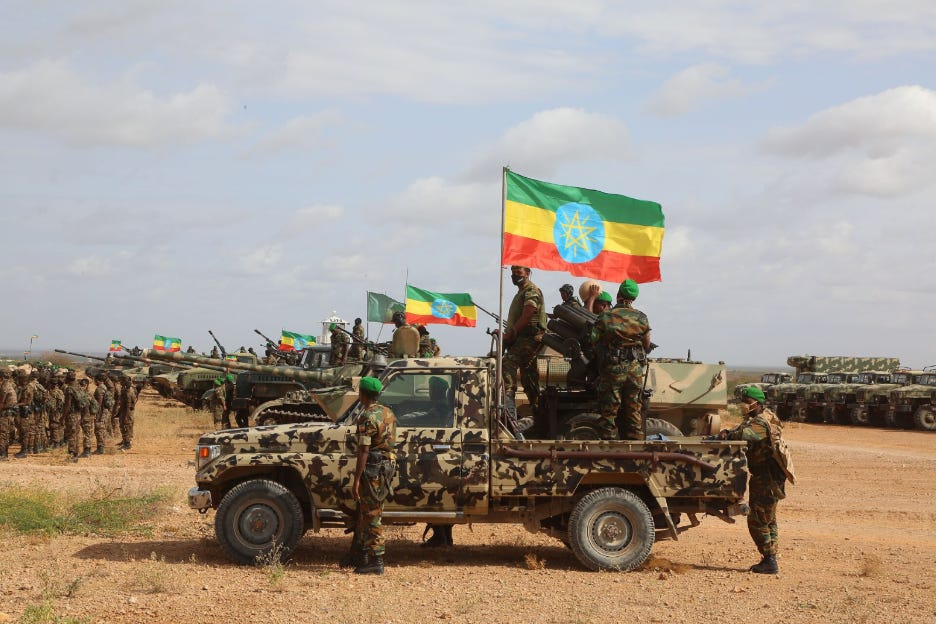
"Ethiopian soldiers under AMISOM training for combat" by AMISOM Public Information is marked with CCO 1.0.

On September 18, the Office of Foreign Assets Control announced the expiration of Executive Order 14046, ending 11 designations, including sanctions on Eritrea’s ruling party and military. The Biden administration deemed Eritrean authorities complicit in Ethiopia’s alleged human rights abuses during the war against the Tigray People’s Liberation Front (TPLF), leading to sanctions and a decline in relations. Recently, the Trump administration has sought to balance relations with both countries to stabilize the Horn of Africa, using the lifting of sanctions as an initial step toward expanding engagement with Asmara. However, the TPLF’s declaration of a “defensive war” against Ethiopia on September 23 and ongoing attacks could escalate into a full-scale war and invite Eritrean involvement, particularly as its rivalry with Ethiopia has intensified and caused Asmara to align with the Tigrayan rebels. If this occurs, the US could reimpose sanctions on Eritrea and potentially sanction Ethiopia if it perceives both sides are resistant to peace talks, which would likely be mediated by Washington.
The Ethiopia-TPLF Conflict, Explained
The first Tigray war began in November 2020 after months of worsening tensions between Addis Ababa and the TPLF. The TPLF was the dominant political force in the country until the appointment of Prime Minister Abiy Ahmed Ali, an ethnic Oromo, in 2018. Despite promising to heal decades of ethnic strife, the federal government delayed national elections, extended Abiy’s term, and opposed local elections in Tigray, creating tensions with Tigrayan authorities that culminated in armed conflict. Although historically an adversary of Ethiopia, Eritrea sided with Addis Ababa in the war, motivated by its longstanding rivalry with the TPLF and border security concerns. Other rebel groups entered the conflict: the Oromo Liberation Army allied with the TPLF, while Fano militants fought alongside the government.
The war ended in 2022 with the signing of the Pretoria Agreement, but the agreement did not fully address the TPLF’s grievances. Key political and territorial disputes were never resolved in the years following the agreement, including massive population displacement and restrictions on the authority of the Tigrayan government. The agreement also excluded Eritrea and the Fano militias, undermining a previous reset in Ethiopia-Eritrea relations and contributing to a Fano insurgency in 2023.
The End to a Fragile Peace and Possibility of Regional Conflict
Following drone strikes in Tigray by the Ethiopian military in August, the TPLF and six other rebel groups announced the formation of the Ethiopian Peoples’ Forces Alliance for Survival last week. The alliance, which also includes the Fano militias that fought the TPLF in the war, outlined the organization’s objectives as overthrowing the Abiy government and establishing a democracy, the details of which are unclear as the groups have historically advocated for different governance structures. Days later, fighting erupted in the Tigray, Afar, and Amhara regions. The TPLF seized the airport in Mekelle, Tigray’s capital, and claimed their attacks were defensive measures against bombardments from federal forces.
It remains unclear how federal forces will respond beyond retaking territory seized by Tigrayan rebels. Expanded drone strikes in Tigray or an occupation of the region are possibilities, but doing either would likely invite greater retaliation from the TPLF and potentially trigger insurgencies in neighboring regions.
In addition to the risk of a prolonged war between Addis Ababa and the TPLF, regional and external actors could become involved, creating a complex proxy conflict in northern Ethiopia. Ethiopia-Eritrea relations have worsened in part due to statements from Abiy that access to the Red Sea (Ethiopia has been landlocked since Eritrea’s independence in 1993) is an existential issue. Eritrea interprets these statements as a threat to its sovereignty and fears Ethiopia seeks to eventually control its port of Assab. To counter Ethiopia’s regional ambitions, Eritrea has increasingly aligned with the Sudanese Armed Forces (SAF), the TPLF, and Fano militias, a network that Ethiopia characterizes as a shadow military alliance known as Tsimdo. The extent of these groups’ cooperation is unclear; however, Eritrean officials have visited Tigray, indicating deepening security ties to hedge against Ethiopia.
A broader regional conflict, in turn, could provide Gulf states with an opportunity to expand their influence across the Horn of Africa. The UAE has substantial interests in Ethiopia, including agricultural imports, investments, and security cooperation. Moreover, the UAE has allegedly used Ethiopia as a training and logistical hub for the Rapid Support Forces, the paramilitary group fighting the Saudi-aligned SAF in Sudan. As Saudi-UAE competition has intensified in Sudan and elsewhere, Riyadh may cultivate deeper ties with Eritrea to counter Abu Dhabi and secure the Red Sea, although the extent to which it would support Eritrea in a conflict is uncertain.
US Interests and Potential Response
As efforts to resolve the Sudan war have stalled and Somalia becomes increasingly unstable, the Trump administration is seeking closer partnerships with Ethiopia and Eritrea, leveraging potential investment deals and other bilateral economic agreements to dissuade both actors from going to war or further engaging in proxy conflicts. A major Ethiopian offensive in Tigray could displace thousands, leading to refugee flows that could further destabilize the Horn and extend far beyond the region. Another core interest is stabilizing the Red Sea and cooperating with littoral states, including Eritrea, to maintain maritime security as trade through the Bab el-Mandeb is increasingly under threat by the Houthis and Somali piracy.
The US Ambassador to Ethiopia, Ervin Massinga, condemned the TPLF attacks and warned that sanctions would be imposed on other rebel groups that join (the TPLF was sanctioned earlier this year). If Eritrea provides arms to the TPLF, the reimposition of sanctions is possible, particularly if the conflict drags on and Asmara shows little willingness to participate in peace negotiations. At the same time, sanctions on Ethiopia are also possible for the same reasons, as the Trump administration has previously sanctioned multiple parties in African conflicts to compel all sides to reach a peaceful settlement. However, sanctions alone are unlikely to bring the parties to the negotiating table given their limited effectiveness during the first Tigray war and the strategic imperatives at stake, particularly if the UAE backs Ethiopia. Brokering a lasting settlement will likely require significant reforms to the administration of Tigray, conditions that Addis Ababa may resist.
Implications for Businesses
Should the US impose sanctions on Ethiopian officials or the Ethiopian National Defense Force, businesses will have to navigate a more complex regulatory environment. Major investment initiatives, such as Washington’s push to secure US investment in the Bishoftu International Airport—positioned to become Africa’s largest air hub—are likely to be disrupted if the TPLF expands targeting of critical infrastructure. Other future projects, such as the Nigerian Dangote Group’s planned petroleum pipeline through Djibouti and Ethiopia, are unlikely to move forward in a prolonged conflict regardless of whether additional regional actors become involved. Any of these scenarios could significantly raise the risks of operating within the country, delay US, Chinese, or Gulf investment in critical sectors, and disrupt intra-African trade at a time when food scarcity is worsening in unstable and war-torn Sub-Saharan African states. Eritrean involvement could increase perceived geopolitical risk in the Red Sea, potentially raising risk premiums and shipping costs.
US Developments
US and China Extend Trade Truce by Two Months
On September 23, Treasury Secretary Scott Bessent announced the US and China agreed to extend their trade truce by two months. Originally set to expire on November 10, Secretary Bessent said the US-China economic détente will be extended to January 10, 2027. The agreement followed a meeting between Secretary Bessent and his Chinese counterpart, Vice Premier He Lifeng, and coincided with the start of President Xi Jinping’s three-day state visit to Washington, DC.
The extension is a continuation of the Busan Agreement between the US and China, which was agreed upon in October 2025. The Busan Agreement suspended Chinese export controls on rare earths, and the implementation of the US Bureau of Industry and Security’s (“BIS”) Affiliates Rule, which extends the application of the Entity List restrictions to affiliates owned 50 percent or more by an Entity List entity. Although not explicitly stated by Secretary Bessent, US officials reportedly confirmed that the two-month extension applies to the BIS Affiliates Rule.
President Donald Trump recently received authority under the Lindsey O. Graham Sanctioning Russia and Iran Act of 2026 that would permit him to impose tariffs of up to 100 percent on China due to its status as a major market for Russian oil. We covered the bill in our previous update. The trade truce appears likely to delay President Trump’s use of the bill’s tariff authorities against China.
Although the Busan Agreement has delayed US imposition of further tariffs and export controls on China, it has not prevented sanctions designations involving Chinese individuals and entities. Many sanctions designations involving China-based individuals and entities over the past year were made under the Treasury’s Iran sanctions program. Most notably, on the day of the launch of “Operation Economic Outcast,” the Treasury Department designated numerous Chinese entities, individuals, and vessels as part of a broader action involving nearly 60 targets for allegedly supporting Iran.
In their discussions this week, President Trump reportedly told President Xi that Chinese help for Iran is unacceptable. On September 25, David Purdue, the US Ambassador to China, said that the US “made it very clear to [China] weeks ago that… any help they’d give Iran, whether it be direct or indirect, whether it be intelligence or parts or military equipment, was totally unacceptable.” We expect that the Trump Administration will continue to sanction Chinese persons allegedly involved in sensitive sectors of the Iranian economy, such as oil and defense.
Countries Ban Iranian Airlines Following US Sanctions on Iran’s Aviation Sector
Last week, several countries suspended flights operated by Iranian airlines to and from their airports, reflecting the broader impact of recent US measures targeting Iran’s aviation sector.
On September 24, the United Arab Emirates, the Middle East’s busiest aviation hub, announced it would suspend all flights by Iranian airlines. The UAE’s General Civil Aviation Authority said the flights were suspended “in light of the US ban imposed on Iranian airlines from using airports in various countries around the world.” Other countries that suspended flights from Iranian airlines include Oman, Iraq, Azerbaijan, Georgia, and Turkmenistan. On September 8, the Department of the Treasury’s Office of Foreign Assets Control (“OFAC”) sanctioned 36 targets for supporting Iran’s aviation sector, including 27 Iranian commercial airlines. We covered the sanctions on Iran’s aviation sector in our September 14 update.
OFAC Consolidates Information on Enforcement Penalties and Removes Syria General License
On September 24, OFAC issued a final rule adding the Sanctions Penalties Regulation. The new regulation consolidates information about enforcement procedures and penalties, including the rights of US persons being investigated for violations. The information was previously located throughout 31 CFR chapter V. The new rule became effective on September 25.
On the same day, OFAC issued another final rule amending the Terrorism List Government Sanctions Regulations and removing and reserving a Syria-specific general license in order to implement the removal of Syria from the State Sponsor of Terrorism list.
OFAC Removes One Individual and One Entity from the DRC Sanctions List
On September 23, OFAC removed François Olenga and Safari Club from the Specially Designated Nationals List. Olenga was designated in 2017 for allegedly undermining democratic processes in the Democratic Republic of Congo, while Safari Club was designated for being owned or controlled by Olenga. OFAC did not provide comment on the delisting.
UK Developments
OFSI Introduces Presumption of Denial for Licence Applications Involving Designated Iranian Banks
OFSI has published guidance introducing a new licensing approach for transactions involving five designated Iranian banks: (i) Bank Sepah, (ii) Melli Bank plc, (iii) Bank Saderat, (iv) Persia International Bank; and (v) Bank Tejarat. With immediate effect, HM Treasury will apply a presumption of denial to licence applications involving these banks, meaning applications will generally be refused unless there are clear and compelling grounds for an exception. OFSI has also published FAQ 204 providing further detail on how this approach will operate in practice, confirming that applications will continue to be assessed on their individual facts but generally will only be granted when required by law or in exceptional and urgent circumstances. Examples include circumstances involving risks to life or environmental safety, essential regulatory payments, the preservation of assets, or the orderly wind-down of operations. The FAQ therefore indicates that the threshold for licensing transactions involving the five banks will be significantly higher than under OFSI’s ordinary case-by-case licensing approach, with applicants expected to demonstrate why their circumstances justify an exception to the general presumption of refusal.
OFSI has also confirmed that it will not renew the Iran Interim Basic Necessities General Licence (INT/2025/7628424) when it expires on October 22, 2026. Transactions currently relying on that licence will therefore cease to be authorised after expiry unless another applicable general licence or a specific HM Treasury licence is available, making it important for firms currently relying on the licence to assess alternative authorisation arrangements ahead of the deadline.
EU Developments
EU Council Renews Russia Asset Freeze Sanctions Regime for Three Years
On September 22, the EU Council renewed the restrictive measures in respect of actions undermining or threatening the territorial integrity, sovereignty and independence of Ukraine under Council Decision 2014/145/CFSP and Council Regulation (EU) 269/2014, until September 22, 2029. The renewal extended the targeted financial sanctions and travel bans applicable to more than 3,000 listed individuals and entities and, for the first time, provided for their renewal for a three-year period rather than the customary six-month period.
At the same time, the Council removed Russian businessmen Alisher Usmanov and Mikhail Fridman, as well as Andrey Falaleev and Redbird Corporate Services Ltd., from the EU sanctions list. In addition, the entries of 104 individuals and 71 entities designated under the EU asset freeze sanctions regime were updated.
According to reports, EU Member States agreed to delist Alisher Usmanov and Mikhail Fridman as part of a political compromise that secured unanimous support for the three-year renewal of the sanctions regime. France reportedly advocated for Usmanov’s removal amid negotiations with Azerbaijan concerning the release of French nationals detained in the country. The day after the Council adopted the renewal, Azerbaijani President Ilham Aliyev pardoned French national Martin Ryan, who had been convicted on espionage charges. Meanwhile, Luxembourg reportedly supported Fridman’s delisting during the negotiations, against the backdrop of a $16 billion arbitration claim brought by Fridman concerning assets frozen by the Grand Duchy under EU sanctions.
The negotiations proved contentious, with Latvia initially opposing the proposed delistings before ultimately abstaining and allowing the renewal decision to be adopted. Following the decision, Latvian Prime Minister Andris Kulbergs reportedly indicated that Latvia would look to impose national sanctions measures against the delisted individuals.
EU Council Announces News Listing Targeting Russian Hybrid Threats
The EU Council recently adopted restrictive measures against an additional individual involved in Russia’s continued hybrid activities, in particular Foreign Information Manipulation and Interference (FIMI) targeting the EU and its Member States and partners. The newly designated individual under the restrictive measures in view of Russia’s destabilizing activities is Russian media figure and former senior executive of Russia Today France, Xenia Fedorova.
According to the Council, Fedorova participated in the implementation and dissemination of RT France’s editorial line, including narratives aligned with those promoted by the Russian authorities in the context of Russia’s war of aggression against Ukraine. Following the suspension of RT’s broadcasting activities in the EU, Fedorova continued to disseminate such narratives through French media outlets, including CNews, Europe 1, and Le JDNews. The listing also notes that French authorities publicly identified Fedorova as relaying Kremlin disinformation and adopted an expulsion measure against her in July 2026.
With this update, EU sanctions in response to Russia’s destabilizing actions now apply to a total of 81 individuals and 20 entities.
EU Council Updates Sanctions Listings Targeting Individuals and Entities Associated with the Taliban
The EU Council updated the entries relating to 24 individuals and one entity under the restrictive measures directed against certain individuals, groups, undertakings and entities in view of the situation in Afghanistan, following an update at the UN level. Changes under Council Regulation (EU) 753/2011 reflect the March and April decisions of the UN Security Council Sanctions Committee updating the identifying information of 24 individuals associated with the Taliban, as well as that of Haji Khairullah Haji Sattar Money Exchange (HKHS). According to HKHS’s updated listing, Taliban leaders have used HKHS to disseminate funds to Taliban shadow governors and commanders and to receive informal money remittance transfers for the Taliban.
Asia-Pacific Developments
China imposed export restrictions on an additional two precursor chemicals used in the production of fentanyl
On September 22, 2026, China expanded its export control regime on drug-related precursor chemicals by adding two more substances to the list of chemicals that require export permits for shipments to the United States, Canada, and Mexico, bringing the total number of controlled chemicals to 18. The move came ahead of a meeting between Chinese President Xi Jinping and US President Donald Trump and reflects continued pressure from the United States, which has long criticized China as a major source of precursor chemicals used in the illicit manufacture of fentanyl, methamphetamine, and other synthetic drugs.
China Criticizes Expanded US Sanctions Campaign Targeting Iranian Aviation Sector
On September 22, 2026, China reaffirmed its opposition to US sanctions against Iran, with Foreign Ministry spokesman stating that Beijing rejects unilateral sanctions that are not authorized by the UN Security Council and opposes the extraterritorial application of US laws. At the same time, US Treasury Secretary Scott Bessent announced that, beginning September 23, the United States would seek to effectively halt the global operations of Iranian commercial airlines by enforcing sanctions against 27 Iranian airlines and related aviation entities.
Japan Reaffirms Support for Ukraine and Sanctions Pressure on Russia
On September 22, 2026, Japanese Prime Minister Sanae Takaichi reaffirmed Japan’s support for Ukraine during her first formal meeting with Ukrainian President Volodymyr Zelenskyy on the sidelines of the UN General Assembly, pledging to continue coordinating with the international community on assistance to Ukraine and sanctions against Russia. Takaichi emphasized that sustained international support is essential to achieving a fair and lasting peace, while Zelenskyy thanked Japan for its humanitarian and energy assistance.
South Korean President Urges Sanctions Relief for North Korea in Exchange for Nuclear Freeze
South Korean President Lee Jae Myung has called on the United States to consider easing sanctions on North Korea in exchange for a freeze on Pyongyang’s nuclear weapons and intercontinental ballistic missile programs, arguing that existing sanctions have had limited effectiveness and that diplomacy offers the only realistic path forward. Lee advocated a step-by-step approach in which sanctions relief and other incentives would help build trust following a negotiated freeze, eventually encouraging North Korea to scale back its nuclear arsenal.
Australia Expands Russia Sanctions as It Commits to Long-Term Ukraine Support
On September 23, 2026, Ukraine and Australia signed a 10-year bilateral security agreement during the UN General Assembly, formalizing long-term cooperation in defense, energy security, democratic reforms, and broader geopolitical coordination. The agreement highlights the expanded pressure on Russia by imposing 106 new sanctions designations, including measures targeting 38 vessels associated with Russia’s “shadow fleet” used to circumvent restrictions on fossil fuel exports, as well as organizations involved in the indoctrination and militarization of children, including Ukrainian children taken from occupied territories.

Listen to the news:
Global
A new UN Environment Programme report examines the risks and impacts of living in an era of 1.5°C, focusing on adaptation and development approaches responding to changing conditions. The report assesses that mitigation and adaptation are interconnected and mutually reinforcing. They must advance together, responding to emerging risks. Weak mitigation will increase impacts and potentially divert funds to emergency responses, while mitigation efforts that are not adapted will be vulnerable.
The report also urges urgent actions to limit emissions to mitigate overshoot of 1.5°C, saying there are no good outcomes in remaining above 1.5°C. Those outcomes include intensified extreme weather, ecosystem loss, submersion of coastal regions, and severe damage to human health, food security, water supplies, nature, cities, infrastructure and economies. In addition to sustained reductions in greenhouse gas emissions, further investment and deployment of carbon dioxide removal should be pursued. The UN’s most optimistic scenario has warming peaking around 1.8°C before declining.
Read More: UN Environment Programme, Overshoot Commission
Europe
German Foreign Minister Johann Wadephul held a surprise bilateral meeting with Russian Foreign Minister Sergey Lavrov on the sidelines of the UN General Assembly’s high-level week. This is the first interaction between the German and Russian chief diplomats since the full-scale invasion of Ukraine in February 2022. Wadephul shared that he discussed Russia’s recent hybrid activity, including the failed August attack on Ukrainian cargo planes at the Leipzig Halle international airport, and that Germany can defend itself amid further provocation.
The Wadephul-Lavrov meeting could suggest that Germany sees an opportunity for Ukraine mediation. Germany has suggested that it would support Russia-Ukraine peace talks if Moscow took them seriously. Momentum for renewing peace talks is growing, especially after the Trump administration’s recent shuttle diplomacy between Moscow and Kyiv. The US is also reportedly planning to invite Russian President Vladimir Putin to the Miami G20 summit, which Wadephul commended as an “opportunity” to advance serious negotiations. Germany may attempt to directly involve itself, either as a European voice or a European “track,” and compete with other European players to become a mediator.
Read More: Politico, Financial Times [paywall], Council on Foreign Relations
Asia-Pacific
According to US Ambassador to China David Perdue, President Trump asked Chinese President Xi Jinping whether China would like to buy US weapons during high-level talks last week. Following Perdue’s statement, the White House said it has no plans to sell arms to China, while the State Department said US law prohibits such sales. The comments come as Trump continues to hold up a $14 billion arms package for Taiwan, despite longstanding US policy to provide Taiwan with defense articles and services for its self-defense. Trump said in May that he was holding the Taiwan sale because it was a “very good negotiating chip” in dealings with China.
The remarks raise questions among US allies about the consistency of Washington’s regional security commitments. The US has maintained an arms embargo on China since 1989, while Beijing remains a principal US strategic and military competitor. Although the White House and State Department quickly clarified that there are no plans to sell weapons to China, Perdue’s comments add uncertainty for Asian partners about how the administration will balance US-China engagement with its existing security commitments in the region.
Read More: New York Times [paywall], South China Morning Post [paywall]
Americas
Colombia will seek financing from the IMF to address its fiscal crisis. Colombian President Abelardo de la Espriella announced during a Sunday night televised address that his government would begin discussions with the IMF led by Finance Minister Miguel Gomez. De la Espriella emphasized the severity of Colombia’s fiscal situation in the speech, stating that the “balance is in the red” and placing the blame on the previous government of leftist Gustavo Petro. IMF loans are often tied to austerity measures, which can be deeply unpopular and have recently caused unrest in Bolivia.
The announcement represents a dramatic policy shift for De la Espriella’s administration. Just weeks ago, Gomez stated that Colombia would not turn to the IMF and would rely on other measures to balance the budget. However, De la Espriella said during his televised address that state revenues were no longer covering debt servicing and operating expenses, making it necessary to borrow in domestic and international markets. Colombia’s public debt stands near 60% of GDP, and the government estimates a deficit of 9.4% of GDP for 2027, up from the Petro government’s projection of 6.7%.
Read More: El Pais [Spanish], ColombiaOne, Bloomberg [paywall]
Geoeconomics
The US and China have agreed on a framework to reduce tariffs on roughly $60 billion in bilateral trade following last week’s Trump–Xi summit. Under the “30-for-30” arrangement, each government identified approximately $30 billion in imports from the other country for more favorable tariff treatment, measured using 2024 trade values. China’s proposed reductions cover US agricultural products, medical devices and cosmetics, while the US list includes Chinese household appliances, toys and children’s car seats. The reductions remain subject to domestic legal procedures. The two governments also advanced their trade and investment boards and established an agricultural working group to address market-access barriers. These measures accompany the extension of their existing trade truce through January 10, 2027.
The package could lower costs for selected businesses. Lower Chinese duties would improve the competitiveness of US corn, wheat, meat and dairy exports, while reduced US tariffs could ease costs for retailers importing covered consumer goods. Soybeans were excluded from China’s list, leaving a major American agricultural export outside the tariff relief. The $60 billion figure describes existing trade covered by the proposed reductions, so it does not establish how much additional business the agreement will generate. The agricultural working group could help by addressing regulatory barriers that prevent sales even when tariffs are revoked.
Read More: USTR, White House, The Korea Times, CSIS
Disruptive Technology
Google will send its first “Suncatcher” orbital data center into space on October 1. The experimental design is small, about the size of a refrigerator containing about four AI-enabling tensor processing units (TPUs). A typical data center would host thousands of these chips, but the idea is to launch clusters of satellites with dozens of these TPUs. To get there, Google wants to test whether an orbital data center is both technically and logistically feasible, while also identifying unforeseen engineering challenges in space, including the TPUs’ fragility to radiation in space, orbital and launch forces, and extreme temperatures. Google also wants to test whether the TPUs function effectively after six years, which is when the satellites are expected to reenter Earth’s atmosphere. Some Google analysts noted that, like Waymo, a viable new service could take at least a decade of tinkering and progress.
Orbital data centers are supported across the AI industry. SpaceX, which is facilitating the Suncatcher launch, has bet its own valuation on the prospect of becoming a major AI player, partially on the assumption that it is poised to be a first mover on data centers in space. Orbital data centers could gain traction as the political costs grow to the high energy demand of terrestrial data centers.
Read More: Ars Technica, The New York Times [paywall]
Energy
The EU is pushing member states to cut energy demand amid rising prices. EU Commissioner for Energy and Housing Dan Jørgensen wrote a letter to EU ministers on September 25 asking them to consider tools to reduce demand for gas and electricity. At the same time, Jørgensen offered assurances that there is no risk to the EU’s “security of supply” despite global supply issues and price volatility. The EU depends on imports to meet its energy needs, with foreign suppliers providing about 80% of the EU’s gas needs. Starting in January, the EU will also phase out purchases of Russian LNG.
The EU is looking at low gas storage levels going into the winter. Across the EU, gas storage is only at 70%, which puts it more than 10% below where it was at this point last year. Storage levels vary across the bloc and some countries, such as Germany, have stockpiled barely more than 50% of total capacity. In a best-case scenario, Germany can likely only reach 77% of capacity before winter, according to Germany’s gas storage industry association INES.
Read More: Reuters [paywall], Politico EU, Reuters [paywall]
Transnational Crime & Corruption
UK authorities arrested five individuals near a Royal Air Force base and charged them with planning a terror attack. The men, all London-based UK nationals, were charged under the UK’s Explosives Act and Terrorism Act, but no official information has been released about their motivations. UK and US authorities claimed that the arrested individuals had been known to intelligence services. The men were arrested after a local resident near the RAF base called the police and reported seeing three vans blocking a road near the base.
Media reports indicated that investigators suspected Iran was behind the plot. The RAF base near the arrests had been used as a staging point for US strikes on Iran, and the Iranian government has specifically threatened to target the facility in retaliation. Iranian government representatives denied any link to an attack on the base. UK domestic intelligence has repeatedly warned of Iran-sympathetic and -directed groups carrying out arson attacks and hate crimes in the UK since the start of the Iran war.
Read More: Financial Times [paywall], Wall Street Journal [paywall], BBC
Defense
South Korea is introducing its first domestically developed fighter jet into its armed forces. Seoul has reached a significant milestone in its national arms industry with the entry into service of Korea Aerospace Industries (KAI) KF-21. South Korea has already bought 40 KF-21s in its Block 1 configuration, which will have a primarily air-to-air role. South Korea is also working on a Block 2 of the KF-21, which will have air-to-ground capabilities, and Seoul is reportedly considering purchasing 80 jets in this configuration. The KF-21 is a 4.5-generation fighter and will field a mixture of sensors and weapons from both South Korea and Western suppliers.
South Korean defense exports have surged in recent years. Seoul’s defense exports have started widening from primarily tanks and self-propelled howitzers to air defense systems, missiles, and aircraft as the country sees a major expansion in its defense exports business. South Korea is exploring exports of the KF-21 to Indonesia, and South Korea has also been exporting air defense interceptors to the Middle East as countries grapple with the fallout of the US war with Iran. South Korea has also developed strong defense industrial ties with countries in Europe like Poland, which has become a major purchaser of South Korean defense products.
Read More: Breaking Defense, Seoul Economic Daily, Lowy Institute


Contact Us
Karl Hopkins
Partner
+1 202 429 6499
khopkins@steptoe.com
Melissa B. Mahle
Senior Advisor
+1 202 261 0577
mmahle@steptoe.com
Anni Coonan
Senior Intelligence Analyst
+1 212 506 3979
acoonan@steptoe.com
Samuel Bloebaum
Senior Due Diligence Analyst
+1 602 410 6240
sbloebaum@steptoe.com
Zayna Dembinski
Analyst
+1 202 778 3567
zdembinski@steptoe.com
Thomas Goldstein
Analyst
+1 202 862 6735
tgoldstein@steptoe.com
Ian Cameron
Analyst
+1 202 327 6908
icameron@steptoe.com
Elton Smole
Analyst
+1 202 261 0556
esmole@steptoe.com
Carter Spahn
Intelligence Fellow
+1 202 261 7555
cspahn@steptoe.com
Chris Dantes
Intelligence Fellow
+1 202 327 6904
cdantes@steptoe.com
Legal disclaimer: This Substack is for educational and informational purposes only and does not constitute the rendering of legal counseling or other professional services. Reading, subscribing to, or communicating through this Substack does not create an attorney-client relationship. Do not send confidential information through this platform. Consult qualified legal counsel regarding your specific circumstances.